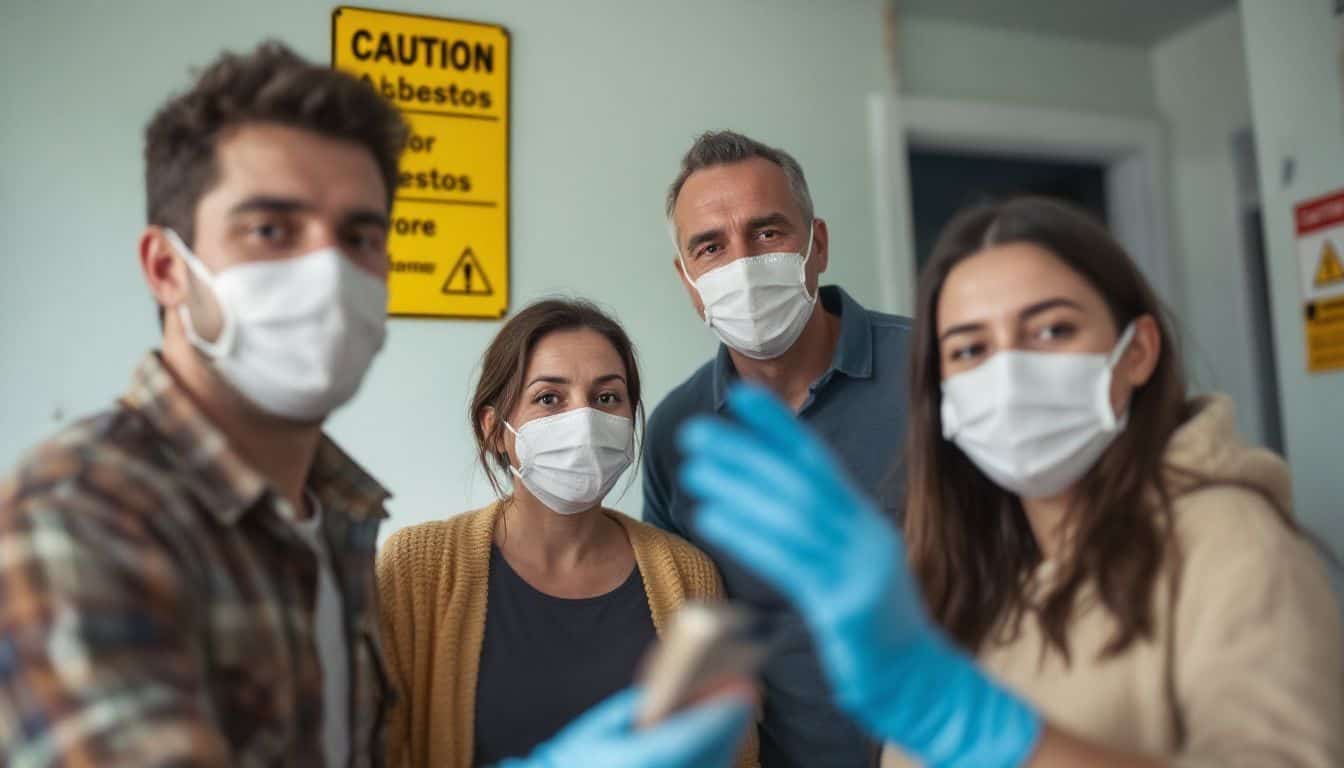
Asbestos Dust During Home Renovations: What Every Homeowner Must Know
Asbestos dust is one of the most dangerous airborne hazards you will encounter during a home renovation — and the terrifying part is that you cannot see it, smell it, or taste it. Millions of UK homes built before 2000 contain asbestos-containing materials (ACMs), and the moment those materials are disturbed, microscopic fibres become airborne and can lodge permanently in your lungs.
If you are planning any renovation work on an older property, understanding how asbestos dust behaves, where it comes from, and how to prevent exposure is not optional. It is the difference between a safe project and a life-altering health crisis.
Why Asbestos Dust Is So Dangerous
Asbestos fibres are extraordinarily fine — far smaller than a human hair — which means they stay suspended in the air for hours after a material is disturbed. Once inhaled, the body cannot expel them. Over time, they cause scarring and inflammation that leads to conditions including mesothelioma, asbestosis, and lung cancer.
These diseases do not appear immediately. Symptoms can take 20 to 40 years to develop, which is precisely why so many people underestimate the risk at the moment of exposure. By the time a diagnosis is made, the damage is already done.
Asbestos-related diseases claim thousands of lives in the UK every year, making asbestos the single largest cause of work-related deaths in the country. There is no safe level of exposure to asbestos dust — none whatsoever.
Where Asbestos Dust Comes From in a Home
Asbestos was used extensively in UK construction from the 1950s through to its complete ban in 1999. If your property was built or refurbished before that date, there is a realistic chance it contains ACMs somewhere inside it.
Common locations where asbestos dust can be generated during renovation include:
- Artex and textured coatings on ceilings and walls — drilling, sanding, or scraping releases fibres immediately
- Floor tiles and adhesives — vinyl floor tiles and the black mastic adhesive beneath them frequently contain chrysotile asbestos
- Pipe lagging and boiler insulation — often friable (crumbly) and among the most hazardous forms of ACM
- Roof sheets and soffit boards — asbestos cement is common in garages, outbuildings, and extensions
- Partition walls and ceiling tiles — particularly in properties with 1960s and 1970s commercial-style refurbishments
- Insulating board around fireplaces and boilers — often Asbestolux or Marinite board, both of which release dust easily when cut or broken
The critical point is that ACMs in good condition and left undisturbed pose a low immediate risk. It is the act of renovation — cutting, drilling, sanding, or demolishing — that creates dangerous asbestos dust.
Identifying Asbestos Before You Start Work
You cannot identify asbestos by looking at it. Asbestos cement looks like ordinary cement. Artex with asbestos looks identical to Artex without it. The only reliable way to confirm whether a material contains asbestos is laboratory analysis of a sample taken under controlled conditions.
Commission a Professional Asbestos Survey
Before any renovation work begins on a property that might contain ACMs, you should commission a professional asbestos survey. An management survey identifies accessible ACMs and assesses their condition, and is typically used for ongoing property management rather than pre-renovation planning.
For properties about to undergo significant building work, you need a refurbishment and demolition survey. This more intrusive type of survey is specifically designed to locate all ACMs that could be disturbed during the planned works. You can explore exactly what this involves on our demolition survey service page.
Surveys must be carried out by a competent surveyor working to the standards set out in HSG264, the HSE’s guidance document on asbestos surveying. The survey will produce a detailed report identifying the location, type, and condition of all ACMs found, along with a risk assessment and clear recommendations for management or removal.
Do Not Sample Asbestos Yourself
Some homeowners attempt to take their own samples and send them to a laboratory. While this is not illegal for domestic properties, it carries a real risk of generating asbestos dust if done incorrectly. A professional surveyor has the training, equipment, and technique to take samples safely and without spreading contamination throughout your home.
Legal Requirements for Asbestos Management During Renovation
The Control of Asbestos Regulations impose clear duties on anyone carrying out work that may disturb asbestos. These regulations apply primarily to commercial premises under a duty holder framework, but the principles — and the risks — apply equally to domestic renovations.
For licensed asbestos work, which includes work on most high-risk ACMs such as pipe lagging, sprayed coatings, and loose-fill insulation, only a contractor holding a licence from the HSE may legally carry out the removal. This is not a recommendation — it is a legal requirement.
Non-licensed work, such as removing asbestos cement sheets or textured coatings, can be carried out by a competent person, but strict controls still apply. Notification may be required under NNLW (notifiable non-licensed work) rules, and health surveillance records must be maintained.
Homeowners commissioning renovation work have a responsibility to inform contractors if asbestos has been identified on site. Failing to do so — and a contractor disturbing ACMs unknowingly — creates serious legal and health consequences for everyone involved.
Preventing Asbestos Dust Exposure During Renovation
Once ACMs have been identified, the priority is to prevent asbestos dust from being released. There are several strategies for achieving this, depending on the type and condition of the material.
Leave It Alone Where Possible
If an ACM is in good condition and will not be disturbed by your renovation work, leaving it in place and managing it is often the safest option. A management plan should be put in place to monitor its condition over time. Asbestos that is intact and sealed poses minimal immediate risk.
Encapsulation
Where ACMs cannot be left alone but do not need to be removed, encapsulation — applying a sealant or covering the material — can contain fibres and prevent dust release. This is typically used for textured coatings and asbestos cement in good condition. It must be carried out by a competent professional, not a general decorator.
Professional Removal
Where ACMs must be removed to allow renovation to proceed, professional asbestos removal is the only safe route. Licensed contractors follow a strict methodology to contain and eliminate asbestos dust throughout the removal process.
This typically involves:
- Isolating the work area — sealing off the space with polythene sheeting and negative pressure units to prevent fibres escaping into the wider property
- Wetting the material — dampening ACMs before and during removal significantly reduces fibre release
- Careful removal — breaking materials as little as possible to minimise dust generation
- Double-bagging and labelling — all asbestos waste is double-wrapped in heavy-duty polythene and clearly labelled as hazardous waste
- Air monitoring — fibre counts are checked during and after removal to confirm the area is safe
- Four-stage clearance — a full visual inspection, HEPA vacuuming, final visual inspection, and air testing before the area is declared safe to re-enter
Personal Protective Equipment Against Asbestos Dust
PPE is the last line of defence against asbestos dust — not the first. Controls such as enclosure, wetting, and HEPA filtration should always be in place before relying on PPE. That said, the correct PPE is essential for anyone working in proximity to ACMs.
Required PPE for asbestos work includes:
- Respiratory protective equipment (RPE) — at minimum a half-face mask with a P3 filter; for higher-risk work, a full-face respirator or powered air-purifying respirator (PAPR) is required. Standard dust masks offer no protection against asbestos fibres whatsoever.
- Disposable coveralls — Type 5 Category 3 coveralls (often referred to as Tyvek suits) prevent fibres settling on clothing and being carried out of the work area
- Disposable gloves — to prevent skin contact and avoid transferring fibres to other surfaces
- Boot covers or dedicated footwear — to prevent fibres being walked through the rest of the property
All PPE must be removed carefully within the work area — not outside it — to avoid carrying contamination into clean areas. Disposable items must be bagged as asbestos waste and disposed of correctly.
The Control of Asbestos Regulations set specific control limits: 0.1 fibres per cubic centimetre (f/cm³) over a four-hour period for licensed work, and 0.6 f/cm³ over ten minutes as a short-term exposure limit. These are legal maxima, not targets — the goal is always to reduce exposure as far below these levels as reasonably practicable.
What to Do If Asbestos Dust Is Accidentally Released
Despite best efforts, accidental disturbance of ACMs does happen. If you suspect asbestos dust has been released during renovation work, act immediately and calmly — panic makes things worse.
- Stop all work immediately — do not continue in an attempt to finish the task
- Evacuate the area — everyone should leave the space and the area should be sealed off
- Do not vacuum with a standard vacuum cleaner — ordinary vacuums spread asbestos fibres rather than capturing them
- Do not sweep or use compressed air — both will re-suspend fibres and worsen contamination
- Contact a licensed asbestos contractor — they will carry out an emergency clean-up using HEPA-filtered equipment and air monitoring
- Seek medical advice — if you believe you have inhaled asbestos dust, inform your GP and request it is formally recorded on your medical history
Under RIDDOR, certain asbestos incidents in the workplace must be reported to the HSE. Even in a domestic context, accurate documentation of any incident is valuable for both health monitoring and insurance purposes.
Safe Disposal of Asbestos Waste
Asbestos waste is classified as hazardous waste under UK law and cannot be placed in general household bins, skips, or taken to ordinary household waste recycling centres. Illegal fly-tipping of asbestos carries severe penalties and creates a serious public health hazard for the wider community.
The correct disposal route depends on the quantity and type of asbestos waste:
- Small quantities of non-licensable asbestos waste from domestic properties can sometimes be accepted at licensed hazardous waste facilities — contact your local council for guidance specific to your area
- Licensed contractors will arrange disposal as part of their service, transporting waste to a licensed landfill site that is permitted to accept asbestos
- All asbestos waste must be double-bagged in UN-approved polythene bags, clearly labelled with the hazardous waste symbol and a description of the contents
- A consignment note must accompany asbestos waste from commercial premises — your contractor will manage this documentation on your behalf
Never attempt to break up or crush asbestos waste to reduce its volume. This generates asbestos dust and dramatically increases the risk of exposure to yourself and anyone nearby.
Post-Removal Clean-Up and Clearance
After asbestos removal, the area must be thoroughly decontaminated before it can be safely reoccupied or renovation work continues. This is not a job for a standard cleaning company.
A licensed contractor will carry out a four-stage clearance procedure:
- A thorough visual inspection of the work area to confirm no visible debris remains
- HEPA vacuuming of all surfaces, including walls, floors, and any equipment that was present in the enclosure
- A second visual inspection under good lighting conditions to confirm cleanliness
- Air testing by an independent analyst to confirm that airborne fibre levels are below the clearance indicator of 0.01 f/cm³
Only once all four stages have been passed can the area be handed back for continued renovation work. Do not allow any contractor to skip or abbreviate this process — the clearance certificate is your proof that the space is safe.
Asbestos Surveys Across the UK
Whether you are planning a kitchen extension in the capital or a full property refurbishment in the north, getting the right survey in place before work starts is essential. Supernova Asbestos Surveys operates nationwide, with specialist teams covering all major cities and regions.
If you are based in the capital, our asbestos survey London service covers all London boroughs and surrounding areas. For properties in the north west, our asbestos survey Manchester team provides fast turnaround across Greater Manchester and beyond. In the Midlands, our asbestos survey Birmingham service covers the city and surrounding counties.
Every survey is carried out by qualified surveyors working to HSG264 standards, with full laboratory analysis and a detailed written report delivered promptly so your renovation project is not delayed.
Frequently Asked Questions
Can asbestos dust from a single disturbance make you ill?
A single, brief exposure to asbestos dust carries a lower risk than prolonged or repeated exposure, but there is no confirmed safe level of exposure. Any inhalation of asbestos fibres carries some degree of risk, and the effects are cumulative over a lifetime. If you believe you have been exposed, inform your GP so it can be recorded on your medical history.
How long does asbestos dust stay in the air?
Asbestos fibres are extremely lightweight and can remain suspended in the air for several hours after a material is disturbed. Unlike larger dust particles that settle quickly, asbestos fibres can be re-suspended by movement, ventilation, or air currents, which is why sealing off the work area and using negative pressure units is so important during removal work.
Do I need a survey before renovating a house built before 2000?
If your property was built or significantly refurbished before 2000, a refurbishment and demolition survey is strongly recommended before any intrusive building work begins. This type of survey, carried out to HSG264 standards, identifies all ACMs that could be disturbed during the works and informs your contractor of any risks on site. Starting work without one puts both you and your contractors at risk.
Can I remove asbestos-containing materials myself?
For certain lower-risk materials — such as small quantities of asbestos cement — non-licensed removal by a competent person is legally permitted, though strict controls must still be followed. For higher-risk materials including pipe lagging, sprayed coatings, and loose-fill insulation, only an HSE-licensed contractor may legally carry out the work. In practice, professional removal is always the safer and more reliable option regardless of the material type.
What does asbestos dust look like?
Asbestos dust is invisible to the naked eye. The individual fibres are microscopic — far too small to be seen without specialist equipment. You may see a visible dust cloud when an ACM is disturbed, but the most dangerous fibres are those you cannot see at all. This is why visual inspection alone is never sufficient to confirm whether an area is safe after a disturbance — air testing by an accredited analyst is always required.
Get Professional Advice Before Your Renovation Begins
Asbestos dust does not give you a second chance. The decisions you make before renovation work starts — commissioning the right survey, engaging a licensed contractor, and following the correct procedures — are what determine whether your project is safe.
Supernova Asbestos Surveys has completed over 50,000 surveys across the UK. Our qualified surveyors work to HSG264 standards and provide clear, actionable reports so you can move forward with your renovation with confidence.
Call us today on 020 4586 0680 or visit asbestos-surveys.org.uk to book a survey or speak to one of our team about your project.