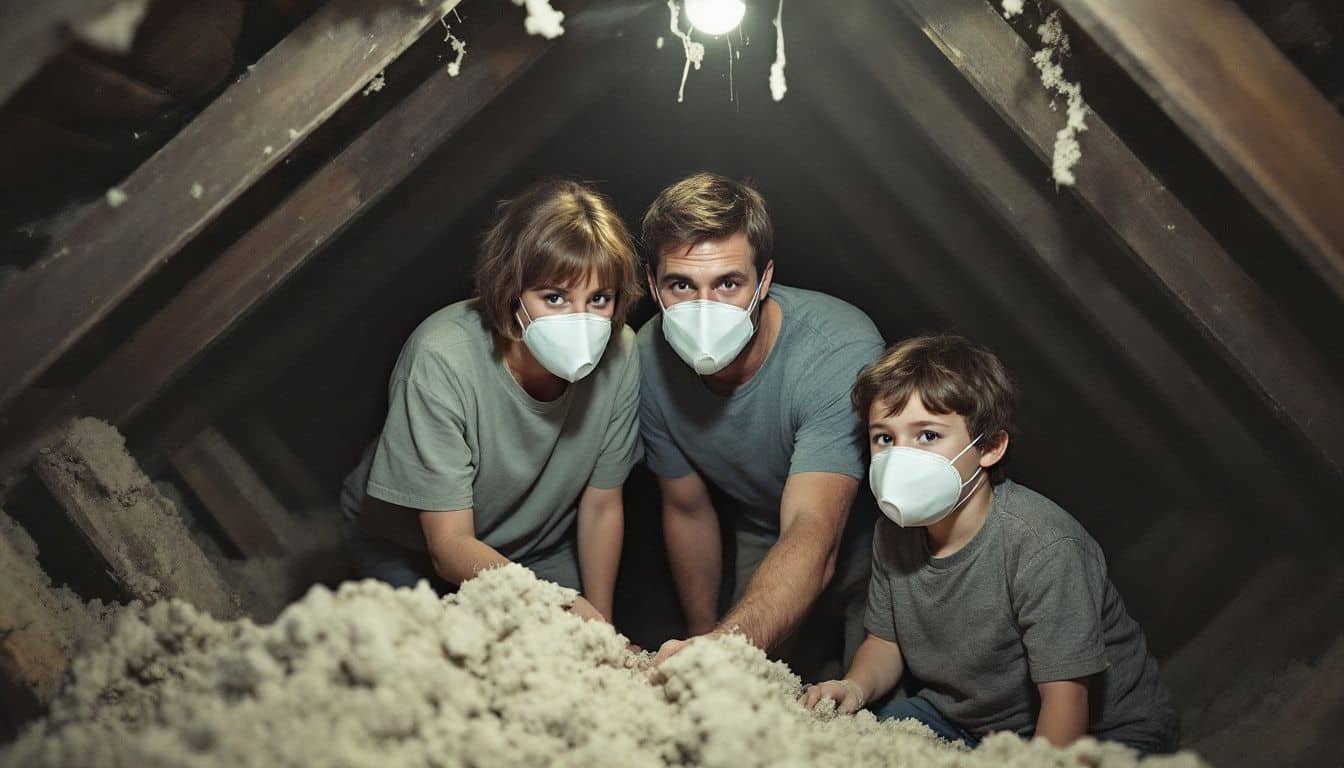
Asbestos Doesn’t Send a Warning — But a Survey Does
It sits behind plasterboard, beneath floor tiles, above suspended ceilings. In homes and buildings constructed before 2000, asbestos is almost certainly present somewhere — and it won’t announce itself. Understanding how often should you conduct an asbestos survey to ensure your family’s safety is one of the most practical decisions any property owner can make, and one of the most consistently misunderstood.
This isn’t a bureaucratic checkbox. It’s the difference between managing a hidden risk and being blindsided by one.
What an Asbestos Survey Actually Does
An asbestos survey is a professional inspection carried out by a qualified surveyor. Their job is to identify asbestos-containing materials (ACMs) — where they are, what condition they’re in, and what risk they present.
Surveyors examine insulation, floor tiles, ceiling tiles, pipe lagging, textured coatings such as Artex, roofing materials, and any other area where ACMs are commonly found. Every identified material is recorded in an asbestos register, which becomes the foundation of your asbestos management strategy.
Without a survey, you’re managing a risk you cannot see. Asbestos fibres are invisible, odourless, and only dangerous when disturbed — which is precisely why a documented, systematic approach is essential.
The Three Types of Asbestos Survey — and When You Need Each One
Not every survey is the same. The type you require depends entirely on what you’re planning to do with the property. Getting this wrong means either under-surveying a genuine risk or commissioning work that doesn’t match your actual needs.
Management Survey
A management survey is the standard option for any building that is occupied or in everyday use. It identifies ACMs that could be disturbed during routine activities — maintenance work, minor repairs, or normal occupancy.
This is the survey most homeowners and landlords will need to arrange on a recurring basis. It’s less intrusive than other types and focuses on accessible areas. The findings feed directly into your asbestos management plan, which must be kept current.
Refurbishment Survey
Planning any renovation work? Even something as seemingly minor as removing a partition wall, replacing a boiler, or fitting a new kitchen requires a refurbishment survey before work begins.
This survey is more intrusive. Surveyors access areas that would be disturbed during the planned works, which may involve minor destructive inspection. It exists to protect tradespeople and contractors from unknowing exposure during the project — and to protect you from legal liability if something goes wrong.
Demolition Survey
Before any structure is demolished, a demolition survey is a legal requirement. This is the most thorough type, covering the entire building including areas that are normally inaccessible.
Every ACM must be identified and safely removed before demolition can proceed. There are no exceptions to this, regardless of the building’s age or how confident you are that asbestos isn’t present.
How Often Should You Conduct an Asbestos Survey to Ensure Your Family’s Safety?
This is the question most property owners get wrong — either by surveying too infrequently or by assuming one survey covers them indefinitely. The answer depends on your circumstances, but there are clear benchmarks to follow.
Annual Reviews for Commercial and Non-Domestic Properties
Under the Control of Asbestos Regulations, duty holders in non-domestic premises have a legal obligation to manage asbestos risks and keep their asbestos register current. In practice, this means reviewing and updating the register at least every 12 months.
If you’re a landlord, employer, or property manager, annual reviews are the baseline — not a best-practice aspiration. Failure to maintain an up-to-date register can result in enforcement action from the HSE and significant legal liability.
Residential Properties: What Homeowners Need to Know
The Control of Asbestos Regulations apply primarily to non-domestic premises. However, the health risks don’t change based on property type. If you live in a home built before 2000, it’s strongly advisable to commission an asbestos management survey — particularly before any renovation work begins.
For residential properties with known ACMs in stable, undamaged condition, a survey every three to five years is a reasonable approach, provided nothing changes. The moment you plan works, notice damage, or make structural alterations, you need a fresh survey. Full stop.
When You Should Survey More Frequently
Certain circumstances call for increased frequency, regardless of when the last survey was completed:
- ACMs in poor condition: If previously identified materials have deteriorated, cracked, or been damaged, resurvey every six to twelve months.
- High-occupancy buildings: Frequent use increases the likelihood of ACMs being disturbed, raising exposure risk for everyone inside.
- Buildings undergoing ongoing maintenance: Any works near known ACMs should trigger a review before those works begin.
- Change of use: If a property’s function changes — say, a commercial unit becomes residential — a fresh survey is essential.
- After an incident: If ACMs have been accidentally disturbed, damaged by flooding, or affected by fire, an immediate survey is necessary.
What the Regulations Actually Require
The Control of Asbestos Regulations set out clear duties for those who manage non-domestic premises. Regulation 4 places a legal duty on the responsible person — the duty holder — to manage asbestos in their building.
This includes:
- Taking reasonable steps to find ACMs in the premises
- Assessing the condition of any ACMs found
- Producing and implementing an asbestos management plan
- Reviewing and monitoring the plan regularly
- Providing information about ACMs to anyone who may work on or disturb them
The HSE’s guidance document HSG264 provides detailed technical guidance on how surveys should be carried out and what they must cover. Any surveyor you appoint should be working to this standard — ask them directly whether they are.
Non-compliance is not a minor administrative issue. The HSE can issue improvement notices, prohibition notices, and prosecute duty holders who fall short of their obligations. In serious cases, individuals face criminal liability.
How Long Does an Asbestos Survey Remain Valid?
This is one of the most persistent misconceptions in asbestos management. A survey is not a one-time certificate that sits in a drawer and remains accurate forever.
A survey reflects the condition of a building at a specific point in time. As conditions change — materials deteriorate, works are carried out, occupancy patterns shift — the survey becomes progressively less accurate. Think of it as a living document, not a one-off task.
As a practical guide:
- Commercial and non-domestic properties should review their asbestos register annually as a minimum
- Any significant change to the property should trigger an immediate review
- A survey carried out before major refurbishment does not replace the need for a post-works review
- Residential properties with known ACMs should be re-surveyed every three to five years, or sooner if circumstances change
Maintaining Your Asbestos Register
The asbestos register is the practical output of your survey. It lists every ACM found, its location, its condition, and the recommended management action. Keeping this register current is not optional — it’s a legal requirement for duty holders and a matter of basic safety for everyone who uses the building.
When to Update the Register
Your register should be updated in the following situations:
- After every survey or re-inspection
- Before any planned maintenance, refurbishment, or demolition work
- After any ACM is removed, encapsulated, or disturbed
- When the condition of a known ACM changes
- When a new occupant, contractor, or tradesperson needs to be made aware of risks
The register must be shared with anyone carrying out work on the premises. A contractor who doesn’t know about asbestos in the ceiling void above their work area is a contractor at serious risk — and you could be held liable for that.
The Health Risks That Make Regular Surveys Non-Negotiable
Asbestos-related diseases are among the most serious occupational and environmental health conditions in the UK. Fibres, once inhaled, embed in lung tissue and cause irreversible damage that may not become apparent for decades.
The diseases associated with asbestos exposure include:
- Mesothelioma: A cancer of the lining of the lungs, abdomen, or heart. Almost exclusively caused by asbestos exposure and invariably fatal.
- Asbestosis: Chronic scarring of the lung tissue causing progressive breathing difficulties.
- Lung cancer: Asbestos exposure significantly increases the risk, particularly in those who also smoke.
- Pleural disease: Thickening or scarring of the pleura — the membrane surrounding the lungs — which restricts breathing over time.
What makes these conditions particularly devastating is the latency period. Symptoms often don’t appear until decades after exposure. By the time a diagnosis is made, the disease is frequently at an advanced stage with limited treatment options.
Regular surveys don’t just tick a legal box. They actively reduce the likelihood that you, your family, or your workers will ever be exposed to fibres in the first place.
What Happens During a Survey — and What You’ll Receive
A qualified surveyor will carry out a systematic visual inspection of all accessible areas of the property. They’ll examine materials known to commonly contain asbestos: textured coatings, insulating board, pipe lagging, floor tiles, roofing felt, and more.
Where materials are suspected to contain asbestos, the surveyor takes small samples for laboratory analysis. These confirm the presence and type of asbestos fibres present.
Following the inspection, you’ll receive a detailed report that includes:
- A full list of identified or suspected ACMs
- The location and extent of each material
- A condition assessment and risk rating
- Recommended management actions
- Photographic evidence
This report forms the basis of your asbestos register and management plan. It should be treated as a working document, updated as circumstances change — not filed away and forgotten.
Who Is Responsible for Arranging a Survey?
In non-domestic premises, the duty holder is responsible. This is typically the building owner, the employer, or the person with the greatest control over maintenance and repair.
If you manage a commercial property, a school, a block of flats, or any non-domestic building, the obligation sits with you. Delegating it to a managing agent doesn’t remove your underlying liability — it simply means someone is acting on your behalf.
For residential properties, there is no strict legal duty on homeowners to survey their own home — unless they employ people to work there. Landlords who rent out properties do have responsibilities, particularly in relation to communal areas.
If you’re buying a property built before 2000, commissioning a survey before exchange is a sensible precaution. It protects you from inheriting a problem you didn’t know about and gives you leverage in negotiations if ACMs are found.
When Asbestos Needs to Be Removed
Not all asbestos needs to be removed. ACMs that are in good condition and unlikely to be disturbed are often best left in place and managed. Removal itself carries risk — disturbing intact asbestos can release fibres that would otherwise remain safely contained.
However, removal becomes necessary when:
- ACMs are in poor condition and actively deteriorating
- Refurbishment or demolition works will disturb them
- The material poses an unacceptable ongoing risk to occupants
- The property is changing use in a way that increases exposure risk
Any removal work involving licensable asbestos materials must be carried out by a contractor licensed by the HSE. This is not a job for a general builder, regardless of how confident they sound.
Getting a Survey Arranged — Wherever You Are in the UK
Supernova Asbestos Surveys operates nationwide, with experienced surveyors covering urban and rural locations across England, Scotland, and Wales. Whether you need an asbestos survey London property owners rely on, an asbestos survey Manchester residents and landlords trust, or an asbestos survey Birmingham building managers book year after year, the process is straightforward.
Every survey is carried out to HSG264 standards by accredited surveyors. You’ll receive a clear, detailed report with everything you need to manage ACMs correctly — or to act on them before they become a problem.
Practical Steps You Can Take Right Now
You don’t need to wait for a scheduled review to take action. Here’s what you can do immediately:
- Check your property’s age. If it was built or refurbished before 2000, assume asbestos may be present until a survey confirms otherwise.
- Locate any existing survey records. If a survey has already been carried out, find the report and check when it was completed and whether it’s still current.
- Review your asbestos register. If one exists, check that it reflects the current condition of your building and has been updated following any recent works.
- Plan ahead for any renovation work. Don’t book contractors until you’ve confirmed whether a refurbishment survey is required. Starting works without one is both dangerous and potentially unlawful.
- Book a survey if you’re uncertain. If you’re not sure whether asbestos is present, or whether your existing survey is still valid, the safest option is always to commission a fresh inspection.
Frequently Asked Questions
How often should you conduct an asbestos survey to ensure your family’s safety in a residential home?
For residential properties with known asbestos-containing materials in stable condition, re-surveying every three to five years is a reasonable approach. However, any planned renovation, visible damage to existing materials, or change in the building’s structure should prompt an immediate survey, regardless of when the last one was carried out.
Is an asbestos survey a legal requirement for homeowners?
The Control of Asbestos Regulations place legal duties primarily on duty holders in non-domestic premises. Homeowners living in their own property are not legally required to commission a survey — but landlords, employers, and those managing non-domestic buildings are. For homeowners, a survey is strongly advisable before any renovation work, particularly in properties built before 2000.
Can I carry out my own asbestos inspection?
No. Asbestos surveys must be carried out by a competent, trained surveyor working to the standards set out in HSG264. Attempting to identify or sample asbestos yourself risks disturbing fibres and causing exposure. Always use a qualified professional.
What is the difference between a management survey and a refurbishment survey?
A management survey is designed for buildings in everyday use. It identifies ACMs that could be disturbed during routine activities and informs your ongoing asbestos management plan. A refurbishment survey is required before any renovation or intrusive works begin. It is more thorough, accessing areas that would be disturbed during the planned project, and may involve minor destructive inspection to locate all ACMs in the affected areas.
What should I do if I think asbestos has been disturbed in my home?
Stop any ongoing work immediately. Evacuate the area and prevent others from entering. Do not attempt to clean up any debris yourself. Contact a qualified asbestos surveyor as soon as possible to carry out an inspection and, if necessary, arrange for air monitoring and safe remediation by a licensed contractor.
Supernova Asbestos Surveys has completed over 50,000 surveys nationwide. If you’re unsure whether your property needs a survey, when your last survey is due for review, or which type of survey applies to your situation, our team can help. Call us on 020 4586 0680 or visit asbestos-surveys.org.uk to book an inspection or request a quote.