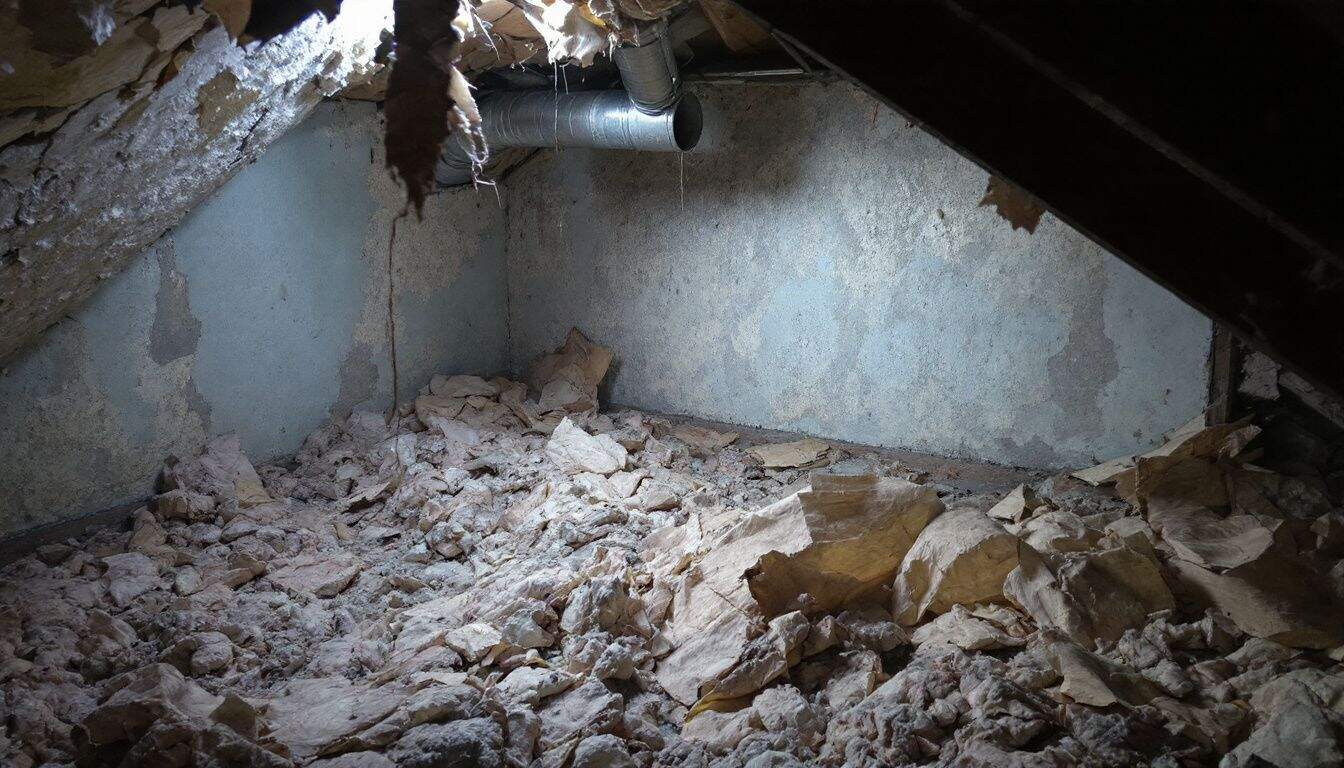
Protecting Your Family from Asbestos: What a Survey Actually Does
Asbestos remains one of the most serious hidden hazards in UK homes. If your property was built before 2000, there is a real chance asbestos-containing materials are present somewhere — and you may not know it until fibres are already in the air your family breathes.
An asbestos survey is the only reliable way to find out what you are dealing with and take the right action. This is not a theoretical risk. Asbestos-related diseases — including mesothelioma and asbestosis — are still responsible for thousands of deaths in the UK every year.
The fibres are invisible, odourless, and can remain airborne for hours after disturbance. Understanding where asbestos is hiding in your home is the first step towards protecting the people you care about.
Where Asbestos Hides in Older Properties
Asbestos was used extensively in UK construction from the 1920s right through to the late 1990s. It was cheap, fire-resistant, and easy to work with — which is precisely why it ended up in so many building materials before its dangers were fully understood.
Common locations where asbestos may be found in residential properties include:
- Loft and wall insulation — particularly loose-fill insulation, which is among the most hazardous types
- Floor tiles and adhesives — vinyl floor tiles from before the 1980s frequently contain asbestos
- Textured coatings — Artex and similar textured ceiling and wall finishes were commonly made with asbestos fibres
- Pipe lagging and boiler insulation — older heating systems often used asbestos as insulation material
- Roofing and guttering — asbestos cement was widely used in flat and pitched roofing, garage roofs, and gutters
- Soffit boards and fascias — particularly in properties built or extended before the 1990s
- Textured paints — some decorative paints applied before the mid-1980s contained asbestos fibres
The presence of these materials does not automatically mean your family is at risk. Asbestos that is in good condition and left undisturbed is generally considered low risk. The danger arises when materials are damaged, deteriorating, or disturbed during renovation work.
How to Spot the Warning Signs
You cannot identify asbestos by looking at it — laboratory testing is the only way to confirm its presence. However, there are warning signs that should prompt you to seek a professional assessment without delay.
Look out for:
- Crumbling, cracking, or flaking surfaces on older insulation or ceiling materials
- Peeling paint or wallpaper in properties built before the 1980s
- Deteriorating pipe insulation, particularly around older boilers or in basements
- Damaged or broken floor tiles in older kitchens or utility rooms
- Any material that appears fibrous or powdery in an older property
If you notice any of these signs, stop what you are doing and do not attempt to investigate further yourself. Keep everyone away from the area and contact a qualified surveyor as soon as possible.
What to Do If You Suspect Asbestos in Your Home
The single most important rule is straightforward: do not disturb it. Many homeowners make the mistake of poking, scraping, or breaking apart a suspicious material to get a better look — this is precisely how fibres are released into the air.
If you suspect a material contains asbestos, take these steps immediately:
- Stop all work in the area — if you are mid-renovation, put down your tools and leave the space
- Keep family members and pets away — restrict access until a professional has assessed the situation
- Seal off the area where possible — use heavy-duty plastic sheeting to cover doorways and air vents, securing edges with strong tape to prevent fibres spreading to other rooms
- Do not use a standard vacuum cleaner — ordinary vacuums cannot capture asbestos fibres and will simply recirculate them through the air
- Contact a qualified asbestos surveyor — arrange a professional inspection before any further work takes place
Proper containment is not about panic — it is about giving a professional the best possible chance to assess the situation accurately and safely.
What Happens During a Professional Asbestos Survey
A professional asbestos survey is a systematic inspection of your property carried out by a qualified surveyor. In the UK, surveyors should hold relevant qualifications such as the British Occupational Hygiene Society (BOHS) P402 certificate, and laboratories analysing samples should be UKAS-accredited.
This matters because it ensures your survey results are accurate and legally defensible. There are two main types of survey, defined under HSG264 guidance from the Health and Safety Executive.
Management Survey
A management survey is the standard survey for properties that are occupied and in normal use. The surveyor inspects all reasonably accessible areas, taking samples of suspected asbestos-containing materials for laboratory analysis.
The goal is to identify the location, type, and condition of any asbestos present so that a management plan can be put in place. For most homeowners concerned about their family’s safety, a management survey is the appropriate starting point.
Refurbishment and Demolition Survey
If you are planning renovation work or demolition, a more intrusive demolition survey is required. This involves accessing areas that would be disturbed during the work — including inside walls, above ceilings, and beneath floors.
Under the Control of Asbestos Regulations, this type of survey must be completed before any such work begins. Skipping this step is not just a legal risk — it is a health risk to every person on site.
During either type of survey, the inspector will:
- Examine all accessible areas of the property
- Take physical samples of suspected materials using appropriate protective equipment
- Send samples to a UKAS-accredited laboratory for analysis
- Assess the condition of any asbestos found and evaluate the risk it poses
- Provide a detailed written report identifying all asbestos-containing materials and recommending appropriate action
The report you receive is not just a list — it is a practical document that tells you exactly what you have, where it is, what condition it is in, and what to do about it.
DIY Versus Professional Asbestos Removal
Once asbestos has been identified, homeowners face a choice: manage it in place, or have it removed. In many cases, leaving asbestos undisturbed and in good condition is the right decision. Removal is not always necessary — and poorly executed removal can create more risk than leaving the material alone.
However, when removal is necessary — for example, prior to renovation work — the question of whether to attempt this yourself or hire a professional is not really a question at all.
Why Professional Removal Is Almost Always the Right Choice
Licensed asbestos removal contractors are trained to work safely with hazardous materials. They have access to specialist equipment including HEPA-filtered vacuum cleaners, full-face respirators, and disposable protective suits.
They know how to contain the work area, manage waste, and dispose of asbestos materials in accordance with UK regulations. For certain types of asbestos work — particularly involving higher-risk materials like sprayed coatings, lagging, or insulation board — a licensed contractor is legally required under the Control of Asbestos Regulations.
Attempting this work yourself or hiring an unlicensed contractor is not just dangerous; it can result in serious legal consequences.
If DIY Work Is Unavoidable
There are limited circumstances where minor, lower-risk asbestos work may be carried out by a competent non-licensed person — for example, removing a small number of asbestos cement sheets in good condition. If you find yourself in this situation, the safety precautions are non-negotiable:
- Wear a properly fitted FFP3 respirator — not a standard dust mask
- Use disposable protective overalls and gloves
- Dampen materials lightly with water before handling to reduce dust
- Double-bag all waste in heavy-duty, clearly labelled asbestos waste bags
- Dispose of waste only at a licensed hazardous waste facility
- Never cut, drill, or sand asbestos-containing materials
- Shower and change clothes immediately after the work is complete
Even in these limited scenarios, professional advice beforehand is strongly recommended. The risks of getting it wrong are simply too high.
UK Legal Requirements Around Asbestos
The Control of Asbestos Regulations set out clear legal duties for property owners, landlords, and employers across the UK. Understanding these obligations is not just about compliance — it is about understanding why the regulations exist and what they are designed to prevent.
Key legal points for homeowners and landlords include:
- Any building constructed before 2000 must be assessed for asbestos before renovation or demolition work begins
- Landlords of non-domestic premises have a legal duty to manage asbestos, which includes maintaining an up-to-date asbestos register
- Certain types of asbestos removal work must only be carried out by HSE-licensed contractors
- Asbestos waste must be disposed of as hazardous waste in accordance with environmental regulations
For residential landlords, the duty of care to tenants is also a practical concern. If a tenant reports suspected asbestos, the landlord has a responsibility to investigate and act appropriately. Failing to do so can expose a landlord to significant legal liability.
If you are a tenant and suspect asbestos in your rented property, report it to your landlord in writing and keep a record of the communication. Do not attempt to investigate or disturb the material yourself.
The Health Risks: Why Asbestos Cannot Be Ignored
Asbestos fibres, when inhaled, can become permanently lodged in lung tissue. The body cannot break them down or expel them. Over time — often decades later — this can lead to serious and life-threatening conditions.
Asbestos-related diseases include:
- Mesothelioma — a cancer of the lining of the lungs or abdomen, almost exclusively caused by asbestos exposure and with a very poor prognosis
- Asbestosis — scarring of the lung tissue that causes progressive breathlessness and reduced lung function
- Lung cancer — asbestos exposure significantly increases the risk, particularly in those who also smoke
- Pleural thickening — thickening of the membrane surrounding the lungs, causing breathlessness and chest pain
These conditions can take 20 to 40 years to develop after exposure, which means there is no immediate warning that damage is occurring. This latency period is precisely why prevention — through proper identification and management of asbestos — is so critical.
If you have concerns about past asbestos exposure, speak to your GP and mention the exposure history specifically. Early monitoring can make a significant difference to outcomes.
Asbestos Surveys Across the UK
Asbestos is a nationwide concern, not limited to any one region. Properties across every part of the UK — from Victorian terraces to 1970s tower blocks — may contain asbestos-containing materials. Wherever you are based, qualified, accredited help is available.
If you are based in the capital, our asbestos survey London service covers properties throughout Greater London and the surrounding area. For property owners in the North West, our asbestos survey Manchester team provides the same expert, accredited service.
In the Midlands, our asbestos survey Birmingham service is available for residential and commercial properties alike. Wherever you are in the UK, the process is the same: qualified surveyors, UKAS-accredited laboratory analysis, and a clear, actionable report.
Your Next Steps: A Practical Checklist
If you own or manage a property built before 2000 and have not had an asbestos survey carried out, now is the time to act — particularly if you are planning any building work or have noticed any of the warning signs described above.
Work through this checklist:
- Identify the age of your property — if it was built or significantly refurbished before 2000, asbestos-containing materials may be present
- Note any areas of concern — damaged ceilings, deteriorating insulation, crumbling tiles, or any material that looks fibrous or powdery
- Do not disturb suspected materials — keep people and pets away from any area you are concerned about
- Decide which survey type you need — a management survey for occupied properties, a demolition survey if refurbishment or demolition is planned
- Book a UKAS-accredited surveyor — make sure the surveyor holds the appropriate qualifications and the laboratory is accredited
- Act on the report — follow the recommendations in your survey report, whether that means putting a management plan in place or arranging professional removal
- Keep records — retain your survey report and any subsequent management documentation; this is particularly important for landlords and commercial property owners
A survey does not automatically mean you have a problem. In many cases, the result is reassurance — confirmation that materials are present but in good condition and low risk. That peace of mind alone is worth the investment.
What to Look for in an Asbestos Surveying Company
Not all asbestos surveyors offer the same standard of service. Choosing the right company matters — both for the accuracy of your results and for your legal protection.
When selecting a surveyor, check for the following:
- UKAS-accredited laboratory — samples must be analysed by a laboratory accredited by the United Kingdom Accreditation Service
- Qualified surveyors — look for BOHS P402 certification as a minimum standard
- Clear, detailed reports — your report should identify every suspect material, its location, condition, and a risk assessment
- Transparent pricing — a reputable company will provide a clear quote before work begins, with no hidden charges
- Experience with your property type — residential surveys differ from commercial ones; make sure the company has relevant experience
At Supernova Asbestos Surveys, we have completed over 50,000 surveys nationwide. Every survey is carried out by qualified professionals, with samples analysed by UKAS-accredited laboratories. Our reports are clear, practical, and designed to give you exactly the information you need to act.
Frequently Asked Questions
How do I know if my home contains asbestos?
The only reliable way to confirm the presence of asbestos is through laboratory analysis of a sample taken by a qualified surveyor. Visual inspection alone cannot identify asbestos — many materials that contain it look perfectly ordinary. If your property was built before 2000, a professional asbestos survey is the only way to know for certain what materials are present and whether they pose a risk.
Is asbestos dangerous if it is left undisturbed?
Asbestos that is in good condition and not being disturbed is generally considered low risk. The danger arises when fibres become airborne — this happens when materials are damaged, deteriorating, or disturbed during DIY or renovation work. A management survey will assess the condition of any asbestos found and advise whether it needs to be removed or simply monitored as part of an ongoing management plan.
Do I need an asbestos survey before renovating my home?
If your property was built before 2000, a refurbishment and demolition survey is strongly recommended — and in many circumstances legally required — before any renovation or demolition work begins. Under the Control of Asbestos Regulations, work that disturbs asbestos-containing materials must be properly managed. Proceeding without a survey puts both workers and occupants at risk and can result in serious legal consequences.
Who is responsible for managing asbestos in a rented property?
Landlords of non-domestic premises have a specific legal duty to manage asbestos under the Control of Asbestos Regulations. For residential landlords, there is a clear duty of care to tenants. If a tenant reports suspected asbestos, the landlord is responsible for investigating and taking appropriate action. Tenants who suspect asbestos should report it to their landlord in writing and should not attempt to disturb or investigate the material themselves.
How long does an asbestos survey take?
The duration of a survey depends on the size and complexity of the property. A management survey for a standard residential property typically takes between one and three hours. A refurbishment or demolition survey, which is more intrusive and may involve accessing areas within walls, ceilings, and floors, can take longer. Your surveyor will be able to give you a realistic time estimate when you book. Laboratory results are usually returned within a few working days.
Get Expert Asbestos Advice from Supernova
Supernova Asbestos Surveys is one of the UK’s most experienced asbestos surveying companies, with over 50,000 surveys completed across the country. Whether you need a management survey for an occupied property, a demolition survey ahead of renovation work, or professional removal of identified materials, our qualified team is ready to help.
Call us today on 020 4586 0680 or visit asbestos-surveys.org.uk to book your survey or request a free quote. Do not leave your family’s safety to chance — find out exactly what is in your property and take the right action.