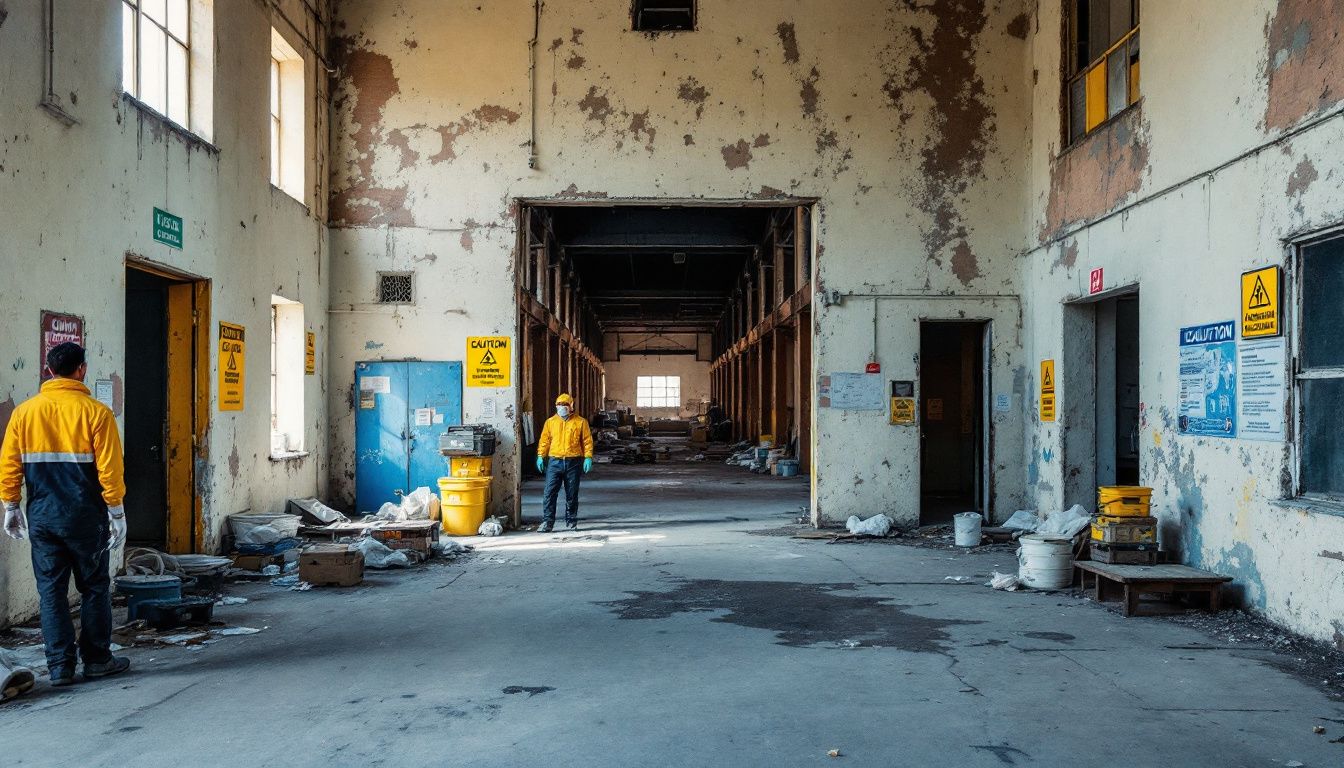
What You Need to Know About the Management and Removal of Asbestos in the UK
Asbestos is still present in millions of UK buildings, and the rules around the management and removal of asbestos are among the most stringent in the country’s health and safety framework. Whether you’re a building owner, facilities manager, or employer, getting this wrong isn’t just a regulatory headache — it can mean criminal prosecution, six-figure fines, and serious harm to the people in your care.
The good news is that when you understand what the law requires and follow the right process, asbestos is entirely manageable. Here’s what you need to know.
Why Asbestos Remains a Serious Concern in UK Buildings
Asbestos was widely used in UK construction until its full ban in 1999. That means any building constructed or refurbished before that date could contain asbestos-containing materials (ACMs).
Common locations include ceiling tiles, pipe lagging, floor tiles, textured coatings such as Artex, and roof sheets. The danger isn’t the asbestos sitting undisturbed — it’s when materials are damaged, drilled, cut, or disturbed that microscopic fibres become airborne.
Once inhaled, those fibres can cause:
- Mesothelioma — an aggressive cancer affecting the lining of the lungs and other organs
- Asbestosis — a chronic scarring of the lung tissue
- Pleural thickening — thickening of the lung lining that restricts breathing
- Lung cancer — with asbestos exposure as a contributing factor
These conditions can take decades to develop, which is why asbestos-related diseases continue to claim lives today from exposures that happened 30 or 40 years ago. The HSE consistently identifies asbestos as the single greatest cause of work-related deaths in the UK.
The Legal Framework: What the Regulations Actually Require
The primary legislation governing the management and removal of asbestos in the UK is the Control of Asbestos Regulations. These regulations place clear duties on building owners, employers, and anyone who manages premises where asbestos may be present.
The Duty to Manage
The duty to manage applies to non-domestic premises — offices, schools, hospitals, industrial units, and similar buildings. The duty holder (typically the building owner or person responsible for maintenance) must:
- Identify whether ACMs are present, or presume materials contain asbestos until proven otherwise
- Assess the condition and risk posed by any ACMs found
- Produce and maintain a written asbestos management plan
- Ensure the plan is implemented and kept up to date
- Share information about asbestos locations with anyone who might disturb it
- Arrange regular monitoring of ACMs in situ
This duty doesn’t automatically require removal. In many cases, asbestos in good condition that isn’t going to be disturbed is best left in place and managed. Removal is only required when materials are deteriorating, pose an unacceptable risk, or when refurbishment or demolition work is planned.
HSE Guidance: HSG264
HSG264 is the HSE’s technical guidance document for asbestos surveys. It defines the types of surveys required, the competency standards for surveyors, and how findings should be recorded.
Any survey carried out on your behalf should follow HSG264 methodology. If a surveyor can’t confirm this, that’s a red flag worth taking seriously.
Licensed vs. Non-Licensed Work
Not all asbestos work requires a licensed contractor, but high-risk activities do. The regulations divide asbestos work into three categories:
- Licensed work — required for high-risk materials such as sprayed asbestos coatings, asbestos insulation, and asbestos insulating board (AIB). Only contractors holding an HSE licence can undertake this work.
- Notifiable non-licensed work (NNLW) — lower-risk activities that must still be notified to the relevant enforcing authority and require medical surveillance for workers.
- Non-licensed work — the lowest risk category, subject to basic precautions but not requiring a licence.
If you’re unsure which category applies to your situation, always err on the side of caution and consult a qualified professional before any work begins.
The Role of Asbestos Surveys in Safe Management
Before any management plan can be put in place — and certainly before any refurbishment or demolition — you need a proper asbestos survey. There are two main types, and choosing the right one matters.
Management Survey
A management survey is designed for the routine occupation and maintenance of a building. It locates ACMs that could be disturbed during normal use and assesses their condition. This forms the basis of your asbestos register and management plan.
If you manage a pre-2000 building and haven’t yet had this survey carried out, commissioning one should be your immediate priority. Without it, you have no reliable basis for your duty to manage obligations.
Refurbishment and Demolition Survey
A demolition survey is required before any structural work, renovation, or demolition. It’s more intrusive than a management survey — surveyors need to access all areas that will be affected by the work, including voids, cavities, and structural elements.
This survey must be completed before work starts, not during. Commissioning it at the last minute is a common mistake that causes project delays and potential legal exposure.
Supernova Asbestos Surveys carries out both survey types across the UK. If you need an asbestos survey London teams can rely on, our surveyors are on hand to respond quickly and provide fully compliant, HSG264-methodology reports.
The Management and Removal of Asbestos: A Step-by-Step Overview
When removal is necessary, the process must be carefully planned and executed. Cutting corners at any stage creates legal liability and genuine risk to health.
Step 1: Commission a Survey
Before any removal can take place, you need confirmed identification of the ACMs involved. A qualified surveyor will take samples and have them analysed in a UKAS-accredited laboratory. Never assume — always confirm.
Step 2: Notify the Relevant Authorities
For licensed asbestos work, the contractor must notify the HSE (or the relevant local authority for certain premises) at least 14 days before work begins. This isn’t optional — it’s a legal requirement under the Control of Asbestos Regulations.
Step 3: Engage a Licensed Removal Contractor
For licensed work, only an HSE-licensed contractor may carry out the removal. You can verify a contractor’s licence status on the HSE’s online register — always check before signing any contract.
Our dedicated asbestos removal service connects clients with licensed, accredited professionals who operate to the highest standards of safety and compliance.
Step 4: Prepare and Isolate the Work Area
The work area must be sealed off using plastic sheeting and negative pressure enclosures to prevent fibre migration. Access is restricted to authorised personnel wearing appropriate personal protective equipment (PPE), including:
- FFP3 respirators or powered air-purifying respirators (PAPRs)
- Disposable coveralls (Type 5)
- Gloves and boot covers
- Eye protection where necessary
Step 5: Carry Out the Removal
Materials should be dampened before and during removal to suppress fibre release. Where possible, ACMs should be removed intact rather than broken apart — fragmented materials release far more fibres into the air.
All removed material is double-bagged in heavy-duty polythene and clearly labelled as asbestos waste before leaving the work area.
Step 6: Clean and Inspect
After removal, the area undergoes a thorough clean using HEPA-filtered vacuum equipment. A visual inspection is carried out, followed by air testing if required.
Only once the area passes inspection can the enclosure be dismantled and the space returned to use. Rushing this stage is where things go wrong.
Step 7: Dispose of Waste at a Licensed Facility
Asbestos waste is classified as hazardous waste and must be transported by a licensed waste carrier and disposed of at a licensed facility. You cannot take asbestos waste to a standard household recycling centre or general skip.
The waste transfer documentation must be retained for your records — this paperwork forms part of your compliance trail.
Responsibilities of Building Owners and Employers
The legal responsibility for asbestos management doesn’t sit with contractors — it sits with the duty holder. That’s typically the building owner, employer, or person in control of the premises.
Your responsibilities include:
- Commissioning and maintaining an up-to-date asbestos register
- Ensuring all contractors and maintenance workers are informed of asbestos locations before they start work
- Only engaging licensed professionals for notifiable and licensed asbestos work
- Keeping records of all surveys, removals, and inspections
- Reviewing and updating your asbestos management plan regularly
Ignorance of the regulations is not a defence. If you’re managing a pre-2000 building and haven’t had an asbestos survey carried out, you’re already in a legally vulnerable position.
Businesses across the country rely on us for local expertise. Our asbestos survey Manchester service and our asbestos survey Birmingham teams give clients across the Midlands and the North access to the same rigorous standards we apply nationwide.
Consequences of Getting It Wrong
Non-compliance with asbestos regulations carries serious consequences — and enforcement action is real, not theoretical.
Legal Penalties
Breaches of the Control of Asbestos Regulations can result in unlimited fines and, in serious cases, imprisonment of up to two years. The HSE prosecutes both organisations and individuals, including directors and managers who fail in their duty of care.
Prosecution decisions are published publicly, which also means significant reputational damage for the businesses involved.
Health Consequences
Beyond the legal risk, improper management and removal of asbestos puts real people in danger. Workers, building occupants, and even members of the public can be exposed to fibres released by careless or unlicensed work.
The diseases caused by asbestos exposure are irreversible and often fatal. There is no safe level of exposure to asbestos fibres.
Financial Liability
Building owners who fail to manage asbestos properly can face civil claims from those who suffer harm as a result. Insurance policies may also be invalidated where a duty holder has demonstrably failed to comply with their legal obligations.
Choosing the Right Professionals
When it comes to the management and removal of asbestos, the quality of the professionals you engage matters enormously. A cheap survey or an unlicensed contractor isn’t a saving — it’s a liability.
When selecting a surveying or removal contractor, look for:
- UKAS-accredited laboratory analysis for any samples taken
- Surveyors who hold the P402 qualification (or equivalent) for asbestos surveys
- HSE-licensed removal contractors for any licensed work
- Membership of relevant trade bodies such as ARCA (Asbestos Removal Contractors Association)
- Clear, detailed reporting that follows HSG264 methodology
- Transparency about costs and timescales from the outset
Don’t make decisions based on price alone. An underqualified contractor might be cheaper upfront, but the cost of remediation — or worse, a prosecution — will far exceed any saving made.
Supernova Asbestos Surveys has completed over 50,000 surveys nationwide. Our surveyors are qualified, our reports are fully compliant, and our teams operate across the whole of the UK. Call us on 020 4586 0680 or visit asbestos-surveys.org.uk to book a survey or discuss your asbestos management obligations.
Frequently Asked Questions
What is the difference between asbestos management and asbestos removal?
Asbestos management means keeping asbestos-containing materials in place but monitoring them, maintaining records, and ensuring they don’t pose a risk to building occupants or workers. Removal means physically taking out the ACMs. Management is often the preferred option for materials in good condition; removal becomes necessary when materials are deteriorating, pose an unacceptable risk, or when refurbishment or demolition is planned.
Do I need a licensed contractor for all asbestos removal work?
Not always. The Control of Asbestos Regulations distinguish between licensed, notifiable non-licensed, and non-licensed work based on the type of material and the risk involved. However, for the most hazardous materials — including sprayed coatings, asbestos insulation, and asbestos insulating board — only an HSE-licensed contractor can legally carry out the work. When in doubt, always seek professional advice before proceeding.
How do I know if my building contains asbestos?
The only way to know for certain is to commission an asbestos survey carried out by a qualified surveyor following HSG264 methodology. If your building was constructed or refurbished before 2000, you should treat it as potentially containing asbestos until a survey confirms otherwise. Visual inspection alone is not sufficient — laboratory analysis of samples is required for definitive identification.
What happens to asbestos waste after removal?
Asbestos waste is classified as hazardous waste under UK legislation. It must be double-bagged, clearly labelled, transported by a licensed waste carrier, and disposed of at a facility that is licensed to accept hazardous waste. Standard skips and household recycling centres cannot accept asbestos waste. Your contractor should provide you with waste transfer documentation, which you must retain for your records.
How often should an asbestos management plan be reviewed?
Your asbestos management plan should be reviewed at least annually, or sooner if there are changes to the building, its use, or the condition of any ACMs. The Control of Asbestos Regulations require duty holders to keep their management plan up to date and to act on it — having a plan that sits in a drawer and is never reviewed does not fulfil your legal obligations.