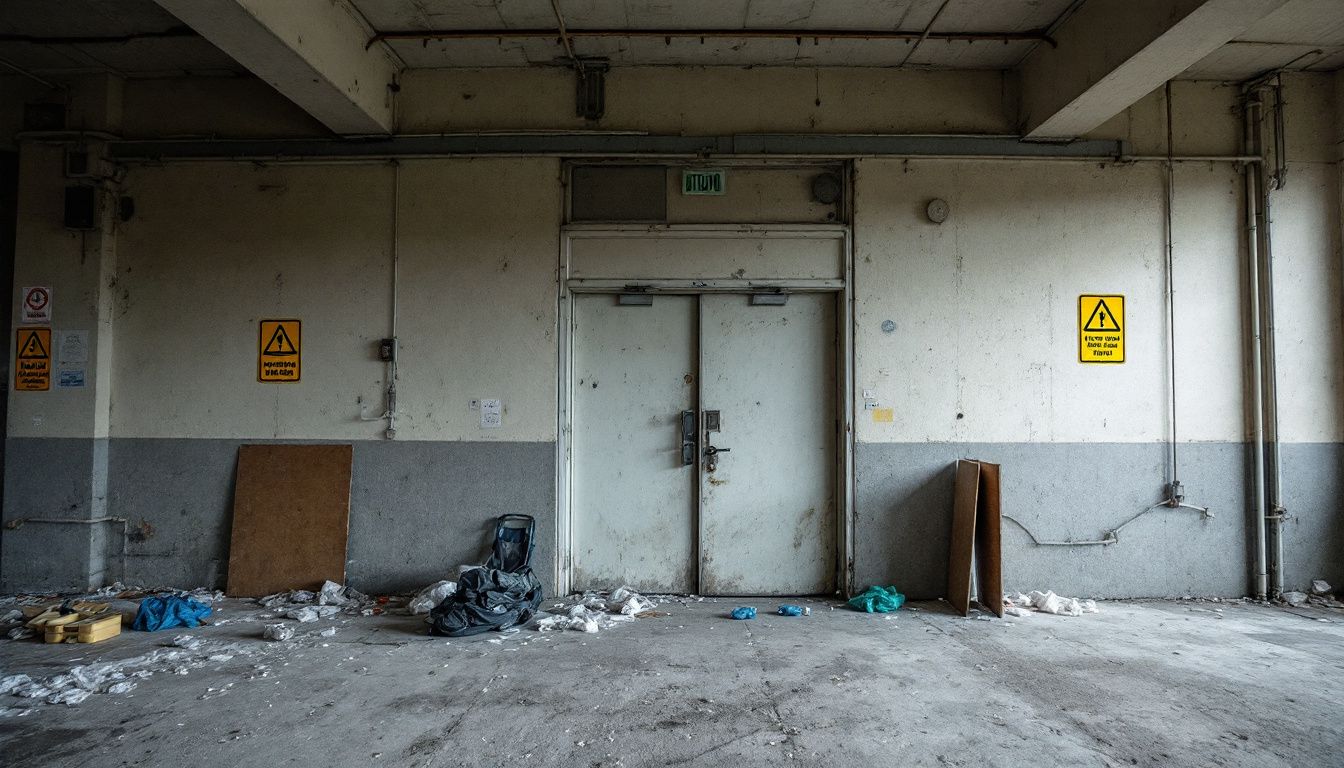
Why Healthcare Facilities Face Unique Challenges Navigating Asbestos Regulations in the UK
Asbestos doesn’t discriminate between building types — but navigating asbestos regulations in healthcare facilities across the UK carries a weight that most other sectors simply don’t face. You have vulnerable patients, round-the-clock operations, and a workforce that cannot simply down tools while remediation takes place.
Get it wrong, and you’re not just risking a fine. You’re risking lives.
Many NHS trusts and private healthcare providers still operate out of buildings constructed during the peak decades of asbestos use. That means asbestos-containing materials (ACMs) are frequently present in walls, ceiling tiles, pipe lagging, floor coverings, and service ducts — often in areas that see constant footfall from staff, patients, and visitors.
Understanding your legal obligations, structuring your management approach, and keeping pace with HSE guidance isn’t optional in this sector. It’s the baseline.
The Legal Framework: What the Control of Asbestos Regulations Requires
The Control of Asbestos Regulations place a clear duty on those who manage or have control over non-domestic premises — and healthcare buildings fall squarely within that scope. Whether you manage a GP surgery, a private clinic, an NHS hospital, or a care home, the legal obligations are identical.
Under these regulations, the dutyholder must:
- Take reasonable steps to find out if ACMs are present in the premises
- Assess the condition of any ACMs found
- Produce and maintain an asbestos register
- Prepare and implement a written asbestos management plan
- Review and monitor that plan at regular intervals
- Provide information about the location and condition of ACMs to anyone likely to disturb them
The duty to manage is not a one-off exercise. It’s an ongoing responsibility that demands regular review as buildings change, staff turn over, and materials deteriorate.
Who Counts as the Dutyholder?
In a healthcare setting, the dutyholder is typically the organisation that owns or manages the building — this could be an NHS trust, a facilities management contractor, or a private healthcare group. Where multiple parties are involved in a building’s management, responsibilities must be clearly assigned and documented.
Ambiguity here is not a defence. If something goes wrong and responsibilities weren’t clearly defined, all parties may face scrutiny from the HSE.
HSG264: The Surveying Standard Every Healthcare Manager Needs to Know
HSG264 is the HSE’s guidance document on asbestos surveying. It defines the main survey types and sets out how they should be conducted, documented, and acted upon. In a healthcare context, this matters enormously — because the wrong survey type, or an outdated one, leaves you exposed both legally and practically.
Management Surveys
A management survey is required to keep the asbestos register up to date during normal building occupation. This is the survey type that underpins your day-to-day management obligations — it identifies ACMs that could be disturbed during routine maintenance and normal use of the building.
For healthcare facilities, this survey should be treated as a living document, not a box-ticking exercise. The register it produces needs to be actively used, regularly reviewed, and immediately accessible to anyone carrying out work on the building fabric.
Refurbishment Surveys
A refurbishment survey must be completed before any intrusive work takes place — even something as routine as installing new cabling or replacing ceiling tiles. It’s more invasive than a management survey and is designed to locate all ACMs in the area where work will be carried out.
In healthcare buildings, where minor refurbishment work is almost constant, this requirement is frequently underestimated. Every scope of works that involves disturbing the building fabric requires a refurbishment survey first — no exceptions.
Demolition Surveys
Where a building or part of a building is being demolished, a demolition survey is required. This is the most thorough survey type, designed to locate all ACMs throughout the entire structure before demolition work begins. It is fully destructive in nature and must be completed before any structural work commences.
Given that healthcare buildings are rarely static — wards are reconfigured, new equipment is installed, maintenance work is ongoing — the need for current, accurate survey data is constant. An outdated survey is not a safety net; it’s a liability.
Why Healthcare Buildings Present an Elevated Risk Profile
The risk profile of a healthcare facility is fundamentally different from an office block or industrial unit. Several factors compound the challenge of navigating asbestos regulations in healthcare facilities across the UK, and facilities managers need to understand each of them clearly.
Building Age and Construction Type
A significant proportion of the UK’s hospital estate was built between the 1950s and 1980s — precisely the period when asbestos use was at its height. The materials used during that era are still present in thousands of buildings across the country.
Common ACMs found in buildings of this age include:
- Sprayed asbestos coatings applied to structural steelwork for fire protection
- Asbestos insulating board used in partition walls and ceiling systems
- Pipe lagging throughout heating and ventilation systems, frequently containing chrysotile or amosite
- Vinyl floor tiles containing chrysotile
- Asbestos cement panels used in external cladding and roofing
These materials don’t always announce themselves. Without a current, professionally conducted survey, you genuinely cannot know what’s present — or where.
Continuous Occupation and Maintenance Activity
Hospitals and care facilities operate 24 hours a day, every day of the year. Maintenance teams are constantly working on building fabric — fixing leaks, upgrading electrical systems, repairing HVAC equipment. Every one of those tasks is a potential disturbance event if ACMs are present and the maintenance team hasn’t been briefed on the asbestos register.
This is one of the most common failure points in healthcare asbestos management. The register exists, but the information isn’t reaching the people who need it before they pick up a drill. A robust permit-to-work system directly addresses this gap.
Vulnerable Occupants
Patients in healthcare settings are, by definition, already unwell. Many will have compromised respiratory systems. The consequences of an asbestos disturbance event in a ward environment are potentially catastrophic — not just from a regulatory standpoint, but from a patient safety perspective.
This is why the HSE takes enforcement in healthcare settings particularly seriously. The stakes are simply higher than in most other non-domestic environments.
Structuring a Robust Asbestos Management Plan
An asbestos management plan isn’t a document you produce once and file away. In a healthcare setting, it needs to be a living document that reflects the current state of your building and your management approach at all times.
A robust plan should cover:
- The asbestos register — a complete record of all known or presumed ACMs, their location, type, condition, and risk rating
- Monitoring schedule — how often each ACM will be visually inspected and by whom
- Maintenance protocols — the permit-to-work system that ensures no work is undertaken on or near ACMs without prior review of the register
- Staff training records — evidence that relevant staff have received appropriate asbestos awareness training
- Emergency procedures — what happens if an ACM is accidentally disturbed
- Remediation log — records of any work carried out on ACMs, including encapsulation, labelling, or removal
The plan must be accessible to anyone who needs it — facilities managers, maintenance contractors, and emergency services. Keeping it locked in a filing cabinet defeats its purpose entirely.
Keeping the Register Current
The asbestos register is only useful if it accurately reflects the current state of the building. Every time work is carried out that affects ACMs — whether that’s encapsulation, removal, or disturbance — the register must be updated to reflect what changed and when.
Build this update process into your post-works sign-off procedure. It takes minutes to record; the consequences of failing to do so can take years to resolve.
Training Requirements: Who Needs It and at What Level
The Control of Asbestos Regulations require that anyone liable to disturb asbestos during their work receives adequate information, instruction, and training. In healthcare, this typically covers a wider range of staff than many facilities managers initially anticipate.
Those who should receive asbestos awareness training include:
- Facilities and estates staff
- Maintenance engineers and contractors
- Domestic and cleaning staff, who may disturb damaged floor tiles or ceiling materials
- Any clinical staff involved in refurbishment decisions
Asbestos awareness training (Category A under HSG264) is the minimum for those who might encounter ACMs incidentally. Those who work directly with ACMs require higher-level training. Licensed contractors must be used for any notifiable non-licensed work or licensed work on higher-risk materials such as asbestos insulating board or lagging.
Training is not a one-time event. Records need to be maintained, refreshers scheduled, and new staff inducted before they begin any work that could bring them into contact with ACMs.
HSE Enforcement and What It Means for Healthcare Providers
The Health and Safety Executive has both the authority and the appetite to enforce asbestos regulations rigorously. In healthcare settings, HSE inspectors can and do conduct unannounced visits, particularly following incidents or complaints.
Where breaches are identified, the consequences can include:
- Improvement notices requiring specific remedial action within a set timeframe
- Prohibition notices stopping certain activities immediately
- Prosecution, which can result in unlimited fines and, in serious cases, custodial sentences for individuals
Healthcare organisations also face a significant reputational dimension. A prosecution or enforcement notice in a hospital setting attracts media attention. The damage to public trust can be lasting and difficult to recover from.
Reporting obligations under RIDDOR (Reporting of Injuries, Diseases and Dangerous Occurrences Regulations) also apply where workers are exposed to asbestos in circumstances that indicate a failure in controls. Prompt, transparent reporting is not just a legal requirement — it’s the foundation of a credible management approach.
Practical Steps for Healthcare Facilities Managers
If you’re responsible for asbestos management in a healthcare building, the following areas deserve your immediate and sustained attention.
Commission a Current Survey
If your asbestos register is more than a few years old, or if the building has undergone any changes since it was produced, commission a new survey from a UKAS-accredited surveying company. An outdated register creates false confidence — which is arguably more dangerous than having no register at all.
For healthcare providers in major cities, specialist local surveyors can respond quickly and work around operational constraints. Whether you need an asbestos survey in London, an asbestos survey in Manchester, or an asbestos survey in Birmingham, Supernova Asbestos Surveys has the expertise and capacity to work within your facility’s operational demands.
Implement a Permit-to-Work System
Every maintenance task that involves disturbing building fabric should require a review of the asbestos register before work begins. A permit-to-work system formalises this process and creates an auditable trail that demonstrates due diligence to the HSE if questions are ever raised.
The system doesn’t need to be complicated. It needs to be consistent, documented, and followed without exception — including by external contractors who may be less familiar with your building’s specific ACM locations.
Appoint a Named Responsible Person
Every healthcare building should have a named individual who holds overall responsibility for asbestos management. This person should be sufficiently senior to make decisions, sufficiently informed to understand the risks, and sufficiently empowered to enforce compliance across all teams operating in the building.
Where facilities management is outsourced, the contractual responsibilities for asbestos management must be explicitly defined. Don’t assume a contractor is managing something unless it’s written into the contract and verified in practice.
Review Contractor Competence
Any contractor working on your building fabric should be able to demonstrate competence in asbestos awareness as a minimum. For work that involves or is likely to involve ACMs, you need to verify that the contractor holds the appropriate HSE licence and that the licence is current.
Asking for evidence of training and licensing before work begins is not bureaucratic overreach — it’s a basic due diligence requirement that protects your patients, your staff, and your organisation.
Plan Refurbishment Work Carefully
Healthcare buildings are in a near-constant state of minor refurbishment — new medical equipment requires structural modifications, wards are reconfigured, infection control requirements drive changes to surfaces and fixtures. Each of these projects, however small, must be preceded by an appropriate survey.
Build survey commissioning into your project initiation process. If a refurbishment project begins without a current survey in place, stop it. The cost of a survey is negligible compared to the cost of an enforcement action or, worse, an exposure incident involving patients or staff.
Working with Specialist Asbestos Surveyors in Healthcare Settings
Not every asbestos surveying company has experience working in live healthcare environments. Conducting surveys in occupied wards, operating theatres, and clinical areas requires a different approach to a standard commercial building — access must be carefully coordinated, infection control protocols observed, and disruption minimised.
When selecting a surveying partner, look for:
- UKAS accreditation for asbestos surveying
- Demonstrable experience in healthcare or similarly complex occupied environments
- The ability to work flexibly around clinical schedules, including out-of-hours where necessary
- Clear, structured reporting that integrates with your existing asbestos management plan
- Willingness to liaise directly with your estates and facilities team throughout the process
The quality of the survey report matters as much as the survey itself. A report that doesn’t clearly communicate ACM locations, conditions, and risk ratings to the people who need to act on it has limited practical value.
Frequently Asked Questions
What type of asbestos survey does a healthcare building need?
Most occupied healthcare buildings require a management survey as the foundation of their ongoing asbestos management obligations. Before any refurbishment or intrusive maintenance work, a refurbishment survey is required for the specific area affected. Where structural demolition is planned, a full demolition survey must be completed before work begins. The appropriate survey type depends on what activity is being planned and where.
Who is legally responsible for asbestos management in an NHS hospital?
The dutyholder under the Control of Asbestos Regulations is typically the organisation that owns or controls the building — in NHS settings, this is usually the NHS trust. Where facilities management is contracted out, responsibilities must be clearly allocated in writing. Ambiguity between parties does not reduce legal liability; it can extend it to multiple organisations simultaneously.
How often should an asbestos management plan be reviewed in a healthcare setting?
The Control of Asbestos Regulations require that the management plan is reviewed regularly and kept up to date. In a healthcare setting — where building changes, maintenance activity, and staff turnover are constant — annual reviews are a sensible minimum. The plan should also be updated immediately following any change to ACMs, any disturbance incident, or any significant refurbishment work.
Does cleaning staff need asbestos awareness training?
Yes. Domestic and cleaning staff can inadvertently disturb ACMs — particularly damaged vinyl floor tiles or deteriorating ceiling materials — during the course of routine cleaning. The Control of Asbestos Regulations require that anyone liable to disturb asbestos receives appropriate training. Category A asbestos awareness training is the minimum standard for staff who may encounter ACMs incidentally rather than working directly with them.
What happens if asbestos is disturbed accidentally in a healthcare building?
If an ACM is accidentally disturbed, the area should be vacated and secured immediately. The incident must be reported to the responsible person for asbestos management, and a licensed asbestos contractor should be engaged to assess and remediate the situation. Depending on the circumstances, reporting obligations under RIDDOR may also apply. The asbestos register and management plan should be updated to reflect the incident and any subsequent remediation work.
Talk to Supernova Asbestos Surveys
Supernova Asbestos Surveys has completed over 50,000 surveys across the UK, including in complex, occupied healthcare environments. Our surveyors are UKAS-accredited, experienced in working around clinical operations, and able to produce clear, actionable reports that integrate directly with your asbestos management obligations.
If you’re responsible for asbestos management in a healthcare building and you’re not fully confident in the currency or accuracy of your register, don’t wait for an incident to prompt action. Call us on 020 4586 0680 or visit asbestos-surveys.org.uk to discuss your requirements and arrange a survey that works around your facility’s operational needs.