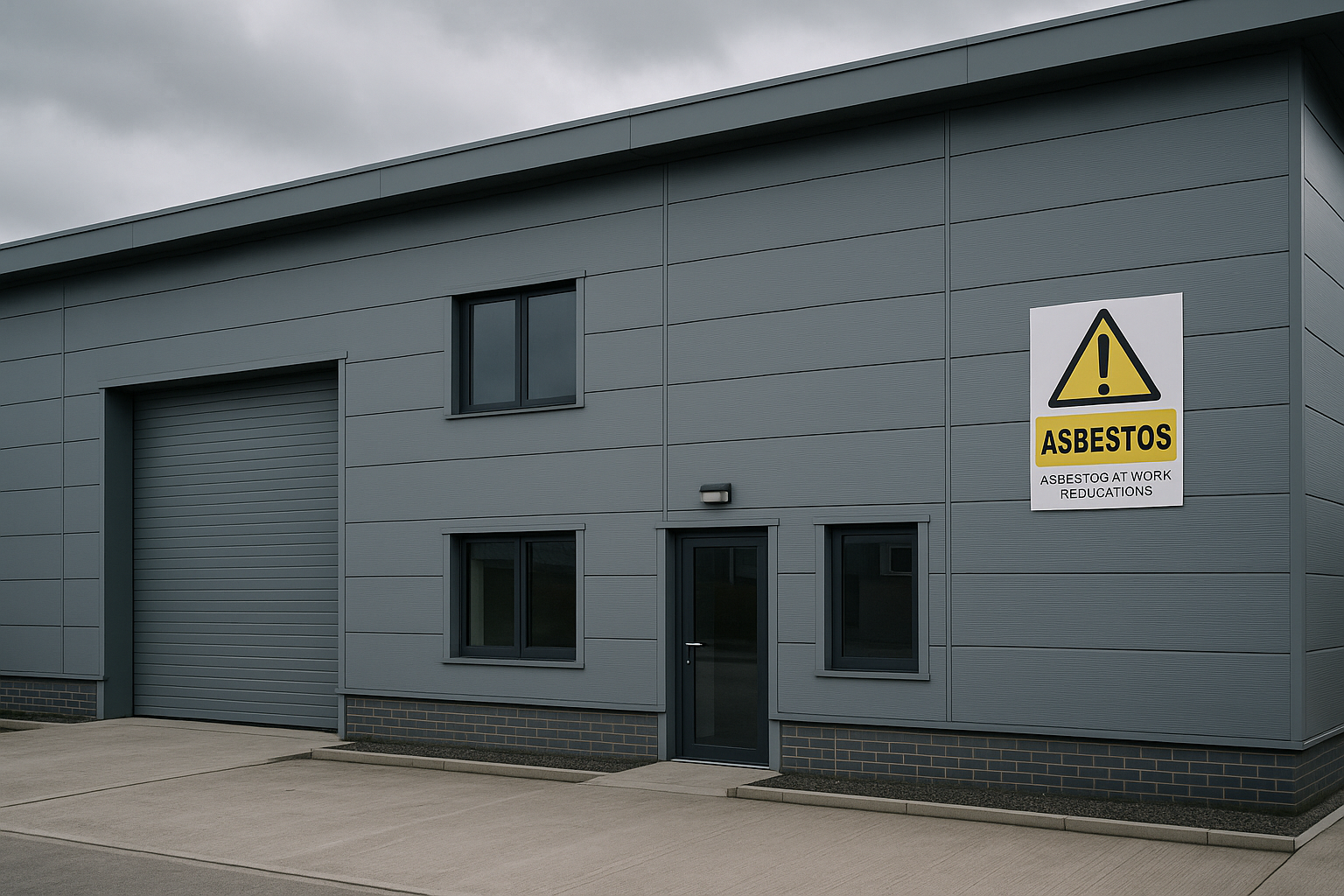
What the Asbestos at Work Regulations Actually Require — and What Happens If You Get It Wrong
One damaged ceiling tile, one rushed cable installation, one contractor drilling into the wrong panel — any of these can trigger a serious health risk and a legal liability at the same time. That is why asbestos at work regulations matter so much in practice. They set out exactly what dutyholders, employers, landlords, and property managers must do to prevent exposure and keep buildings safe.
If you are responsible for a non-domestic property, shared residential areas, maintenance activity, or building works, these duties are not optional. They shape how you assess risk, what records you hold, when surveys are needed, how contractors are briefed, and what happens when asbestos is found or disturbed.
Understanding the Legal Framework for Asbestos at Work Regulations
The main legal framework in the UK sits within the Control of Asbestos Regulations, supported by HSE guidance and the survey standards set out in HSG264. Together, they explain how asbestos should be identified, assessed, managed, and — where necessary — removed.
For most dutyholders, the practical message is straightforward. If asbestos may be present, you must take reasonable steps to find it, assess the risk, keep records, and prevent anyone disturbing it without proper controls in place.
Asbestos at work regulations apply across a wide range of commercial and public-sector property. They commonly affect:
- Employers and self-employed tradespeople
- Facilities managers and managing agents
- Landlords of non-domestic premises
- Property owners with repair obligations
- Those responsible for common parts of residential buildings
If a building was constructed or refurbished before 2000, asbestos should remain a live consideration unless there is reliable evidence showing otherwise. Guesswork is not a compliance strategy.
The Duty to Manage: The Core Obligation
The central requirement within asbestos at work regulations is the duty to manage asbestos in non-domestic premises. This applies to the person or organisation responsible for maintenance or repair of non-domestic premises, or the shared parts of certain residential buildings.
That duty does not mean every asbestos-containing material must be stripped out immediately. In many cases, asbestos can remain in place safely if it is in good condition, properly recorded, monitored, and protected from disturbance.
Who Is the Dutyholder?
The dutyholder is usually the person with the greatest control over maintenance and repair. Depending on the lease, management agreement, or ownership structure, that could be the freeholder, tenant, managing agent, facilities team, or several parties sharing responsibility.
Where duties overlap, cooperation is essential. The HSE will still expect asbestos risks to be controlled even where contractual arrangements are complicated.
What the Duty Involves in Practice
To comply with asbestos at work regulations, dutyholders should take reasonable steps to:
- Find out whether asbestos-containing materials are present
- Presume materials contain asbestos where there is uncertainty
- Assess the condition of known or suspected materials
- Assess the risk of fibre release
- Keep an accurate asbestos register
- Prepare and implement an asbestos management plan
- Provide information to anyone liable to disturb asbestos
- Review and update records regularly
If you manage multiple sites, standardise this process across the portfolio. Use the same naming conventions, register format, contractor briefing process, and review schedule so nothing falls through the gaps between buildings.
Why a Professional Asbestos Survey Is the Starting Point
You cannot manage what you have not identified. A professional asbestos survey provides the evidence base for your register, your risk assessment, and your management plan. HSG264 sets out how surveys should be carried out — and that matters, because a poor-quality survey can leave hidden risks in place and give a false sense of compliance.
Management Surveys for Occupied Buildings
A management survey is designed for premises in normal occupation. Its purpose is to locate, as far as reasonably practicable, asbestos-containing materials that could be disturbed during everyday use, routine maintenance, or foreseeable installation work.
This is usually the right survey for occupied offices, schools, warehouses, retail units, healthcare settings, and communal areas. It is not fully intrusive, but it should still be thorough enough to support safe day-to-day management.
Refurbishment and Demolition Surveys Before Intrusive Work
Before major works begin, asbestos at work regulations require a more intrusive approach. If you are stripping out, refurbishing, or taking down part or all of a building, you will usually need a demolition survey to identify all asbestos in the affected areas before work starts.
This type of survey must locate asbestos in hidden voids, risers, service ducts, floor build-ups, ceiling voids, and structural elements. It must be completed before work starts — not after contractors are already on site asking questions.
As a practical rule:
- Use a management survey for normal occupation and routine maintenance
- Use a refurbishment or demolition survey before intrusive works
- Do not rely on an outdated report if the building has changed or the scope of works has expanded
- Make sure the survey area matches the actual work area, including access routes and temporary compounds
If you operate across the capital, arranging an asbestos survey London before works begin can prevent delays, contractor downtime, and costly last-minute changes to programme.
What an Asbestos Register Should Contain
Once asbestos has been identified or presumed, you need a clear asbestos register. This is one of the first documents contractors, insurers, and enforcement officers will ask to see. A useful register should not just exist — it should be current, accessible, and easy for people on site to understand.
A strong asbestos register will usually record:
- The location of each asbestos-containing material or presumed material
- The product type or description
- The extent or quantity where known
- Its condition
- The material and priority risk assessment
- Recommended actions
- The date of inspection and review
- Any changes following repair, encapsulation, or removal
A register buried in an inbox or saved under an unclear file name is of little practical use when a contractor arrives to open a riser or drill into a wall.
Practical Tips for Keeping the Register Useful
- Store it in a central, controlled location
- Make sure site teams know where it is and how to use it
- Cross-check entries against floor plans so locations are obvious
- Review it after damage, works, or changes in occupancy
- Issue relevant extracts to contractors before they attend site
- Remove superseded versions to avoid confusion
Building an Asbestos Management Plan That Works
Asbestos at work regulations are not satisfied by a survey report alone. You also need an asbestos management plan that turns survey findings into clear action. The best plans are practical rather than generic — if your plan does not tell people what to do, who is responsible, how contractors are controlled, and when reviews happen, it will not help much when pressure is on.
What to Include in the Plan
A strong management plan will usually include:
- Details of known or presumed asbestos-containing materials
- The asbestos register and supporting floor plans
- Risk assessments and priorities
- Actions for monitoring materials left in place
- Procedures for permits to work and contractor control
- Emergency arrangements for accidental disturbance
- Responsibilities of named individuals
- Training arrangements
- Review dates and triggers for updating records
Many asbestos-containing materials can remain safely in place if they are sealed, undamaged, and unlikely to be disturbed. Your plan should make that clear while also identifying where encapsulation, repair, or asbestos removal is the safer option.
When the Plan Should Be Reviewed
Review the plan regularly and whenever circumstances change. Common triggers include:
- Refurbishment or fit-out projects
- Damage to building fabric
- A change in tenancy or occupancy
- Discovery of previously hidden materials
- Updated survey findings
- Contractor incidents or near misses
If you manage regional sites, the review process should be consistent across the portfolio — whether you need an asbestos survey Manchester for a warehouse or a city-centre office update.
Categories of Asbestos Work and Why They Matter
Not all asbestos work is treated the same way under asbestos at work regulations. The level of control required depends on the type of material, its condition, and the likelihood of fibre release. Getting that classification wrong can lead to unsafe work methods and enforcement action.
Broadly, asbestos work falls into three categories: licensed work, notifiable non-licensed work, and non-licensed work.
Licensed Work
Licensed work covers the highest-risk activities, often involving friable materials such as insulation, lagging, or asbestos insulation board where significant fibre release is likely. This work must be carried out by an HSE-licensed contractor.
Licensed work requires prior notification to the HSE, specialist enclosures, decontamination procedures, air monitoring, and detailed records. There is no shortcut here — using an unlicensed contractor for licensed work is a serious breach of asbestos at work regulations.
Notifiable Non-Licensed Work
Some lower-risk jobs still require notification because of the material type, its condition, or the scale of the task. These jobs do not require a full licence, but they do trigger additional duties around notification, medical surveillance, and record keeping.
If there is any uncertainty about the category, get specialist advice before work starts. It is far easier to clarify the classification in advance than to stop a job halfway through.
Non-Licensed Work
Some limited work with lower-risk materials can be non-licensed, provided it is short duration, properly assessed, and carried out by people with suitable training, equipment, and controls in place. Non-licensed does not mean informal or low standard — risk assessment, safe methods, correct waste handling, and suitable cleaning arrangements still apply.
Training Duties Under Asbestos at Work Regulations
Training is a core part of compliance. Anyone who may encounter asbestos during their work needs the right level of information, instruction, and training before they start. This often includes electricians, plumbers, joiners, decorators, general maintenance staff, IT and telecoms installers, heating and ventilation engineers, and supervisors.
What Asbestos Awareness Training Should Cover
Awareness training does not qualify someone to remove asbestos. Its purpose is to help people recognise risk and avoid disturbing suspect materials. Training should cover:
- What asbestos is and why exposure is dangerous
- Common asbestos-containing materials and where they are found
- How to avoid disturbing suspect materials
- What to do if suspicious materials are found
- Emergency reporting procedures
Those who plan work, assess risk, or manage asbestos information may need more detailed training linked to their specific responsibilities.
Keep Records, Not Assumptions
Maintain training records properly. If an incident occurs, you may need to show who was trained, what type of training they received, and when it was delivered. Refresh training when roles change, when site risks change, or when there is evidence that procedures are not being followed in practice.
Where Asbestos Is Commonly Found in Workplaces
Many dutyholders still underestimate how widely asbestos was used in construction. In older buildings, it can appear in obvious places and in areas most people rarely access.
Common locations include:
- Pipe lagging and boiler insulation
- Asbestos insulation board in partitions, risers, and ceiling tiles
- Sprayed coatings on structural steelwork and concrete
- Textured coatings on ceilings and walls
- Floor tiles and the adhesives beneath them
- Roofing sheets, gutters, and soffits
- Fire doors and door panels
- Electrical panels and consumer units
- Gaskets and rope seals in plant rooms
- Rainwater goods and external cladding panels
The presence of asbestos in any of these locations does not automatically mean there is an immediate danger. Condition, accessibility, and likelihood of disturbance all factor into the risk assessment. What matters is that the material is identified, recorded, and managed accordingly.
Enforcement, Penalties, and What the HSE Can Do
The HSE has broad enforcement powers when asbestos at work regulations are not followed. Inspectors can issue improvement notices, prohibition notices, and prosecute dutyholders — including individual managers and directors, not just companies.
Enforcement action tends to follow situations such as:
- Asbestos disturbed without a prior survey
- No asbestos register in place
- Licensed work carried out by unlicensed contractors
- Workers not informed of asbestos risks before entering a site
- Failure to notify the HSE of notifiable work
- Inadequate or absent management plans
Beyond the regulatory penalties, the reputational and financial consequences of getting this wrong are significant. Contractor downtime, remediation costs, insurance complications, and civil claims can all follow a single incident involving asbestos disturbance.
For dutyholders managing property across the West Midlands, having a current survey and management plan in place is straightforward to arrange — an asbestos survey Birmingham can be booked quickly and completed with minimal disruption to normal operations.
Practical Steps to Get Compliant and Stay Compliant
Compliance with asbestos at work regulations does not have to be complicated, but it does require consistent attention. The following steps cover the essentials for most dutyholders:
- Commission a survey — if you do not have a current, HSG264-compliant survey, arrange one before anything else
- Build your register — document all known and presumed asbestos-containing materials with clear locations, conditions, and risk ratings
- Write a management plan — make it specific to your building and your team, not a generic template
- Control contractor access — issue asbestos information before any trade starts work, and require written confirmation it has been received
- Train your team — make sure everyone who might encounter asbestos has appropriate awareness training and that records are kept
- Review regularly — set a calendar reminder, review after any works, and update records whenever something changes
- Act on findings — do not leave high-risk materials unmanaged; get specialist advice on whether monitoring, encapsulation, or removal is the right response
Staying on top of these steps is far less costly than dealing with the consequences of a disturbance incident or an HSE inspection that reveals gaps in your records.
Frequently Asked Questions
Who does the duty to manage asbestos apply to?
The duty to manage applies to anyone who has responsibility for the maintenance or repair of non-domestic premises, or the common parts of certain residential buildings. This can include freeholders, tenants with repairing obligations, managing agents, and facilities teams. Where more than one party shares responsibility, all parties are expected to cooperate to ensure asbestos risks are properly controlled.
Do I need an asbestos survey if the building was built after 2000?
Buildings constructed after 1999 are unlikely to contain asbestos, as its use in construction was banned in the UK by that point. However, if a building underwent significant refurbishment using older materials, or if there is any uncertainty about the construction history, a survey is still advisable. For buildings constructed before 2000, a survey should be treated as a baseline requirement unless there is reliable documented evidence that no asbestos is present.
What is the difference between a management survey and a demolition survey?
A management survey is designed for buildings in normal use. It identifies asbestos-containing materials that could be disturbed during routine maintenance or everyday activity, without requiring fully intrusive access. A demolition or refurbishment survey is more intrusive and is required before any major works, strip-out, or demolition. It must locate all asbestos in the areas affected by the planned work, including hidden voids, structural elements, and service routes.
Can I carry out asbestos removal myself?
It depends on the material and the type of work. Some very limited, short-duration work with lower-risk materials may be non-licensed, but it still requires proper risk assessment, suitable training, correct protective equipment, and compliant waste disposal. Higher-risk work — particularly involving insulation, lagging, or asbestos insulation board — must be carried out by an HSE-licensed contractor. If there is any doubt about the category, always seek specialist advice before starting work.
How often should the asbestos management plan be reviewed?
There is no single fixed interval, but the HSE expects the plan to be kept up to date and reviewed regularly. As a minimum, it should be reviewed annually. It should also be reviewed following any works that could have disturbed asbestos-containing materials, after any damage to the building fabric, when new asbestos is discovered, or when there is a change in occupancy or use that affects how the building is maintained.
Get Expert Support from Supernova Asbestos Surveys
Supernova Asbestos Surveys has completed over 50,000 surveys nationwide. Whether you need a management survey for a single site, a demolition survey ahead of major works, or specialist advice on your asbestos management obligations, our team can help you meet your duties under asbestos at work regulations quickly and reliably.
We work with property managers, facilities teams, local authorities, contractors, and landlords across the UK — including London, Manchester, Birmingham, and beyond.
Call us on 020 4586 0680 or visit asbestos-surveys.org.uk to arrange a survey or discuss your requirements with our team.