What Mesothelioma Victims Deserve: Awareness, Justice, and the Fight That Continues
Every year, around 2,700 people in the UK are diagnosed with mesothelioma — a devastating cancer caused almost exclusively by asbestos exposure. Behind each of those diagnoses is a person who was exposed to a dangerous material, often decades ago, often at work, and often with no warning of the risk they were taking.
Mesothelioma victims and their families deserve both justice and answers. Awareness is the engine driving progress on both fronts — shaping public understanding, driving landmark legal reforms, and continuing to push for the rights of those affected by asbestos-related disease across the UK and beyond.
Understanding Mesothelioma and Its Asbestos Link
Mesothelioma is a cancer that affects the lining of the lungs (pleural mesothelioma), abdomen, or heart. It is caused by inhaling or ingesting asbestos fibres, which become lodged in the body’s tissues and trigger cellular changes over time. There is no cure, and the prognosis remains poor for most patients.
What makes this disease particularly cruel is its latency period. Mesothelioma typically takes between 20 and 50 years to develop after initial exposure — meaning someone exposed on a building site in the 1970s may only receive a diagnosis today, long after the responsible employer has closed and memories of specific exposures have faded.
Who Is Most at Risk?
Historically, mesothelioma victims have been concentrated in industries where asbestos use was widespread. Those most commonly affected include workers from:
- Construction and building trades
- Shipbuilding and naval dockyards
- Insulation and lagging work
- Plumbing and heating engineering
- Electrical installation
- Manufacturing and industrial processing
Secondary exposure has also affected family members — particularly women who washed the work clothes of partners or parents who unknowingly brought asbestos fibres home. These cases have gained increasing recognition in UK courts over recent decades.
The Role of Mesothelioma Awareness in Protecting People Today
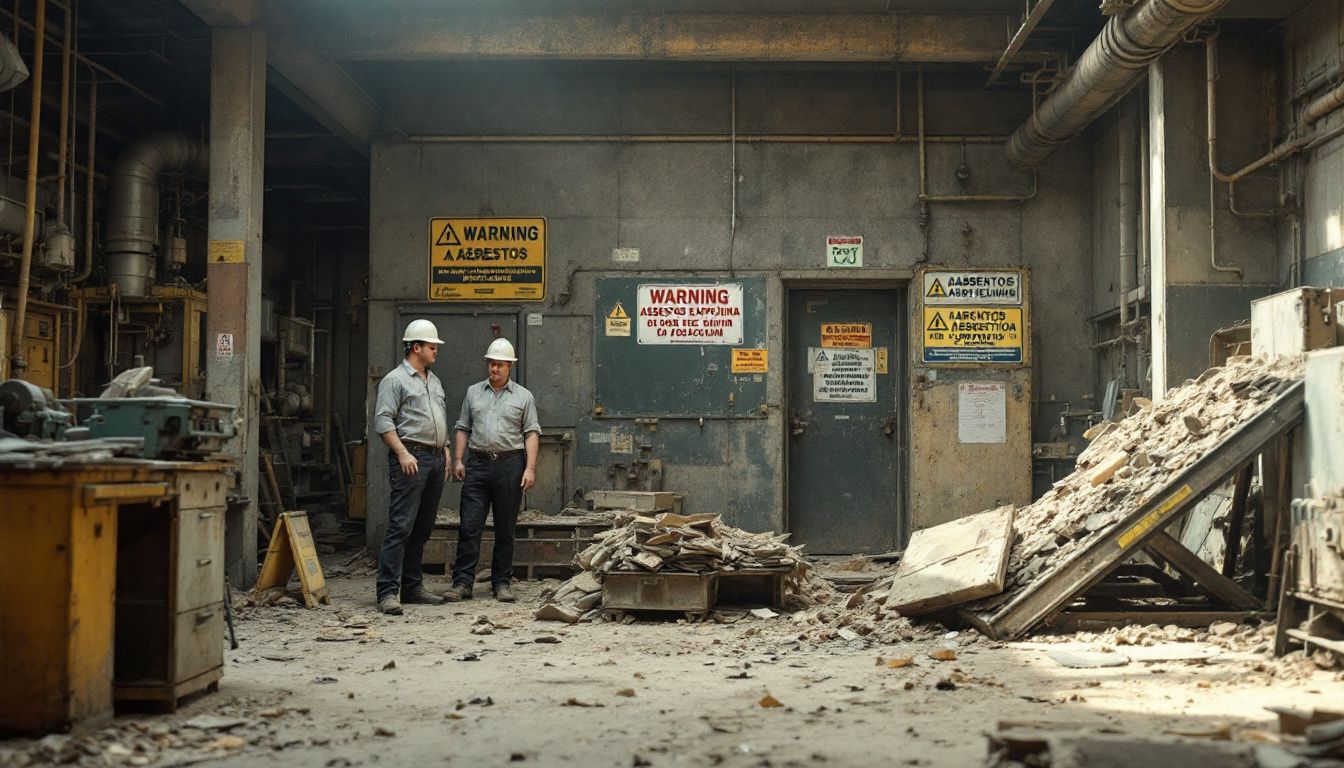
Awareness campaigns do more than commemorate those lost to asbestos-related disease. They actively protect people who may be at risk right now — particularly workers in older buildings where asbestos-containing materials (ACMs) remain in place.
Action Mesothelioma Day, observed on the first Friday of July each year, is the UK’s most prominent annual event dedicated to raising awareness. It brings together patients, families, legal professionals, healthcare workers, and campaigners to highlight the scale of the problem and push for continued progress.
Why Awareness Translates to Safer Buildings
When mesothelioma victims share their stories publicly, it reminds property owners, employers, and managers that asbestos is not a historical problem — it is a present-day one. Approximately half of all UK buildings constructed before 2000 may contain some form of asbestos, and many of those buildings remain in daily use.
Awareness campaigns have directly encouraged more building owners to commission a management survey, which identifies the location and condition of ACMs and forms the basis of a legally compliant asbestos management plan. Without this kind of proactive action, workers and visitors remain unknowingly at risk.
Campaigns also promote asbestos testing as a sensible first step for anyone uncertain about materials in their property — a straightforward but potentially life-saving measure.
Landmark Legal Victories That Changed the Landscape for Mesothelioma Victims
The legal history of mesothelioma in the UK is a story of persistent advocacy pushing against institutional resistance. Each major case has expanded the rights of asbestos victims and set precedents that continue to matter today.
Thompsons Solicitors and the House of Lords
Thompsons Solicitors secured the first successful asbestos case in the House of Lords, establishing that employers could be held liable for asbestos-related harm to their workers. This was a watershed moment — it confirmed that industrial negligence had legal consequences and opened the door for future claims.
The Fairchild Case
The case of Mr Fairchild was a turning point in how UK courts approached the challenge of proving causation in mesothelioma claims. Because the disease can be triggered by a single fibre and victims are often exposed by multiple employers over their careers, proving which employer caused the disease had been nearly impossible.
The Fairchild judgment established that employers could be held fully liable even where the precise source of exposure could not be pinpointed — a ruling that transformed the prospects for mesothelioma victims pursuing compensation.
The Jeromson Case
Mr Jeromson’s case extended the scope of asbestos industry regulations to cover all industries handling raw asbestos — not just those originally named. This broadened the reach of employer liability and meant that workers across a wider range of sectors could seek redress.
The Compensation Act and the Diffuse Mesothelioma Payment Scheme
The Compensation Act strengthened the legal framework around asbestos claims, including provisions for secondary exposure and full compensation entitlement. The Diffuse Mesothelioma Payment Scheme (DMPS) addressed a critical gap: what happens when a victim cannot trace their former employer or that employer’s insurer?
The scheme provides a route to compensation for mesothelioma victims who would otherwise receive nothing. The case of Margaret Ward, whose successful DMPS claim was settled shortly before her death, illustrated both the scheme’s value and the urgency with which these claims must often be pursued.
Thompsons Solicitors also secured a £45 million settlement for South African miners — a case that demonstrated the global reach of asbestos litigation and the scale of harm that negligent industrial practices have caused across borders.
Barriers That Mesothelioma Victims Still Face
Despite significant legal progress, the path to justice for mesothelioma victims remains difficult. Understanding these barriers matters — both for those affected and for anyone involved in managing buildings where asbestos may be present.
Proving Historical Exposure
Establishing exactly when, where, and how a person was exposed to asbestos — often 30 or 40 years before their diagnosis — is a formidable legal challenge. Employment records from decades ago are frequently incomplete, lost, or destroyed, and witnesses may no longer be alive. Courts must weigh evidence that is, by its nature, fragmentary.
Insurance Industry Resistance
Insurance companies that covered employers during periods of heavy asbestos use have sometimes resisted or delayed claims, creating additional hardship for victims who are already seriously ill. Legal teams working on behalf of mesothelioma victims have repeatedly had to challenge this resistance through the courts.
The Scale of Future Litigation
Estimates suggest that future asbestos litigation costs in the UK could reach up to £200 billion. This reflects the sheer scale of historical asbestos use and the long latency period of mesothelioma — meaning new cases will continue to emerge for decades. The legal and financial systems that support mesothelioma victims must be robust enough to meet this demand.
How Asbestos Surveys Protect People From Becoming Future Victims
The most powerful thing we can do for future mesothelioma victims is to prevent exposure from happening in the first place. In the UK, that means taking the duty to manage asbestos seriously — particularly in non-domestic premises, where the legal obligation under the Control of Asbestos Regulations is clear.
If you manage or own a property built before 2000, you have a legal duty to identify any asbestos present, assess its condition and risk, and put a management plan in place. Failing to do so does not just risk regulatory penalties — it risks lives.
The Types of Survey That Matter
Different situations call for different types of asbestos survey. Here is a straightforward breakdown:
- Management survey — The standard starting point for any occupied building. A management survey identifies ACMs that could be disturbed during normal use and maintenance, forming the foundation of your legal compliance.
- Refurbishment survey — Before any renovation or demolition work begins, a refurbishment survey is required to ensure that workers will not disturb hidden asbestos during the project.
- Re-inspection survey — Once an asbestos register is in place, a regular re-inspection survey ensures that the condition of known ACMs is monitored over time. If asbestos deteriorates or is damaged, the risk profile changes and the management plan must be updated.
For those who want to check specific materials before commissioning a full survey, a testing kit provides a straightforward way to collect samples for laboratory analysis. Full asbestos testing by a qualified professional remains the most reliable approach for any material you suspect may contain asbestos.
Where asbestos is found to be in poor condition or where planned work will disturb it, asbestos removal by a licensed contractor is the appropriate course of action. Removal is not always necessary — but where it is, it must be carried out safely and in full compliance with the Control of Asbestos Regulations.
Alongside asbestos management, building owners should also consider a fire risk assessment — another legal requirement for most non-domestic premises, and one that complements an asbestos management plan as part of a broader approach to building safety.
Nationwide Coverage, Including Major Cities
Supernova Asbestos Surveys operates across the UK. If you are based in the capital, our asbestos survey London service covers properties across the city, with same-week availability and BOHS P402-qualified surveyors. For those in the north-west, our asbestos survey Manchester team provides the same professional standard of service across Greater Manchester and the surrounding region.
Supporting Mesothelioma Victims: What You Can Do
If you or someone you know has been diagnosed with mesothelioma, there are several avenues worth exploring without delay.
- Seek specialist support: Mesothelioma UK provides specialist nursing support and information for patients and families.
- Get legal advice early: A solicitor experienced in asbestos claims should be consulted as soon as possible after diagnosis. The disease progresses quickly, and legal processes take time.
- Explore compensation routes: Depending on your circumstances, you may be eligible to claim through a civil claim against a former employer, the Diffuse Mesothelioma Payment Scheme, or industrial injuries benefits.
For those managing buildings or employing workers, the most meaningful contribution to the cause of mesothelioma victims is straightforward: take asbestos management seriously. Commission surveys. Maintain registers. Act on findings.
The workers and visitors who move through your building every day deserve that protection. Awareness campaigns, legal reforms, and compensation schemes all matter enormously — but prevention is the only way to reduce the number of mesothelioma victims in the decades ahead.
Frequently Asked Questions
What is mesothelioma and how is it caused?
Mesothelioma is a cancer that affects the lining of the lungs, abdomen, or heart. It is caused by exposure to asbestos fibres, which are inhaled or ingested and become embedded in body tissue. The disease typically develops 20 to 50 years after exposure, which is why many people diagnosed today were exposed decades ago, often in industrial or construction settings.
Are mesothelioma victims entitled to compensation in the UK?
Yes. Mesothelioma victims in the UK may be entitled to compensation through several routes, including civil claims against former employers, claims through the Diffuse Mesothelioma Payment Scheme where an employer or their insurer cannot be traced, and industrial injuries benefits. Legal advice should be sought as early as possible after diagnosis, given the urgency of these claims.
What is the Diffuse Mesothelioma Payment Scheme?
The Diffuse Mesothelioma Payment Scheme (DMPS) was established to provide compensation to mesothelioma victims who cannot trace their former employer or that employer’s insurer. It provides a route to financial support for those who would otherwise have no means of making a claim, and it has provided vital assistance to many patients and their families.
Do building owners have a legal duty to manage asbestos?
Yes. Under the Control of Asbestos Regulations, duty holders responsible for non-domestic premises built before 2000 are legally required to identify any asbestos present, assess its condition, and implement a written management plan. Failure to comply is a criminal offence and puts workers and visitors at risk of the very exposure that causes mesothelioma.
What should I do if I think a building I manage contains asbestos?
The first step is to commission a professional asbestos survey. A management survey will identify the location and condition of any ACMs within the building and provide the information needed to create a compliant asbestos management plan. Do not attempt to sample or disturb suspected materials yourself — always use a qualified surveyor. Contact Supernova Asbestos Surveys on 020 4586 0680 or visit asbestos-surveys.org.uk to arrange a survey.
Speak to Supernova Asbestos Surveys
Supernova Asbestos Surveys has completed over 50,000 surveys across the UK. Our BOHS-qualified surveyors work with property managers, employers, landlords, and contractors to ensure full compliance with the Control of Asbestos Regulations — and to help ensure that no one else becomes a victim of preventable asbestos exposure.
To book a survey or discuss your requirements, call us on 020 4586 0680 or visit asbestos-surveys.org.uk. Same-week appointments are available across the UK.