Asbestos still turns up in places people least expect: above suspended ceilings, inside risers, behind wall panels, under floor finishes and within old plant rooms. For anyone responsible for a building, asbestos is not just a historic material with a bad reputation. It remains a live compliance, maintenance and health risk whenever refurbishment, repair or demolition work could disturb it.
That is why asbestos needs to be understood properly. Knowing where it came from, why it was so widely used, how its dangers were recognised, and what UK law now requires will help you make better decisions before work starts. If you manage property, oversee contractors or plan alterations, that knowledge prevents delays, costly mistakes and avoidable exposure.
What is asbestos?
Asbestos is the collective name for a group of naturally occurring fibrous silicate minerals. When processed, these minerals separate into very small fibres that are strong, durable, heat resistant and resistant to many chemicals.
Those properties made asbestos attractive across construction, engineering and manufacturing. It was added to insulation, boards, cement products, coatings, textiles, seals and many other materials because it improved fire resistance, strength and thermal performance.
The hazard comes when asbestos fibres are released and inhaled. These fibres are microscopic, can remain airborne for long periods and may lodge deep in the lungs. All forms of asbestos are hazardous, and any suspect material should be treated cautiously until it has been assessed by a competent professional.
Etymology: where the word asbestos comes from
The word asbestos is generally traced to Greek, where it carries the sense of something inextinguishable or unquenchable. That meaning fits the way the material was viewed for centuries: a mineral associated with resistance to heat and flame.
You may also come across older terms such as amiantus or amianthus in historical references. In modern UK practice, the standard terms are asbestos, asbestos-containing material and ACM.
The etymology matters because it reflects the very quality that drove widespread use. The same fire-resistant reputation that made asbestos commercially valuable also helped it become embedded in thousands of products before its health risks were fully controlled.
Early references and uses of asbestos
Long before industrial production, fibrous minerals resembling asbestos were noted for their unusual resistance to fire. Ancient references describe lamp wicks, cloth and ceremonial items that could survive burning or be cleaned by placing them in flame.
These early uses were limited and specialised. Asbestos was not yet an everyday construction material. Mining, transport and manufacturing methods were too limited for large-scale use.
What changed later was not the mineral itself but the ability to extract, process and distribute it cheaply. Once industry could do that at scale, asbestos moved from curiosity to common commercial material.
Why early users valued asbestos
- It resisted heat and flame
- It could be woven or mixed into products
- It offered durability in harsh conditions
- It appeared to solve practical fire protection problems
Those same perceived advantages explain why asbestos later became so common in the built environment.
How asbestos became a major construction material
The industrial era transformed asbestos into a staple of modern building and engineering. Heavy industry needed insulation for boilers, steam systems, turbines, furnaces and pipework. Construction needed affordable products that offered fire resistance, thermal insulation and durability.
Asbestos met all of those needs. It was mixed into boards, sprayed coatings, lagging, cement sheets, textured finishes, floor tiles, roofing materials, seals and many other products.
Construction was one of the biggest users of asbestos. That legacy is why so many UK properties built or refurbished before the final ban may still contain it today.
Common places asbestos was used in construction
- Asbestos insulating board in partitions, soffits, ceiling tiles and service duct panels
- Pipe lagging and boiler insulation in plant areas
- Sprayed coatings for fire protection
- Asbestos cement sheets on roofs, walls, garages and outbuildings
- Textured coatings on walls and ceilings
- Vinyl floor tiles and bitumen adhesives
- Fire doors, panels and boxing around services
- Gaskets, seals and rope products around plant and equipment
If you are planning maintenance or alterations in an older building, checking for asbestos before work begins is the practical first step. Assumptions are where projects go wrong.
Types of asbestos
There are six recognised mineral types of asbestos, but they are generally grouped into two families: serpentine and amphibole. In UK buildings, three types are most commonly encountered in commercial use, though all six are relevant from a technical and regulatory point of view.
Serpentine group
The serpentine group contains one asbestos type: chrysotile. Chrysotile fibres are curly in structure, unlike the straighter needle-like fibres associated with amphibole types.
Chrysotile, often called white asbestos, was the most widely used type in many products. It can be found in cement sheets, roof panels, wall cladding, vinyl floor tiles, gaskets, seals, textured coatings and some insulation products.
Amphibole group
The amphibole group includes amosite, crocidolite, tremolite, actinolite and anthophyllite. These fibres are generally straighter and more brittle than chrysotile.
Amosite, commonly called brown asbestos, was widely used in asbestos insulating board, ceiling tiles, thermal insulation products and some cement materials.
Crocidolite, commonly called blue asbestos, was used in some spray coatings, pipe insulation, cement products and high-performance insulation applications.
Tremolite, actinolite and anthophyllite were less commonly used commercially in the UK, but they may appear as contaminants in other materials or in certain specialist products.
Why the type matters
Every type of asbestos is hazardous. In practice, risk is not judged by colour name alone. The condition of the material, the likelihood of disturbance, the fibre release potential and the type of work being planned all matter.
For example, asbestos cement in good condition is very different from damaged lagging or friable sprayed coating. Both may contain asbestos, but the management response will not be the same.
Serpentine and amphibole: understanding the difference
Property managers do not need to become mineralogists, but a basic distinction helps. Chrysotile from the serpentine group has curly fibres and was used in a broad range of products, particularly where flexibility and reinforcement were useful.
Amphibole asbestos types have straighter, sharper fibres and were often used where higher heat resistance or insulation performance was required. In older buildings, amphibole asbestos is often associated with higher-risk materials such as insulating board, thermal insulation and sprayed coatings.
The practical takeaway is simple. Do not try to identify asbestos by sight or by colour names used in old trade language. Materials should be assessed through survey and, where needed, sampling by a competent provider.
Discovery of toxicity
The health risks of asbestos were not identified all at once. Reports of respiratory illness in workers handling asbestos appeared over time as exposure patterns became clearer. Workers in mining, manufacturing, insulation, shipbuilding and construction were among those affected.
As medical and occupational evidence developed, asbestos became linked with serious long-term disease. The key point for building owners is that the danger is tied to inhalation of fibres, often after disturbance of asbestos-containing materials.
Diseases associated with asbestos exposure include asbestosis, mesothelioma, asbestos-related lung cancer and diffuse pleural thickening. These conditions usually develop after a long latency period, which is one reason the full scale of harm took time to be recognised.
Why toxicity was recognised gradually
- Disease can take decades to develop after exposure
- Exposure often occurred across many jobs and sites
- Historic dust controls were poor by modern standards
- Asbestos was used so widely that harmful exposure was normalised in some industries
That history explains why today’s controls are strict. The lesson is not academic. If asbestos is disturbed now, the same basic hazard remains: airborne fibres entering the lungs.
How can people be exposed to asbestos?
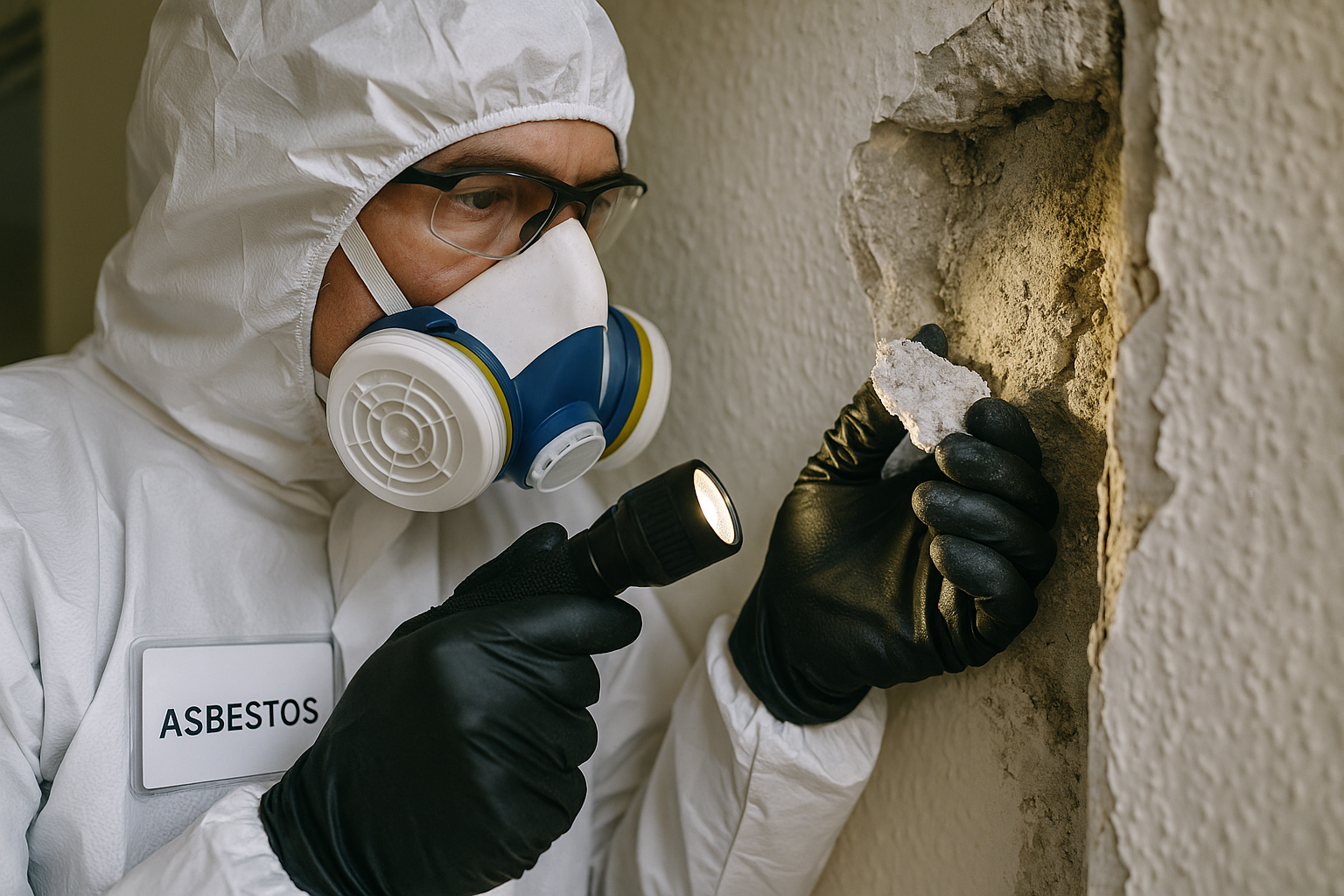
People are exposed to asbestos when fibres become airborne and are breathed in. This usually happens when asbestos-containing materials are damaged, drilled, cut, sanded, broken, removed or otherwise disturbed.
Exposure does not require dramatic demolition. Routine maintenance, cable installation, plumbing work, ceiling access, flooring replacement and joinery can all disturb asbestos if the material has not been identified first.
Common exposure scenarios
- Drilling into walls, ceilings or soffits without checking for asbestos
- Removing old floor tiles, bitumen adhesive or textured coatings
- Cutting into boxing around pipes or columns
- Working in plant rooms with damaged lagging or insulating board
- Breaking asbestos cement sheets during roof or garage work
- Disturbing debris left from previous unrecorded works
- Refurbishment in areas where asbestos records are missing or out of date
Secondary exposure can also occur if contaminated dust is spread on clothing, tools or waste. That is why poor housekeeping and uncontrolled work methods create wider risk.
Who is most at risk?
In practical building terms, the people most likely to encounter asbestos are tradespeople, maintenance staff, surveyors, installers, demolition workers, caretakers and anyone carrying out intrusive work in older premises.
Occupants are generally at lower risk where asbestos-containing materials are in good condition and remain undisturbed. The danger rises when those materials are damaged or when building work starts without the right checks.
Common asbestos-containing materials still found in UK properties
Asbestos is still present in many non-domestic and domestic buildings, particularly where construction or refurbishment took place before the final ban. Some materials are more friable than others, meaning they release fibres more easily if disturbed.
Higher-risk materials
- Pipe lagging
- Boiler and calorifier insulation
- Sprayed coatings
- Loose fill insulation
- Asbestos insulating board
These materials can release asbestos fibres readily if damaged. They require careful management and, depending on the circumstances, licensed work controls.
Lower-friability materials
- Asbestos cement roof sheets and wall panels
- Rainwater goods such as gutters and downpipes
- Vinyl floor tiles
- Bitumen products
- Textured coatings
- Roofing felt
- Gaskets and seals
Lower-friability does not mean harmless. Drilling, breaking, sanding or power-tool use can still release asbestos fibres, and the material still has to be managed correctly.
Hidden areas where asbestos often appears
- Ceiling voids
- Service risers
- Plant rooms
- Lift motor rooms
- Behind wall panels
- Inside older fire doors
- Under floor coverings
- Within electrical cupboards and service ducts
If you are unsure whether a material contains asbestos, arrange professional identification before disturbing it. Where confirmation is needed, targeted asbestos testing can establish whether the suspect material contains asbestos and support the next decision.
Phasing: how asbestos use was restricted and banned
Asbestos was not removed from use in one step. Controls were phased in over time as the health evidence became clearer and regulation tightened.
Some of the more dangerous asbestos types were restricted earlier, while others remained in circulation for longer in a range of products. This phased approach is one reason asbestos can still be found in buildings from different periods and in a wide mix of materials.
For property managers, the practical point is straightforward. You cannot rely on a single construction date or a visual guess to rule out asbestos. Buildings altered over several decades may contain materials from different periods, including hidden asbestos introduced during refurbishment rather than original construction.
Why phasing matters today
- Different asbestos products stopped being used at different times
- Refurbishments may have introduced asbestos after original construction
- Replacement parts, repairs and upgrades can leave a mixed legacy
- Assumptions based on age alone are unreliable
That is why survey scope matters. The type of survey must match the work planned and the part of the building being affected.
Asbestos laws and regulations in the UK
In the UK, asbestos is controlled through a combination of legal duties and recognised guidance. The central legal framework is the Control of Asbestos Regulations. These regulations set out duties relating to the management of asbestos, prevention of exposure, training, information, control measures and work with asbestos-containing materials.
For surveying, the recognised guidance is HSG264. This explains how asbestos surveys should be planned, carried out and reported. It also distinguishes between the main survey types used in practice.
HSE guidance provides practical direction for dutyholders, employers, contractors and building managers. It supports day-to-day decisions on safe working, asbestos registers, training, maintenance planning and the duty to manage.
The duty to manage asbestos
If you are responsible for non-domestic premises, the duty to manage asbestos is central. That means taking reasonable steps to find out whether asbestos is present, assessing the risk, keeping records up to date and making sure anyone liable to disturb asbestos has the information they need.
An asbestos report is not meant to sit in a drawer. It should feed into real management decisions, contractor control, permit systems, maintenance planning and periodic review.
What good compliance looks like
- Identify whether asbestos is present through the right survey approach
- Assess material condition and risk of disturbance
- Maintain an accurate asbestos register
- Share relevant information with contractors and staff
- Review the management plan regularly
- Arrange reinspection where required
- Use competent specialists for sampling, removal and remediation
If you manage sites in the capital, a local asbestos survey London service can help you obtain building-specific advice before maintenance or refurbishment starts.
Survey types and why they matter
Not every asbestos survey serves the same purpose. Choosing the wrong one can leave gaps in information and expose contractors to risk.
Management survey
A management survey is designed to locate, as far as reasonably practicable, the presence and extent of asbestos-containing materials that could be disturbed during normal occupation, including routine maintenance and installation work. It supports the day-to-day management of asbestos in a building.
Refurbishment and demolition survey
A refurbishment and demolition survey is needed before more intrusive work takes place. It is used where the building, or part of it, will be upgraded, altered or demolished. Because the work is intrusive, the survey is more disruptive and aims to identify asbestos in the areas affected so it can be managed before work begins.
Where materials need laboratory confirmation, separate asbestos testing may be carried out as part of the investigation process.
Practical advice for property managers and dutyholders
Most asbestos problems are not caused by the material suddenly becoming dangerous on its own. They happen because work starts without enough information, records are out of date, or contractors are not told what is present.
If you are responsible for a building, a few disciplined steps make a major difference.
Before any work starts
- Check whether an asbestos survey already exists and whether it is still relevant
- Confirm the survey type matches the planned work
- Review the asbestos register for the exact work area
- Do not rely on old assumptions or incomplete plans
- Brief contractors before they begin
- Stop the job if suspect materials are uncovered unexpectedly
During occupation and maintenance
- Inspect known asbestos-containing materials regularly
- Record damage promptly and act on it
- Label or otherwise clearly manage access where appropriate
- Make sure maintenance teams know how to report concerns
- Keep documents accessible, not buried in archives
For regional portfolios, site-specific support also matters. If you are planning works in the North West, an asbestos survey Manchester appointment can help clarify risk before contractors attend site. The same applies in the Midlands, where an asbestos survey Birmingham service can support compliance and project planning.
What workers should do if they suspect asbestos
When a suspect material is found, the safest response is to stop and verify. Carrying on to save time is how minor uncertainty becomes a serious incident.
- Stop work immediately
- Keep others away from the area
- Do not cut, break, sweep or vacuum the material with standard equipment
- Report the issue to the responsible person or site manager
- Check the asbestos register and survey information
- Arrange competent assessment and sampling if required
Do not try to identify asbestos by eye. Many non-asbestos materials look similar, and many asbestos-containing materials look ordinary.
Why asbestos remains a current issue
Some people speak about asbestos as if it is only a problem from the past. In property management, that is not how it works. Asbestos remains in a large number of existing buildings, and every repair, fit-out, plant replacement or strip-out can bring it back into focus.
The risk is especially high where records are poor, buildings have been altered repeatedly, or maintenance teams treat older materials as routine. A ceiling tile, service duct panel or textured finish may look unremarkable and still contain asbestos.
That is why asbestos management is really about control of information as much as control of materials. If you know what is present, where it is, what condition it is in and who may disturb it, you are in a far stronger position to prevent exposure.
Health effects linked to asbestos exposure
The illnesses most commonly associated with asbestos exposure are serious and often develop many years after the exposure happened. They include asbestosis, mesothelioma, asbestos-related lung cancer and diffuse pleural thickening.
These diseases are associated with inhalation of asbestos fibres. The level, frequency and duration of exposure all matter, but there is no sensible reason to take chances with suspect materials.
For employers and dutyholders, the practical lesson is prevention. The right survey, the right controls, the right communication and the right specialist support are what reduce risk in the real world.
Frequently Asked Questions
Is asbestos always dangerous if it is present in a building?
Not necessarily. Asbestos is most dangerous when fibres are released and inhaled. Materials in good condition that are sealed, managed and left undisturbed may present a much lower immediate risk. The issue is whether the asbestos could be damaged during occupation, maintenance or refurbishment.
Can you identify asbestos just by looking at it?
No. Some asbestos-containing materials are obvious to experienced surveyors, but visual inspection alone is not enough to confirm whether a material contains asbestos. Sampling and analysis are often needed for certainty.
When is an asbestos survey needed?
A management survey is typically needed to help manage asbestos during normal occupation of non-domestic premises. A refurbishment and demolition survey is needed before intrusive work or demolition takes place in the affected area. The survey type must match the planned activity.
What should I do if contractors uncover a suspect material?
Stop the work, keep people away from the area, avoid disturbing the material further and seek competent advice. Check the asbestos register and arrange assessment or sampling before work resumes.
Does asbestos only affect industrial buildings?
No. Asbestos can be found in offices, schools, hospitals, shops, warehouses, factories and some homes, particularly in older properties or buildings that were refurbished before the final ban.
Need expert help with asbestos?
If you need clear advice, fast turnaround and reliable asbestos support, Supernova Asbestos Surveys can help. We carry out asbestos surveys, sampling and testing for commercial, public sector and residential clients across the UK.
To arrange a survey or discuss the right next step for your property, call 020 4586 0680 or visit asbestos-surveys.org.uk. Supernova will help you identify asbestos, stay compliant and keep work moving safely.