
Breathlessness that appears years after dusty work is easy to dismiss. But if you have worked in older buildings, managed refurbishment, or supervised maintenance where asbestos-containing materials may have been disturbed, asking about an asbestos exposure test is often the point where uncertainty turns into proper action.
The phrase sounds simple, but it often causes confusion. There is no single asbestos exposure test that can prove exactly when exposure happened, measure every past contact with asbestos, or diagnose every asbestos-related condition on its own. In practice, doctors diagnose suspected asbestos disease by looking at symptoms, work history, examination findings, scans, breathing tests and, when needed, specialist procedures.
That matters for more than personal health. If you manage property, instruct contractors or oversee compliance in older premises, understanding what an asbestos exposure test really means helps you respond properly after accidental disturbance and reduce the risk of further exposure.
What an asbestos exposure test actually means
When most people search for an asbestos exposure test, they are usually looking for one of three things:
- proof that they were exposed to asbestos in the past
- tests that help diagnose an asbestos-related disease
- medical checks after symptoms such as cough, chest discomfort or breathlessness
In reality, an asbestos exposure test is not one named blood test or one scan. It is a shorthand term for a wider medical investigation.
A clinician will usually ask whether your symptoms fit an asbestos-related pattern, whether your work or environmental history suggests credible exposure, and whether imaging or lung function tests show changes linked with asbestos.
On the building side, the approach is different. If the concern is damaged material in a property, the first step is not a medical asbestos exposure test. The right response is to stop work, prevent further disturbance, identify the material and follow the Control of Asbestos Regulations, supported by HSE guidance and survey standards in HSG264.
Why asbestos-related disease can be difficult to diagnose
Asbestos-related conditions often develop slowly. A person may have had significant exposure decades ago and only notice symptoms much later.
That delay creates two common problems. Symptoms can look like more common illnesses, and people often forget to mention the work history that gives the diagnosis context.
Latency can be very long
Many asbestos-related diseases do not appear soon after exposure. This is one reason an asbestos exposure test is rarely straightforward. The doctor is often trying to connect present-day symptoms with work done many years earlier.
If you saw dust while removing insulation board, drilling ceiling panels, stripping old pipe lagging or working near demolition, mention it clearly. Small details can make a big difference.
Early symptoms are often vague
Symptoms that may lead to an asbestos exposure test include:
- shortness of breath during activity
- a persistent cough
- chest tightness or discomfort
- wheezing
- fatigue
- reduced exercise tolerance
- loss of appetite
- unexplained weight loss
None of these automatically means asbestos disease. The key question is whether they sit alongside a believable history of exposure.
Exposure history is often the missing piece
People often say they worked as builders, electricians, plumbers, decorators, caretakers or maintenance staff, but they do not explain the tasks that mattered most. Doctors need more than a job title.
If you are discussing an asbestos exposure test with a GP or respiratory specialist, be specific about:
- where you worked
- what materials you handled
- whether dust was generated
- how often this happened
- whether protective equipment was used
- whether anyone at home may have been exposed through contaminated clothing
Who should consider an asbestos exposure test or medical assessment?
One brief visit to an older building does not mean you need to panic. Risk depends on the type of asbestos, the condition of the material, how it was disturbed and how long the exposure lasted.
Repeated or heavy exposure is more strongly associated with conditions such as asbestosis, pleural thickening, mesothelioma and asbestos-related lung cancer. If you have symptoms and a credible history of exposure, seeking medical advice is sensible.
Higher-risk occupations and settings
- construction and demolition
- shipbuilding and ship repair
- insulation and lagging work
- plumbing and heating engineering
- electrical installation in older premises
- roofing and flooring work
- boiler and plant room maintenance
- maintenance in schools, hospitals, factories and council buildings
- vehicle brake and clutch work in older settings
- manufacturing where asbestos materials were used
Secondary exposure can matter too. Some people were exposed by washing dusty work clothes or living with someone who brought asbestos fibres home.
When the concern is the building rather than your health
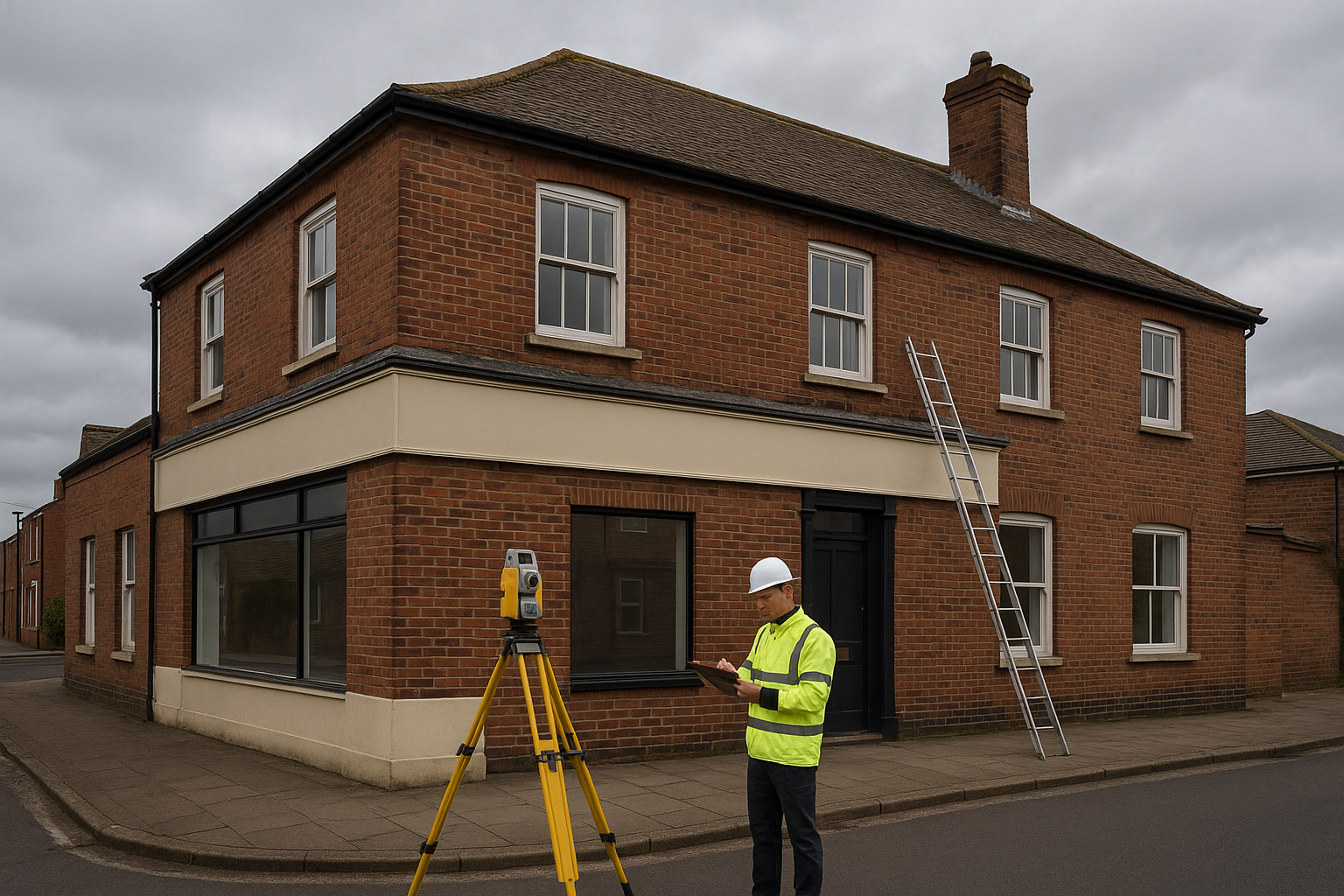
Property managers often search for an asbestos exposure test after accidental damage during works. If a ceiling tile, riser panel, insulating board, pipe insulation, textured coating or floor tile has been damaged in a pre-2000 building, the first priority is to stop work and identify the material properly.
If you need location-specific help, arranging the right survey is usually the practical starting point. For premises in the capital, booking an asbestos survey London service can help confirm whether asbestos-containing materials are present before work resumes.
The same principle applies elsewhere. Dutyholders in the North West can arrange an asbestos survey Manchester service, while landlords and facilities teams planning works in the Midlands can book an asbestos survey Birmingham to assess risk before refurbishment starts.
Symptoms and conditions linked to an asbestos exposure test
An asbestos exposure test is usually part of a wider effort to identify or rule out specific asbestos-related conditions. Some changes cause no symptoms and are only picked up on imaging. Others are progressive and need urgent assessment.
Asbestosis
Asbestosis is scarring of lung tissue caused by substantial asbestos exposure. It commonly leads to progressive breathlessness and a persistent cough.
Breathing tests may show reduced lung function, and scans may reveal fibrotic changes. The pattern matters more than any single asbestos exposure test result.
Pleural plaques
Pleural plaques are areas of thickening on the lining of the lungs. They often do not cause symptoms, but they can indicate previous asbestos exposure.
If plaques are found, a doctor may explain that they are markers of past exposure rather than proof of serious active disease. That distinction is important.
Diffuse pleural thickening
This condition can restrict lung expansion and lead to breathlessness. It may be picked up during the asbestos exposure test process through chest imaging and lung function assessment.
Mesothelioma
Mesothelioma is a cancer affecting the lining of the lungs or, less commonly, the abdomen. Symptoms may include chest pain, breathlessness, pleural effusion, weight loss or abdominal symptoms.
Where mesothelioma is suspected, the asbestos exposure test pathway becomes urgent and specialist-led.
Asbestos-related lung cancer
This can present like other forms of lung cancer, with cough, chest pain, coughing up blood and unexplained weight loss. Diagnosis relies on imaging and tissue analysis rather than a simple asbestos exposure test alone.
How doctors investigate suspected asbestos-related disease
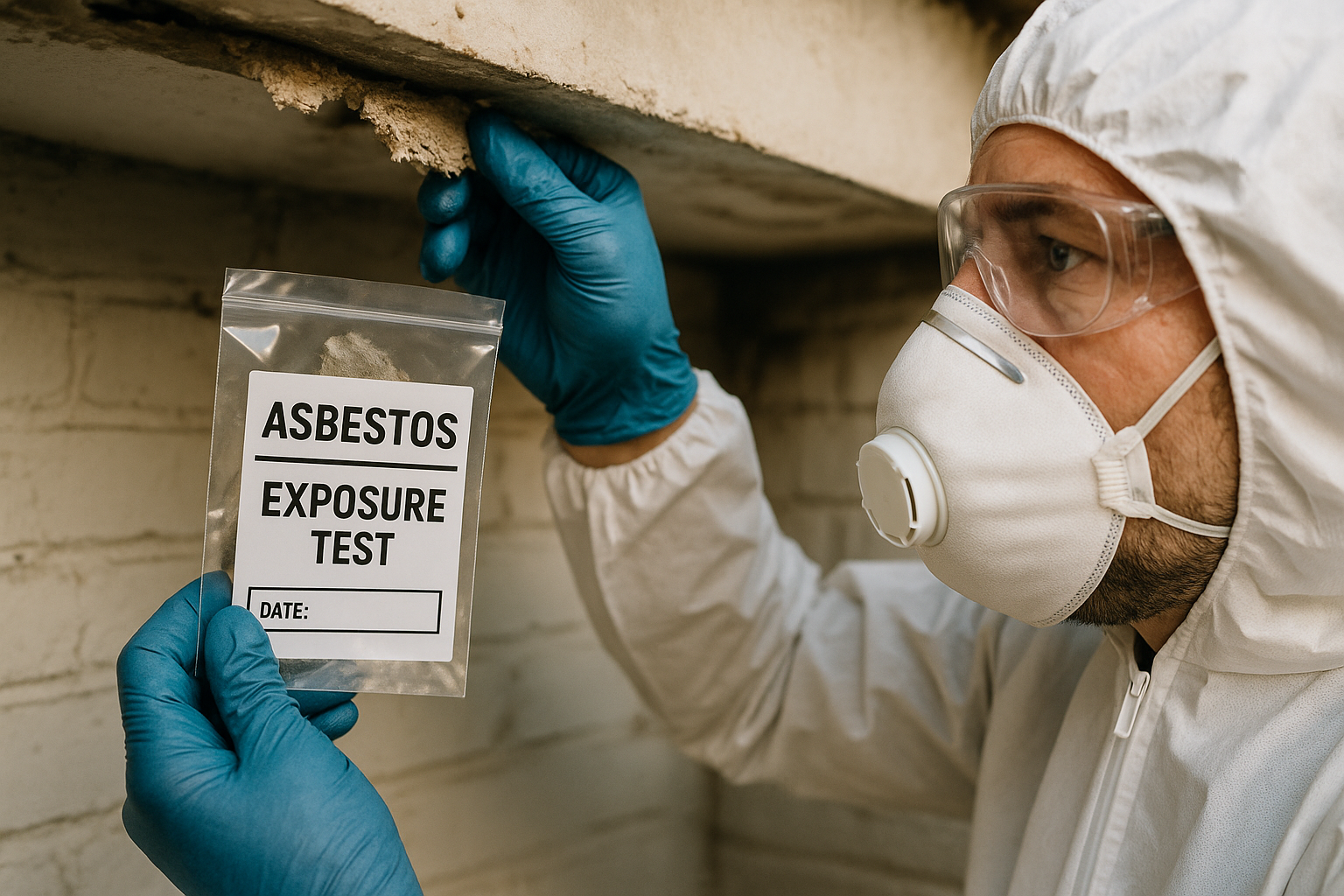
Doctors do not usually diagnose asbestos-related disease using one asbestos exposure test. They build a picture from your history, symptoms, clinical findings and objective test results.
1. Clinical and occupational history
This is one of the most useful parts of the process. A GP or specialist will often ask about every job you have held, the materials you worked with and whether your tasks involved cutting, drilling, sanding, stripping or demolition.
They may ask whether you handled:
- pipe lagging
- insulating board
- cement sheets
- sprayed coatings
- ceiling panels
- floor tiles
- textured coatings
Practical advice: write down your work history before the appointment. Include sites, job roles, likely materials and rough time periods. That makes the asbestos exposure test discussion far more useful.
2. Physical examination
A clinician may listen to your chest, check oxygen levels and look for signs such as finger clubbing or reduced chest expansion. These findings cannot confirm a diagnosis on their own, but they help direct the next stage.
3. Imaging tests
Imaging is central to the asbestos exposure test pathway because it can show changes in the lungs and pleura.
Chest X-ray
A chest X-ray is often the first imaging test. It may show pleural plaques, pleural thickening or more advanced scarring, but it can miss earlier disease.
A normal chest X-ray does not always rule out an asbestos-related condition.
CT scan
A CT scan gives much more detail than a chest X-ray. It is often used if symptoms persist, if X-ray findings are unclear, or if a specialist needs a closer look at pleural or lung changes.
CT may help identify:
- interstitial fibrosis consistent with asbestosis
- pleural plaques
- diffuse pleural thickening
- pleural effusion
- masses that need further investigation
Where cancer is suspected, the specialist team may arrange further imaging as part of a wider diagnostic plan.
4. Pulmonary function tests
Breathing tests are a major part of the asbestos exposure test process. They show how well the lungs are working and whether there is a restrictive pattern that fits scarring or pleural disease.
These tests may include:
- spirometry
- lung volume measurement
- gas transfer testing
In asbestosis, these tests may show reduced lung volumes and impaired gas transfer. They are also useful for monitoring severity and whether disease appears stable or progressive.
Practical advice: ask for your results in plain language. You should know whether findings are normal, mildly reduced or significantly impaired.
5. Blood tests
There is no routine blood test that works as a stand-alone asbestos exposure test for general diagnosis. Blood tests may still be used to rule out other causes of symptoms or to support treatment planning, but they do not replace imaging and specialist review.
6. Biopsy and specialist procedures
If mesothelioma or lung cancer is suspected, a specialist may recommend further procedures. These can include pleural fluid sampling, bronchoscopy, image-guided biopsy or thoracoscopy.
The purpose is to obtain tissue or fluid for analysis so the exact diagnosis can be confirmed. Treatment decisions depend on that precision.
What the asbestos exposure test pathway usually looks like
The term asbestos exposure test suggests one quick check, but the real process is usually step by step.
- GP appointment – symptoms, smoking history, occupation and possible exposure are discussed.
- Initial examination – chest examination and basic observations are carried out.
- First-line tests – a chest X-ray and routine blood tests may be arranged.
- Referral – if the history or findings are concerning, referral to respiratory medicine or a suspected cancer pathway may follow.
- Specialist imaging – CT scanning is commonly arranged.
- Breathing tests – pulmonary function tests assess lung performance.
- Further procedures – biopsy or fluid sampling may be needed if malignancy is suspected.
This process can move quickly when there are red-flag symptoms such as coughing up blood, significant unexplained weight loss, persistent chest pain or pleural effusion.
Can an asbestos exposure test prove past exposure?
Not in the way many people expect. An asbestos exposure test cannot usually pinpoint exactly when exposure happened or measure every past event.
What doctors can sometimes say is that your imaging findings are consistent with previous asbestos exposure. Pleural plaques, for example, may support a history of exposure, especially when your work background fits.
That is different from saying there is one test that proves exposure beyond doubt in every case. Diagnosis depends on the whole picture.
If your concern is a recent incident in a building, the more useful question is often not whether you need an asbestos exposure test straight away, but whether the material should be sampled, surveyed or managed under the duty to prevent exposure.
What to do if you think you have been exposed
The right response depends on whether the issue is a health concern, a building concern, or both.
If you have symptoms
- Book a GP appointment promptly.
- Explain clearly that you are concerned about asbestos exposure.
- Take a written work history with you.
- Mention any dusty tasks, damaged materials or repeated exposure.
- Do not rely on internet symptom lists instead of medical advice.
If there has been a recent building incident
- Stop work immediately.
- Keep people away from the area.
- Do not sweep, vacuum or clean the debris unless the correct controls are in place.
- Arrange competent asbestos identification or surveying.
- Record what happened and who may have been present.
For dutyholders, the practical response should align with the Control of Asbestos Regulations, HSE guidance and the survey approach set out in HSG264. An asbestos exposure test for staff is not a substitute for proper asbestos management.
If you manage property or contractors
Take a structured approach:
- Check whether an asbestos register or survey already exists.
- Review whether the planned work could disturb asbestos-containing materials.
- Arrange the right survey before maintenance or refurbishment.
- Make sure contractors have the relevant information before they start.
- Stop works immediately if suspect materials are damaged unexpectedly.
This reduces risk, avoids unnecessary exposure and helps you demonstrate sensible compliance.
Common misunderstandings about an asbestos exposure test
“A blood test will tell me if I was exposed”
Not as a reliable stand-alone answer. Routine blood tests are not used as a definitive asbestos exposure test.
“If my chest X-ray is normal, I am definitely fine”
Not always. A normal X-ray can miss early or subtle changes, which is why CT and breathing tests may still be needed.
“Any contact with asbestos means I will become ill”
No. Risk depends on the amount, type and duration of exposure. A brief low-level event is not the same as repeated dusty work over years.
“If I feel well, I do not need to report damaged asbestos materials”
Wrong approach. Even if no one has symptoms, damaged suspect materials in a building still need proper management to prevent future exposure.
When to seek urgent help
Some symptoms should not wait. Seek prompt medical assessment if you have:
- coughing up blood
- persistent or worsening chest pain
- unexplained weight loss
- new or worsening breathlessness
- significant fatigue with a history of asbestos exposure
If the issue is a property incident rather than symptoms, urgent help means isolating the area and getting competent asbestos advice quickly.
Frequently Asked Questions
Is there a single asbestos exposure test?
No. There is no single asbestos exposure test that confirms all past exposure or diagnoses every asbestos-related disease. Doctors usually rely on work history, symptoms, imaging, breathing tests and sometimes biopsy.
Can a GP arrange an asbestos exposure test?
A GP can start the process by taking your history, examining you and arranging first-line tests such as a chest X-ray. If needed, they can refer you to a respiratory specialist for more detailed investigation.
Does a blood test show asbestos exposure?
Not as a routine stand-alone diagnostic tool. Blood tests may support general assessment, but they do not replace scans, lung function tests or specialist review when asbestos disease is suspected.
What should I do after accidental disturbance of suspected asbestos?
Stop work, keep people out of the area and arrange competent asbestos identification or surveying. Do not continue working or try to clean up debris without the right controls.
When should property managers act?
Immediately, if suspect materials are damaged or if planned maintenance could disturb asbestos-containing materials. The right survey and asbestos information should be in place before work starts, not after a problem develops.
If you need expert help with asbestos identification, management surveys or refurbishment and demolition surveys, speak to Supernova Asbestos Surveys. Our team works nationwide and can help you act quickly and compliantly. Call 020 4586 0680 or visit asbestos-surveys.org.uk to book a survey.