
Britain’s history of asbestos regulations still affects day-to-day property management across the UK. Asbestos is no longer used in new materials, but it remains in thousands of schools, offices, warehouses, shops, flats and public buildings, which means the legal duty has shifted from use to control.
If you manage a building built or refurbished before 2000, this is not just background law. The history explains why asbestos is still found so often, why surveys matter, and why getting the right advice early can prevent disruption, enforcement issues and avoidable exposure.
The history of asbestos regulations in the UK
The history of asbestos regulations in the UK is a gradual move from limited industrial controls to a much broader legal framework covering buildings, maintenance work, refurbishment and demolition. For many years asbestos was treated as a practical building material first and a health risk second.
That changed as medical evidence became stronger and workplace law developed. Over time, the UK moved from narrow controls in factories to a full ban on new use, alongside clear duties to identify and manage asbestos already present in premises.
Why asbestos became so widely used
Asbestos was used on a huge scale because it was cheap, durable and resistant to heat, fire and chemical damage. It could be mixed into many products, which made it attractive to builders, manufacturers and engineers.
It appeared in both heavy industry and everyday construction. That is why the history of asbestos regulations matters so much now: the legacy is still inside many standing buildings.
- Pipe lagging and thermal insulation
- Sprayed coatings
- Asbestos insulating board
- Floor tiles and adhesives
- Textured coatings
- Roof sheets and soffits
- Fire doors and ceiling products
- Cement panels, rainwater goods and service ducting
Post-war building programmes accelerated its use. Schools, hospitals, council buildings, factories, offices and housing stock all made extensive use of asbestos-containing materials.
Why older buildings still present a risk
Many asbestos products were built to last. A material installed decades ago may still be present today, hidden behind newer finishes or above suspended ceilings.
That means appearance alone is never enough. A tidy, modern-looking space can still contain asbestos in risers, plant rooms, partition walls or service voids.
Why regulation came so slowly
The health risks from asbestos were not unknown, but legal control lagged behind the evidence. Early rules focused on specific industrial processes rather than the full range of trades and workplaces where asbestos dust was being created.
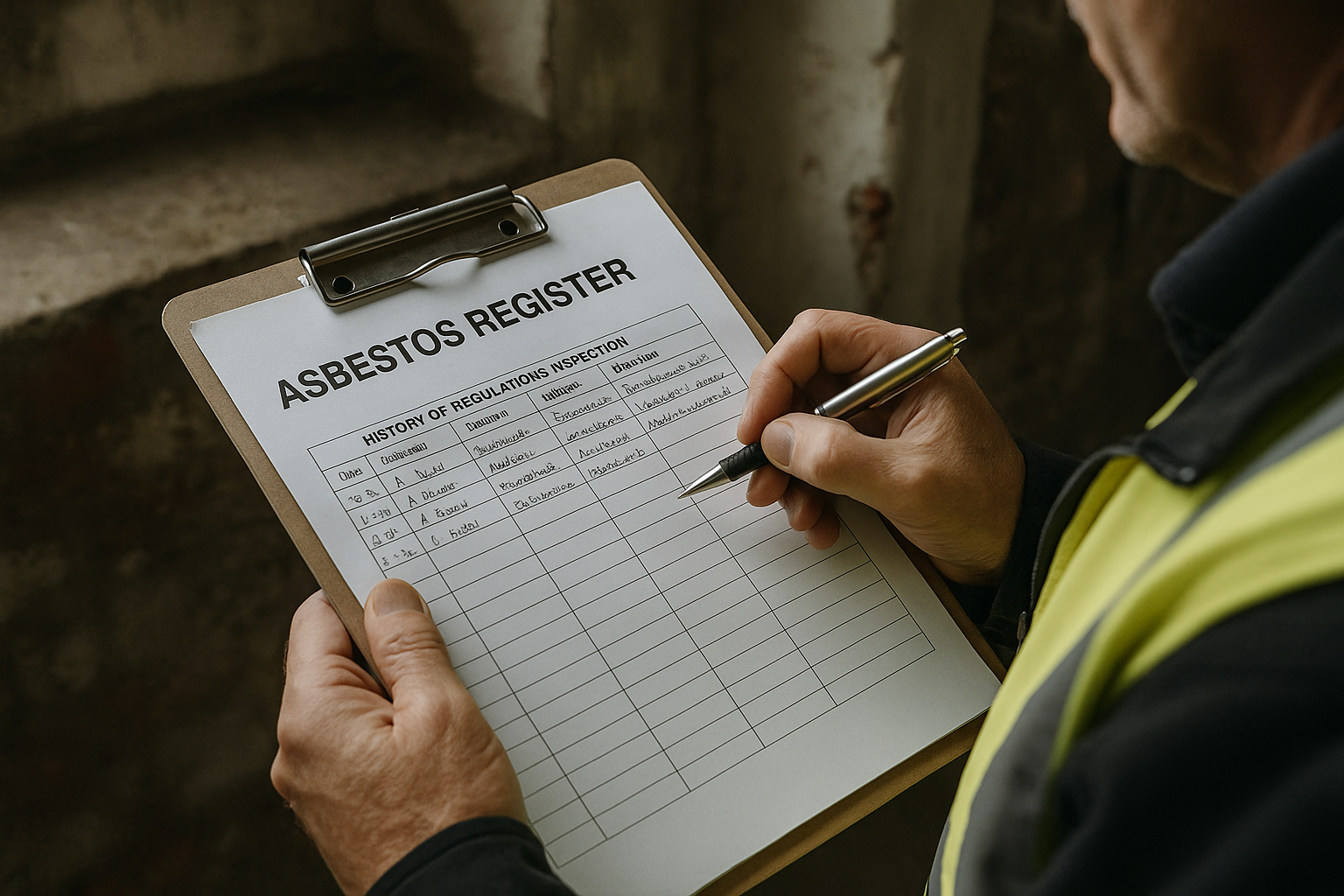
This delay is a major part of the history of asbestos regulations. By the time stronger controls arrived, asbestos had already been installed across a vast number of UK premises.
The problem of delayed illness
Asbestos-related disease often develops many years after exposure. That long latency made the problem harder to confront because the harm was not always immediate or visible.
For today’s duty holders, the practical lesson is simple: low awareness in the past is not a defence now. If asbestos may be present, it must be identified and managed properly.
Who faced the highest historical exposure
Some of the highest exposures historically occurred in industries and trades where asbestos was cut, drilled, sprayed, mixed or removed.
- Shipbuilding and ship repair
- Construction and demolition
- Plumbing and heating work
- Power generation
- Manufacturing and engineering
- Maintenance and installation trades
Secondary exposure also occurred. Workers could carry fibres home on contaminated clothing, exposing other people in the household.
Early asbestos use before modern regulation
Long before detailed asbestos law existed, asbestos fibres were valued for their fire-resistant and insulating qualities. Industrial production turned that limited use into widespread commercial use across construction, transport and manufacturing.
Boilers, steam systems, industrial plant and later ordinary buildings all used asbestos products. By the middle of the 20th century, asbestos was not just an industrial material. It had become part of mainstream building practice.
That is one reason the history of asbestos regulations remains relevant to property managers. The legal issue is no longer about encouraging safer manufacturing. It is about controlling the risk left behind in occupied premises.
When the health risks became impossible to ignore
As medical evidence strengthened, the case against asbestos became much harder to dismiss. Heavy exposure was linked to serious respiratory disease, and the understanding of asbestos-related cancers developed further over time.
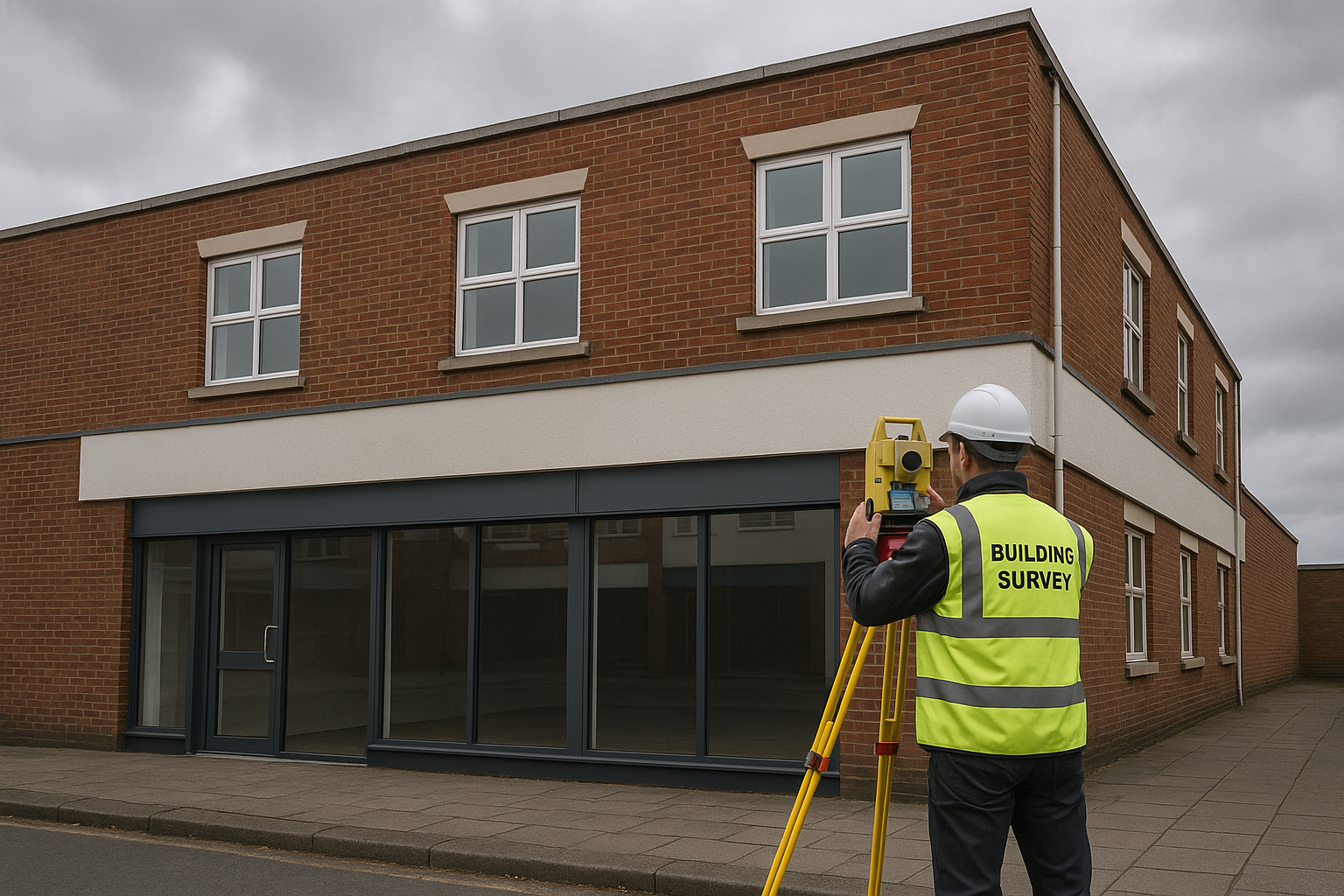
Asbestosis was one of the earliest recognised conditions associated with asbestos dust. Later, the established links to mesothelioma and asbestos-related lung cancer drove much stricter legal control.
For anyone managing property, the practical point is clear: materials that seem stable should still be treated with caution. The risk rises when asbestos-containing materials are damaged, drilled, cut, broken or otherwise disturbed.
Key milestones in the history of asbestos regulations
The history of asbestos regulations is best understood as a series of legal and practical steps. Each stage widened responsibility and increased the expectation on employers, building owners and duty holders.
Early asbestos-specific controls
The earliest UK asbestos controls focused mainly on factory processes and dust suppression. Measures such as ventilation, medical surveillance and improved working conditions were introduced for certain settings.
Those rules were limited. They did not cover the full range of workplaces where asbestos materials were being installed, maintained or disturbed.
The wider health and safety framework
As workplace health and safety law developed, asbestos stopped being treated as a niche factory issue. It became part of a broader duty to protect employees and others from harmful exposure.
That shift matters because it laid the groundwork for modern enforcement. Today, asbestos compliance sits within mainstream property and workplace risk management.
Partial bans on the most hazardous asbestos types
The UK moved first to prohibit the import and new use of the most dangerous amphibole asbestos types before moving to a complete ban on asbestos use. This reflected the growing recognition that limited workplace controls were not enough.
Even after partial bans, some asbestos-containing products remained in circulation. As a result, asbestos continued to be installed in some settings after the earliest restrictions had already begun.
The full ban on new use
The full ban stopped new asbestos-containing materials from being imported, supplied and used in the UK. That was a major milestone, but it did not create a duty to remove every asbestos product already in place.
This distinction is central to the history of asbestos regulations. A ban on new use is not the same as mandatory removal from all buildings. In many cases, asbestos can remain in place if it is in good condition and unlikely to be disturbed.
Control of Asbestos Regulations and current legal duties
The modern legal position is built around the Control of Asbestos Regulations. These regulations set out duties for those responsible for premises, employers and contractors where asbestos may be present.
The law does not expect guesswork. It expects a structured approach based on evidence, competent advice and proper records.
The duty to manage asbestos
For non-domestic premises, one of the most important legal duties is the duty to manage asbestos. This applies to many workplaces and to common parts of domestic buildings such as shared corridors, plant rooms and stairwells.
In practical terms, duty holders should:
- Find out whether asbestos is present, or presume it is unless there is strong evidence otherwise
- Record the location and condition of asbestos-containing materials
- Assess the risk of exposure
- Prepare and implement an asbestos management plan
- Review the information regularly
- Share relevant details with anyone who may disturb the material
If records are missing or out of date, arranging a management survey is often the right starting point.
Surveying standards and HSG264
Survey work should follow HSG264, the HSE guidance for asbestos surveying. This guidance explains the purpose of each survey type, how surveys should be planned, and how findings should be recorded and reported.
The practical message is straightforward: match the survey to the work. If a building is occupied and needs routine management, an asbestos management survey is suitable. If intrusive works are planned, a basic inspection is not enough.
Training, licensing and removal controls
The regulations also deal with training, licensed work, notifiable non-licensed work and exposure control. Anyone likely to encounter asbestos during their work needs suitable information, instruction and training.
Where materials need to be removed, the work must be assessed properly to determine the correct method and whether a licensed contractor is required. If removal is necessary, use specialist asbestos removal services rather than relying on general trades.
What the history of asbestos regulations means for buildings today
The history of asbestos regulations is not just legal background. It directly affects how buildings should be managed now, especially where the structure was built or refurbished before 2000.
Many premises still contain asbestos because removal was not always required when the law changed. In many cases, the correct approach was and still is management in place, backed by surveys, records and regular review.
Why asbestos is still found so often
Asbestos was used in a huge variety of products, many of them durable and long-lasting. Cement sheets, insulating boards, floor tiles and textured coatings can remain in place for decades.
If they are in good condition and left undisturbed, the immediate risk may be lower. Problems usually arise during maintenance, accidental damage, refurbishment, strip-out or demolition.
Common locations in commercial and public buildings
Property managers should stay alert to asbestos in areas such as:
- Service risers and plant rooms
- Ceiling voids and boxed columns
- Pipe insulation and boiler rooms
- Partition walls and fire doors
- Floor coverings and bitumen adhesive
- Roof sheets, soffits and rainwater goods
- Textured coatings and backing boards
If there is any uncertainty, arrange asbestos testing rather than relying on visual assumptions. Many asbestos-containing materials look similar to modern non-asbestos products.
Choosing the right asbestos survey
One of the most common compliance mistakes is ordering the wrong survey. The history of asbestos regulations has led to a system where survey type matters because the purpose of the survey matters.
Management surveys for occupied premises
A management survey is designed to locate, as far as reasonably practicable, the presence and extent of asbestos-containing materials that could be disturbed during normal occupation, including routine maintenance.
This is the survey many duty holders need as the basis of an asbestos register and management plan. It is suitable for ongoing occupation and day-to-day building control.
Refurbishment and demolition surveys
Before intrusive works begin, a more intrusive survey is required in the affected area. If the project involves strip-out, structural change or demolition, a demolition survey or refurbishment and demolition survey is essential.
This type of survey is intentionally disruptive because it is designed to find asbestos that would be disturbed by the planned works. It is not a substitute for routine management in occupied areas.
Re-inspection surveys
Known or presumed asbestos-containing materials should not be left unchecked. A periodic re-inspection survey helps confirm whether materials remain in the same condition or whether damage, deterioration or increased risk has developed.
That review supports better decision-making. It also helps keep the asbestos register accurate and up to date.
Testing, sampling and analysis in practice
Surveying and management often rely on sampling to confirm whether a suspect material contains asbestos. Laboratory analysis provides the evidence needed for sound decisions about management, repair or removal.
If a material is damaged, unclear or due to be worked on, sampling is often the safest way to remove doubt. For standalone confirmation in specific locations, specialist asbestos testing can help clarify the next step quickly.
When testing is useful
- Before maintenance work on suspect materials
- When old records are missing or unreliable
- When a refurbishment project is being scoped
- After accidental damage to a ceiling, wall, panel or insulation product
- When verifying whether a material is asbestos-free before disposal or repair
Testing should be planned properly. Random disturbance by untrained staff can create the very exposure you are trying to avoid.
Practical advice for duty holders and property managers
The best response to the history of asbestos regulations is not panic. It is organised control. A few practical steps can make asbestos compliance much easier to manage.
- Check the age and refurbishment history of the building. If it was built or refurbished before 2000, asbestos should be considered possible.
- Review your asbestos records. Make sure surveys, registers and plans are current and accessible.
- Match the survey to the task. Occupation, refurbishment and demolition all require different approaches.
- Share asbestos information with contractors. Anyone drilling, cutting or accessing hidden areas needs the right information first.
- Arrange re-inspections. Known materials should be reviewed periodically, not forgotten.
- Do not rely on appearance. If in doubt, test before work starts.
- Use competent specialists. Surveying, sampling and removal should be handled by experienced professionals.
These steps are practical, proportionate and aligned with HSE guidance. They also reduce the chance of delays once maintenance or project work begins.
The history of asbestos regulations and enforcement today
The modern enforcement approach reflects the long development of asbestos law. Regulators expect duty holders to know whether asbestos is present, to keep records, and to control the risk before work begins.
Common failings include outdated surveys, poor communication with contractors, missing management plans and intrusive works starting without the correct survey. These are avoidable problems.
The history of asbestos regulations shows why enforcement now focuses so heavily on planning and documentation. The law developed precisely because informal assumptions failed to protect people in the past.
Regional support for surveys and asbestos compliance
Whether you manage a single site or a national portfolio, local access to competent surveyors makes compliance easier. If you need support in the capital, Supernova can help with an asbestos survey London service tailored to commercial, public and residential settings.
For clients in the North West, our asbestos survey Manchester team supports landlords, managing agents, schools and businesses. In the Midlands, we also provide an asbestos survey Birmingham service for occupied premises, planned works and compliance reviews.
Frequently Asked Questions
Is asbestos completely illegal in the UK?
New use, import and supply of asbestos-containing materials are banned, but asbestos already present in existing buildings is not automatically illegal. The key legal requirement is to identify it, assess the risk and manage it properly under the Control of Asbestos Regulations.
Does every older building need an asbestos survey?
If a building was constructed or refurbished before 2000, asbestos may be present. In many non-domestic premises and common parts of residential buildings, a suitable survey is often needed to support compliance and safe management.
What is the difference between a management survey and a demolition survey?
A management survey is used for normal occupation and routine maintenance. A demolition survey, or refurbishment and demolition survey, is intrusive and is required before major structural work, strip-out or demolition in the affected area.
Can asbestos be left in place?
Yes, if the material is in good condition and unlikely to be disturbed, management in place may be the correct approach. That decision should be supported by proper surveying, risk assessment, records and regular review.
What should I do if I suspect asbestos has been disturbed?
Stop work immediately, keep people away from the area and seek specialist advice. Do not sweep, vacuum or attempt to remove the material yourself unless you are properly trained and the work is lawfully assessed.
Need expert help with asbestos compliance?
The history of asbestos regulations explains why asbestos management still matters so much today, but you do not need to handle it alone. Supernova Asbestos Surveys provides surveys, testing, re-inspections and project support across the UK for landlords, duty holders, managing agents and commercial clients.
To book a survey or discuss the right next step, call 020 4586 0680 or visit asbestos-surveys.org.uk. Supernova can help you identify asbestos risks, stay compliant and plan work safely.