
It starts in rock, not in a factory. If you have ever asked where does asbestos come from, the answer begins deep in the earth and ends in thousands of products still found in UK buildings today.
That matters for property managers, landlords and dutyholders because asbestos is not just a historical curiosity. Its natural origin explains why it was mined so heavily, why it was built into so many materials, and why proper identification under the Control of Asbestos Regulations, HSG264 and wider HSE guidance remains essential before maintenance, refurbishment or demolition starts.
Where does asbestos come from?
The short answer is simple: asbestos comes from naturally occurring mineral deposits. It is not man-made. The fibres form over very long geological periods when certain rocks are altered by heat, pressure and chemically active fluids.
Those minerals develop a fibrous structure. Once mined and processed, the fibres were sold into industry and used in everything from insulation and cement sheets to floor tiles and fire protection.
So when people ask where does asbestos come from, there are really two parts to the answer:
- Natural origin – asbestos forms in rock within the earth’s crust
- Commercial origin – the mineral is extracted, milled, shipped and manufactured into products
That distinction matters. The mineral itself is natural, but the asbestos risk in UK premises comes from historic mining, importation and industrial use.
What asbestos actually is
Asbestos is the name given to a group of naturally occurring fibrous silicate minerals. What made these minerals commercially valuable was their ability to split into tiny, strong and durable fibres.
Those fibres resist heat, tolerate chemical attack and add strength to other materials. For decades, that made asbestos attractive to builders, engineers and manufacturers.
The six minerals generally classed as asbestos are:
- Chrysotile – often called white asbestos
- Amosite – often called brown asbestos
- Crocidolite – often called blue asbestos
- Tremolite
- Actinolite
- Anthophyllite
In UK buildings, chrysotile, amosite and crocidolite are the types most commonly linked with asbestos-containing materials. The other forms may appear less often, sometimes as contaminants in other mineral products.
Why industry valued asbestos
Asbestos offered a combination of properties that was hard to match at the time. It could do several jobs at once, which is why it spread so widely across construction and engineering.
- Resistance to heat and flame
- Good thermal insulation
- Resistance to chemical damage
- Tensile strength in fibre form
- Ability to be mixed into cement, boards, coatings and textiles
- Practical performance in harsh industrial settings
That is a big part of where does asbestos come from as a practical question. It may start in rock, but its long legacy comes from the way industry turned it into a mass-market material.
How asbestos forms in nature
To understand where does asbestos come from, it helps to start with geology. Asbestos minerals form naturally under specific conditions within certain rock types.
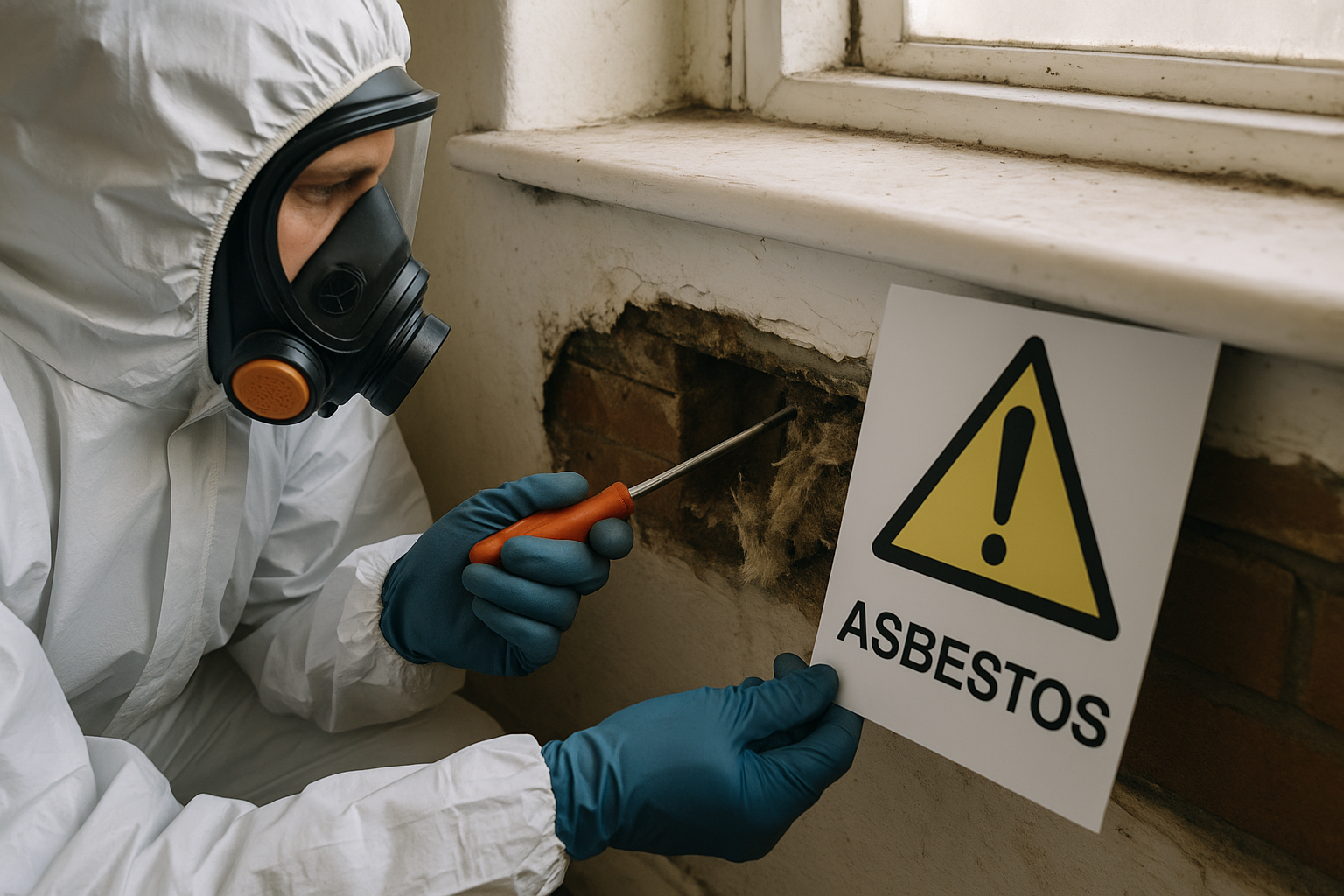
Over long periods, heat, pressure and fluids moving through rock can create fibrous silicate minerals. These fibres are not manufactured by people. They are part of the natural mineral structure.
Rock types and mineral formation
Different asbestos minerals are associated with different geological environments:
- Chrysotile often forms in serpentinite rock
- Crocidolite is associated with certain iron-rich metamorphic deposits
- Amosite is linked with metamorphic rock formations
- Tremolite, actinolite and anthophyllite may occur naturally and can appear as contaminants in other minerals
These processes take place over immense timescales. That is why asbestos is classed as a natural mineral resource rather than a synthetic fibre.
Are there natural sources of asbestos in the UK?
There can be naturally occurring asbestos-bearing geological materials in some locations, but the UK is not known for the kind of large-scale commercial asbestos mining associated with major overseas producing regions. For most practical building and compliance purposes, the asbestos found in UK premises was historically imported as raw fibre or in manufactured products.
That means the question is less about British geology and more about the built environment. If asbestos is present in a property, the pressing issue is not where the original rock sat in the ground. It is whether the material is present, what condition it is in, and whether planned work could disturb it.
From mineral deposit to building product
Natural deposits alone did not put asbestos into schools, offices, factories and homes. Mining, transport and manufacturing did that. The industrial journey is central to understanding where does asbestos come from in real-world terms.
Commercial asbestos production involved extracting asbestos-bearing rock, crushing it, separating the fibres and grading them for sale. Those fibres were then sent to factories and mixed into a huge range of products.
How asbestos was mined and processed
Although methods varied by deposit and mineral type, the broad process usually followed the same pattern:
- Asbestos-bearing rock was extracted from the ground
- The rock was crushed and milled
- Fibres were separated from the surrounding material
- The fibre was graded according to length and quality
- It was packed, transported and sold for manufacturing
Once processed, asbestos could be blended into cement, insulation, boards, textiles, friction materials and coatings. That versatility is one reason it appeared in so many sectors.
Where asbestos used in the UK came from
The UK did not rely on large domestic production on the scale seen in major mining countries. Historically, asbestos used in Britain was largely imported from overseas mining regions, including Canada, South Africa, Russia, Zimbabwe and Australia.
So if you are asking where does asbestos come from in a UK property, the answer is often: from an overseas deposit, imported into Britain, then manufactured into a product before installation in the building.
For dutyholders, tracing the exact mine is rarely the priority. The practical priority is proper survey work, sampling where needed, and a clear management plan.
The history of asbestos use
People knew about fire-resistant fibrous minerals long before modern construction. Early references describe materials believed to be asbestos being used in textiles, lamp wicks and objects exposed to heat.
Those early uses were limited. The real change came with industrial expansion, when asbestos moved from curiosity to commodity.
Why asbestos use expanded so quickly
Industry needed materials that could cope with heat, steam, friction and chemical exposure. Asbestos met those demands while also being easy to incorporate into manufactured goods.
It became common in:
- Power generation
- Heavy engineering
- Shipbuilding
- Railways and transport
- Commercial construction
- Public buildings such as schools and hospitals
- Domestic housing
By the time the health risks were properly recognised and tighter legal control followed, asbestos-containing materials were already embedded across the built environment.
What the word asbestos means
The word has ancient Greek roots and is generally understood to mean something like inextinguishable or unquenchable. That reflects the property that made asbestos so commercially desirable: it would not readily burn.
The name itself tells a story. For a long time, asbestos was admired for its fire resistance before it became known primarily as a dangerous material that must be controlled carefully.
Why asbestos became such a problem in UK buildings
Asbestos did not become a widespread hazard simply because it existed in nature. The problem was scale. Once mining, shipping and manufacturing expanded, asbestos moved from isolated deposits into the fabric of everyday life.
It was installed in factories, offices, schools, hospitals, warehouses, shops and homes. Many of those materials are still in place today.
The path was straightforward:
- Natural mineral deposits formed in rock
- Deposits were mined and milled into fibres
- Fibres were shipped internationally
- Manufacturers mixed them into products
- Products were installed in buildings and plant
- Some of those materials remain decades later
That is why where does asbestos come from is more than a geology question. It explains how a natural mineral became a continuing legal and safety issue for property owners and managers.
Common uses of asbestos
Asbestos was used because it performed well under pressure. Heat, moisture, friction and chemical exposure all made it attractive to industry.
In buildings, it was popular because it was practical and adaptable. It could insulate, reinforce, protect against fire and improve durability.
Common uses included:
- Thermal insulation on pipes, boilers and vessels
- Fire protection to structural elements
- Insulating boards for partitions, soffits and ceiling voids
- Cement products for roofs, walls, gutters and flues
- Floor tiles and bitumen adhesives
- Textured coatings and decorative finishes
- Gaskets, seals, ropes and packing
- Friction materials in plant and vehicles
- Heat-resistant textiles and fabrics
Some of these products are more friable than others. That matters because friable materials can release fibres more easily if disturbed.
Asbestos-containing materials still found today
For most building owners, the real issue is not raw mineral asbestos. It is asbestos-containing materials already installed in the premises.
These materials can stay hidden for decades until routine maintenance, refurbishment or damage exposes them. Visual judgement alone is not enough to confirm whether a product contains asbestos.
Typical asbestos-containing products in UK premises
- Pipe lagging and thermal insulation
- Sprayed coatings on ceilings, beams and service areas
- Asbestos insulating board in partitions, risers and ceiling panels
- Asbestos cement sheets, garage roofs, wall cladding, gutters and downpipes
- Floor tiles and bitumen adhesive
- Textured coatings on walls and ceilings
- Boiler insulation and plant room materials
- Ropes, gaskets and seals in machinery
- Fire doors and service duct materials
- Ceiling tiles and partition systems
Risk depends on the product type, condition and likelihood of disturbance. Damaged lagging or sprayed coating can present a very different level of concern from intact asbestos cement.
Where asbestos is commonly found in older buildings
If a property was built or refurbished before asbestos use was fully prohibited, asbestos may still be present. Common locations include:
- Plant rooms and boiler houses
- Service risers and ceiling voids
- Roof sheets and outbuildings
- Wall linings and partition panels
- Floor finishes and adhesives
- Lift motor rooms and ducts
- Fire protection around structural steel
That is why assumptions are risky. Ordinary-looking materials can still contain asbestos, and disturbing them without checks can create avoidable problems.
What this means for property managers and dutyholders
If you manage non-domestic premises, the question where does asbestos come from quickly leads to a more practical one: what should you do about it?
The answer depends on the building, the planned work and the materials present. Under the Control of Asbestos Regulations, those responsible for premises must take reasonable steps to find out whether asbestos is present, assess the risk and manage it properly.
Practical steps to take
- Do not rely on age alone – older buildings are more likely to contain asbestos, but assumptions are not enough
- Arrange the right survey – management surveys help locate asbestos during normal occupation, while refurbishment and demolition surveys are needed before intrusive work
- Keep records current – maintain an asbestos register and update it when materials are removed, repaired or reassessed
- Brief contractors properly – anyone likely to disturb the fabric of the building must have the right asbestos information before starting work
- Act on damage quickly – if a suspect material is damaged, stop work, restrict access and seek competent advice
If you are responsible for a portfolio, consistency matters. A clear process for surveys, reinspection and contractor communication will save time and reduce risk.
When a survey is needed
A survey is not just a box-ticking exercise. It helps you make safe decisions about maintenance, occupation and planned works.
You may need an asbestos survey when:
- You are taking on a property and need to understand risk
- Maintenance work could disturb the building fabric
- You are planning refurbishment
- You are preparing for demolition
- Existing asbestos records are missing, outdated or unreliable
If you need local support, Supernova can help with an asbestos survey London service, as well as regional coverage for an asbestos survey Manchester or an asbestos survey Birmingham.
Does natural origin make asbestos safer?
No. A natural origin does not make asbestos harmless. Plenty of hazardous substances occur naturally, and asbestos is one of them.
The risk comes from inhaling airborne fibres. If asbestos-containing materials are damaged, drilled, cut, broken or otherwise disturbed, fibres can be released and breathed in.
That is why management is based on condition, location and likelihood of disturbance rather than the simple fact that asbestos came from a natural source.
Can you identify asbestos just by looking at it?
Not reliably. Some materials are strongly associated with asbestos, but appearance alone is not enough to confirm presence or absence.
Two products can look almost identical while only one contains asbestos. Equally, some asbestos-containing materials are hidden behind finishes, above ceilings or inside service areas.
Practical advice:
- Do not cut, drill or break suspect materials to check them
- Do not rely on old labels, assumptions or hearsay
- Use a competent surveyor and appropriate sampling where needed
- Treat unknown materials cautiously until assessed
Why understanding where asbestos comes from still matters
For most people, the value of asking where does asbestos come from is not academic. It helps explain why asbestos became so common, why it turns up in such a wide range of products and why it still has to be managed carefully today.
It started as a natural mineral with useful properties. Industry then turned it into insulation, boards, coatings, cement products and countless other materials that were installed across the UK.
That is the legacy building owners still deal with. The safest approach is not guesswork. It is proper surveying, accurate records and sensible controls before work begins.
Frequently Asked Questions
Is asbestos natural or man-made?
Asbestos is natural. It is a group of naturally occurring fibrous minerals formed in rock over long geological periods. The hazard in buildings comes from historic mining, processing and use in manufactured products.
Where did asbestos used in UK buildings usually come from?
Most asbestos used in UK buildings was historically imported from overseas mining regions rather than produced domestically on a large scale. It was then manufactured into products used in construction, engineering and industry.
Why was asbestos used so widely?
It was valued for heat resistance, insulation, durability and strength. It could also be mixed into many products, which made it commercially useful across a wide range of applications.
Is asbestos still found in buildings today?
Yes. Many older premises still contain asbestos-containing materials such as insulating board, cement sheets, pipe lagging, floor tiles and textured coatings. Whether those materials present a risk depends on their condition and whether they are likely to be disturbed.
What should I do if I suspect asbestos in a property?
Do not disturb the material. Stop any work that could affect it, restrict access if necessary, and arrange a competent asbestos survey or assessment so the material can be identified and managed correctly.
Need expert asbestos help?
If you are unsure what is in your building, do not leave it to guesswork. Supernova Asbestos Surveys carries out professional asbestos surveys across the UK, helping landlords, property managers and dutyholders meet their legal responsibilities and plan work safely.
Call 020 4586 0680 or visit asbestos-surveys.org.uk to book a survey or speak to our team about the right service for your property.