
Asbestos is still one of the most serious hidden risks in UK property, and the danger usually appears when someone disturbs it without realising it is there. A ceiling tile gets lifted, a riser panel is opened, floor finishes are stripped back, or pipe boxing is drilled into, and a routine job suddenly becomes an exposure incident.
For property managers, landlords, dutyholders and contractors, asbestos is not a historic issue. It is a live legal, safety and operational problem that needs proper surveys, clear records and sensible control measures under the Control of Asbestos Regulations, HSG264 and HSE guidance.
Why asbestos is still a major issue in UK buildings
Asbestos was used widely because it was durable, heat resistant, insulating and relatively cheap. Those same qualities made it attractive for everything from plant insulation and fire protection to roofing sheets, textured coatings and floor products.
The problem now is simple: a large number of UK buildings still contain asbestos-containing materials. If the building was constructed before the final UK ban, you should assume asbestos may be present unless a competent survey or test result shows otherwise.
That matters because asbestos is often hidden in places people do not check until work starts, including:
- Ceiling voids and service risers
- Plant rooms and boiler areas
- Wall partitions and duct panels
- Floor voids and old floor finishes
- Roof spaces, soffits and external outbuildings
- Lift shafts, basements and storage areas
Asbestos does not become dangerous because it exists. The risk increases when materials are damaged, deteriorating or disturbed during maintenance, refurbishment or demolition.
What asbestos is and why it is dangerous
Asbestos is a naturally occurring mineral made up of tiny fibres. Those fibres are extremely small, and when released into the air they can be inhaled deep into the lungs.
Once inhaled, asbestos fibres can remain in the body for many years. Exposure is associated with serious illnesses including mesothelioma, asbestos-related lung cancer, asbestosis and pleural thickening.
The practical point for anyone managing property is that asbestos risk depends on three things:
- Whether asbestos is present
- What type of material contains it
- Its condition and likelihood of disturbance
A hard cement sheet in good condition may present a very different level of risk from damaged insulation board or pipe lagging. That is why guessing based on appearance is never enough.
Main types of asbestos found in UK premises
There are six recognised asbestos minerals, but three are the main types typically found in UK buildings:
- Chrysotile – often called white asbestos
- Amosite – often called brown asbestos
- Crocidolite – often called blue asbestos
In practice, the colour names are less useful than understanding the product, the condition it is in and the work likely to affect it. Good asbestos management is based on material assessment, not assumptions.
How asbestos became so widespread
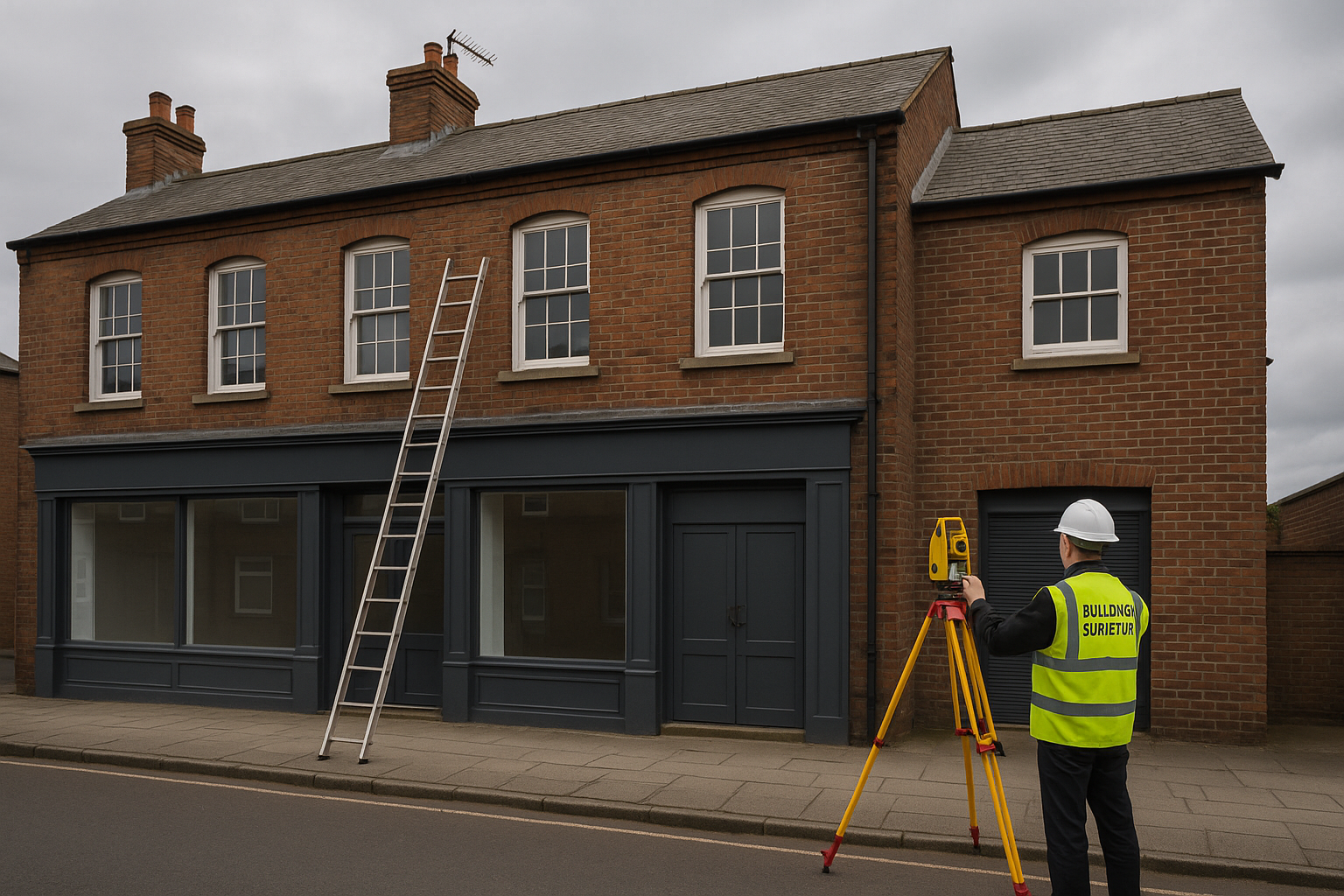
The history of asbestos in construction explains why it still turns up across so many property portfolios. It was used in homes, schools, hospitals, factories, offices, transport sites and public buildings because it offered a combination of properties builders wanted.
Asbestos was favoured for:
- Fire resistance
- Thermal insulation
- Acoustic performance
- Chemical resistance
- Tensile strength
- Low cost in mass production
It was mixed into cement products, insulation, boards, coatings, textiles, gaskets and friction materials. Over time, the health risks became clear and controls tightened, eventually leading to a full ban on use.
That ban did not remove asbestos already installed in buildings. The legacy remains, which is why dutyholders still need surveys, registers and management plans.
Where asbestos is commonly found today
One of the biggest mistakes in older buildings is assuming asbestos only appears around boilers or obvious insulation. In reality, asbestos can be found in a wide range of products, from highly friable materials to harder bonded items that still release fibres if cut, broken or drilled.
Common asbestos-containing materials include:
- Pipe lagging
- Sprayed coatings
- Asbestos insulating board
- Cement sheets and roof panels
- Textured coatings
- Vinyl floor tiles and bitumen adhesive
- Ceiling tiles
- Gaskets and rope seals
- Boiler and plant insulation
- Fire doors and fire protection panels
- Soffits, gutters and downpipes
- Toilet cisterns and other moulded cement items
- Brake and clutch components in some industrial settings
Higher-risk and lower-risk asbestos materials
A practical way to think about asbestos is to consider how easily the material can release fibres.
Higher-risk materials often include:
- Pipe lagging
- Loose fill insulation
- Sprayed coatings
- Damaged asbestos insulating board
Lower-risk materials may include:
- Asbestos cement sheets
- Roofing panels
- Gutters and downpipes
- Some floor tiles
Lower risk does not mean no risk. If asbestos is drilled, sanded, broken, stripped out or removed without the right controls, fibres can still be released.
Who is most at risk from asbestos exposure
Asbestos exposure has affected a wide range of industries because the material was used so widely. Some people were exposed through direct work with asbestos products, while others came into contact with it during maintenance, repairs or refurbishment.
Industries with strong historical links to asbestos include:
- Construction
- Demolition
- Shipbuilding and dock work
- Rail and transport engineering
- Power generation
- Manufacturing
- Chemical processing
- Oil and gas
- Education estate maintenance
- Healthcare estate management
- Local authority housing and public buildings
- Facilities management
Trades still likely to disturb asbestos today
Modern asbestos incidents often happen during short, routine jobs rather than specialist asbestos work. The trades most likely to disturb hidden materials include:
- Electricians
- Plumbers
- Joiners and carpenters
- Heating and ventilation engineers
- Telecoms and data installers
- Demolition teams
- General maintenance operatives
- Roofers
- Painters and decorators preparing old surfaces
If you manage contractors in older premises, share asbestos information before work starts. Waiting until a suspect board is broken open is too late.
What to do if you suspect asbestos
The worst response to suspected asbestos is to carry on. If a material might contain asbestos, stop work immediately and prevent access until it has been properly assessed.
Do not drill, cut, sweep or vacuum debris unless specialist controls are already in place. Disturbance is what turns a hidden building issue into a serious exposure risk.
Immediate steps to take
- Stop work straight away
- Keep people out of the area
- Check the asbestos register if one exists
- Report the issue to the dutyholder or responsible person
- Arrange competent assessment and sampling if needed
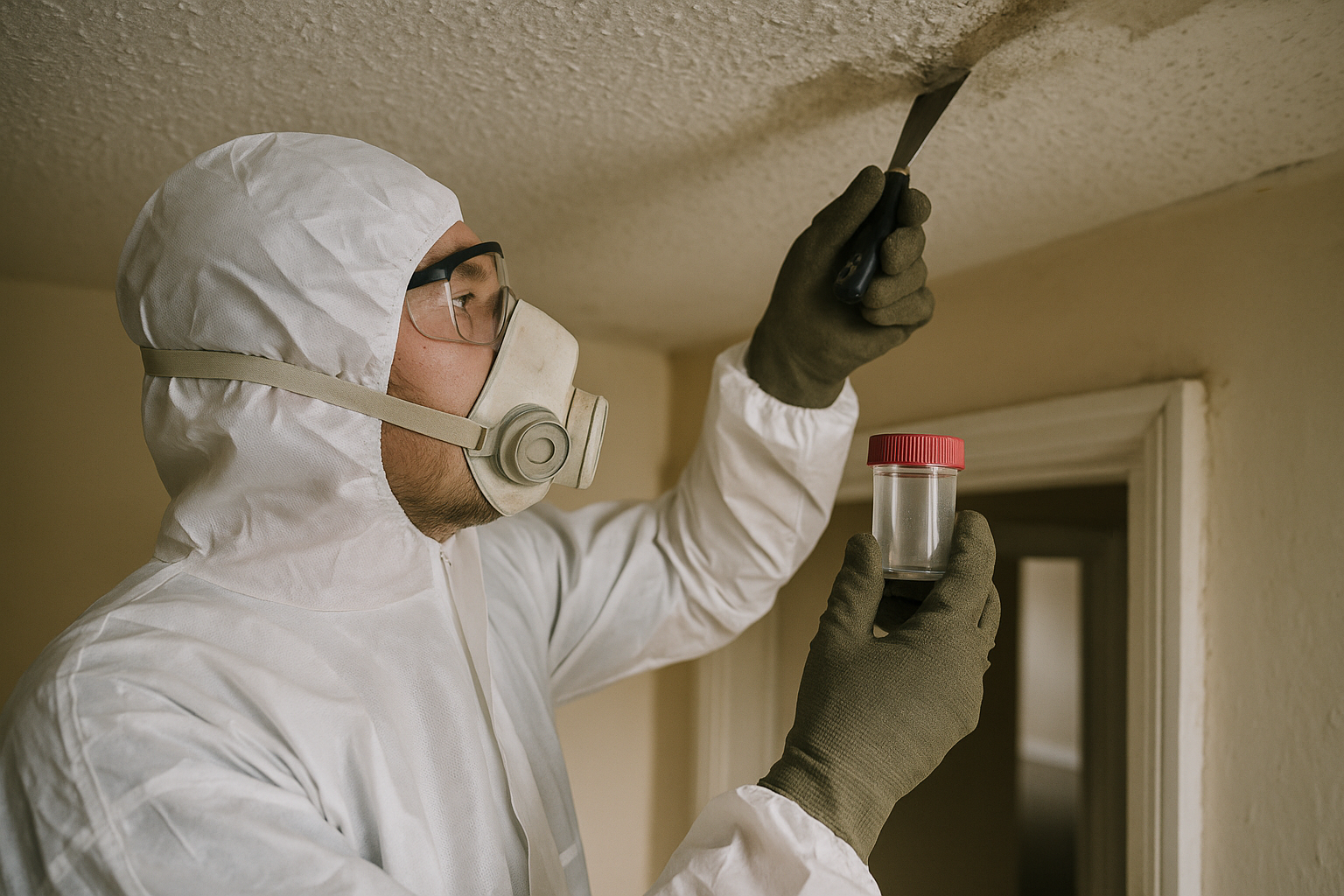
If you need material identification, arrange asbestos testing through a competent provider. Sampling should never be treated as a casual maintenance task.
Where there is no clear asbestos record, the next step is often a survey matched to the planned activity. That choice matters.
Choosing the right asbestos survey
Not every asbestos survey serves the same purpose. HSG264 makes it clear that the survey should match the work being planned, not simply the age of the building.
Using the wrong survey can mean asbestos is missed, projects are delayed and legal duties are not met. For property managers, that can quickly become a safety issue and a contractual issue at the same time.
Management survey
A management survey is designed to locate, as far as reasonably practicable, the presence and extent of asbestos-containing materials that could be disturbed during normal occupation, routine maintenance or foreseeable installation work.
This type of asbestos survey supports the register and management plan. It is generally the right starting point for occupied premises where the aim is safe day-to-day management.
Refurbishment and demolition survey
Where intrusive work is planned, a management survey is not enough. Before major works, strip-out or structural alteration, you need a survey that identifies asbestos in the areas affected by the project.
If the building is being taken apart or knocked down, a demolition survey is essential. These surveys are intrusive by design because hidden asbestos must be found before work begins.
Re-inspection survey
If asbestos has already been identified and left in place, it should be reviewed periodically. A re-inspection survey helps confirm whether known asbestos-containing materials are still in the same condition and whether the management plan remains accurate.
This is particularly useful for schools, offices, industrial sites and larger estates where asbestos remains under active management.
How asbestos should be managed in occupied buildings
Finding asbestos does not always mean it must be removed immediately. In many cases, asbestos in good condition can remain in place if it is properly assessed, recorded and managed so it is not disturbed.
That said, passive awareness is not the same as management. A compliant asbestos approach needs clear records, communication and regular review.
Practical asbestos management steps
- Keep an up-to-date asbestos register
- Maintain an asbestos management plan
- Record the location, extent and condition of materials
- Communicate risk areas clearly where appropriate
- Share asbestos information with contractors before work starts
- Review the condition of known materials regularly
- Update records after removal, encapsulation or further sampling
If your team cannot answer basic questions about where the asbestos is, what condition it is in and who has been informed, the system needs tightening up.
For occupied buildings in the capital, arranging an asbestos survey London service can help establish a reliable register and management plan. The same applies regionally, whether you need an asbestos survey Manchester appointment or an asbestos survey Birmingham visit for a local site.
When asbestos removal may be needed
Asbestos removal is sometimes necessary, but not every asbestos finding automatically leads to removal. The right response depends on the material, its condition, the risk assessment and the work planned in the area.
Removal may be needed when asbestos is:
- Damaged or deteriorating
- Likely to be disturbed during normal use
- In the way of refurbishment or demolition works
- Located in an area where control is difficult to maintain
- No longer suitable to leave in place as part of the management plan
If removal is required, use a competent specialist and make sure the scope is based on survey findings and risk assessment. Superficial assumptions can lead to unnecessary cost or unsafe decisions.
Where removal is the correct route, professional asbestos removal should be arranged only after the material has been properly identified and the work planned with suitable controls.
Asbestos safety advice for workers and contractors
Many asbestos incidents happen during small jobs: drilling a single hole, opening a service duct, lifting old floor coverings or removing a panel to access services. These tasks look routine until hidden asbestos is disturbed.
The safest rule is straightforward: if you do not know what the material is, do not disturb it.
Basic asbestos safety rules
- Never assume a material is safe because it looks solid or clean
- Ask for the asbestos register before starting work in older premises
- Check whether the task needs sampling, a survey or specialist input
- Do not use power tools on suspect materials
- Stop work if hidden debris, lagging or board is uncovered
- Report concerns immediately rather than trying to tidy up
For property managers, contractor control is part of asbestos management. Briefings, permits to work and access to current asbestos information can prevent expensive mistakes and protect the people on site.
Asbestos testing, surveys and records: what good practice looks like
Good asbestos control depends on accurate information. That means using competent surveyors, arranging testing where identification is needed and keeping records current.
A strong asbestos system usually includes:
- A suitable survey for the building and planned work
- Laboratory analysis where materials need confirmation
- An asbestos register that people can actually access
- A management plan linked to real site conditions
- Regular review of known materials
- Clear communication with contractors and maintenance teams
If you only have an old report sitting in a file, that is not enough. The information has to be usable on site.
Where sampling is required separately from a survey, specialist asbestos testing can help confirm whether a suspect material contains asbestos and support the next decision.
Common mistakes that lead to asbestos incidents
Most asbestos problems are avoidable. They happen because information is missing, ignored or out of date.
Common failures include:
- Starting work without checking the asbestos register
- Relying on an old survey that does not match the planned works
- Assuming a material is non-asbestos because it looks modern
- Failing to brief contractors properly
- Leaving known asbestos in place without re-inspection
- Not updating records after changes to the building
If you manage multiple buildings, standardise your process. Before any maintenance or project work begins, ask three questions:
- Do we know whether asbestos is present in the work area?
- Is the existing information current and suitable for this job?
- Have the people doing the work seen that information?
Those checks are simple, but they prevent a large number of incidents.
What property managers should do next
If you are responsible for an older property, do not wait for damage or refurbishment plans to expose an asbestos problem. Start by checking what information you already have and whether it is current, accessible and suitable for the building’s actual use.
If records are missing, unclear or outdated, arrange the right survey. If asbestos has already been identified, make sure it is being re-inspected and managed properly. If intrusive works are planned, confirm that the survey type matches the work before anyone starts on site.
Supernova Asbestos Surveys provides nationwide asbestos surveys, testing and support for property managers, landlords, dutyholders and contractors. To book a survey or discuss the right next step, call 020 4586 0680 or visit asbestos-surveys.org.uk.
Frequently Asked Questions
Is asbestos always dangerous if it is present in a building?
No. Asbestos is most dangerous when fibres are released and inhaled. Materials in good condition that are properly managed may be left in place, but they still need to be recorded, monitored and protected from disturbance.
Do I need an asbestos survey before refurbishment works?
Yes, if the works will disturb the fabric of the building. A management survey is not enough for intrusive works. You need the correct refurbishment or demolition survey so hidden asbestos in the work area can be identified before the project starts.
How often should asbestos be re-inspected?
There is no single interval that suits every building. Re-inspection should be based on the risk, condition and likelihood of disturbance, and it should form part of the asbestos management plan.
Can maintenance staff take samples of suspect materials themselves?
That is not advisable. Sampling should be carried out by a competent person using suitable controls. Treating asbestos sampling as an informal maintenance task can create unnecessary exposure risk.
What should contractors do if they uncover suspect asbestos during a job?
They should stop work immediately, keep others away from the area and report it to the dutyholder or responsible person. Work should not restart until the material has been properly assessed and the right controls are in place.