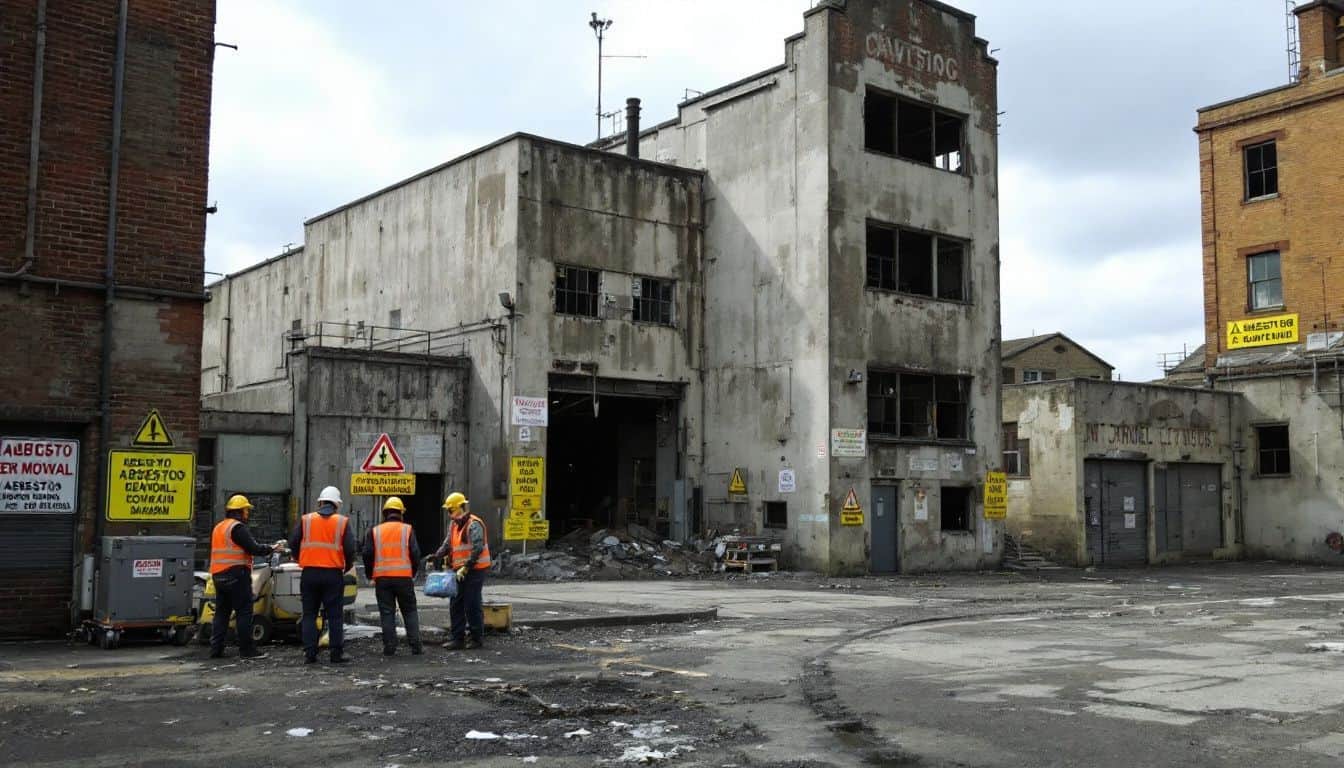
Why the Importance of Asbestos Awareness Still Costs Lives Across the UK
Every week, around 20 tradespeople in the UK die from diseases caused directly by asbestos exposure. That figure has barely shifted in decades, and the reason is straightforward: asbestos remains present in thousands of buildings across the country, and too many workers encounter it without understanding what they are dealing with.
Recognising the importance of asbestos awareness — and acting on it — is one of the most meaningful steps any employer or worker can take to prevent needless, entirely avoidable deaths. This is not a niche concern for specialists. It touches electricians, plumbers, carpenters, decorators, maintenance staff, and anyone who works in buildings constructed before 2000.
If you manage a property, employ tradespeople, or work on older buildings yourself, asbestos awareness is your business.
What Is Asbestos and Why Does It Still Matter?
Asbestos is a naturally occurring fibrous mineral used extensively in UK construction from the 1950s through to the late 1990s. It was prized for its fire resistance, durability, and insulating properties — mixed into floor tiles, ceiling tiles, pipe lagging, roof sheets, textured coatings, and dozens of other building materials.
The UK banned all forms of asbestos in 1999, but that ban did not make the existing material disappear. Asbestos-containing materials (ACMs) remain present in a significant proportion of UK schools, NHS buildings, and countless commercial and residential properties across the country.
The material is not dangerous when left undisturbed and in good condition. The moment it is drilled into, cut, or damaged, it releases microscopic fibres into the air. Those fibres, once inhaled, can lodge permanently in lung tissue. The resulting diseases — mesothelioma, asbestosis, asbestos-related lung cancer, and pleural thickening — can take 20 to 40 years to develop. By the time symptoms appear, the damage is already done.
Approximately 5,000 people in the UK die from asbestos-related diseases every year, making it the country’s single largest cause of work-related death. That is not a historical problem. It is happening right now.
Who Needs Asbestos Awareness Training?
The Control of Asbestos Regulations places a clear legal duty on employers to provide appropriate asbestos training to workers who may come into contact with ACMs, or who supervise those who do. This is not optional, and it is not restricted to workers who handle asbestos directly.
Construction and Demolition Workers
Anyone working on buildings that may contain asbestos falls within scope — bricklayers, roofers, groundworkers, and structural engineers included. Demolition work carries particularly high risk because it involves disturbing large quantities of material rapidly, often without full knowledge of what is present.
Category A asbestos awareness training is mandatory for these workers. It does not qualify them to work with asbestos, but it teaches them to recognise ACMs, understand the risks, and know when to stop and seek expert advice.
Maintenance Staff and Facilities Managers
Maintenance workers are arguably the group at greatest risk. They carry out routine tasks — fixing a leaking pipe, replacing a ceiling tile, drilling into a wall — in buildings where the presence of asbestos may not be immediately obvious.
A facilities manager in a 1970s office block or a caretaker in a pre-2000 school needs to know what they might be dealing with before they pick up a drill. Employers in non-domestic premises have a specific duty under the Control of Asbestos Regulations to manage asbestos in their buildings and to ensure anyone who may disturb it has received adequate training.
Safety Inspectors and Health and Safety Officers
Those responsible for workplace safety need a thorough understanding of asbestos risks to carry out meaningful risk assessments and audits. A safety inspector who cannot identify common ACMs or who is unfamiliar with the legal framework is simply not equipped to protect the people they are responsible for.
Other Trades at Risk
The following trades regularly encounter ACMs during normal work and should receive asbestos awareness training as a baseline:
- Electricians and electrical contractors
- Plumbers and heating engineers
- HVAC engineers working in older buildings
- Painters and decorators
- Plasterers
- Joiners and carpenters
- Gas engineers
- Telecommunications installers
Self-employed workers in these trades are equally bound by the regulations and are responsible for ensuring their own training is in place.
The Three Levels of Asbestos Training Explained
Not all asbestos training is the same. The HSE and the approved code of practice L143 set out three distinct levels, each corresponding to a different type of work and level of risk.
Category A — Asbestos Awareness
This is the baseline level, aimed at workers who may inadvertently disturb asbestos during routine tasks. It does not authorise anyone to work with asbestos. The goal is recognition, understanding of the health risks, and knowing when to stop and call in a specialist.
This level is appropriate for the vast majority of maintenance workers, tradespeople, and anyone working in older buildings on a regular basis.
Category B — Non-Licensable Work
Some work with ACMs does not require a licence but still demands specific training beyond awareness level. This covers tasks such as minor repairs to asbestos cement sheeting or the removal of small quantities of certain materials. Workers must understand the specific controls needed to carry out this work safely.
Category C — Licensable Work
Work with higher-risk materials — such as asbestos insulation, asbestos insulating board, or sprayed asbestos coatings — must be carried out by a contractor licensed by the HSE. Workers holding an HSE licence require comprehensive training and regular medical surveillance. This is specialist work and should never be attempted by untrained personnel.
What Asbestos Awareness Training Actually Covers
A well-structured asbestos awareness course goes well beyond telling workers that asbestos is dangerous. To be effective, it needs to give people the practical knowledge to make safe decisions on site.
Identifying Asbestos-Containing Materials
Workers learn to recognise the most common ACMs they are likely to encounter, including:
- Textured decorative coatings (such as Artex) on ceilings and walls
- Asbestos cement products in roofing sheets, gutters, and soffits
- Vinyl floor tiles and the adhesive beneath them
- Pipe lagging and thermal insulation
- Asbestos insulating board used in partition walls and ceiling tiles
- Rope seals and gaskets in older boilers and heating systems
Crucially, workers are taught that asbestos cannot be identified by sight alone. Confirmation requires laboratory analysis of a sample taken by a competent person. If in doubt, the safe assumption is that the material may contain asbestos until proven otherwise.
Understanding the Health Risks
Training covers the four main asbestos-related diseases — mesothelioma, asbestos-related lung cancer, asbestosis, and pleural thickening — and explains why there is no safe level of exposure to asbestos fibres. Workers learn about the latency period, which is why many people do not connect their illness to past exposure until it is far too late.
Legal Responsibilities
Employees and employers alike need to understand their respective duties under the Control of Asbestos Regulations. Training covers the duty to manage asbestos in non-domestic premises, the requirement to carry out risk assessments, and the obligation to keep records of asbestos surveys and management plans.
Workers also learn what to do if they discover a suspected ACM during work: stop the task, leave the area, prevent others from entering, and report to a supervisor or the dutyholder. This simple protocol can prevent exposure incidents that might otherwise go unnoticed.
Emergency Procedures
Training should include what to do if accidental disturbance occurs — how to decontaminate, who to notify, and when specialist remediation is required. This is not about creating panic. It is about ensuring workers have a clear, calm course of action if something goes wrong.
The Importance of Asbestos Awareness: Real Benefits for Employers and Workers
There is a tendency to treat asbestos awareness training as a box-ticking exercise — something done once at induction and then forgotten. That approach misses the point entirely.
Protecting Worker Health
The most direct benefit is that trained workers are less likely to disturb asbestos unknowingly, and less likely to continue working in an area where they have already done so. That directly reduces exposure and, over time, reduces the number of people who develop fatal asbestos-related diseases.
Legal Compliance and Avoiding Penalties
Employers who fail to provide adequate asbestos training are in breach of the Control of Asbestos Regulations. The HSE has powers to issue improvement notices, prohibition notices, and prosecute employers. Fines can be substantial, and in serious cases individuals can face criminal prosecution.
Maintaining up-to-date training records is not just good practice — it is a legal safeguard that demonstrates due diligence if an incident is ever investigated.
Supporting Asbestos Management Plans
Training does not exist in isolation. It works alongside asbestos surveys, management plans, and regular reinspections to create a coherent approach to managing asbestos risk. A trained workforce is more likely to report changes in the condition of known ACMs, which feeds back into the management process and keeps the risk register current.
Refresher Training
The HSE recommends that asbestos awareness training is refreshed regularly. Annual refresher training is widely regarded as best practice, particularly for workers in high-risk trades. Regulations change, materials are discovered in new locations, and knowledge fades over time. Regular refreshers keep awareness sharp and demonstrate an employer’s ongoing commitment to safety.
The Role of Asbestos Surveys in Supporting Awareness
Training tells workers what asbestos might look like and what to do if they suspect they have found it. An asbestos survey tells them — and their employers — exactly what is present in a specific building, where it is located, and what condition it is in. The two go hand in hand.
For occupied buildings, a management survey should be in place to identify ACMs that could be disturbed during normal maintenance activities. This type of survey is the foundation of any effective asbestos management plan and is a legal requirement for most non-domestic premises.
Before any refurbishment or demolition work begins, a demolition survey is a legal requirement under the Control of Asbestos Regulations. It provides a far more intrusive assessment of the building fabric to ensure nothing is missed before work starts — protecting workers, contractors, and the wider public.
A survey without trained staff to act on its findings is only half the picture. Equally, trained staff working in a building with no survey in place are operating without the information they need to stay safe.
Online Training vs. Practical Courses: Which Is Right?
Asbestos awareness training at Category A level can be delivered online, and e-learning has become a practical and widely accepted format — particularly for large workforces that are geographically dispersed. Online courses can be completed at the worker’s own pace and provide a consistent standard of content across an entire organisation.
However, online delivery is most effective when combined with practical, site-specific instruction. Workers benefit from understanding the theoretical risks in a classroom or e-learning environment, but they also need to understand how those risks apply to the specific buildings and tasks they encounter day to day.
For higher-risk categories of work — Categories B and C — face-to-face practical training is essential. There is no substitute for hands-on instruction when workers are expected to handle ACMs or carry out controlled removal work.
Whichever format is used, the training provider should be able to demonstrate that their course content aligns with HSE guidance and covers all the elements required under the Control of Asbestos Regulations. Ask for a course outline before committing, and check that certification is provided upon completion.
Asbestos Awareness Across the UK: Regional Coverage Matters
The need for asbestos awareness is not limited to any one part of the country. Older building stock is found in every region, and the risks are just as real in a Victorian terrace in Birmingham as they are in a 1970s office block in central London.
Supernova Asbestos Surveys provides professional survey services to support awareness and compliance efforts across the UK. If you need an asbestos survey London covering commercial, residential, or public sector properties, our experienced surveyors are ready to help.
For properties in the North West, our team delivers an asbestos survey Manchester service to the same rigorous standard, covering a wide range of property types and sectors. We also serve the Midlands, providing a full asbestos survey Birmingham service for dutyholders and property managers across the region.
Wherever you are based, having a current, accurate asbestos survey in place is the single most important step you can take to support the safety of everyone who works in or visits your building.
Bringing It All Together: A Practical Approach to Asbestos Safety
Understanding the importance of asbestos awareness means more than simply booking a training course. It means building a culture where workers feel confident identifying potential risks, know exactly what to do when they encounter them, and trust that their employer has taken the necessary steps to give them the information they need.
That requires three things working in concert: up-to-date asbestos surveys, a written management plan that is accessible and acted upon, and a trained workforce that understands both the risks and their responsibilities.
None of these elements works in isolation. A management plan based on an outdated survey is unreliable. Training delivered to workers who have never seen their building’s asbestos register is incomplete. And a survey that sits in a filing cabinet, unread and unshared, protects nobody.
The good news is that getting this right is entirely achievable. The legal framework is clear, the guidance from the HSE is detailed, and professional support is available at every stage — from initial surveys through to management planning and staff training.
Frequently Asked Questions
Who is legally required to have asbestos awareness training in the UK?
Under the Control of Asbestos Regulations, employers must ensure that any worker who may come into contact with asbestos-containing materials — or who supervises those who do — receives appropriate training. This includes maintenance staff, tradespeople, construction workers, and health and safety officers. Self-employed workers are also responsible for their own training.
How often does asbestos awareness training need to be refreshed?
The HSE recommends that asbestos awareness training is refreshed regularly, and annual refresher training is widely regarded as best practice. This is particularly important for workers in high-risk trades such as plumbing, electrical work, and general building maintenance. Knowledge fades over time, and refresher training ensures workers remain alert to the risks.
Can asbestos awareness training be completed online?
Yes. Category A asbestos awareness training can be completed online and e-learning is a widely accepted format, particularly for large or dispersed workforces. However, for Categories B and C — where workers handle or remove ACMs — face-to-face practical training is required. Any course should align with HSE guidance and provide a certificate upon completion.
What is the difference between a management survey and a demolition survey?
A management survey identifies ACMs in an occupied building that could be disturbed during routine maintenance or everyday use. A demolition survey is a more intrusive inspection required before any refurbishment or demolition work begins, ensuring all ACMs are identified before the building fabric is disturbed. Both are legal requirements under the Control of Asbestos Regulations in the appropriate circumstances.
What should a worker do if they suspect they have disturbed asbestos?
The correct response is to stop work immediately, leave the area, and prevent others from entering. The incident should be reported to a supervisor or the dutyholder without delay. If there is any possibility that fibres have been released, specialist remediation advice should be sought before work resumes. Asbestos awareness training covers this protocol in detail.
Speak to Supernova Asbestos Surveys
Supernova Asbestos Surveys has completed more than 50,000 surveys across the UK, working with property managers, employers, contractors, and public sector organisations to ensure buildings are safe and legally compliant. Whether you need a management survey, a pre-demolition inspection, or advice on your asbestos management obligations, our team is ready to help.
Call us on 020 4586 0680 or visit asbestos-surveys.org.uk to find out more or book a survey.