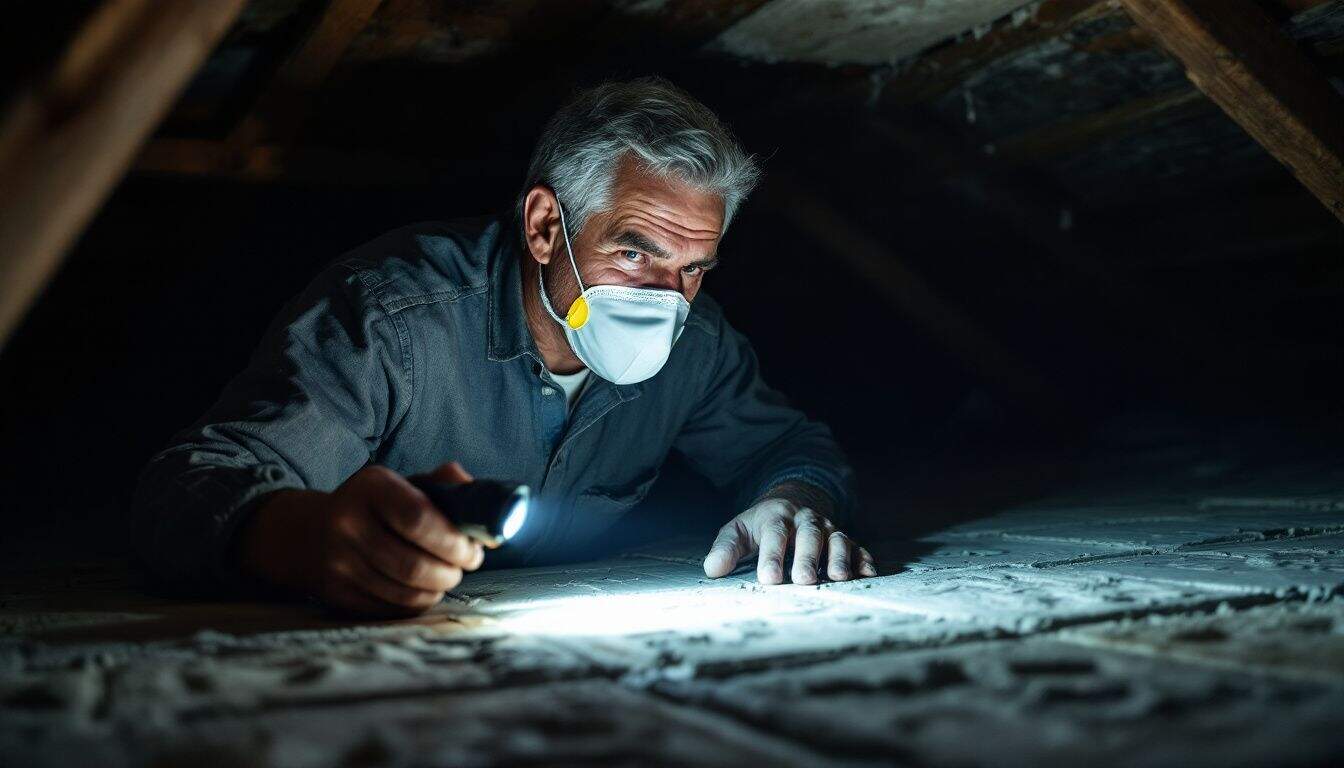
Does My House Have Asbestos? Here’s How to Find Out
If your home was built before 2000, there is a very real chance it contains asbestos. The UK didn’t ban all forms of asbestos until 1999, which means millions of properties across the country still have asbestos-containing materials (ACMs) hidden in ceilings, floors, walls, and pipe lagging. Asking does my house have asbestos is one of the most sensible questions any homeowner can ask — and getting the right answer could protect your family’s health for decades to come.
This post walks you through exactly what to look for, where asbestos hides, how to get it tested properly, and what your obligations are if it’s found.
Why Asbestos Was Used in UK Homes
Asbestos was considered a wonder material for much of the 20th century. It’s fire-resistant, thermally insulating, cheap, and easy to work with — which made it the go-to choice for builders and manufacturers across the UK from the 1930s right through to the late 1990s.
The problem is that when asbestos-containing materials are disturbed, damaged, or deteriorate over time, they release microscopic fibres into the air. Breathing those fibres in can cause serious diseases including mesothelioma, asbestosis, and lung cancer — conditions that take decades to develop but are ultimately fatal.
Asbestos-related diseases still claim thousands of lives in the UK every year. It remains the single biggest occupational health killer in the country, according to the HSE.
Does My House Have Asbestos? Start With the Age of Your Property
The age of your property is the single most useful starting point. If your home was built or significantly renovated during any of the following periods, the likelihood of asbestos being present increases considerably.
- 1930s–1950s: Asbestos insulation board, pipe lagging, and roofing materials were widely used throughout this era.
- 1960s–1970s: This was peak asbestos use in UK residential construction. Textured coatings, floor tiles, and ceiling tiles were commonplace.
- 1980s–1990s: Use declined but didn’t stop. Some ACMs were still being installed legally right up to the final ban in 1999.
Even if your home was built after 1999, renovation work using salvaged or imported materials could theoretically have introduced ACMs. If you’re unsure of your property’s full history, that uncertainty alone is reason enough to arrange a professional inspection.
Where Asbestos Is Commonly Found in UK Homes
Asbestos doesn’t announce itself. It can look entirely ordinary, blending seamlessly into the surrounding building fabric. Knowing where to look is half the battle.
Textured Coatings (Artex and Similar Products)
One of the most widespread sources of asbestos in UK homes is textured decorative coating — the kind used on ceilings and sometimes walls to create a stippled or swirled finish. Products like Artex, applied before the mid-1980s, frequently contained chrysotile (white asbestos).
If your ceilings have any kind of textured pattern and your home is pre-1985, treat it as potentially containing asbestos until proven otherwise. Don’t sand it, scrape it, or drill through it without testing first.
Floor Tiles and Adhesives
Vinyl floor tiles — particularly the 9-inch square variety common in kitchens and hallways from the 1950s through to the 1980s — frequently contained asbestos fibres. The adhesive used to fix them down often did too.
If these tiles are intact and undamaged, they’re generally considered lower risk. But cracked, lifting, or damaged tiles can release fibres. Never scrape or sand old vinyl floor tiles without having them tested first.
Pipe Lagging and Boiler Insulation
Older homes with original pipework often have asbestos lagging — the white or grey fibrous wrapping around hot water and heating pipes. This is one of the more hazardous forms because the material tends to be friable (easily crumbled), meaning fibres are released more readily when disturbed.
Check around boilers, hot water tanks, and any exposed pipework in airing cupboards, basements, or loft spaces. Damaged or deteriorating lagging should be treated as a priority.
Loft and Cavity Insulation
Vermiculite insulation — a grey, granular material sometimes used in lofts — can contain asbestos depending on its source and origin. If you have loose-fill vermiculite in your loft and your property dates from before the 1990s, have it tested before carrying out any loft work or conversions.
Roof Sheets, Gutters, and Soffits
Asbestos cement was used extensively in external building materials. Corrugated roof sheets on garages and outbuildings, rainwater goods, fascias, and soffits were all commonly made from asbestos cement. These materials are generally lower risk when intact, but weathering and physical damage can make them hazardous over time.
Ceiling Tiles and Partition Boards
Suspended ceiling tiles and asbestos insulation board (AIB) used in partition walls were common in homes built or renovated between the 1950s and 1980s. AIB is particularly hazardous — it’s one of the more dangerous ACM types because it releases fibres readily when disturbed.
Joint Compounds and Plaster
Beyond textured coatings, older joint compounds used to fill gaps between plasterboard sheets sometimes contained asbestos. If you’re planning any renovation work involving walls or ceilings in an older property, this is worth bearing in mind before you start cutting or sanding.
What Asbestos Looks Like — and Why Visual Checks Aren’t Enough
Here’s the honest truth: you cannot identify asbestos by looking at it. Asbestos fibres are microscopic. A material can look completely normal and still contain asbestos, or it can look suspicious and contain none at all.
Visual inspection is useful for identifying materials that are likely to contain asbestos based on their age, type, and condition. But confirmation always requires laboratory analysis of a physical sample.
Some signs that a material might warrant closer attention:
- It’s in a property built before 2000
- It has a fibrous or chalky texture
- It’s deteriorating, crumbling, or visibly damaged
- It’s in a location commonly associated with ACMs — pipes, ceilings, floors
- It looks like it hasn’t been replaced or renovated in decades
If any of these apply, the safest course of action is to arrange professional asbestos testing rather than attempting to assess the material yourself.
Should You Test for Asbestos Yourself?
DIY asbestos test kits are available online and involve collecting a small sample yourself and posting it to a laboratory. They can provide a basic confirmation of whether asbestos is present in a specific material.
However, there are significant limitations to the DIY approach. Collecting samples incorrectly can disturb the material and release fibres — creating exactly the exposure risk you’re trying to avoid. You also won’t get a full picture of your property. A single sample tells you about one material in one location, not about the wider condition of ACMs throughout your home.
For a thorough assessment, professional asbestos testing carried out by a qualified surveyor is the only reliable option. A surveyor will inspect the whole property, identify all suspect materials, take samples safely, and produce a report you can actually act on.
Types of Asbestos Survey Explained
If you want a professional assessment of whether your house has asbestos, there are two main survey types defined by HSG264 — the HSE’s guidance document on asbestos surveys.
Management Survey
This is the standard survey for properties that are occupied and not undergoing major renovation. The surveyor inspects accessible areas of the property, identifies and assesses ACMs, and produces a report with recommendations for managing them safely.
An management survey is appropriate for most homeowners who simply want to understand what’s in their property and whether it poses any risk.
Refurbishment and Demolition Survey
If you’re planning significant building work — a loft conversion, extension, or full renovation — you need this more intrusive survey. It involves accessing areas that would be disturbed during the work, including within walls and above ceilings.
Under the Control of Asbestos Regulations, a demolition survey is legally required before any major refurbishment or demolition work begins. This isn’t optional — it’s a legal obligation.
Your Legal Obligations as a Homeowner
The legal picture for private homeowners is slightly different from that of commercial property owners. Under the Control of Asbestos Regulations, the duty to manage asbestos applies primarily to non-domestic premises. So if you own and live in your home, you’re not legally obligated to commission a survey in the same way a landlord or employer would be.
However, that doesn’t mean you can simply ignore it.
- If you’re a landlord renting out a property, you have a legal duty to manage asbestos risks for your tenants.
- If you’re planning building work — whether you’re doing it yourself or hiring contractors — you have a responsibility to ensure workers aren’t put at risk from ACMs.
- Contractors working in older properties are required under HSE guidance to assume asbestos may be present and take appropriate precautions.
If you’re commissioning work on a pre-2000 property, arranging a survey beforehand protects both you and the people carrying out the work. It also protects you from potential liability if a contractor is exposed to asbestos on your premises.
What Happens If Asbestos Is Found in Your Home?
Finding asbestos in your home doesn’t automatically mean it needs to come out. In many cases, ACMs that are in good condition and unlikely to be disturbed are best left in place and managed — this is often the safer option compared to removal, which itself carries risk if not done properly.
Your surveyor’s report will categorise materials by condition and risk, giving you a clear picture of what needs action and what can be monitored. The options typically include:
- Leave and monitor: Suitable for intact, undamaged ACMs in low-traffic areas where disturbance is unlikely.
- Encapsulation or sealing: A specialist coating can be applied to stabilise the material and reduce the risk of fibre release.
- Removal: Required when materials are badly damaged, deteriorating, or in the way of planned building work.
Professional asbestos removal must be carried out by a licensed contractor for the most hazardous types of ACM. Never attempt to remove asbestos insulation board, pipe lagging, or sprayed coatings yourself. These are licensable materials under the Control of Asbestos Regulations, and their removal must be handled by a contractor holding the appropriate HSE licence.
Protecting Your Family While You Wait for Results
While you’re waiting for a survey or test results, there are some straightforward steps you can take to minimise risk in the meantime.
- Don’t disturb any materials you suspect might contain asbestos — no drilling, sanding, scraping, or cutting.
- If you notice deteriorating materials such as crumbling ceiling tiles or damaged pipe lagging, keep the area well-ventilated and restrict access.
- Avoid DIY work in areas where ACMs might be present until you have clarity on what’s there.
- If you believe you’ve already disturbed asbestos, leave the area immediately, keep others out, and contact a professional straight away.
Asbestos that’s in good condition and left undisturbed poses minimal risk. It’s the disturbance that creates danger. The key message is simple: if in doubt, don’t touch it.
What to Expect From a Professional Asbestos Survey
A professional asbestos survey from a qualified surveyor is a straightforward, non-disruptive process. The surveyor will visit your property, carry out a visual inspection of all accessible areas, and take samples of any materials suspected of containing asbestos. Those samples are sent to an accredited laboratory for analysis.
You’ll receive a written report detailing:
- The location and type of any ACMs identified
- Their current condition and the associated risk level
- Recommended actions — whether that’s monitoring, encapsulation, or removal
- A material assessment score to help you prioritise
A good survey report gives you everything you need to make informed decisions about your property. It’s also a document you can share with contractors, estate agents, or future buyers — providing transparency and protecting everyone involved.
Supernova Asbestos Surveys operates across the UK, including dedicated teams for asbestos survey London, asbestos survey Manchester, and asbestos survey Birmingham — so wherever you are, expert help is close at hand.
When to Act — and When Not to Panic
Discovering that your home might contain asbestos can feel alarming. But it’s worth keeping perspective. Millions of UK homes contain ACMs that have been safely in place for decades and will continue to be so, provided they remain undisturbed and in good condition.
The time to act is when:
- You’re planning any renovation, extension, or demolition work on a pre-2000 property
- You’ve noticed materials that are damaged, crumbling, or deteriorating
- You’re buying or selling a property and want clarity on its condition
- You’re a landlord with a duty to protect your tenants
- You simply want peace of mind about what’s in your home
In all of these situations, commissioning a professional survey is the right move. It’s not about finding a problem — it’s about understanding your property fully so you can manage it safely and confidently.
Frequently Asked Questions
Does my house have asbestos if it was built after 2000?
It’s unlikely but not impossible. The UK banned all forms of asbestos in 1999, so properties built after that date should not contain asbestos-containing materials installed during construction. However, if renovation work was carried out using salvaged materials, or if the property was substantially refurbished using older stock, there is a small possibility. If you have any doubts about your property’s history, a professional survey will give you certainty.
Can I tell if a material contains asbestos just by looking at it?
No. Asbestos fibres are microscopic and cannot be seen with the naked eye. A material can look completely normal and still contain asbestos. The only way to confirm whether a material contains asbestos is through laboratory analysis of a physical sample taken by a qualified professional.
Is asbestos in my home dangerous if I leave it alone?
Asbestos-containing materials that are in good condition and left undisturbed pose a very low risk. The danger arises when materials are damaged, deteriorating, or physically disturbed — releasing microscopic fibres into the air. If you know or suspect ACMs are present in your home, the safest approach is to have them assessed by a professional and follow the recommendations in their report.
Do I legally have to get an asbestos survey done on my home?
If you are an owner-occupier of a private residential property, you are not legally required to commission an asbestos survey under the Control of Asbestos Regulations. However, if you are a landlord, you have a legal duty to manage asbestos risks for your tenants. And if you’re planning any significant renovation or demolition work on a pre-2000 property, a refurbishment and demolition survey is a legal requirement before work begins.
How long does an asbestos survey take?
For a typical residential property, a management survey usually takes between one and three hours depending on the size and complexity of the building. The surveyor will inspect accessible areas, take any necessary samples, and send them to an accredited laboratory. You can typically expect to receive your written report within a few working days of the survey being completed.
Get a Professional Asbestos Survey From Supernova
Supernova Asbestos Surveys has completed over 50,000 surveys across the UK. Our qualified surveyors work to HSG264 standards, covering residential and commercial properties of all types and sizes. Whether you want a straightforward management survey for peace of mind or a full refurbishment survey ahead of building work, we’ll give you a clear, actionable report — fast.
Call us on 020 4586 0680 or visit asbestos-surveys.org.uk to book your survey or request a quote. Don’t leave it to chance — get the facts about your property today.