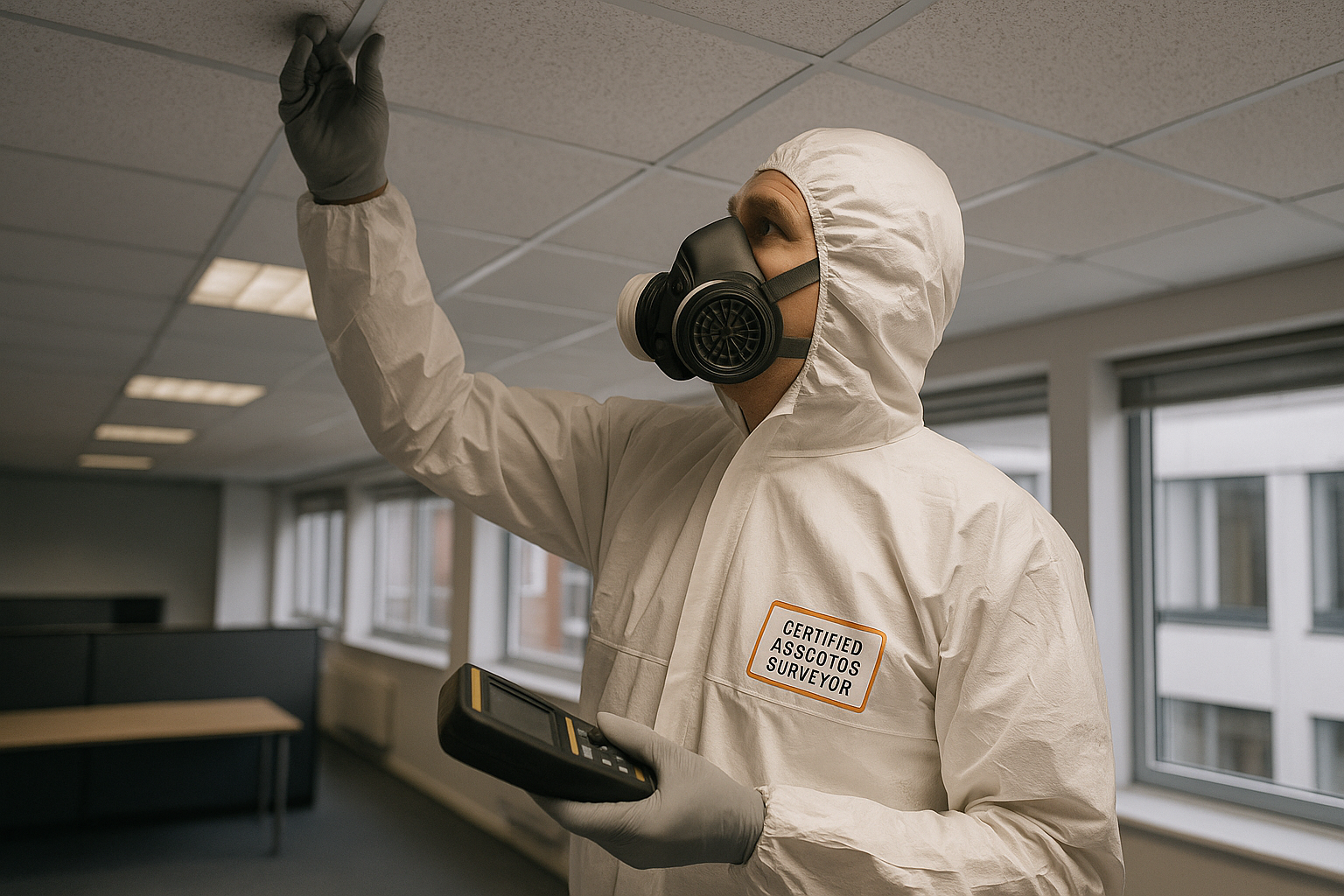
A panel above a ceiling, a garage roof sheet, old floor tiles under fresh vinyl, a board behind a fuse box — all of them can look ordinary until someone cuts, drills or removes them. In a building some materials that are suspected to contain asbestos can be positively identified, but only through the right combination of survey work, sampling and laboratory analysis. If you are responsible for a property built before 2000, guessing is not a strategy. It is how routine maintenance turns into a health risk, a site stoppage and a compliance problem.
Asbestos was used across a huge range of UK building products because it offered heat resistance, durability and insulation. The difficulty is that asbestos fibres are microscopic. You cannot confirm asbestos by sight, smell or touch, and disturbing the wrong material can release fibres into the air. That is why suspect materials should be treated with caution until a competent surveyor and, where needed, a laboratory result provide a clear answer.
For dutyholders, landlords, facilities teams and property managers, the practical message is simple: stop work, secure the area and get the material assessed properly. In a building some materials that are suspected to contain asbestos can be positively identified through professional inspection and testing, not through assumptions made on site.
Why in a building some materials that are suspected to contain asbestos can be positively identified only by proper assessment
Many asbestos-containing materials look almost identical to non-asbestos alternatives. A cement sheet may or may not contain asbestos. A textured coating may or may not contain asbestos. A ceiling tile, insulating board or floor tile may look familiar, but appearance alone is never enough for certainty.
Surveyors use visual clues as part of the process, but visual identification only gets you so far. Material type, age, location, surface finish, condition and fixing method can all point towards asbestos, yet those observations remain provisional until backed up by analysis where appropriate.
This is the point many people miss. In a building some materials that are suspected to contain asbestos can be positively identified after a competent inspection and, where necessary, controlled sampling followed by laboratory examination. Until then, the safest approach is to presume asbestos may be present.
What a surveyor looks for on first inspection
- The age of the building and any known refurbishment history
- The type of product and where it is installed
- Whether the material matches known asbestos-containing products
- The condition of the material and whether it has been damaged
- How likely it is to be disturbed during normal use or planned works
- Whether sampling is safe, necessary and reasonably practicable
That initial assessment matters because it shapes the next step. Sometimes a material can be presumed to contain asbestos for management purposes. In other cases, especially before intrusive work, confirmation by testing is the sensible route.
Common materials that may contain asbestos in UK buildings
If a property was constructed or refurbished before 2000, asbestos may be present in more places than people expect. It is not limited to pipe lagging and garage roofs. It was used in decorative finishes, fire protection, insulation products and building components across domestic, commercial and industrial settings.
Some materials are relatively low risk when in good condition. Others are far more friable and can release fibres more easily if disturbed. Knowing the difference helps you judge urgency, but it still does not replace formal identification.
Materials often found to contain asbestos
- Asbestos insulating board in partitions, ceiling tiles, soffits, risers and fire breaks
- Textured coatings on ceilings and walls
- Asbestos cement sheets in garages, outbuildings, roofs, wall cladding and flues
- Floor tiles and bitumen adhesives
- Pipe lagging and boiler insulation
- Sprayed coatings on structural elements
- Roofing felt, ropes, gaskets and seals in plant areas
- Panels and backing boards near older electrical equipment
- Gutters, downpipes and other external cement products
Location is often a clue. Plant rooms, service risers, loft spaces, basements, ceiling voids, under-stair cupboards, meter cupboards and older garages are all places where suspect materials often turn up.
Condition is another clue. If a board has broken edges, a lagged pipe is flaking, or a ceiling tile has been drilled repeatedly, the risk of fibre release is higher. The right response is not to poke at it further. It is to isolate the issue and arrange assessment.
What to do immediately if you suspect asbestos
When a suspect material is uncovered during maintenance, refurbishment or a simple repair, speed matters. Not speed to remove it, but speed to stop the disturbance and prevent the problem getting worse.
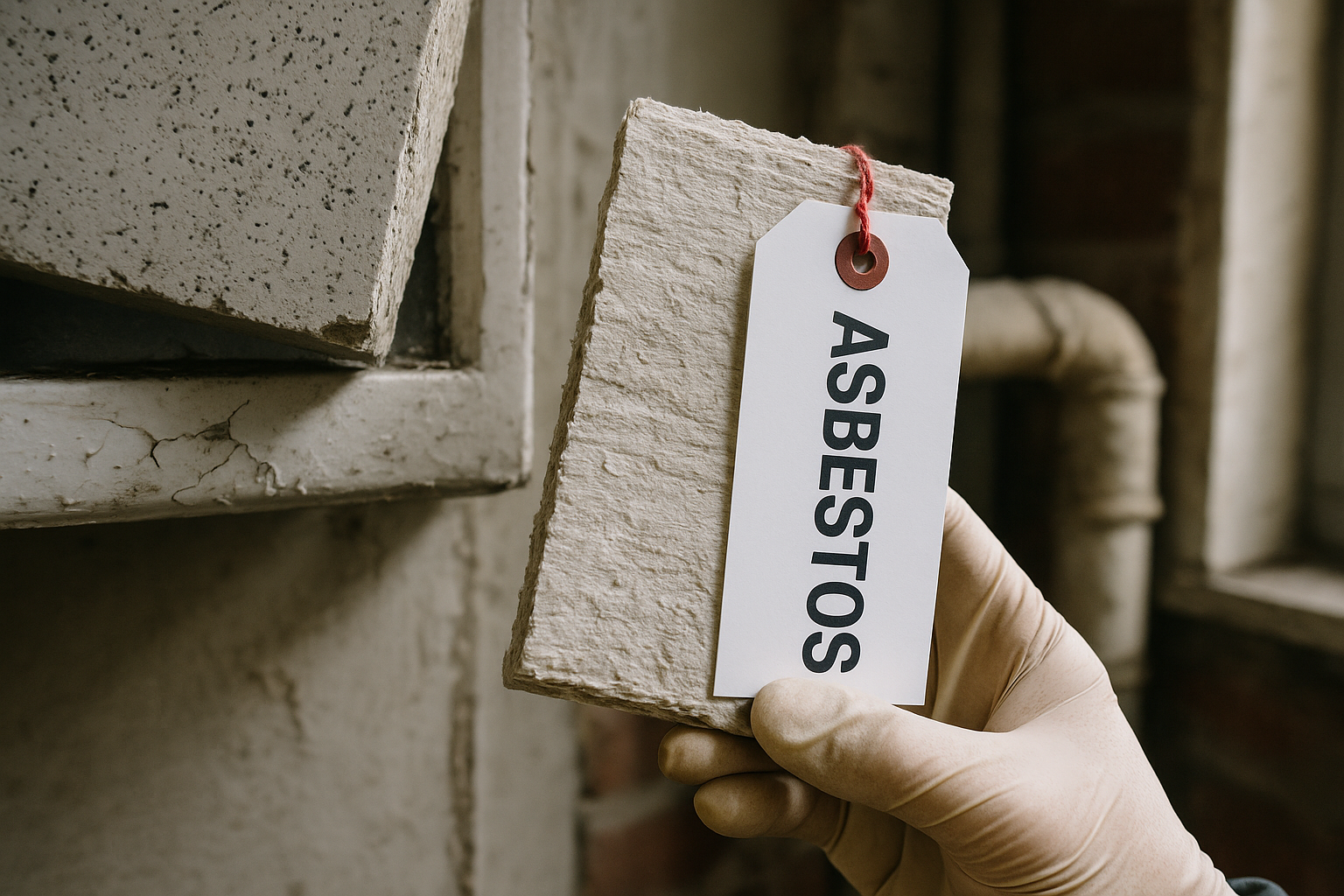
The safest first response is practical and straightforward.
- Stop work immediately. Do not cut, drill, break, sand or move the material.
- Keep people away. Restrict access to the area until it has been assessed.
- Avoid creating dust. Do not sweep, vacuum or wipe debris unless it is part of a controlled asbestos procedure.
- Shut down anything that may spread fibres. Fans or ventilation affecting the immediate area may need to be turned off.
- Report the issue. Make sure the dutyholder, property manager or responsible person knows what has been found.
- Arrange professional assessment. Get a competent surveyor or asbestos consultant involved before work resumes.
These steps apply to more than major construction works. Small jobs cause plenty of asbestos incidents. Changing lights, fitting alarms, lifting floor coverings, replacing pipework, installing cabling and opening service voids can all disturb hidden asbestos if no one checks first.
What not to do
- Do not assume a modern paint finish means the material underneath is safe
- Do not ask a contractor to take “a quick look” and carry on
- Do not bag up debris without knowing what it is
- Do not rely on memory if survey records are missing or outdated
- Do not continue works while waiting for someone to “confirm later”
That pause can save time as well as reduce risk. A controlled stop is far easier to manage than contamination, emergency cleaning and a delayed project.
How asbestos is actually identified: survey, sampling and analysis
This is where suspicion becomes evidence. In a building some materials that are suspected to contain asbestos can be positively identified by following a structured process. That process should align with the Control of Asbestos Regulations, HSG264 and relevant HSE guidance.
The exact route depends on the building, the material and the type of work planned. In broad terms, there are three stages: inspection, sampling and analysis.
Stage 1: Inspection
A competent surveyor inspects the material in context. They consider the product type, condition, accessibility, likelihood of disturbance and whether the area has already been covered by an existing survey. This stage may identify materials that should be presumed to contain asbestos for management purposes, even before samples are taken.
Stage 2: Sampling
If confirmation is required and sampling is appropriate, a small sample is taken in a controlled way. The area should be managed to minimise fibre release. The sample must be sealed and labelled correctly, and the point of sampling may be made good if needed.
Sampling is not just about taking a fragment off a surface. It needs to be representative, handled safely and linked clearly to the location it came from. Poor sampling can give misleading results or create unnecessary contamination.
Stage 3: Laboratory analysis
The sample is then examined by a competent laboratory. The result can confirm whether asbestos is present and, where relevant, identify the asbestos type. That gives the dutyholder solid information for deciding whether the material should be managed in place, repaired, encapsulated or removed.
If you need formal confirmation, professional asbestos testing is the correct next step. Where a sample has already been obtained safely and appropriately, sample analysis can provide the laboratory result needed to support decision-making.
Why DIY identification is unreliable
Homeowners and site teams often search online for images and try to match what they have found. That may help them recognise a possible issue, but it does not identify asbestos with certainty.
- Many asbestos and non-asbestos materials look the same
- Surface coatings can hide the underlying product
- Refurbishment can mix old and new materials in one area
- Taking a sample without controls can release fibres
- An unrepresentative sample may lead to the wrong conclusion
If there is any doubt, leave the material alone and bring in a competent professional.
Choosing the right asbestos survey for the job
An asbestos survey is not a generic formality. The correct survey depends on what is happening in the building. Choosing the wrong one can leave hidden asbestos undetected until contractors disturb it.
Survey work should be planned in line with HSG264, with the scope matched to the building use and the proposed works. For occupied premises, routine management needs differ from refurbishment or demolition.
Management survey
A management survey is used to locate, as far as reasonably practicable, asbestos-containing materials that could be damaged or disturbed during normal occupation, routine maintenance or minor works.
This is the survey most often needed for non-domestic premises and common parts of residential buildings. It supports the asbestos register and helps dutyholders manage risk day to day.
Refurbishment survey
A refurbishment survey is required before refurbishment or intrusive maintenance. It is more invasive because the surveyor must inspect the specific areas that will be disturbed by the planned works.
If ceilings are coming down, walls are being opened or floors are being lifted, this survey should be in place before contractors start. Leaving it until the job is underway is a common and expensive mistake.
Demolition survey
A demolition survey is needed before demolition. It is fully intrusive and aims to locate all asbestos-containing materials so they can be dealt with before demolition proceeds.
This is not just a box-ticking exercise. It prevents uncontrolled disturbance during strip-out and demolition activity, where hidden asbestos would otherwise be broken up and spread.
What a good survey report should contain
- Clear locations of suspect or confirmed asbestos-containing materials
- Descriptions and photographs
- Sample references and laboratory results where taken
- Material assessments and, where relevant, priority information
- Recommendations for management, repair, encapsulation or removal
- Information suitable for the asbestos register
Keep the report accessible. Contractors need the relevant asbestos information before work begins, not after a problem appears.
How likely is asbestos in an older property?
If the building was constructed or refurbished before 2000, the possibility is real. That does not mean every older property contains dangerous asbestos in every room. It does mean you should not assume it is absent simply because it is not obvious.
Age is a useful indicator, but it is not the only one. Refurbishment history matters just as much. A building may have modern finishes in occupied spaces while older asbestos-containing materials remain hidden behind boxing, above ceilings, under floors or in service areas.
General rule of thumb by age
- Older properties: often more likely to contain multiple asbestos products
- Later pre-2000 properties: asbestos may still be present in selected components and finishes
- Post-2000 properties: much less likely to contain asbestos from original construction, though retained older elements may still exist
Converted buildings, industrial units, schools, offices, retail premises and housing stock with piecemeal refurbishment can all contain a mix of materials from different periods. That is why records, surveys and testing matter more than assumptions based on appearance alone.
Where property managers and dutyholders usually get caught out
Most asbestos problems do not start with planned licensed removal. They start during routine work when someone assumes a board, panel, tile or insulation layer is standard building fabric.
Electricians, plumbers, telecoms engineers, decorators, fire alarm installers and general maintenance teams are often the people most likely to disturb hidden asbestos. They are working quickly, often in confined spaces, and may only expose the material once the job is already underway.
Typical problem scenarios
- Drilling through a ceiling tile or soffit without checking survey records
- Lifting old floor finishes and disturbing bitumen adhesive
- Opening a riser or service duct that contains insulating board
- Replacing a consumer unit mounted on an asbestos-containing backing board
- Removing boxing around pipework without a refurbishment survey
- Breaking cement sheets during garage or outbuilding repairs
These are avoidable incidents. The fix is process, not guesswork.
Practical steps for safer maintenance
- Check whether an asbestos register exists and review it before any work starts.
- Make sure the survey type matches the planned task.
- Brief contractors on known or presumed asbestos locations.
- Use permit-to-work systems where intrusive activity is planned.
- Stop immediately if hidden materials are uncovered.
- Update records when new materials are identified or sampled.
If there is no current survey and the building age suggests asbestos may be present, arrange one first. That is usually faster and cheaper than pausing a live project once suspect materials are exposed.
Legal duties and guidance you need to follow
The legal framework in the UK is clear enough in principle. The Control of Asbestos Regulations place duties on those responsible for non-domestic premises and the common parts of domestic buildings to manage asbestos risk properly.
In practical terms, that means the dutyholder must take reasonable steps to find out whether asbestos is present, assess the risk and make sure information is given to anyone liable to disturb it. Survey work should be carried out in line with HSG264, and wider decisions should reflect current HSE guidance.
What compliance looks like in practice
- Knowing the likely age and history of the building
- Having the correct survey for the premises and planned works
- Maintaining an up-to-date asbestos register where required
- Sharing asbestos information with contractors before work starts
- Using testing where a material needs confirmation
- Arranging licensed contractors where the work requires it
- Reviewing management arrangements when building use changes
You do not need to memorise every line of guidance to manage asbestos properly. You do need a reliable system that works every time, especially across multiple sites.
When testing is enough and when you need a full survey
There is a difference between confirming one suspect material and understanding asbestos risk across a building. Testing can answer a specific question. A survey answers the wider one.
If a single panel, textured coating or floor tile needs identification, targeted asbestos testing may be enough. If you are managing an occupied building, planning maintenance or preparing for intrusive works, a survey is usually the proper route.
Testing may be suitable when:
- You need to confirm one or two specific suspect materials
- A survey already exists but one item needs further clarification
- You require evidence before deciding on repair or removal
A survey is usually needed when:
- You are responsible for ongoing management of a non-domestic property
- There is no reliable asbestos information for the building
- Refurbishment or intrusive maintenance is planned
- Demolition is proposed
- Contractors need broader asbestos information before starting work
If you are unsure which route is right, ask before work starts. A short conversation at the planning stage can prevent the wrong survey, duplicate visits and unnecessary delays.
Regional support for occupied sites and property portfolios
Response time matters when tenants are in place, contractors are booked and access windows are tight. That is particularly true for managing agents, FM teams and organisations with multiple properties.
If you need local support, Supernova can help with an asbestos survey London appointment for capital sites, an asbestos survey Manchester visit for North West properties, or an asbestos survey Birmingham booking for Midlands premises.
The principle is the same wherever the building is located: identify the right survey, control the risk, and give contractors accurate information before they start work.
Frequently Asked Questions
Can asbestos be identified just by looking at it?
No. A visual inspection can indicate that a material may contain asbestos, but it cannot usually confirm it with certainty. In a building some materials that are suspected to contain asbestos can be positively identified only after competent assessment and, where needed, laboratory analysis.
Should I stop work if I find a material that might contain asbestos?
Yes. Stop work immediately, keep people away from the area and arrange professional assessment. Do not drill, cut, break, sweep or remove the material while waiting for advice.
What is the difference between asbestos testing and an asbestos survey?
Testing confirms whether a specific sample contains asbestos. A survey looks at the building more broadly, locating and assessing suspect materials so they can be managed safely or addressed before planned works.
Do all buildings built before 2000 contain asbestos?
No, not all of them. However, any property built or refurbished before 2000 should be treated as potentially containing asbestos until reliable survey information or test results show otherwise.
Which survey do I need before refurbishment works?
You usually need a refurbishment survey for the areas affected by the planned works. A management survey is not enough for intrusive refurbishment because it is not designed to uncover all materials hidden behind finishes or within the building fabric.
If you need clear answers before maintenance, refurbishment or demolition, Supernova Asbestos Surveys can help. We carry out surveys, testing and sampling nationwide, with practical advice that keeps projects moving safely. Call 020 4586 0680 or visit asbestos-surveys.org.uk to arrange the right service.