Home Inspection for Asbestos: What Every UK Homeowner Needs to Know
If your home was built before 2000, there is a realistic chance it contains asbestos-containing materials (ACMs) — and a home inspection for asbestos is the only reliable way to know for certain. Asbestos was used extensively throughout UK construction during the 20th century, appearing in everything from Artex ceilings and floor tiles to pipe lagging, roof sheets, and boiler insulation. In millions of properties, it is still there, largely undisturbed and unrecorded.
The reassuring truth is that asbestos left in good condition and undisturbed does not automatically pose a health risk. The danger comes when materials deteriorate, get damaged, or are disturbed — releasing microscopic fibres into the air that can cause serious, irreversible disease. That is precisely why regular maintenance and professional inspections are so valuable.
Why Routine Maintenance Is Your First Line of Defence
Most homeowners only think about asbestos when a renovation is looming or something has gone wrong. By that point, damage may already have occurred and fibres may already have been disturbed.
Routine maintenance gives you the opportunity to monitor the condition of your property before small problems escalate into genuine hazards. When you — or a professional — regularly checks the condition of materials throughout your home, you are far more likely to catch early signs of deterioration.
A crumbling ceiling, degraded pipe lagging, or damaged floor tiles might not look alarming at first glance. But if those materials contain asbestos, the appropriate response is entirely different from a standard repair job. Knowing your property’s asbestos status in advance means you can act safely and proportionately — rather than discovering a problem mid-project when fibres may already be airborne.
What a Professional Home Inspection for Asbestos Actually Involves
A casual walk around your property will not identify asbestos. You cannot reliably detect ACMs by sight alone — many materials that contain asbestos look completely ordinary, and some that look suspicious turn out to be asbestos-free. Professional assessment is the only approach that gives you accurate, actionable information.
Visual Survey of the Property
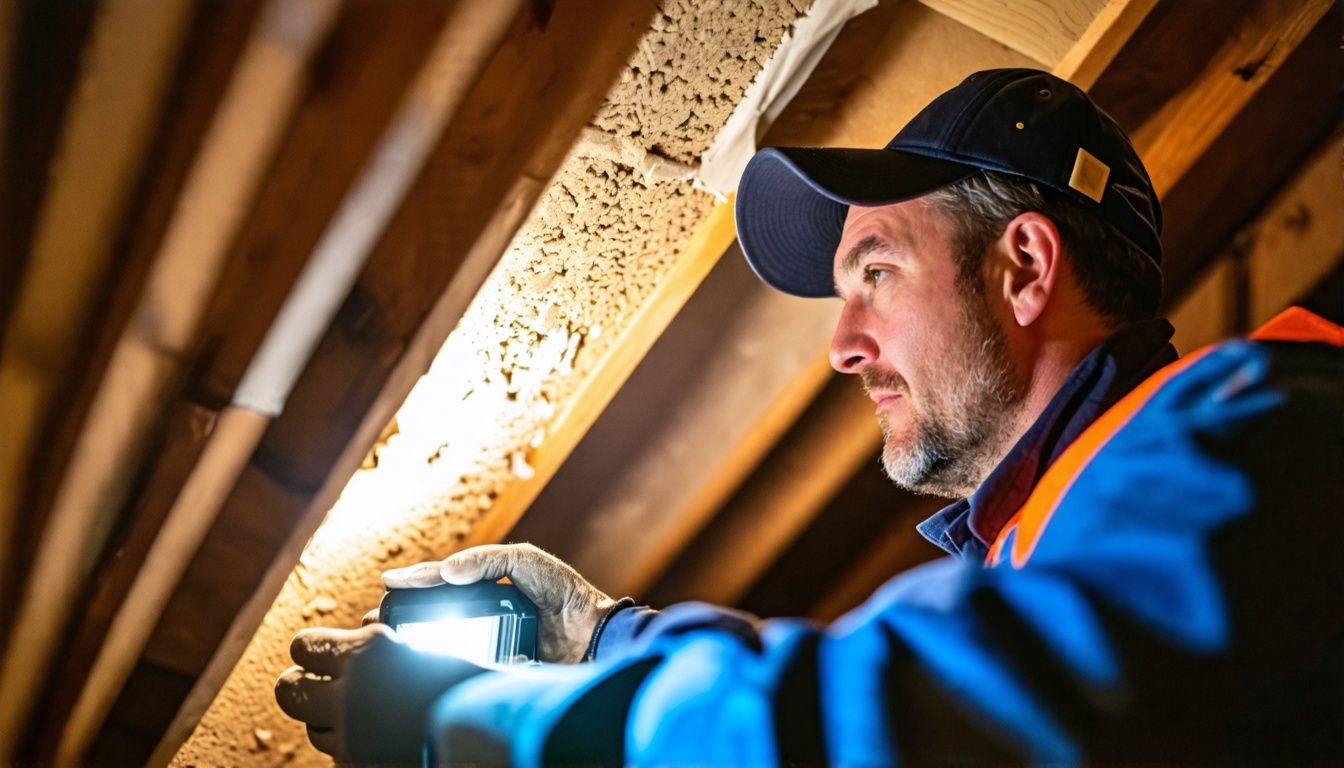
A qualified asbestos surveyor will carry out a systematic inspection of all accessible areas throughout your home. They are trained to recognise materials that were commonly manufactured with asbestos and to assess their current condition — whether they are intact, damaged, or showing signs of friability.
Common locations a surveyor will examine include:
- Textured coatings on ceilings and walls, such as Artex
- Floor tiles, particularly older vinyl and thermoplastic types
- Pipe lagging and boiler insulation
- Roof sheets, soffit boards, and guttering — especially in extensions and outbuildings
- Ceiling tiles and partition boards
- Sprayed coatings on structural steelwork
- Insulation around heating systems and storage heaters
The surveyor is not simply looking for the presence of these materials. They are assessing the risk each material currently poses, based on its condition, location, and how likely it is to be disturbed during normal use or maintenance.
Sampling and Laboratory Analysis
Where materials are suspected to contain asbestos, small samples are taken and sent to an accredited laboratory for analysis. This is the only definitive way to confirm or rule out asbestos content.
Results will tell you not just whether asbestos is present, but what type — important information when it comes to assessing risk and deciding between management and removal. If you want to test a specific material without commissioning a full survey, our asbestos testing service allows you to submit samples for analysis at our UKAS-accredited laboratory.
Alternatively, you can order an asbestos testing kit directly from our website, collect a sample following the guidance provided, and receive your results promptly without needing to book a full inspection.
The Written Asbestos Report
Following any professional inspection, you should receive a detailed written report. This will include the location of any identified or suspected ACMs, their current condition, a risk assessment, and clear recommendations for management or removal.
This document becomes a valuable record for your property — particularly if you are planning building work, selling, or remortgaging. Keep it somewhere accessible and share it with any tradespeople working on your home.
The Different Types of Asbestos Survey — and When You Need Each One
Not all asbestos surveys are the same. The right type depends on what you are planning to do with the property and what information you need.
Management Survey
A management survey is the standard option for an occupied home. It identifies ACMs that could be disturbed during normal occupation or routine maintenance, assesses their condition, and provides a management plan. This is the appropriate starting point for any homeowner who wants to understand their property’s asbestos status without planning any immediate renovation work.
Refurbishment Survey
If you are planning renovation work — even something as apparently minor as removing a partition wall, replacing a bathroom, or fitting a new kitchen — a refurbishment survey is required before work begins. This is a more intrusive inspection that focuses on areas which will be directly affected by the planned works.
Under the Control of Asbestos Regulations, this is a legal requirement in non-domestic properties. For domestic properties, it is strongly recommended — and any responsible contractor should insist on it before starting work.
Demolition Survey
Required before any demolition work takes place, a demolition survey is the most comprehensive type available. It involves a fully intrusive inspection of the entire structure to locate all ACMs before they can be disturbed. This survey is non-negotiable — demolishing a structure without one puts workers and the surrounding area at serious risk.
Re-Inspection Survey
If asbestos has already been identified in your property and is being managed in place rather than removed, it should be re-inspected at regular intervals to check that its condition has not deteriorated. A re-inspection survey provides an updated assessment and ensures your management plan remains current and effective. Annual re-inspections are standard practice where ACMs are present.
The Health Risks of Getting This Wrong
Asbestos-related disease is entirely preventable — but the consequences of exposure are severe, and they often do not become apparent for decades after contact. That long latency period is what makes asbestos so particularly dangerous: people can be unaware of the connection between past exposure and a current diagnosis.
Conditions caused by asbestos fibre inhalation include:
- Mesothelioma — a cancer of the lining of the lungs or abdomen, almost exclusively caused by asbestos exposure
- Asbestos-related lung cancer
- Asbestosis — chronic scarring of lung tissue causing progressive breathing difficulties
- Pleural thickening — thickening of the membrane surrounding the lungs, restricting breathing capacity
The risk is particularly significant during home maintenance and DIY work. Drilling into an Artex ceiling, cutting through old floor tiles, or disturbing pipe lagging without knowing it contains asbestos can release substantial quantities of fibres. A professional home inspection for asbestos — carried out before you pick up a drill — prevents that exposure from ever happening.
What to Do If Asbestos Is Found in Your Home
Finding asbestos does not mean you need to panic or evacuate your home. In many cases, ACMs that are in good condition and are not at risk of being disturbed can be safely managed in place. The key is having a clear, documented plan and monitoring the material’s condition over time.
If the Asbestos Is in Good Condition
Leave it alone. Intact, undamaged asbestos poses minimal risk. Your surveyor will advise on any specific precautions, and you should arrange annual re-inspections to ensure the condition has not changed. Keep a written record of the material’s location, condition, and the recommendations from your report.
If the Asbestos Is Damaged or Needs to Be Removed
This is not a DIY job under any circumstances. Professional asbestos removal must be carried out by trained specialists with appropriate equipment and disposal arrangements. For certain higher-risk materials — such as sprayed coatings, lagging, or insulating board — only a licensed contractor is legally permitted to carry out the work.
Do not attempt to repair, seal, or remove the material yourself. Contact a reputable, licensed removal company and follow their guidance throughout.
Inform Anyone Working on Your Property
If you are having any work done — by a builder, plumber, electrician, or any other tradesperson — they must be informed of any known ACMs before work begins. This is not just best practice; it is a legal duty under the Control of Asbestos Regulations. Failing to inform workers puts them at risk and could expose you to legal liability.
Practical Steps Every Homeowner Should Take
You do not need to wait until something goes wrong to take action. Responsible asbestos management for a homeowner looks like this in practice:
- Commission a management survey if you have never had one done and your property was built before 2000. This gives you a baseline record of ACMs in your home.
- Book a refurbishment survey before any renovation, no matter how minor the work appears. Materials hidden behind walls or under floors can easily contain asbestos.
- Keep a written record of any asbestos found — its location, condition, and your surveyor’s recommendations. Update this each time a re-inspection is carried out.
- Schedule annual re-inspections if ACMs are present and being managed in place.
- Brief tradespeople before they start work — share your asbestos register and survey findings with every contractor who comes on site.
- Never disturb suspected materials without testing them first. If you are unsure about a material, treat it as though it contains asbestos until you know otherwise.
If you want to test a specific material quickly, a testing kit from Supernova Asbestos Surveys allows you to collect a sample at home and have it analysed by our UKAS-accredited laboratory — giving you a definitive answer without guesswork.
How Supernova Asbestos Surveys Can Help
At Supernova Asbestos Surveys, we carry out management surveys, refurbishment and demolition surveys, re-inspection surveys, and asbestos testing for homeowners across the UK. With over 50,000 surveys completed nationwide, our surveyors are fully qualified and experienced in residential properties of all ages and types.
If asbestos is found and needs to be removed, we can manage the entire process — from survey through to safe removal, clearance, and disposal — so you do not have to coordinate multiple contractors or navigate unfamiliar regulations on your own.
To book a survey or speak to one of our team, call us on 020 4586 0680 or visit asbestos-surveys.org.uk. We are based at Hampstead House, 176 Finchley Road, London NW3 6BT, with nationwide coverage across the UK.
Frequently Asked Questions
How often should I have a home inspection for asbestos?
If a management survey has been carried out and no ACMs were found, there is no need for regular re-surveys unless you are planning work or the property’s condition changes significantly. If ACMs are present and being managed in place, annual re-inspections are the standard recommendation to ensure conditions have not deteriorated.
Can I identify asbestos myself at home?
No. Asbestos cannot be reliably identified by visual inspection alone — even trained professionals require laboratory analysis to confirm the presence of asbestos. Attempting to identify or disturb suspected materials yourself risks releasing fibres. Always use a qualified surveyor or, at minimum, a proper sampling kit with laboratory analysis.
Is asbestos in a domestic property illegal?
No. The presence of asbestos in a domestic property is not illegal. The regulations governing asbestos management primarily apply to non-domestic premises, though strict legal rules exist around how asbestos must be handled, removed, and disposed of. Homeowners also have a legal duty to inform workers of any known ACMs before work begins.
Do I need an asbestos survey before selling my home?
There is currently no legal requirement to commission an asbestos survey before selling a residential property in the UK. However, having a survey report available can reassure buyers, speed up conveyancing, and demonstrate that you have managed the property responsibly. It may also prevent issues arising during a buyer’s own survey.
What happens if a tradesperson disturbs asbestos in my home?
If asbestos is disturbed during work, the area should be vacated immediately and the work stopped. A licensed asbestos contractor should be contacted to assess the situation, carry out air monitoring, and arrange decontamination if necessary. This is why informing tradespeople of known ACMs before work begins — and commissioning a refurbishment survey in advance — is so critical.