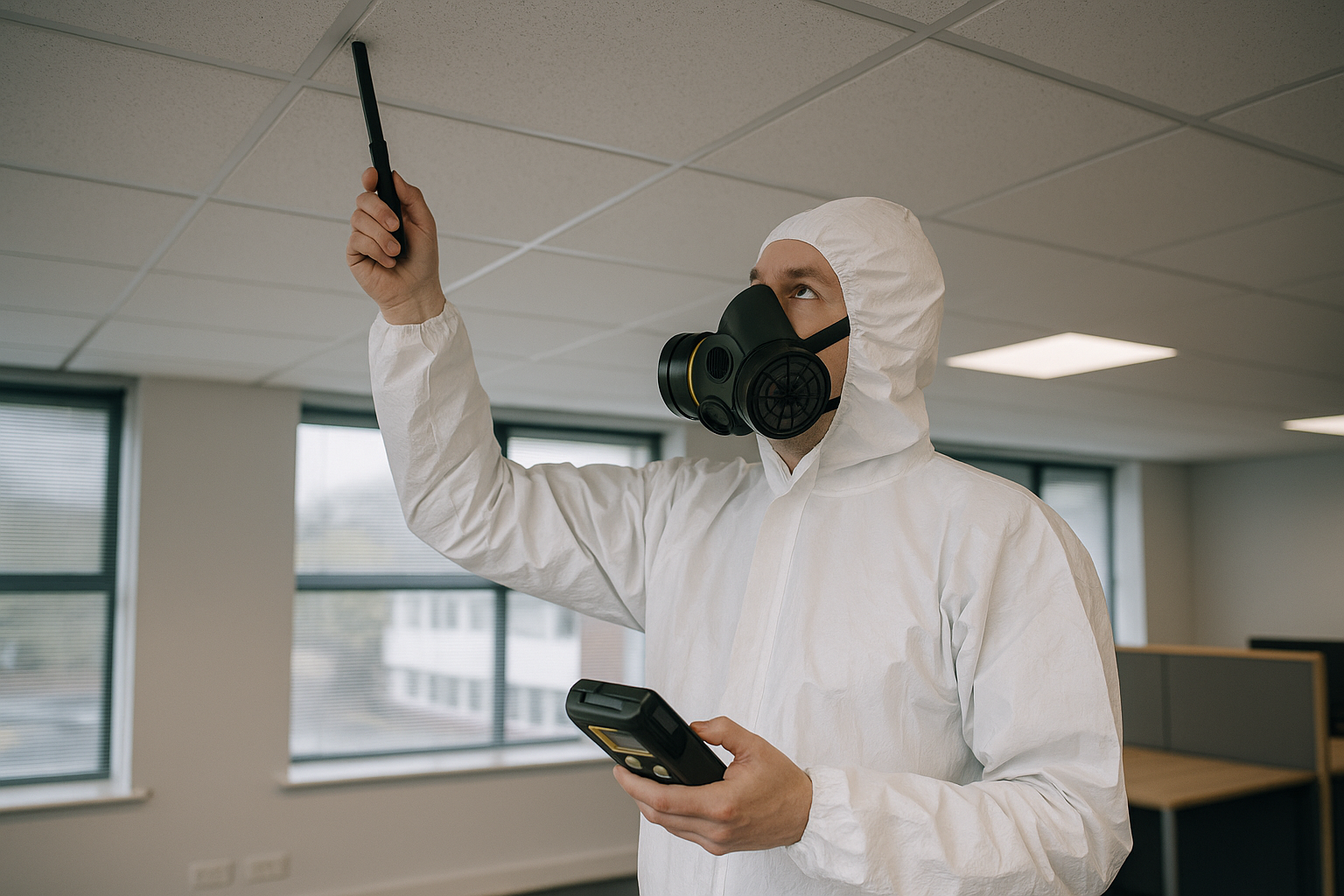
Older buildings can hide asbestos in plain sight. If you are asking how can asbestos be identified, the short answer is this: age, location, product type and building history can all raise suspicion, but only professional sampling and laboratory analysis can confirm whether a material contains asbestos.
That distinction matters. Many asbestos-containing materials look almost identical to non-asbestos alternatives, so guessing based on appearance alone can put staff, contractors, tenants and visitors at risk.
For property managers, landlords, dutyholders and anyone responsible for maintenance, the safest approach is simple: treat suspect materials cautiously, avoid disturbing them, and get the right survey or testing arranged before work starts.
How can asbestos be identified in practice?
When people ask how can asbestos be identified, they often mean one of two things. They either want to know what asbestos looks like, or they want to know how to confirm whether a specific material contains it.
Those are not the same thing. A visual inspection can help identify materials that are likely to contain asbestos, but it cannot prove it.
In practice, identification usually involves three stages:
- Review the building age and history to understand whether asbestos is likely to be present.
- Inspect likely materials and locations without disturbing them.
- Arrange professional sampling and analysis to confirm whether asbestos is present.
If a property was built, altered or refurbished during the main period when asbestos was widely used in the UK, asbestos-containing materials remain a realistic possibility. This is especially relevant in non-domestic premises and the common parts of domestic buildings, where the duty to manage asbestos applies under the Control of Asbestos Regulations.
HSE guidance and HSG264 make it clear that asbestos surveys must be suitable for the building and the planned work. That means the answer to how can asbestos be identified is often linked to choosing the correct survey, not just looking harder at the material.
Why visual identification is limited
One of the biggest mistakes in asbestos management is assuming that a material can be identified by sight alone. It cannot. Asbestos was added to hundreds of products, and many of them still look ordinary today.
A grey board could be asbestos insulating board, or it could be a non-asbestos board. A textured ceiling coating may contain asbestos, or it may not. Floor tiles, soffits, cement sheets and insulation products can all be misleading if you rely on appearance alone.
What suspect asbestos materials may look like
Depending on the product, suspect materials may appear:
- Fibrous and soft
- Dense and board-like
- Rigid and cement-like
- Textured or patterned
- Smooth, tiled or slightly marbled
Colour is not a reliable indicator. Neither is surface finish. Even the condition of the material does not tell you whether asbestos is present.
So, if you are still wondering how can asbestos be identified, the key point is this: visual clues can help you spot risk, but they are only the starting point.
Using the age and history of a building to identify risk
Building age and previous use are some of the most useful clues when assessing whether asbestos may be present. They do not confirm asbestos, but they help you decide how cautious you need to be and where to look first.
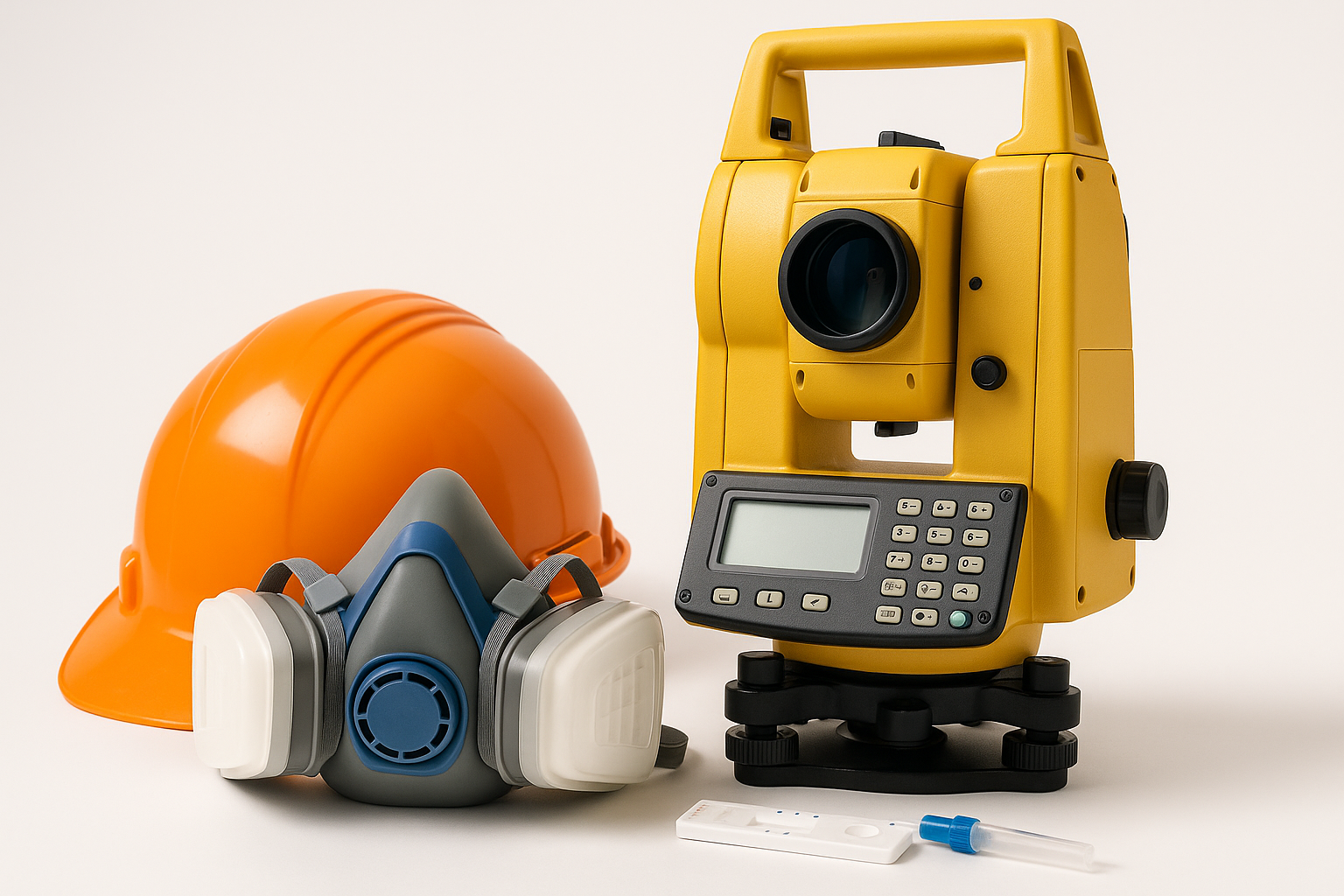
Older homes, offices, schools, warehouses, retail units and industrial premises are all worth careful review, particularly where original materials remain or refurbishment records are incomplete.
Questions to ask about the property
If you need a practical way to assess risk, start with the building record. Ask:
- When was the property originally built?
- Has it been extended, refurbished or converted?
- Are there old plans, specifications or maintenance files?
- Has an asbestos survey already been carried out?
- Are there removal records, certificates or an asbestos register?
- What was the building originally used for?
A former factory converted into offices may still contain asbestos in risers, plant rooms or ceiling voids. A block of flats may have asbestos in the common parts even if individual units have been modernised. A school or hospital estate may contain asbestos in service ducts, ceiling tiles, fire protection and older plant areas.
When considering how can asbestos be identified, the property’s history often tells you where suspicion should be highest.
Common places where asbestos is found
Knowing where asbestos was commonly used is one of the most practical parts of answering how can asbestos be identified. Asbestos was added to products for fire resistance, insulation, strength and durability, so it appears in far more places than many people expect.
Common locations include:
- Boiler rooms and plant rooms
- Pipe lagging and thermal insulation
- Service risers and ceiling voids
- Partition walls and ceiling tiles
- Heater cupboards and duct panels
- Textured coatings on ceilings and walls
- Floor tiles and bitumen adhesive
- Roof sheets, soffits, gutters and downpipes
- Electrical backing boards and fuse cupboard linings
- Lift shafts, stairwells and storage areas
- Garages, sheds and outbuildings
- Wall cladding and industrial roof panels
In occupied commercial buildings, asbestos is often hidden above suspended ceilings, inside service cupboards or behind panels. That is why routine maintenance can create risk if contractors start work without checking the asbestos information first.
Non-domestic premises and common parts
The duty to manage asbestos applies to non-domestic premises such as offices, schools, shops, factories, healthcare settings and public buildings. It also applies to common parts of domestic premises, including corridors, entrance halls, stairwells, bin stores and plant rooms.
If you are responsible for those areas, you need to know whether asbestos is present, what condition it is in, and what controls are in place to prevent disturbance.
Types of asbestos-containing materials you may encounter
Different asbestos-containing materials present different levels of risk. The likelihood of fibre release depends on the product, its condition and whether it is disturbed.
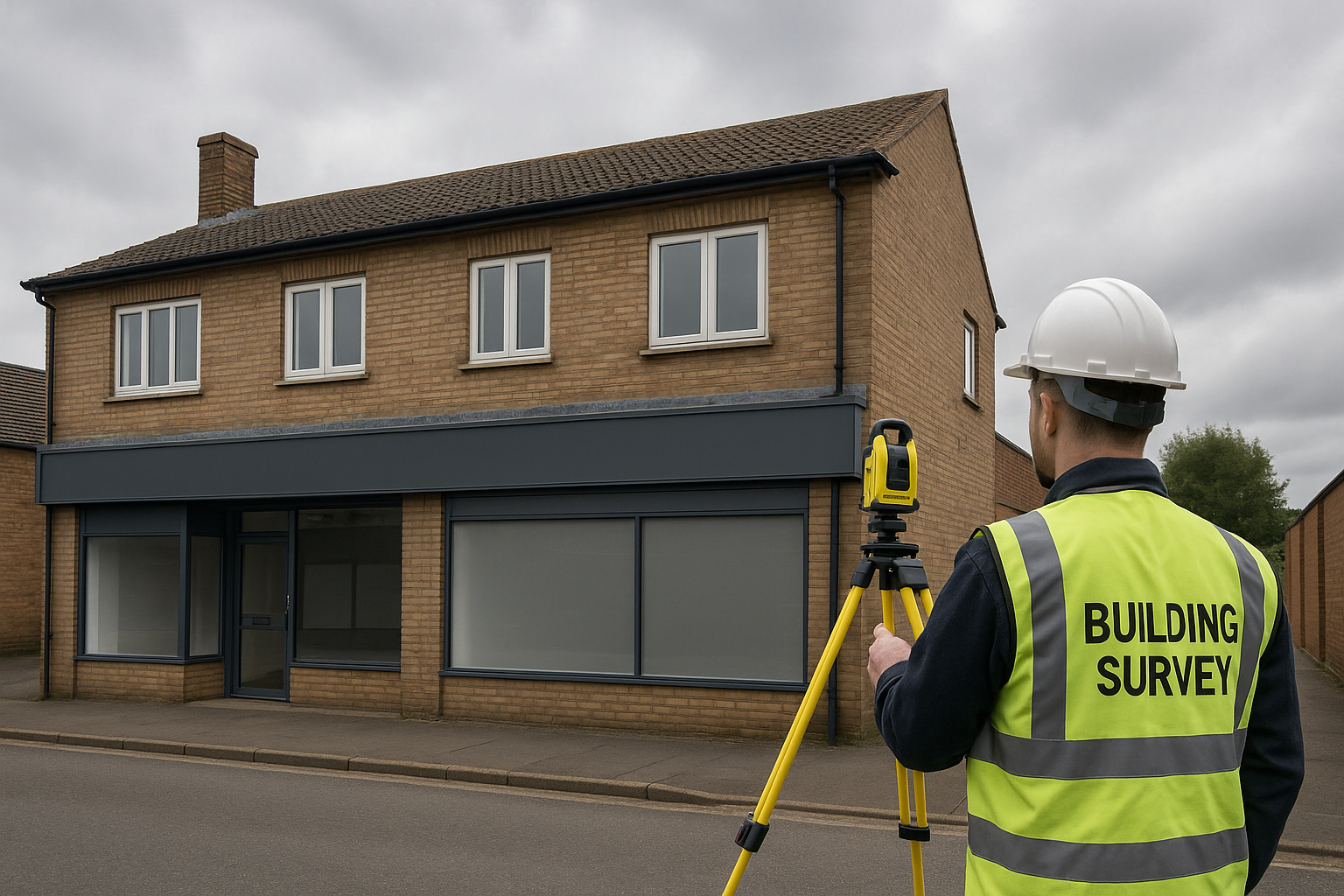
Understanding the common material types helps answer how can asbestos be identified more accurately on site.
Asbestos insulating board
Asbestos insulating board, often called AIB, is one of the most important materials to recognise. It was widely used for fire protection, partitions, soffits, ceiling tiles, service duct panels, heater cupboards and door linings.
AIB often looks similar to plasterboard or other fibre boards, which is why misidentification is common. It can release fibres more readily than asbestos cement if damaged, drilled, broken or removed.
If you suspect AIB:
- Do not drill or cut it
- Do not remove screws or fixings
- Do not break off a corner to inspect it
- Arrange professional assessment immediately
Asbestos cement products
Asbestos cement is commonly found in garage roofs, corrugated sheets, wall cladding, gutters, downpipes, flues and water tanks. It is usually harder and more rigid than AIB.
Although asbestos cement is generally lower risk when intact and undisturbed, it is not harmless. Cutting, snapping, weather damage and poor removal methods can still release fibres.
Textured coatings
Some textured coatings on ceilings and walls may contain asbestos. These finishes can look decorative and harmless, but sanding, scraping and drilling can disturb them.
Before refurbishment or redecoration, suspect coatings should be assessed properly rather than assumed to be safe.
Floor tiles and bitumen adhesive
Older floor finishes may contain asbestos in the tiles themselves or in the adhesive beneath. Because these materials can look like standard vinyl products, they are often overlooked during fit-outs and strip-outs.
If old flooring is being lifted, testing before work begins is the sensible step.
Pipe lagging, sprayed coatings and insulation
These are among the higher-risk asbestos materials because they can be friable and release fibres easily when disturbed. They are more likely to require licensed asbestos work if removal or repair is needed.
Any suspect insulation should be treated with extreme caution.
The only reliable way to confirm asbestos
If the question is how can asbestos be identified with certainty, the answer is professional sampling and laboratory analysis. That is the recognised method for confirming whether a material contains asbestos.
Sampling should be carried out by a competent person using suitable controls. The sample is then analysed by a laboratory to determine whether asbestos fibres are present and, if so, what type of asbestos is involved.
For fast confirmation of a suspect material, professional asbestos testing is often the most direct route. This is particularly useful when maintenance or refurbishment is planned and a specific product needs to be checked before work proceeds.
If you need an alternative route for sample analysis, Supernova also offers asbestos testing through a dedicated service page.
Practical advice here is straightforward:
- Do not take your own sample unless you are trained and authorised to do so
- Do not snap, scrape or drill a material to see what is inside
- Do not rely on online image comparisons
- Use competent surveyors and proper laboratory analysis
Choosing the right asbestos survey
Very often, the real answer to how can asbestos be identified is not a single sample but a suitable survey. The correct survey depends on how the building is used and what work is planned.
HSG264 sets out the framework for asbestos surveys in the UK. Choosing the wrong survey can leave hidden asbestos in place and expose contractors to unnecessary risk.
Management survey
For occupied buildings, a management survey is usually the starting point. Its purpose is to locate, as far as reasonably practicable, asbestos-containing materials that could be disturbed during normal occupation, routine maintenance or foreseeable activities.
This survey is commonly used in offices, schools, retail units, warehouses and the common parts of residential buildings. It supports the asbestos register and management plan required under the duty to manage.
Refurbishment survey
Before intrusive works, a refurbishment survey is needed. This applies to projects such as rewires, HVAC upgrades, kitchen and bathroom replacements, structural changes and strip-outs.
This type of survey is intrusive by design. It goes beyond surface inspection and looks inside walls, floors, ceilings and service voids where asbestos may be hidden.
Demolition survey
If a building, or part of it, is due to be demolished, a demolition survey is required. Its purpose is to identify all asbestos-containing materials, as far as reasonably practicable, before demolition starts.
This is not optional. Demolition work without the right asbestos information creates obvious legal and safety risks.
Re-inspection survey
If asbestos has already been identified and left in place, it must be monitored. A re-inspection survey checks whether known materials remain in good condition and whether the risk profile has changed.
That helps dutyholders keep their asbestos register current and decide whether further action is needed.
What to do if you suspect asbestos
If you come across a material that may contain asbestos, do not try to solve the problem with guesswork. A calm, controlled response is the safest option.
Take these steps immediately:
- Stop work in the area.
- Keep people away from the suspect material.
- Do not disturb it by drilling, sanding, scraping, breaking or moving it.
- Check existing asbestos records, including surveys and the asbestos register.
- Arrange testing or the correct survey before work resumes.
If the material has been damaged, restrict access and seek specialist advice without delay. Even where the product is lower risk, poor handling can turn a manageable issue into a serious one.
Who can work on asbestos?
Not all asbestos work is treated the same. The rules depend on the material, its condition and the task being carried out. Some work must be completed by a licensed asbestos contractor, while some lower-risk tasks may fall under non-licensed or notifiable non-licensed work.
That does not mean lower-risk work can be approached casually. Suitable training, risk assessment, control measures and waste handling are still required under HSE guidance.
Higher-risk work
Higher-risk activities are more likely to involve friable materials or significant fibre release. Examples include:
- Removing pipe lagging
- Work on sprayed coatings
- Large-scale work on damaged AIB
- Work on asbestos insulation
These tasks are typically handled by licensed contractors under strict controls.
Lower-risk work
Some lower-risk tasks may involve intact asbestos cement products, floor tiles or certain textured coatings. Even then, the work must be properly assessed before anyone starts.
If you are unsure which category applies, do not guess. Get specialist advice first.
Practical signs that should trigger caution
If you manage property regularly, there are certain situations where the question how can asbestos be identified should come up automatically.
Be cautious when:
- Opening ceiling voids in older buildings
- Accessing service risers or plant rooms
- Replacing old floor finishes
- Removing partition walls or soffits
- Working on garage roofs, outbuildings or cladding
- Upgrading heating systems or pipework
- Drilling into older boards or panels
- Starting any refurbishment without an intrusive survey
A simple rule helps here: if the material is older, unfamiliar or undocumented, assume it could contain asbestos until proven otherwise.
Getting the right support in your area
Local knowledge can make asbestos identification faster and more practical, especially when dealing with older building stock and urgent project deadlines. Supernova Asbestos Surveys operates nationwide and supports clients across domestic, commercial and public sector properties.
If you need help in the capital, our asbestos survey London service covers a wide range of property types. For clients in the North West, our asbestos survey Manchester service supports everything from offices to industrial units. In the Midlands, our asbestos survey Birmingham service helps dutyholders manage risk before maintenance, refurbishment or demolition.
Wherever your property is located, the principle stays the same: identify risk early, avoid disturbance, and use competent professionals to confirm what is present.
Frequently Asked Questions
Can asbestos be identified just by looking at it?
No. Visual inspection can highlight materials that may contain asbestos, but it cannot confirm their composition. The only reliable way to identify asbestos is through professional sampling and laboratory analysis.
How can asbestos be identified before refurbishment work starts?
Before intrusive work begins, a refurbishment survey is usually required. This survey is designed to inspect hidden areas such as wall cavities, ceiling voids and floor spaces where asbestos may be present.
Does the age of a property help identify asbestos risk?
Yes. The age and history of a building can indicate whether asbestos is likely to be present. Older properties and buildings with historic refurbishments or industrial use deserve particular caution, but age alone does not confirm asbestos.
What should I do if I think a material contains asbestos?
Stop work immediately, prevent access to the area, avoid disturbing the material and check whether an asbestos survey or register already exists. Then arrange professional testing or the correct survey.
Is asbestos always dangerous if it is present?
Not always. Asbestos is most dangerous when fibres are released and inhaled. Materials in good condition that are properly managed may not need immediate removal, but they do need to be identified, recorded and monitored in line with HSE guidance and the Control of Asbestos Regulations.
If you need clear answers on how can asbestos be identified, Supernova Asbestos Surveys can help with surveys, sampling, re-inspections and project support across the UK. Call 020 4586 0680 or visit asbestos-surveys.org.uk to arrange the right service for your property.