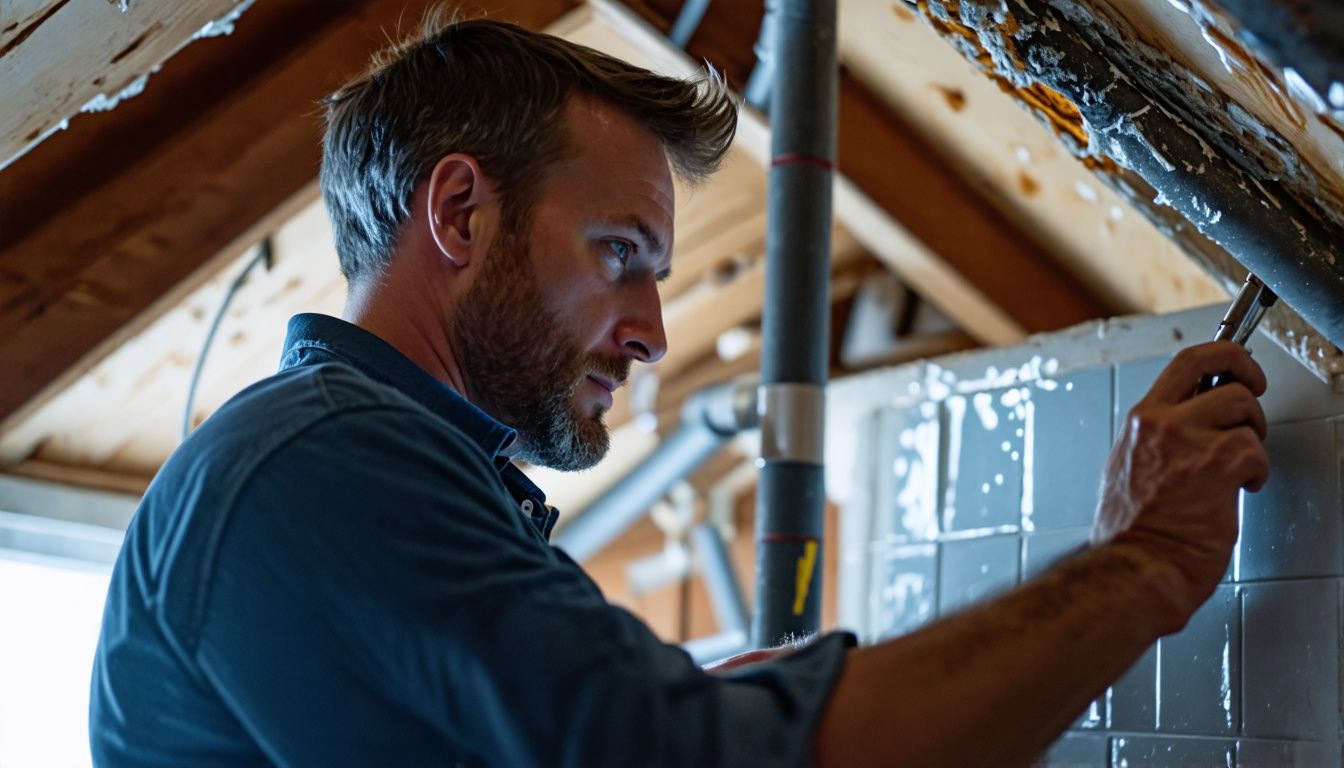
Professional Asbestos Testing: The Only Reliable Way to Know What’s in Your Home
If your home was built before 2000, there is a genuine possibility it contains asbestos-containing materials (ACMs). That is not alarmism — it reflects the sheer scale of asbestos use in UK construction throughout the 20th century. The problem is that you cannot identify asbestos by looking at it. It could be in your artex ceiling, your floor tiles, your pipe lagging, or behind your boiler, and it looks identical to any other building material.
Professional asbestos testing — carried out by a qualified surveyor with laboratory analysis — is the only way to confirm what is in your property, where it sits, and what risk it poses to your household. Guesswork is not an option when the consequences of getting it wrong can affect your health for decades.
Why Asbestos Remains a Real Issue in UK Homes
Asbestos was not fully banned in the UK until 1999. Before that date, it was incorporated into hundreds of building products — insulation boards, roof tiles, textured coatings, adhesives, floor tiles, pipe lagging, and more. Any home built or significantly renovated before that cut-off could contain any number of these materials.
The presence of asbestos does not automatically mean immediate danger. ACMs that are in good condition and left completely undisturbed are generally considered manageable. The risk arises when materials are damaged, deteriorate over time, or are disturbed during DIY projects or renovation work — releasing microscopic fibres into the air that can be inhaled.
Diseases linked to asbestos exposure — including mesothelioma, asbestosis, and lung cancer — can take decades to develop after exposure. That latency period is precisely what makes asbestos so dangerous, and why accurate identification through professional asbestos testing matters so much before any work begins.
What Professional Asbestos Testing Actually Involves
A professional asbestos survey is a systematic, methodical inspection of your property carried out by a trained and qualified surveyor. The objective is to locate any materials that may contain asbestos, assess their condition, and produce a clear written report so you can manage any risks appropriately.
The process is not simply a visual walk-through. It combines expert inspection, controlled sampling, and accredited laboratory analysis — each stage essential to producing a reliable result.
Visual Inspection
The surveyor conducts a room-by-room inspection of all accessible areas, assessing materials against known lists of products that historically contained asbestos. They are trained to recognise the visual signs of deterioration or damage that could elevate risk, and to identify materials that warrant sampling even when they appear intact.
Sampling
Where materials are suspected to contain asbestos, the surveyor takes small, controlled samples. This is done using proper technique and protective equipment to minimise any fibre release during the process. The number of samples taken depends on the size of the property and the number of suspect materials identified.
Laboratory Analysis
Samples are sent to a UKAS-accredited laboratory for analysis under polarised light microscopy. This confirms whether asbestos is present and, critically, which type — chrysotile (white asbestos), amosite (brown asbestos), or crocidolite (blue asbestos). Each carries a different risk profile, and the type identified will influence the recommended course of action.
Our dedicated asbestos testing service page sets out exactly what laboratory-confirmed analysis involves and when it is appropriate for your situation.
The Survey Report
Once analysis is complete, you receive a detailed written report. This becomes your asbestos register — a living document that should be updated whenever work is carried out, conditions change, or a re-inspection takes place. A thorough report will include:
- Every material sampled and the laboratory results for each
- The precise location and extent of any ACMs found
- An assessment of the condition and risk level of each ACM
- Clear recommendations for management, encapsulation, or removal
- A photographic record of key areas and materials
The Different Types of Survey — and Which One You Need
Not every situation calls for the same type of survey. Choosing the right one ensures you get the information you actually need without paying for more than is necessary — or, worse, commissioning something that does not cover the scope of your works.
Management Survey
A management survey is the standard option for occupied properties not undergoing major works. It covers all reasonably accessible areas, with sampling of suspect materials and full laboratory analysis. This is appropriate if you have moved into an older property, are planning minor maintenance, or simply want to understand what your home contains.
The result tells you what is present, where it is, and what level of risk — if any — it poses. For most homeowners commissioning professional asbestos testing for the first time, this is the right starting point.
Refurbishment Survey
If you are planning significant renovation work — removing walls, replacing a kitchen or bathroom, re-roofing, or anything that involves disturbing the building fabric — you need a refurbishment survey before any work begins. This type of survey is considerably more intrusive than a management survey.
The surveyor accesses areas that would normally be left undisturbed, including wall cavities, floor voids, and ceiling spaces, to ensure that every ACM in the areas to be worked on is identified before a contractor picks up a drill or saw.
Demolition Survey
Where a property is being fully or partially demolished, a demolition survey is required. This is the most intrusive type of survey and covers the entire structure, including areas that may be destructively accessed during the inspection.
Under the Control of Asbestos Regulations, this survey is a legal requirement for non-domestic premises before demolition work commences. It is the most thorough form of professional asbestos testing available.
Re-Inspection Survey
If asbestos has already been identified in your property and is being managed in place, a periodic re-inspection survey is essential. This checks that the condition of known ACMs has not deteriorated and that your asbestos register remains accurate and up to date. Annual re-inspections are the standard recommendation for most managed ACMs.
Why DIY Testing Has Serious Limitations
It is understandable to wonder whether you can use a home testing kit to check a specific material yourself. Sample testing kit options — where you collect a sample and post it to a laboratory — can be a useful first step for a single, clearly identified suspect material. Supernova offers sample testing kits directly through our website for exactly this purpose.
However, a testing kit is emphatically not a substitute for professional asbestos testing. It tells you whether one specific sample contains asbestos. It tells you nothing about what may be present behind your walls, above your ceiling tiles, beneath your floorboards, or inside your roof space.
Without a trained surveyor conducting a methodical inspection of the whole property, you are only ever seeing part of the picture. There is also a practical safety risk — collecting samples incorrectly, without the right technique and protective equipment, can release asbestos fibres into the air. A professional surveyor knows how to take samples safely and in a controlled manner that minimises exposure risk.
For a broader overview of your options, our asbestos testing page explains the full range of approaches available and helps you decide which is right for your circumstances.
How to Choose a Qualified Asbestos Surveyor
The quality of professional asbestos testing depends entirely on the competence of the surveyor and the rigour of the laboratory analysis. When choosing a company, look for the following:
- BOHS P402 qualification — the recognised industry qualification for surveyors carrying out asbestos surveys in buildings
- UKAS-accredited laboratory — essential for reliable, legally defensible results
- Membership of recognised bodies such as ARCA or IATP
- Clear, detailed reports — a competent surveyor produces reports that are straightforward to understand and act upon
- Professional indemnity insurance — necessary for your protection as a property owner
Be cautious of any company offering unusually low prices with very fast turnarounds. A thorough survey takes time, and cutting corners during the inspection or sampling process puts your household at risk.
At Supernova Asbestos Surveys, all our surveyors hold the appropriate qualifications and our laboratory analysis is carried out exclusively by UKAS-accredited facilities. We cover the whole of the UK and provide clear, jargon-free reports you can act on with confidence.
What Happens After Asbestos Is Found?
Discovering asbestos in your home does not automatically mean you need to take immediate remedial action. The appropriate response depends on the type of asbestos identified, its current condition, and where it is located within the property.
When Management in Place Is Appropriate
If an ACM is in good condition and is not at risk of being disturbed, managing it in place is often the right course of action. This means monitoring the material through periodic re-inspections — typically annually — and keeping your asbestos register updated after each check. Many homeowners live safely alongside managed ACMs for years without any issue.
When Encapsulation or Removal Is Needed
If an ACM is damaged, deteriorating, or located in an area that will be disturbed during planned works, encapsulation or asbestos removal will be recommended. Encapsulation involves sealing the material to prevent fibre release. Removal eliminates the risk entirely but must be carried out by a licensed contractor.
In certain cases — particularly where higher-risk asbestos types such as crocidolite or amosite are involved — the removal must also be notified to the Health and Safety Executive (HSE) in advance.
Immediate Practical Steps
If asbestos is identified in your property, take the following steps straight away:
- Do not disturb any materials confirmed or suspected to contain asbestos
- Restrict access to areas where damaged ACMs are present
- Inform any tradespeople working in the property about the findings before they begin
- Keep your survey report accessible and share it with future contractors
- Contact a licensed removal contractor promptly if removal has been recommended
The Legal Position for UK Homeowners
The Control of Asbestos Regulations places a formal duty to manage asbestos on those responsible for non-domestic premises — commercial buildings, blocks of flats, and properties with communal areas. For a privately owned home that you occupy yourself, there is no strict legal duty to commission a survey.
However, if you employ anyone to work in your home — builders, plumbers, electricians, or any other tradespeople — you have responsibilities under health and safety law to ensure they are not exposed to risk. Commissioning professional asbestos testing before any significant works is the clearest and most defensible way to discharge that responsibility.
It is also worth noting that if you are selling your property, disclosure of known asbestos is increasingly expected by solicitors and buyers. A current, professionally produced survey report handles this transparently and can smooth the conveyancing process considerably.
For properties with communal areas or commercial elements, the duty to manage is not optional. HSE guidance under HSG264 sets out clearly how surveys should be planned, conducted, and documented for non-domestic premises.
Other Services That Work Alongside Asbestos Surveys
Asbestos surveys are often commissioned alongside other property safety assessments. A fire risk assessment is a legal requirement for most non-domestic premises and houses in multiple occupation, and the two assessments are frequently needed at the same time.
Combining your asbestos survey with fire risk assessments where possible saves time and reduces disruption to occupants. Supernova provides both services, meaning you can manage your compliance obligations through a single provider rather than coordinating multiple contractors.
Frequently Asked Questions
How do I know if my home contains asbestos?
You cannot tell by looking. Asbestos fibres are microscopic and the materials that contain them are visually indistinguishable from non-asbestos equivalents. If your home was built or significantly renovated before 2000, professional asbestos testing by a qualified surveyor is the only reliable way to confirm what is present.
Is professional asbestos testing a legal requirement for homeowners?
For privately occupied homes, there is no strict legal requirement to commission a survey under the Control of Asbestos Regulations. However, if you employ tradespeople to work in your home, health and safety law requires you to ensure they are not exposed to risk. Having professional asbestos testing completed before any significant works is the most effective way to meet that obligation.
How long does a professional asbestos survey take?
The on-site inspection for a typical domestic property usually takes between one and three hours, depending on the size of the property and the number of suspect materials identified. Laboratory analysis typically takes a few working days, after which you receive your full written report.
Can I collect my own asbestos samples instead of hiring a surveyor?
Sample testing kits allow you to collect and submit a single sample for laboratory analysis. This can be useful for checking one specific material you have already identified. However, it is not a substitute for professional asbestos testing — a surveyor inspects the entire property and identifies materials you would not know to look for, including those hidden in cavities, voids, and roof spaces.
What should I do if asbestos is found in my home?
Do not disturb the material. Your survey report will include a recommended course of action based on the type, condition, and location of the asbestos found. In many cases, managing the material in place with periodic re-inspections is appropriate. Where removal is recommended, this must be carried out by a licensed contractor — not a general builder or DIY.
Get Professional Asbestos Testing from Supernova
Supernova Asbestos Surveys has completed over 50,000 surveys across the UK. Our qualified surveyors, UKAS-accredited laboratory analysis, and clear written reports give you everything you need to understand and manage asbestos in your property with confidence.
Whether you need a management survey for an older home, a refurbishment survey ahead of renovation works, or simply want to understand your options, we are here to help. Call us on 020 4586 0680 or visit asbestos-surveys.org.uk to book your survey or speak to one of our team.