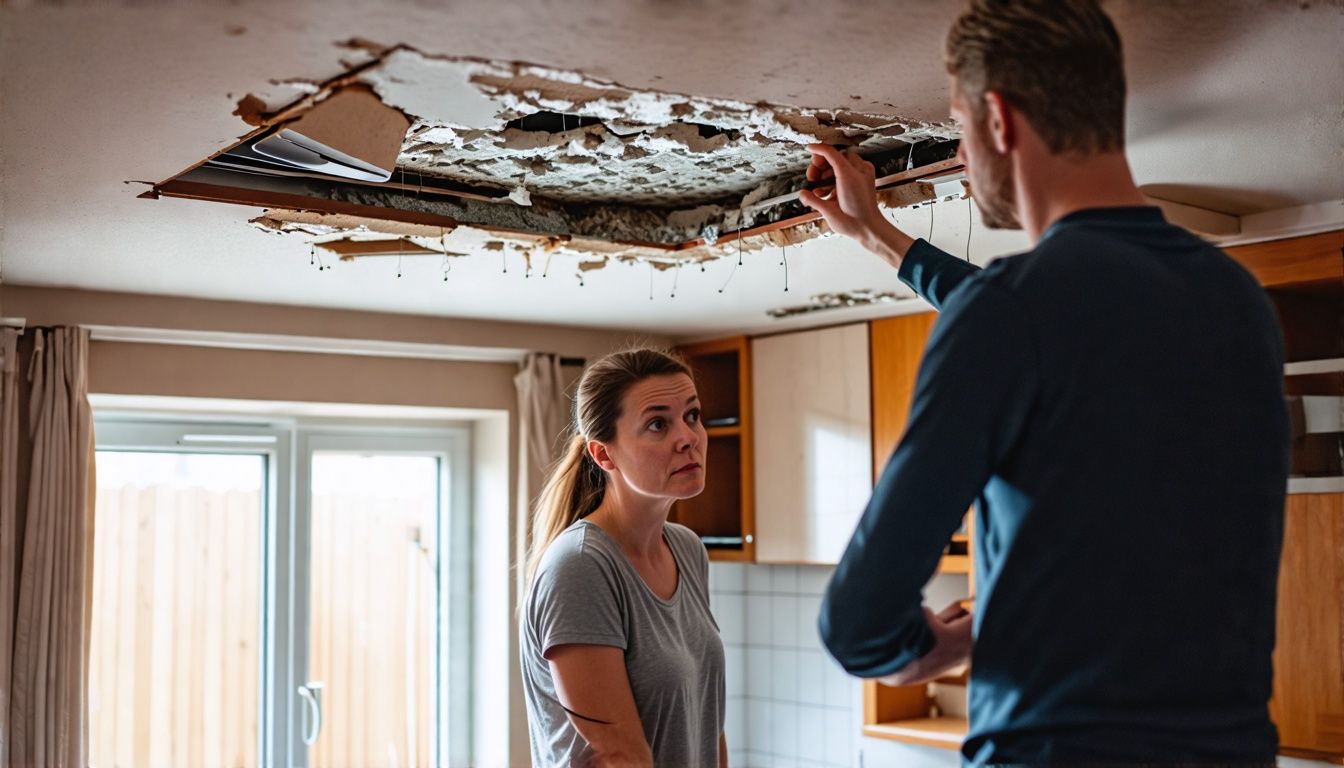
Does Asbestos Affect the Value of Your Property? Here’s What You Need to Know
Finding asbestos in a property you own — or one you’re trying to buy — can feel alarming. But does asbestos affect the value of your property in every case, and by how much? The honest answer is: it depends. The presence of asbestos-containing materials (ACMs) doesn’t automatically devastate a sale price, but how you respond to the discovery can make an enormous difference to the outcome.
Whether you’re preparing to sell, mid-transaction, or simply trying to understand what you’re dealing with as an owner, this post gives you a clear, practical picture of how asbestos interacts with property value — and what you can do about it.
Why Asbestos Is Still So Common in UK Properties
Asbestos wasn’t fully banned from UK construction until 1999. Any property built or significantly renovated before that date could contain ACMs — and in practice, that covers an enormous proportion of the UK’s housing stock.
Common locations include:
- Artex and textured ceiling coatings
- Floor tiles and the adhesive beneath them
- Pipe lagging and boiler insulation
- Roof tiles, soffits, and guttering — particularly cement-based products
- Insulation boards in airing cupboards and partition walls
- Garage roofs — corrugated asbestos cement sheeting remains widespread
Asbestos that’s intact and left undisturbed doesn’t pose an immediate health risk. The danger arises when it’s damaged, deteriorating, or disturbed during renovation — releasing microscopic fibres into the air that can cause serious diseases, including mesothelioma and asbestosis.
Understanding this distinction is critical, because it shapes how buyers, surveyors, and lenders respond when ACMs are identified.
How Does Asbestos Affect the Value of Your Property?
Buyer Perception Drives the Numbers
The moment asbestos appears in a survey report, buyer psychology shifts. Even when the material is in a stable, low-risk location, many buyers instinctively associate the word with danger and significant expense. That reaction can lead to renegotiated offers, demands for remediation before exchange, or buyers walking away altogether.
The extent of any price impact depends on several factors:
- Location within the property — Asbestos in a detached garage tends to concern buyers less than ACMs in a main living area or structural component
- Condition of the material — Intact, well-managed asbestos is treated very differently to friable or visibly deteriorating material
- Whether a management plan is in place — A documented, professional approach reassures buyers considerably
- The buyer’s experience level — Seasoned investors and developers often price asbestos in calmly; first-time buyers can react more emotionally
What the Price Impact Actually Looks Like
It would be misleading to attach a fixed percentage to how much asbestos devalues a property — it genuinely varies case by case. A small quantity of encapsulated asbestos in a garage is a very different proposition to widespread ACMs throughout a pre-1970s home requiring significant remediation before renovation can begin.
What we can say with confidence: unmanaged asbestos with no survey documentation will always have a greater negative impact than asbestos that’s been professionally assessed and managed. Buyers respond to uncertainty more than they respond to risk that’s clearly defined and controlled.
Having a professional survey in hand — one that identifies exactly what’s present, where it is, and what condition it’s in — puts you in a far stronger negotiating position than leaving it to the buyer’s checks to surface anything unexpected.
Disclosure: What UK Sellers Are Required to Do
Your Legal Obligations
There is no single piece of legislation that explicitly requires residential sellers to disclose asbestos, but failing to disclose known material defects — including hazardous materials — can expose you to serious legal consequences after completion.
In practice, sellers must:
- Complete the TA6 Property Information Form honestly, including questions about known defects and environmental issues
- Disclose any existing asbestos survey reports or management plans — withholding these when they exist could constitute misrepresentation
- Share any historical records of asbestos removal or encapsulation carried out at the property
For properties with a Health and Safety file — more common in commercial or converted buildings — this must be passed on and should include all asbestos-related information.
What Happens If You Don’t Disclose
A buyer who discovers asbestos after completion that you knew about — and failed to disclose — has grounds to pursue you for misrepresentation. That could mean a claim for remediation costs, damages, or in serious cases, an attempt to rescind the contract entirely.
The legal and financial exposure from non-disclosure far outweighs any short-term benefit. Transparency, backed by professional documentation, is always the right approach.
Your Options for Managing Asbestos Before a Sale
Option 1: Professional Removal
Full asbestos removal by a licensed contractor eliminates the issue permanently. Once removed and certified as clear, the property can be marketed without the asbestos caveat — which often recovers much of the value that its presence had reduced.
Removal is the right choice when:
- The material is in poor condition or at high risk of disturbance
- Renovation work is planned that would disturb the ACMs
- You want to maximise sale value and remove buyer hesitation entirely
Any removal must be carried out by a licensed contractor for higher-risk materials, in full compliance with the Control of Asbestos Regulations. DIY removal of most ACMs is not a legal option.
Option 2: Encapsulation
Encapsulation involves sealing ACMs with a specialist coating that binds fibres and prevents release. It’s appropriate when the material is in reasonable condition and not at risk of disturbance.
The key trade-off with encapsulation is that it’s a management solution, not a permanent one. It requires ongoing monitoring — typically through a re-inspection survey at regular intervals — and doesn’t remove asbestos from the property’s history. Buyers will still be aware it’s present.
Option 3: Managed Retention
For stable, low-risk ACMs — such as intact floor tiles under carpet, or cement-based roofing in good condition — the most appropriate response is often to leave them in place and manage them responsibly.
This means:
- Having a current, professional survey that clearly identifies and risk-assesses the material
- Keeping a simple asbestos management record
- Arranging periodic re-inspection to monitor condition
- Ensuring any trades working on the property are aware of ACM locations
Presenting buyers with this documentation demonstrates responsible ownership and gives them confidence rather than alarm.
Should You Commission an Asbestos Survey Before Selling?
Yes — and here’s exactly why it works in your favour. If you’re selling a pre-2000 property without a survey, you’re leaving it to the buyer’s surveyor or their own commissioned checks to find any issues. At that point, you’ve lost control of the narrative. An unexpected finding mid-transaction hands the buyer a stronger negotiating position.
Commissioning your own survey before marketing means you know exactly what you’re dealing with. You can make informed decisions about remediation, price the property accurately, and provide buyers with documentation that answers questions before they arise.
A management survey is the standard starting point for occupied properties. It identifies ACMs that could be disturbed during normal occupation or minor maintenance, assesses their condition, and provides a prioritised management plan — exactly the kind of documentation that reassures buyers and solicitors alike.
If you’re planning renovation work before selling, a refurbishment survey is required before any significant work begins. It’s more intrusive than a management survey and is designed to locate all ACMs in areas that will be disturbed. This isn’t optional — it’s a legal requirement under HSE guidance and the Control of Asbestos Regulations.
For properties earmarked for demolition, a demolition survey must be completed before any structural work commences. This is a legal requirement and cannot be skipped regardless of the age or apparent condition of the building.
For Buyers: How to Approach a Property With Known Asbestos
If you’re buying a pre-2000 property and asbestos has been flagged, don’t panic — but do ask the right questions before proceeding.
- Has a full management or refurbishment survey been carried out, and can you see the report?
- What is the current condition of the ACMs identified?
- Is there a management plan in place, and has it been maintained with regular re-inspections?
- Are there any areas of the property that haven’t been surveyed?
- What are your plans for the property? If you’re renovating, a refurbishment survey is essential before any work begins.
If the seller can’t provide adequate documentation, factor the cost of a professional survey into your negotiation. Don’t proceed blind — the cost of a survey is modest compared to the cost of discovering a serious asbestos issue after you’ve exchanged contracts.
Asbestos Testing: When You’re Not Certain What You’re Looking At
If you suspect a material may contain asbestos but aren’t certain, asbestos testing is the only way to confirm it definitively. Visual identification alone is not reliable — many ACMs look identical to non-asbestos alternatives, and making assumptions either way carries real risk.
Supernova Asbestos Surveys offers professional sample analysis through an accredited laboratory, giving you a clear, documented result you can rely on. If you’d prefer to collect a sample yourself, a testing kit is available directly through our website.
Testing gives you a definitive answer before you invest in unnecessary remediation — or, equally importantly, before you assume something is safe when it isn’t.
Fire Risk Assessments and Asbestos: The Overlap
For landlords and commercial property owners, asbestos management often sits alongside other statutory obligations. A fire risk assessment is a legal requirement for most non-domestic premises and for landlords of shared residential buildings.
In some cases, asbestos and fire safety risks interact — for example, where ACMs are present in communal areas or where remediation work could affect fire-resistant materials. Managing both together, through a single professional provider, ensures nothing falls through the gaps and that your documentation is complete and consistent.
Landlords who handle fire risk assessments and asbestos surveys through the same qualified team also benefit from a joined-up approach to their legal compliance obligations — reducing the risk of conflicting advice or duplicated effort.
How Supernova Asbestos Surveys Can Help
Whether you’re selling, buying, or managing a property you intend to keep, Supernova Asbestos Surveys provides the full range of professional services you need to handle asbestos correctly — and with confidence.
With over 50,000 surveys completed nationwide, our team of qualified surveyors understands both the technical and the commercial realities of dealing with asbestos in property transactions. We cover the whole of the UK and work with homeowners, landlords, estate agents, and developers.
Our services include:
- Management surveys for occupied residential and commercial properties
- Refurbishment and demolition surveys before renovation or structural work
- Re-inspection surveys to keep your asbestos management plan current
- Asbestos testing and accredited sample analysis
- Asbestos removal, carried out safely and in full compliance with the Control of Asbestos Regulations
- Fire risk assessments for properties where this is required alongside asbestos management
Call us on 020 4586 0680 or visit asbestos-surveys.org.uk to book a survey or discuss your requirements with our team.
Frequently Asked Questions
Does asbestos affect the value of your property automatically?
Not automatically, no. The impact on value depends heavily on the type, location, and condition of the asbestos-containing materials, and crucially, whether they’ve been professionally surveyed and managed. Documented, well-managed asbestos has a far smaller effect on value than undisclosed or unmanaged ACMs discovered mid-transaction.
Do I have to tell a buyer if I know there’s asbestos in my property?
There’s no single law that explicitly requires disclosure, but you are legally obliged to complete the TA6 Property Information Form honestly. Withholding known information about asbestos — particularly if you have a survey report — could constitute misrepresentation, leaving you exposed to legal claims after completion.
What type of asbestos survey do I need before selling?
For an occupied property where no significant renovation is planned, a management survey is the standard starting point. If you’re carrying out refurbishment work before selling, you’ll need a refurbishment survey before any work begins. Both are available through Supernova Asbestos Surveys — call 020 4586 0680 to discuss which is right for your situation.
Can asbestos be removed before a property sale to protect its value?
Yes, and for properties where ACMs are in poor condition or where renovation is planned, removal is often the most effective way to protect sale value. Removal must be carried out by a licensed contractor in compliance with the Control of Asbestos Regulations. Once removed and certified clear, the asbestos caveat is eliminated entirely.
How do I know if a material in my property contains asbestos?
Visual inspection alone is not reliable — many asbestos-containing materials look identical to non-asbestos alternatives. The only way to confirm whether a material contains asbestos is through laboratory testing. Supernova Asbestos Surveys offers professional sample analysis and self-collection testing kits, both available through asbestos-surveys.org.uk.