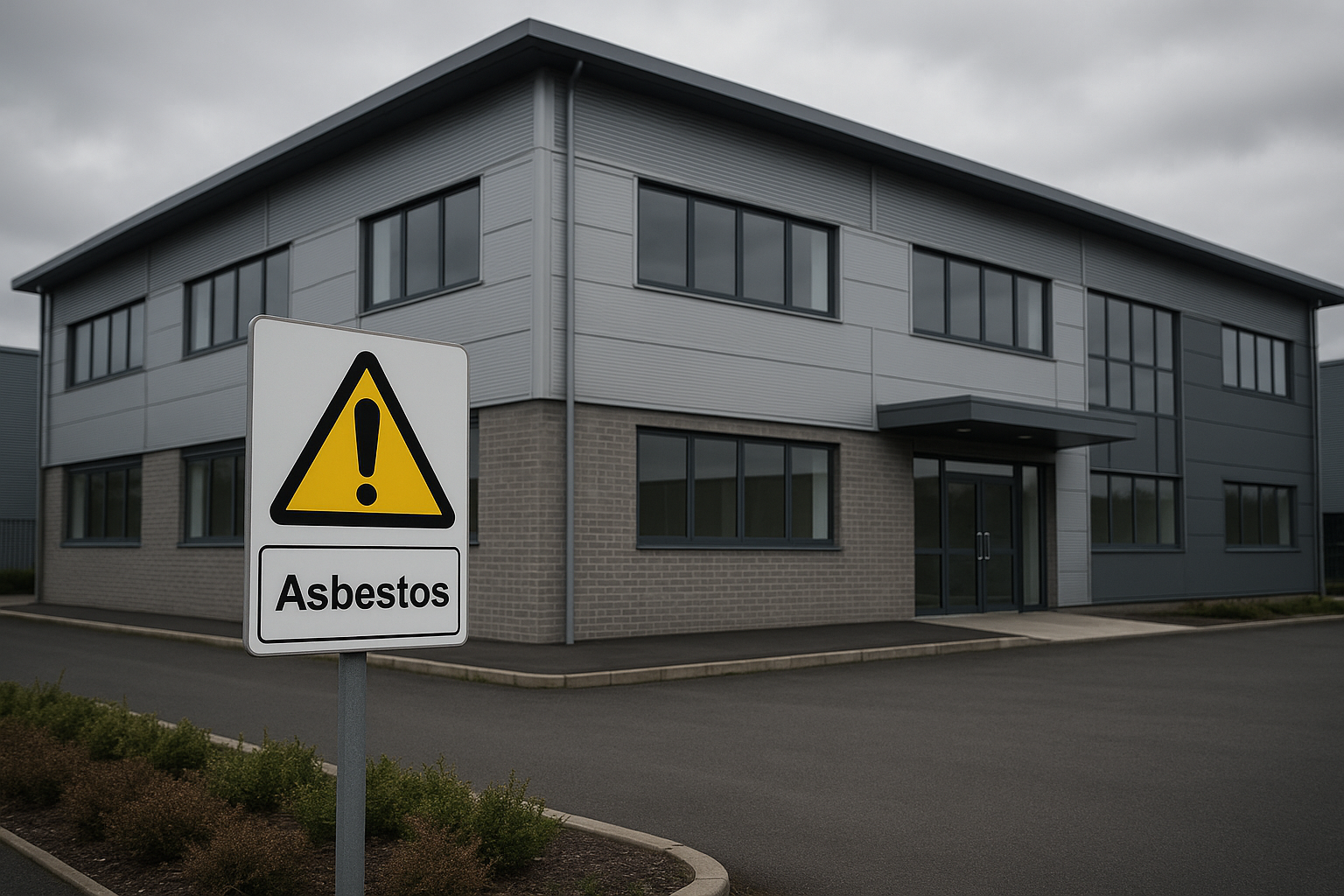
Asbestos rarely announces itself with a dramatic clue. More often, asbestos warning signs show up as older building materials, damaged insulation, faded hazard notices on plant room doors, or restricted-access signs that people have stopped noticing. Miss those signals, and a routine repair can turn into a serious health risk and a compliance problem very quickly.
If you manage, own, let or maintain a property built or refurbished before 2000, you need to recognise both the physical clues and the formal signage used to control asbestos risks. Under the Control of Asbestos Regulations, duty holders in non-domestic premises must identify and manage asbestos properly, and HSG264 and wider HSE guidance set out how asbestos surveying and assessment should be approached.
Why asbestos warning signs matter
Asbestos was used widely across UK buildings because it was durable, fire-resistant and a good insulator. Those same qualities mean asbestos-containing materials are still found in homes, offices, schools, warehouses, retail units and public buildings today.
The danger starts when those materials are damaged or disturbed. Drilling, sanding, cutting, lifting floor coverings, removing ceiling tiles or breaking old cement sheets can release fibres into the air.
That is why asbestos warning signs matter in two ways:
- They help you spot suspect materials before work begins.
- They warn people away from known risks in managed premises and live work areas.
If there is any doubt, do not rely on appearance alone. You cannot confirm asbestos by sight. Sampling and analysis are needed to identify it properly.
Common asbestos warning signs in buildings
Some asbestos warning signs are about context rather than labels. The age of the building, the location of the material and its condition often tell you when to stop and get professional advice.
1. The property is older
One of the clearest asbestos warning signs is the age of the building. If a property was built or refurbished before 2000, asbestos may be present somewhere in the structure, finishes, plant or service areas.
This applies to:
- Houses and flats
- Offices and shops
- Schools and healthcare buildings
- Factories and warehouses
- Garages, outbuildings and plant rooms
2. The material is in a known asbestos location
Certain materials and locations come up repeatedly during surveys. If you see suspect products in these areas, treat them as potential asbestos warning signs until they have been assessed.
- Textured coatings on ceilings and walls
- Pipe lagging and boiler insulation
- Asbestos insulating board in risers, partitions and soffits
- Old floor tiles and bitumen adhesives
- Cement roofs, wall sheets, gutters and flues
- Ceiling voids, lofts and boxed-in services
If you are managing an older property in the capital, arranging an asbestos survey London service before maintenance starts is a practical way to avoid accidental disturbance.
3. There is visible damage
Damaged materials are among the most urgent asbestos warning signs. Cracks, impact damage, water staining, frayed edges, crumbling surfaces and dust or debris nearby all raise concern.
Look out for:
- Crumbling lagging around pipes or valves
- Broken insulating board panels
- Lifting, brittle or cracked floor tiles
- Damaged cement sheets or soffits
- Peeling textured coatings
- Dust in areas where suspect materials have been disturbed
If you find damage, stop work at once. Keep people out of the area and get competent advice before anyone tries to clean up.
4. There are old labels or hazard notices
Formal labels are also asbestos warning signs. A faded sticker on a riser door, a warning notice on a plant room entrance or a marked ceiling void hatch usually means asbestos has already been identified there.
Do not remove the label and do not assume the risk has gone away because the sign looks old. Check the asbestos register and confirm whether the material is still present and what condition it is in.
Where asbestos is commonly found
Knowing where asbestos was historically used makes it easier to recognise asbestos warning signs before contractors start work. That is especially useful for landlords, facilities managers and maintenance teams dealing with older stock.
Textured coatings
Older decorative coatings on ceilings and walls may contain asbestos. They often look harmless, but scraping, sanding or drilling them can create risk.
Pipe lagging and thermal insulation
Lagging is one of the more hazardous asbestos-containing materials because it can be friable. Boiler rooms, service ducts and older heating systems need careful checking.
Asbestos insulating board
Used for fire protection, partitions, ceiling tiles, service risers and boxing, asbestos insulating board can look similar to non-asbestos products. You need survey evidence and, where required, sampling to confirm what it is.
Asbestos cement products
Garage roofs, wall panels, gutters, downpipes and flues often contain asbestos cement. It is lower risk than friable materials when intact, but weathering, drilling and breakage still matter.
Floor tiles and adhesives
Older thermoplastic tiles and bitumen adhesives can contain asbestos. Problems often arise when flooring contractors lift them without checking first.
Lofts, voids and hidden spaces
Some of the most overlooked asbestos warning signs are in concealed areas. Above suspended ceilings, inside boxed-in columns and behind access panels are all common locations.
If intrusive work is planned, a demolition survey or refurbishment survey may be required before the work begins. A management survey is not enough for destructive or invasive works.
Danger asbestos warning sign: what it means and where to use it
A danger asbestos warning sign is one of the most common forms of asbestos signage used in managed premises. Its purpose is simple: to make the presence of asbestos obvious before anyone enters an area, opens an access panel or starts work on a surface.
You will often see this type of sign on:
- Plant room doors
- Service risers
- Ceiling void hatches
- Cupboards containing asbestos-containing materials
- Maintenance access panels
- Walls near known asbestos locations
The wording needs to be clear, durable and positioned where it can be read before access is gained. A sign hidden behind stored items or fixed inside the room rather than outside the door is not doing its job.
Practical tips for using a danger asbestos warning sign:
- Place it at eye level where possible.
- Make sure it is visible from the normal approach route.
- Check it still matches the actual risk in the area.
- Link the sign to your asbestos register and permit-to-work controls.
- Replace faded, damaged or illegible signs promptly.
Danger asbestos dust sign – landscape
A danger asbestos dust sign – landscape is typically used where airborne dust is a concern or where contamination may be present following accidental disturbance or controlled works. The landscape format is useful on wider doors, barriers, temporary screens and fencing.
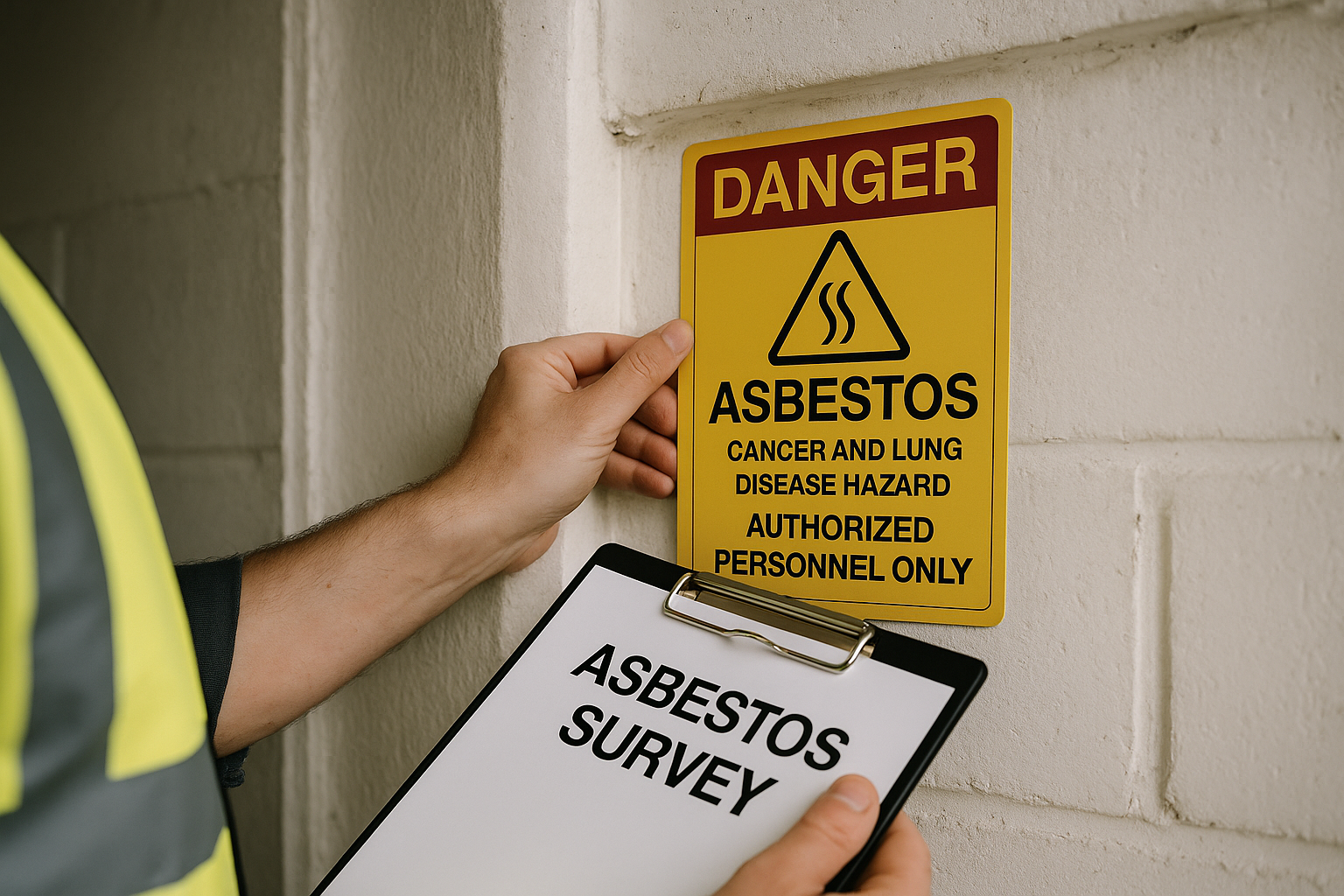
This sign is more specific than a general warning sign. It tells staff, contractors and visitors that the issue is not just the presence of asbestos-containing materials, but the possible presence of asbestos dust or debris.
You may need this sign when:
- A suspect material has been damaged
- Dust or debris is visible in an affected area
- A temporary exclusion zone has been set up
- Cleaning or remediation is pending
- Access must be restricted until the area is assessed
If asbestos dust is suspected:
- Stop work immediately
- Keep unprotected people away
- Do not sweep or dry brush the area
- Do not use a standard vacuum cleaner
- Arrange specialist advice without delay
Signage should support physical controls, not replace them. If a corridor, room or plant area is contaminated, barriers and access restrictions should be in place as well.
Danger asbestos no admittance protective clothing sign
A danger asbestos no admittance protective clothing sign is used where access is restricted to trained people wearing the correct protective equipment. This is common around controlled work zones, enclosures, temporary decontamination routes and some maintenance areas.
The wording matters because it gives a direct instruction. It tells people that entry is not open, and if entry is permitted for authorised persons, suitable PPE and, where necessary, RPE must be worn.
This sign is appropriate where:
- Only trained personnel should enter
- Protective clothing is mandatory
- Respiratory protection may be required
- Removal or remediation work is underway
- Contamination controls are in place
Before using this sign, make sure the site controls are real and not just implied. If protective clothing is required, it must be available, suitable and supported by the right procedures.
For property managers, this is a useful reminder: signage should always reflect the actual control measures in force. If the sign says no admittance without protective clothing, the work area should be supervised and managed accordingly.
Danger asbestos being removed no persons sign
A danger asbestos being removed no persons sign is used during active asbestos removal works to keep unauthorised people away from the area. It is especially useful at the perimeter of removal zones, waste routes, loading areas and temporary exclusion boundaries.
This sign is direct for a reason. During removal work, the risk profile changes, and people from other trades or building occupants must be kept clear of the work zone.
Use this sign where there is:
- Live asbestos removal activity
- A segregated work area
- A designated waste transfer route
- Temporary barriers or site fencing
- Restricted access for building users
Where licensed work is involved, signage should form part of the contractor’s wider plan of work. It is not a substitute for enclosure, segregation, air management, supervision or proper waste handling.
If removal is needed, use a competent specialist. Supernova can help arrange professional asbestos removal where materials have been identified and the correct control measures are required.
Danger asbestos keep out sign – landscape
A danger asbestos keep out sign – landscape is commonly used on doors, gates, temporary barriers and fenced-off areas where a wider sign is easier to read from a distance. The message is clear and immediate: do not enter.
This sign is useful for:
- Plant rooms with known asbestos-containing materials
- Storage areas awaiting remedial work
- Damaged areas that have been isolated
- Temporary exclusion zones
- External compounds or fenced work areas
Landscape signs work well where horizontal space is available and people are likely to approach from a distance. They are often easier to read quickly than smaller portrait signs fixed to narrow surfaces.
Check that the sign size suits the viewing distance. A small sign on a large external gate may be technically present but practically ineffective.
Danger asbestos keep out sign – portrait messages
A danger asbestos keep out sign – portrait messages format is useful where the fixing area is narrow, such as a riser door, access hatch, column or service cupboard. The portrait layout often allows extra wording beneath the main warning, which helps clarify the restriction.
Typical portrait messages may include instructions such as:
- Keep out
- No unauthorised entry
- Report damage immediately
- Do not disturb
- Authorised persons only
The best message depends on the actual risk. A simple keep out instruction may be enough for a locked service riser, while a more detailed sign may be needed in an area where accidental disturbance is more likely.
When choosing portrait messages, ask:
- Who is likely to approach this area?
- Do they need a warning only, or a clear instruction?
- Is the area permanently restricted or temporarily controlled?
- Would extra wording reduce confusion for contractors?
Good signage is specific. Vague wording creates hesitation, and hesitation on a live site can lead to mistakes.
Danger asbestos hazard sign and other formal asbestos warning signs
A danger asbestos hazard sign is a broader warning used to identify asbestos as a significant site hazard. It may be used on access points, near known asbestos-containing materials or as part of a wider hazard communication system in industrial and commercial premises.
Alongside that, you may also come across other formal asbestos warning signs, including:
- General asbestos hazard notices
- Asbestos dust do not enter signs
- Asbestos removal in progress signs
- Contains asbestos labels
- Do not disturb and report damage signs
The exact wording should match the site condition. A general hazard sign has a place, but where there is active removal, contamination or restricted access, the sign should say so plainly.
Asbestos warning signs work best when they are part of a wider management system that includes:
- An up-to-date asbestos register
- Suitable surveys
- Risk assessments
- Contractor briefings
- Permit-to-work controls where needed
- Regular inspection of known materials
Get in touch before ordering signs blindly
Ordering signs without understanding the risk can leave gaps in your compliance arrangements. Before you buy anything, confirm whether asbestos is known, suspected, damaged or actively being removed.
Get in touch for advice first if:
- You do not have an up-to-date asbestos survey
- The asbestos register is missing or incomplete
- You are planning maintenance, refurbishment or strip-out works
- There has been accidental damage
- You are unsure which asbestos warning signs are appropriate
The right starting point is usually the survey, not the sign catalogue. If you manage sites regionally, local support can make that process easier. Supernova can assist with an asbestos survey Manchester service for North West properties and an asbestos survey Birmingham service for clients across the Midlands.
How asbestos warning signs fit into legal compliance
In non-domestic premises, the duty to manage asbestos applies to those responsible for maintenance or repair. That means identifying asbestos-containing materials, assessing their condition, keeping records and sharing information with anyone liable to disturb them.
Asbestos warning signs support that duty, but they are only one part of compliance. Under the Control of Asbestos Regulations, the expectation is not just to put up a sign and hope for the best. You need a proper system.
That system should include:
- Identifying asbestos through a suitable survey
- Keeping an asbestos register up to date
- Assessing the risk from known materials
- Monitoring condition over time
- Informing contractors, staff and others who may be affected
- Using signage where it helps communicate and control the risk
HSG264 explains how asbestos surveys should be carried out, and HSE guidance supports good practice on management, maintenance and work controls. For duty holders, the practical message is straightforward: know what is in the building, know its condition, and make sure nobody disturbs it by accident.
Practical advice for landlords, facilities managers and homeowners
The best response to asbestos warning signs is calm, structured action. Guesswork causes problems, and DIY disturbance is where many avoidable incidents begin.
If you suspect asbestos
- Stop work immediately
- Keep people away from the area
- Do not cut, drill, scrape or remove anything
- Do not sweep debris or use a household vacuum
- Take photos from a safe distance if needed for records
- Arrange professional inspection and, where appropriate, sampling
If asbestos is already known to be present
- Check the asbestos register and management plan
- Inspect the material condition regularly
- Make sure asbestos warning signs remain visible and legible
- Brief contractors before any work starts
- Review whether planned work needs a refurbishment or demolition survey
If damage has occurred
- Restrict access immediately
- Prevent others from entering the area
- Seek urgent specialist advice
- Do not attempt to clean up without the right controls
- Consider whether air monitoring, specialist cleaning or removal is needed
Facebook, Twitter, Email and Instagram: sharing asbestos information responsibly
You may have seen product pages or supplier listings with sharing buttons for Facebook, Twitter, Email and Instagram. That is normal for online sign catalogues, but when it comes to asbestos, sharing information internally matters far more than sharing a product page publicly.
If you need to communicate asbestos risk, focus on practical channels that reach the right people:
- Email contractors before they arrive on site
- Share the asbestos register with maintenance teams
- Use permit-to-work systems for higher-risk tasks
- Brief reception or security staff if access restrictions are in place
- Keep emergency contacts available if accidental damage occurs
Social platforms have their place for general awareness, but site-specific asbestos information should be controlled, accurate and directed to those who need it.
What to do next if you have spotted asbestos warning signs
If you have seen suspect materials, damaged insulation, old hazard notices or formal asbestos warning signs in a building, the next step is not to ignore them and hope for the best. It is to verify the risk and put the right controls in place.
Start with this checklist:
- Confirm whether an asbestos survey already exists.
- Review the asbestos register if the premises are non-domestic.
- Check whether the material is damaged or likely to be disturbed.
- Restrict access if there is an immediate concern.
- Arrange a competent surveyor before maintenance or refurbishment begins.
- Use the right warning signs only after the risk is understood.
Supernova Asbestos Surveys carries out surveys across the UK for landlords, managing agents, homeowners and commercial clients. If you need clear advice, fast booking and practical support, call 020 4586 0680 or visit asbestos-surveys.org.uk to arrange a survey, discuss asbestos warning signs on your site, or get help with asbestos management and removal services.
Frequently Asked Questions
Can you identify asbestos just by looking at it?
No. Some materials may raise suspicion, but asbestos cannot be confirmed by appearance alone. Proper identification requires sampling and analysis by a competent laboratory.
When should asbestos warning signs be used?
Asbestos warning signs should be used where asbestos-containing materials are known, where access needs to be controlled, or where work activity creates a risk that people need to be warned about. The wording should match the actual hazard and controls in place.
Do homeowners need asbestos warning signs?
Not usually in the same way as non-domestic premises. In homes, the priority is identifying suspect materials and avoiding disturbance. Formal signage is more commonly used in commercial, communal or managed settings.
What is the difference between a management survey and a demolition survey?
A management survey helps locate and assess asbestos-containing materials that could be disturbed during normal occupation and maintenance. A demolition survey is required before demolition or major intrusive works so hidden asbestos can be identified before the structure is disturbed.
What should I do if a contractor damages a suspect material?
Stop work immediately, isolate the area, keep people away and seek professional advice. Do not try to sweep up or remove debris yourself. The next steps depend on the material, the extent of the damage and whether contamination is likely.