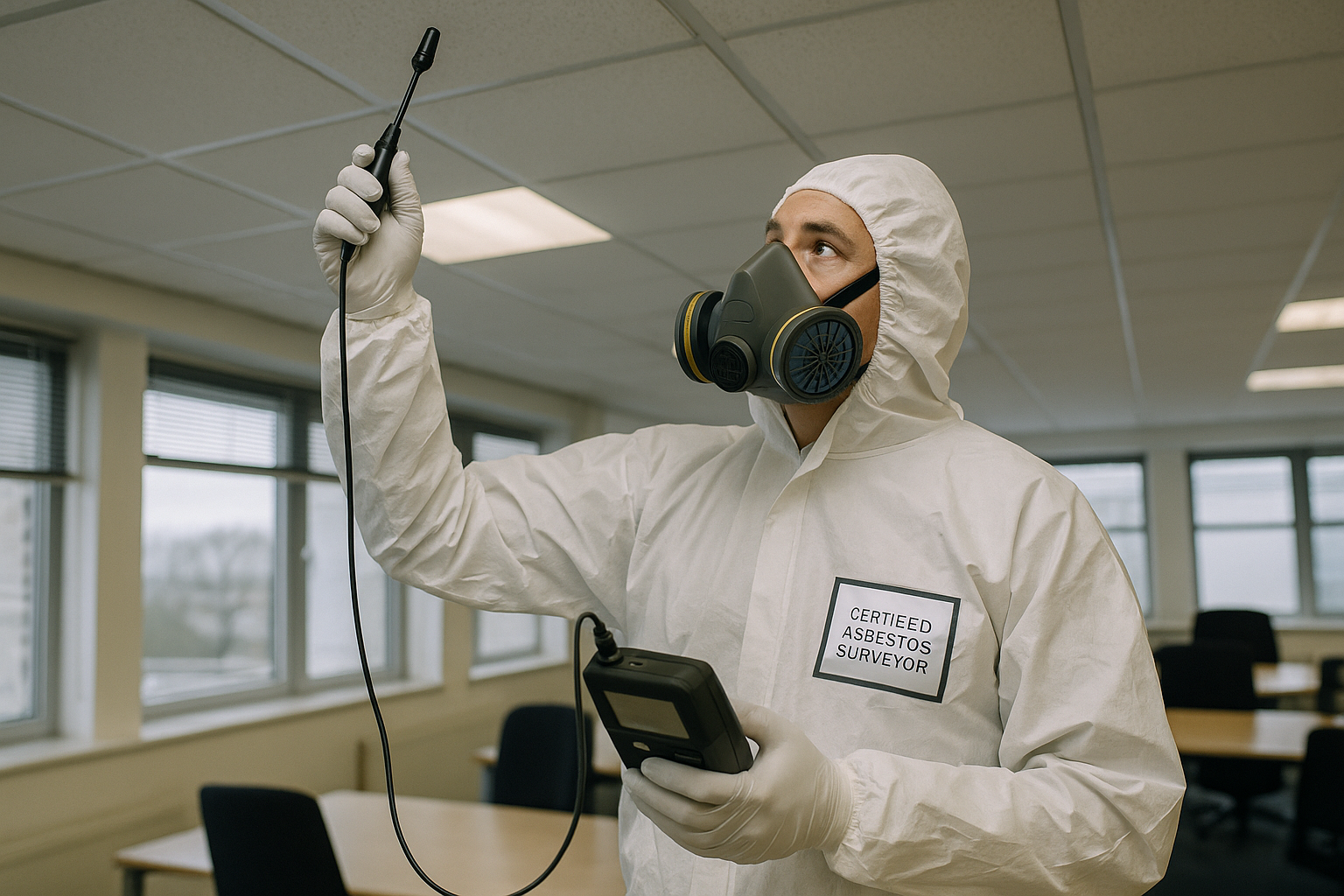
One weak report can leave an entire building exposed. When you are checking asbestos certifications, the real issue is not whether someone has attended a course, but whether they are genuinely competent to survey, sample, advise, or work safely around asbestos in line with UK requirements.
For property managers, landlords, facilities teams and contractors, that distinction matters every day. The wrong training can lead to poor surveys, unsafe work, unreliable asbestos registers and avoidable compliance problems under the Control of Asbestos Regulations.
Why asbestos certifications matter
Asbestos is still present in many UK buildings, particularly those built or refurbished before asbestos-containing materials were banned. It can turn up in offices, schools, hospitals, warehouses, retail units, communal residential areas and older industrial premises.
If the person inspecting the property or advising on risk does not hold suitable asbestos certifications, the consequences can be serious. A missed asbestos-containing material, poor sampling strategy or weak report can affect maintenance planning, refurbishment works and the safety of everyone on site.
Under the Control of Asbestos Regulations, duty holders for non-domestic premises must manage asbestos risk. In practical terms, that means identifying asbestos-containing materials where present, assessing their condition, keeping records current and preventing accidental disturbance.
Good asbestos certifications help you judge whether someone has training that matches the task they are being asked to do. They should support competence in:
- Recognising likely asbestos-containing materials
- Understanding where asbestos is commonly hidden
- Inspecting a building methodically
- Taking samples safely where appropriate
- Producing reports that support compliant decisions
- Advising whether materials should be managed, encapsulated or removed
The key point is simple: not all asbestos certifications mean the same thing. Awareness training is not the same as surveying competence, and surveying competence is not the same as removal competence.
Different types of asbestos certifications
The phrase asbestos certifications is often used loosely. In reality, there are different levels of training and competence, each intended for a specific role.
Asbestos awareness training
This is the basic level of asbestos training. It is designed for people who may encounter asbestos during their work but are not expected to disturb it deliberately.
Typical roles include electricians, plumbers, decorators, caretakers, maintenance staff, telecoms engineers and general contractors. Awareness training helps them recognise risk and avoid accidental disturbance.
A proper awareness course should cover:
- The types of asbestos and common uses in buildings
- The health risks from inhaling asbestos fibres
- Where asbestos may be found
- What to do if suspect materials are discovered or damaged
- How to avoid disturbing asbestos accidentally
What it does not do is qualify someone to carry out an asbestos survey, take samples independently or remove asbestos-containing materials.
Training for non-licensed work
Some lower-risk tasks involving asbestos require more than awareness training. Depending on the material, its condition and the planned work, workers may need task-specific training for non-licensed work or notifiable non-licensed work.
This training should cover safe systems of work, use of control measures, personal protective equipment, dust suppression, waste handling and decontamination procedures. It is still separate from surveyor qualifications.
Surveying qualifications
If someone is carrying out an asbestos management survey or a refurbishment and demolition survey, they need role-specific surveying competence. One of the best-known qualifications in the UK is BOHS P402, which is directly relevant to asbestos surveying.
Equivalent qualifications may also be acceptable, provided they are specific to surveying and supported by robust assessment and practical experience. The aim is to ensure surveyors can inspect premises in line with HSG264 and produce reports that are accurate, clear and usable.
Removal competence
Surveying and removal are different disciplines. A surveyor may identify asbestos-containing materials and assess their condition, but that does not mean they are qualified to remove them.
Where higher-risk work is involved, removal must be carried out by appropriately licensed contractors where required by law. If your survey identifies materials that need to come out, the next step is to arrange competent asbestos removal based on the survey findings and risk assessment.
What qualifications should an asbestos surveyor hold?
If you are appointing someone to inspect a building, update an asbestos register or advise on suspect materials, ask for evidence. Vague claims that a surveyor is “trained” or “certified” are not enough.
BOHS P402 or a suitable equivalent
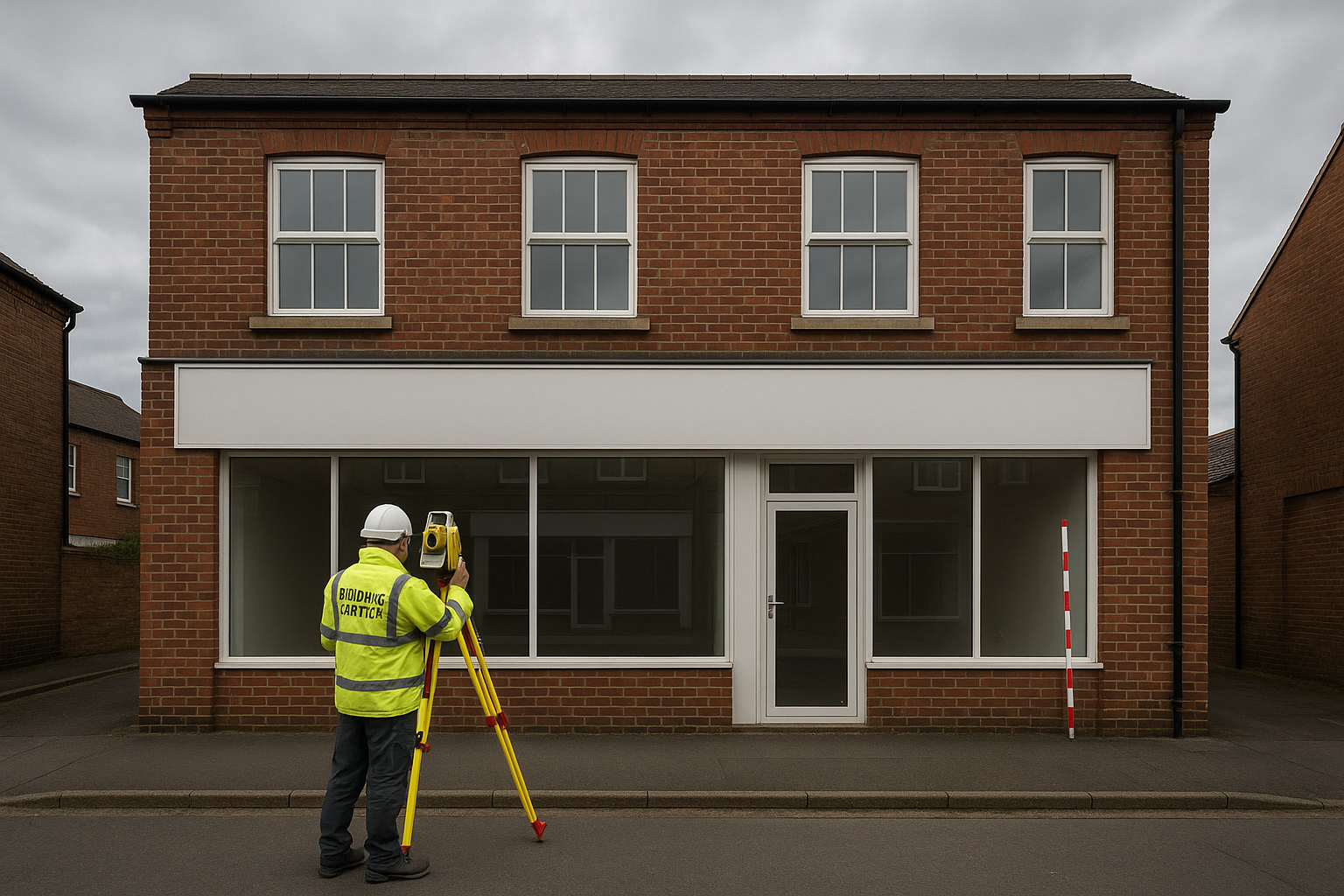
The BOHS P402 Certificate in Asbestos Surveying remains one of the clearest indicators that an individual has completed recognised training in asbestos surveying. It covers planning surveys, inspecting premises, identifying suspect materials, sampling and reporting.
That said, a certificate on its own should never be the end of your checks. Competence also depends on practical experience, supervision and the systems used by the organisation they work for.
Support from a quality-managed inspection organisation
Individual qualifications matter, but the company behind the survey matters just as much. Surveying organisations should operate within a robust quality system, with documented procedures, technical review and competent management oversight.
When reviewing asbestos certifications, check exactly what is being claimed. Some businesses use language that sounds official without clearly stating the scope of their accreditation or competence.
Always verify what standards the organisation works to and what activities its systems actually cover. A good report depends on both the surveyor and the organisation supporting them.
Ongoing refresher training and practical experience
Competence is not fixed forever. Surveyors should keep their knowledge current with HSE guidance, current practice and continued inspection experience across different property types.
Ask practical questions such as:
- When did the surveyor last complete refresher training?
- How often do they carry out surveys?
- Do they regularly inspect buildings like yours?
- Who reviews their reports before issue?
- How are sampling and reporting quality checked?
A surveyor who mainly inspects small domestic properties may not be the right fit for a hospital estate, school campus or large industrial site. Good asbestos certifications should always be backed by relevant experience.
How to judge asbestos certifications when buying training
Many people searching for asbestos certifications are actually trying to buy training for staff. That could be a single maintenance operative, an in-house estates team or a contractor workforce operating across multiple sites.
When comparing providers, focus on what the training qualifies the learner to do. That sounds obvious, but it is where many buyers get caught out.
What a credible asbestos awareness course should include
A genuine awareness course should be clear about its purpose. It should explain the basics well, assess understanding properly and make it obvious that the certificate is for awareness only.
Look for courses that cover:
- Where asbestos may be found in UK buildings
- The main asbestos-containing materials
- How asbestos fibres are released
- The health effects of exposure
- Employer and duty holder responsibilities
- What workers should do if they discover or damage suspect material
If a provider blurs the line between awareness, surveying and removal, treat that as a warning sign. Clear boundaries are a sign of credible training.
Questions to ask before booking
Before paying for online or classroom training, ask a few direct questions:
- Who is the course designed for?
- What exactly does the certificate confirm?
- How is the learner assessed?
- How is identity checked for online training?
- Is learner support available if someone fails?
- How quickly are certificates issued?
- Does the provider explain refresher expectations?
These checks are useful whether you are buying one licence or rolling training out across a large estate.
Low-cost training: what should still be included?
Budget-friendly asbestos certifications can be perfectly acceptable for awareness training. A low price is not automatically a problem, but the course still needs to be credible, current and suitable for the role.
Even a low-cost single licence should normally include:
- Prompt access to the course
- A clear completion period
- An assessment at the end
- A downloadable certificate
- Support if the learner has technical problems
- Clear wording about what the certificate does and does not allow
Read the terms carefully. Some providers advertise a low headline price, then charge extra for certificates, retests or administration.
Free re-sits and auto-renewal
Features such as free re-sits and auto-renewal can be useful, especially for employers managing multiple staff members. They are not essential, but they can reduce admin if the terms are transparent.
Before relying on them, check:
- How many re-sits are allowed
- Whether there is a waiting period
- Whether the learner repeats the whole course or only the assessment
- Whether auto-renewal is optional
- How much notice is given before renewal
- How to cancel the service
Good providers make these details easy to find. If the wording is vague, ask before you buy.
How asbestos certifications fit into the wider compliance picture
Training certificates are only one part of asbestos management. If you are responsible for a building, the practical issue is whether you have the right survey information for the work being carried out.
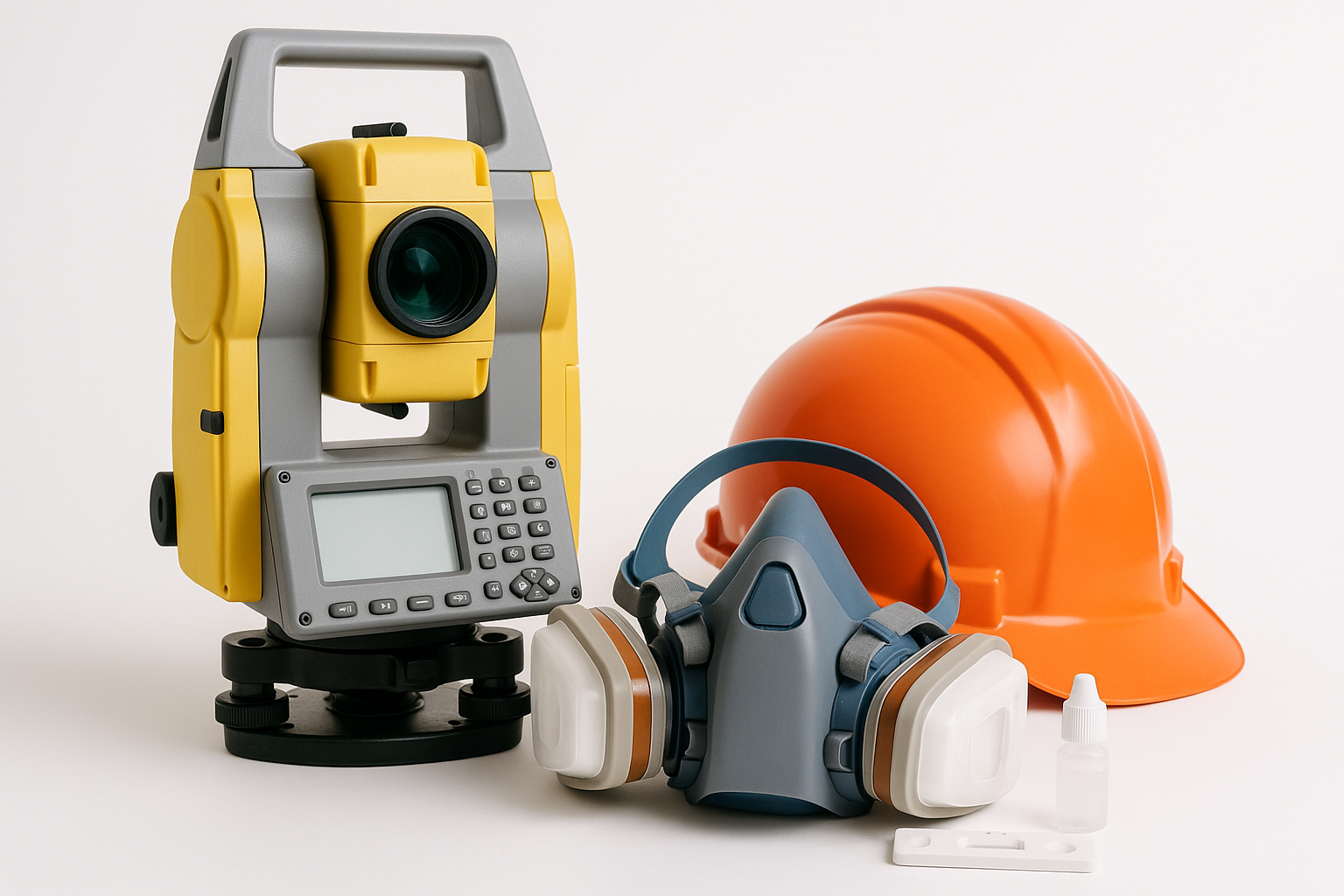
For normal occupation and routine maintenance, a management survey is usually the starting point. For intrusive work, major refurbishment or demolition, a more intrusive survey is needed so asbestos-containing materials can be identified before work begins.
That is why appointing a competent surveyor matters more than collecting paperwork. The survey must be suitable for its purpose, completed thoroughly and reported clearly enough for contractors and duty holders to act on it.
Management surveys
An asbestos management survey is used to help duty holders manage asbestos-containing materials during normal occupation and routine maintenance. It identifies, as far as reasonably practicable, the presence and condition of materials that could be disturbed during everyday use of the building.
The findings should support an asbestos register and management plan. If your building is occupied and in use, this is often the survey you need first.
Refurbishment and demolition surveys
If works will disturb the fabric of the building, a management survey is not enough. A refurbishment and demolition survey is required before the work starts in the relevant areas.
This type of survey is more intrusive because it is designed to locate asbestos where it may be hidden within the structure. If a project involves major strip-out or full clearance, a demolition survey should be planned well in advance so work is not delayed.
Sampling and reporting
Competent surveying is about more than spotting obvious materials. Sampling strategy, site notes, photographs, material assessments and clear recommendations all affect the usefulness of the final report.
When reviewing a survey report, check that it includes:
- A clear description of the surveyed areas
- Any limitations or exclusions
- Material assessments where appropriate
- Laboratory results for samples taken
- Photographs and location details
- Practical recommendations for management or further action
If the report is vague, hard to follow or full of generic wording, ask questions before relying on it.
Practical advice for property managers choosing asbestos surveyors
Property managers rarely have time to decode technical jargon. The easiest way to assess asbestos certifications is to match the person’s training and experience to the exact job you need done.
Start with the building, the planned works and the level of intrusion involved. Then check whether the surveyor and their organisation are equipped for that specific task.
Use a simple appointment checklist
Before instructing a survey, ask for:
- The surveyor’s relevant qualifications
- Evidence of recent surveying experience
- Confirmation of the survey type proposed
- Details of how samples will be analysed
- An example report format
- Expected timescales for inspection and reporting
- Clarification of access requirements and limitations
This avoids misunderstandings and helps you compare providers on quality rather than price alone.
Make sure the survey scope is clear
One of the most common problems is a mismatch between the survey ordered and the work planned. If contractors are opening ceilings, lifting floors, chasing walls or stripping out services, a routine management survey will not be enough.
Explain the planned works in plain language. A competent surveyor should then recommend the correct scope and tell you if access arrangements, isolation or vacant areas are needed.
Check how the report will support action on site
A survey is only useful if the people managing the building can act on it. Ask whether the report will clearly identify material locations, sample results, condition, risk and next steps.
Good reporting should help you brief contractors, update the asbestos register and decide whether to monitor, encapsulate or remove materials. If the report does not support decisions, the survey has not done its job properly.
Common mistakes when relying on asbestos certifications
Problems often arise when buyers assume all training is interchangeable. That is rarely the case.
Here are some of the most common mistakes to avoid:
- Assuming awareness training qualifies someone to survey: it does not.
- Relying on a certificate without checking experience: practical competence matters.
- Choosing the cheapest survey without reviewing sample reports: low cost can mean weak reporting or poor scope.
- Ordering the wrong survey type: this can leave hidden asbestos unidentified before works begin.
- Ignoring report limitations: excluded areas may still contain asbestos.
- Failing to update records after works: registers and management plans need to reflect current site conditions.
If you manage multiple sites, build these checks into your procurement process. A standard questionnaire for surveyors and training providers can save time and reduce risk.
Understanding asbestos certifications in different locations and property portfolios
Large property portfolios often need consistent surveying standards across different regions. Whether you manage one building or hundreds, the same principles apply: the right survey, the right competence and clear reporting.
If you need local support, it helps to work with a provider that can deliver surveys across major cities while maintaining the same technical standards. For example, Supernova can arrange an asbestos survey London, an asbestos survey Manchester or an asbestos survey Birmingham depending on where your premises are located.
This is especially useful for managing agents, national retailers, education providers and multi-site employers. Consistent survey quality makes it easier to maintain registers, plan works and demonstrate compliance.
What competent asbestos advice should look like in practice
Strong asbestos advice is practical, specific and easy to follow. It should not bury the key risks under generic wording.
When reviewing survey findings or discussing asbestos certifications with a provider, expect clear answers to questions such as:
- What materials were identified or presumed?
- Where are they located?
- What condition are they in?
- Can they remain in place and be managed safely?
- Do planned works change the level of risk?
- What actions should happen next, and in what order?
If advice is vague, ask for clarification before works begin. Clear communication is part of competence.
Frequently Asked Questions
Do asbestos certifications prove someone is competent to carry out a survey?
Not on their own. Asbestos certifications can show that a person has completed relevant training, but competence also depends on practical experience, supervision, quality systems and the ability to survey in line with HSG264.
Is asbestos awareness training enough for maintenance staff?
It depends on the work they do. Awareness training is suitable for people who may come across asbestos but are not expected to disturb it. If their tasks involve planned work on asbestos-containing materials, they may need additional task-specific training.
What is the difference between a management survey and a demolition survey?
A management survey is used to help manage asbestos during normal occupation and routine maintenance. A demolition survey is intrusive and is required before demolition or major structural strip-out so hidden asbestos can be identified before work starts.
Should I choose a surveyor based on qualifications alone?
No. Qualifications are important, but you should also check recent experience, reporting quality, technical support, the suitability of the proposed survey scope and whether the organisation follows recognised guidance.
When should asbestos-containing materials be removed rather than managed?
That depends on the material type, condition, location and whether planned works will disturb it. Some materials can remain safely in place with proper management, while others need removal because of their condition or the nature of the project.
If you need clear advice on asbestos certifications, survey requirements or the right inspection for your building, Supernova Asbestos Surveys can help. We provide practical, compliant surveying services nationwide, including management, refurbishment and demolition surveys, with clear reporting that supports action. Call 020 4586 0680 or visit asbestos-surveys.org.uk to book a survey or speak to our team.