Why Asbestos Surveys for Museums Are Unlike Any Other Building Type
Behind the display cases, heritage interiors, and carefully curated collections lies a hidden risk that many museum operators underestimate. Asbestos surveys for museums are not a routine box-ticking exercise — they are a specialist undertaking that demands careful planning, expert knowledge, and a genuine understanding of the unique pressures these environments create.
Many UK museums were built or significantly expanded during the mid-twentieth century, when asbestos was standard in construction. Unlike a commercial office or retail unit, museums present a distinct combination of challenges: irreplaceable collections, listed building constraints, high public footfall, and the constant movement of staff, contractors, and conservators.
Managing asbestos in this context is both a legal obligation and a practical necessity. Get it wrong, and the consequences extend far beyond a compliance notice.
Why Asbestos Is a Particular Concern in Museum Buildings
A significant proportion of the UK’s museum estate dates from the post-war period through to the 1980s. Asbestos-containing materials (ACMs) were used extensively during this era — in pipe lagging, ceiling tiles, floor adhesives, decorative coatings, and structural insulation boards.
Older Victorian and Edwardian museum buildings were frequently retrofitted with asbestos insulation during the twentieth century, meaning even historically significant structures can contain ACMs in unexpected locations. Renovation projects, temporary exhibition fit-outs, and routine maintenance work can all disturb these materials if they have not been properly identified and recorded.
The health consequences of exposure are serious. Asbestos fibres, once airborne, can cause mesothelioma, asbestosis, and lung cancer — diseases with long latency periods that may not manifest for decades after exposure. Protecting staff, visitors, and contractors depends on knowing exactly where ACMs are located and what condition they are in.
Legal Duties for Museum Operators and Duty Holders
Under the Control of Asbestos Regulations, anyone who manages or has responsibility for non-domestic premises has a legal duty to manage asbestos. This applies directly to museums, whether they are local authority-run, charitable, privately owned, or national institutions.
The duty to manage requires the responsible person to:
- Identify the location and condition of any ACMs in the building
- Assess the risk those materials pose
- Produce and maintain a written asbestos management plan
- Ensure that anyone likely to disturb ACMs is informed of their location
- Review and update the management plan regularly
Failure to comply is not simply an administrative oversight. It can result in enforcement action from the Health and Safety Executive (HSE), significant fines, and in serious cases, criminal prosecution.
The HSE’s guidance document HSG264 sets out the standards that surveys must meet, and any reputable surveying company will work to this standard as a baseline. Commissioning a professional management survey is typically the first step for any museum that does not already have an up-to-date asbestos register in place.
Types of Asbestos Survey Relevant to Museums
Not all asbestos surveys are the same, and the type required will depend on what activities are planned in the building. Understanding the difference is essential before you commission any work.
Management Surveys
A management survey is the standard survey required to manage ACMs during normal occupation and routine maintenance. It involves a thorough visual inspection of all accessible areas, with sampling of materials suspected to contain asbestos.
The findings feed directly into the asbestos register and management plan. For a museum in active use, this is the survey type that forms the foundation of ongoing asbestos management. It should be carried out by a UKAS-accredited surveying organisation and reviewed whenever significant changes occur to the building or its use.
Refurbishment and Demolition Surveys
Where a museum is planning renovation work — whether that is a new gallery fit-out, a roof replacement, or a full refurbishment — a demolition survey is required before work begins. This is a more intrusive survey that involves accessing areas not normally disturbed, including voids, cavities, and structural elements.
Given the frequency of temporary exhibition installations and building upgrades in museum environments, this type of survey is often needed on a project-by-project basis. It is essential that contractors working on the site are provided with the survey findings before they begin any work.
What Happens During an Asbestos Survey in a Museum
Understanding the survey process helps museum managers plan effectively and minimise disruption to operations. Here is what a professional survey typically involves.
Initial Planning and Access Arrangements
A professional surveyor will begin by reviewing any existing building information — architectural drawings, previous survey records, and maintenance logs. In a museum setting, this often requires coordination with facilities managers, conservators, and collections staff to ensure that access to all areas can be arranged without risk to artefacts or displays.
Areas of particular focus in museum buildings typically include:
- Plant rooms and boiler houses
- Roof spaces and service voids
- Basement storage and archive areas
- Service corridors and utility runs
- Exhibition halls with suspended ceilings or original decorative finishes
- Any spaces that have been modified or extended over the years
Visual Inspection and Sampling
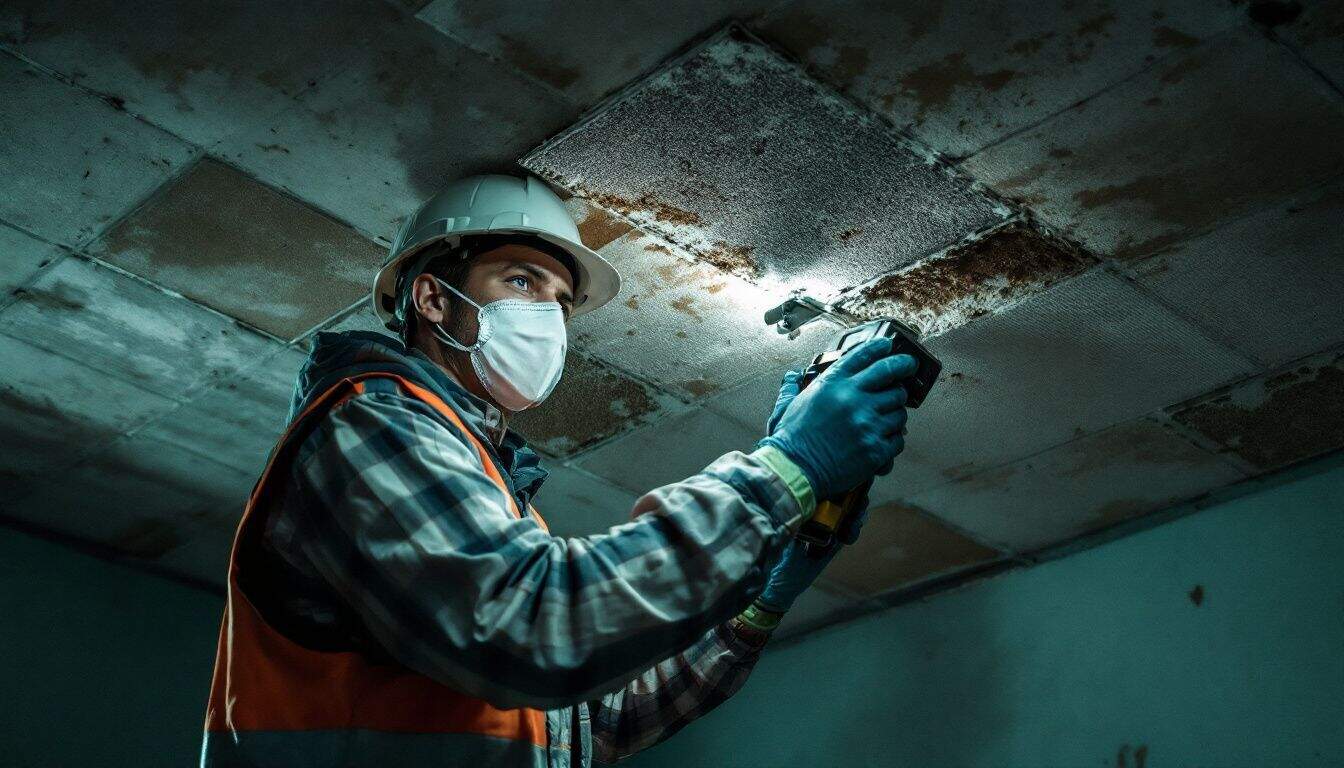
Surveyors carry out a systematic visual inspection of the building, assessing all materials that could potentially contain asbestos. Where materials cannot be confirmed as asbestos-free by visual inspection alone, samples are taken using specialist equipment and strict protocols to avoid releasing fibres into the air.
Surveyors wear appropriate personal protective equipment (PPE) throughout, including respiratory protective equipment (RPE), gloves, and disposable coveralls. Sampling is carried out carefully to minimise disturbance, and any areas disturbed during sampling are made safe before the surveyor moves on.
Each sample is clearly labelled, securely packaged, and sent to a UKAS-accredited laboratory for analysis. The laboratory identifies the type of asbestos present — whether chrysotile (white asbestos), amosite (brown asbestos), or crocidolite (blue asbestos) — and confirms the material composition.
Documentation and the Asbestos Register
The findings from the survey are compiled into a detailed report that forms the basis of the asbestos register. This document records the location of every ACM identified, its type, condition, and an assessment of the risk it poses.
In a museum context, the register also needs to be accessible to a wide range of people — from the estates team managing day-to-day maintenance to external contractors brought in for specialist work. Digital photography is used extensively to document the precise location and condition of ACMs, making the register as clear and usable as possible.
The register is a living document. It must be updated whenever new information comes to light, whenever work is carried out that affects ACMs, and whenever a review identifies changes in the condition of materials.
Managing ACMs in an Occupied Museum Environment
Once ACMs have been identified, the duty holder must decide how to manage them. Not all asbestos needs to be removed — in many cases, materials that are in good condition and unlikely to be disturbed can be safely managed in situ.
For museums, this often means:
- Clearly marking the location of ACMs in the asbestos register and on building plans
- Briefing all relevant staff and contractors on the location of ACMs before they carry out any work
- Implementing a permit-to-work system for any activities that could disturb ACMs
- Carrying out regular condition monitoring to check that materials have not deteriorated
- Ensuring that any contractors working on the building are provided with relevant asbestos information before they begin
Where ACMs are in poor condition, are located in areas subject to frequent disturbance, or present an unacceptable risk, removal may be the most appropriate course of action. This must be carried out by a licensed contractor in accordance with the Control of Asbestos Regulations.
The asbestos removal process requires careful planning, notification to the HSE, and strict controls to protect everyone in and around the building — particularly important in a venue that may remain partially open to the public during works.
Special Considerations for Listed Buildings and Heritage Sites
Many museums occupy listed buildings or are located within conservation areas, which adds an additional layer of complexity to asbestos management. Any work that could affect the character of a listed building — including the removal of ACMs — may require listed building consent in addition to compliance with asbestos regulations.
This does not mean that asbestos cannot be removed from listed buildings. It means that the approach must be carefully planned, with input from conservation officers where necessary, and that the method of removal must be appropriate to the sensitivity of the building fabric.
Surveyors experienced in working with heritage buildings will understand these constraints and can advise on the most appropriate approach. The goal is always to protect both the people who use the building and the building itself.
Protecting Collections and Artefacts During Survey Work
One aspect of asbestos surveys for museums that requires particular attention is the protection of collections during the survey process. Disturbing ACMs — even during careful sampling — carries a risk of fibre release, and in a museum environment, artefacts and display materials may be vulnerable to contamination.
Before sampling takes place in gallery spaces or storage areas, surveyors should work with collections staff to ensure that sensitive items are either removed or adequately protected. Any areas where sampling has taken place should be thoroughly cleaned before they are returned to use.
Good communication between the surveying team and the museum’s collections and facilities staff is essential to managing this risk effectively. A professional surveying company will factor this into their methodology from the outset, not treat it as an afterthought.
How Often Should Museums Commission Asbestos Surveys?
There is no single prescribed interval for asbestos surveys — the frequency depends on the condition of ACMs, the nature of activities in the building, and any changes to the structure or use of the premises.
As a general principle:
- An initial management survey should be carried out if one does not already exist or if the existing survey is significantly out of date
- The asbestos register and management plan should be reviewed at least annually
- A refurbishment and demolition survey must be commissioned before any intrusive work begins
- Additional surveys or re-inspections may be required following incidents, changes in building use, or where ACMs are showing signs of deterioration
- Regular reinspection of known ACMs is a practical way of monitoring their condition and identifying any deterioration before it becomes a problem
For busy museum environments where maintenance and exhibition work is ongoing, this kind of proactive monitoring is particularly valuable. Waiting until something goes wrong is not a strategy — it is a liability.
Finding a Qualified Surveyor for Museum Asbestos Surveys
The quality of an asbestos survey is only as good as the competence of the surveyor carrying it out. HSG264 sets out the qualifications and competencies required, and duty holders should always use a surveying organisation that holds UKAS accreditation for asbestos surveying.
When selecting a surveyor for a museum environment, ask about their experience with similar buildings — particularly listed structures, public-access venues, and buildings with complex layouts. A surveyor familiar with the particular challenges of museum environments will be better placed to identify ACMs in non-standard locations and to work sensitively around collections and heritage fabric.
Questions worth asking when commissioning a survey include:
- Do you hold UKAS accreditation for asbestos surveying?
- Have you worked in listed buildings or heritage environments before?
- How will you manage access to sensitive collection areas?
- What is your process for protecting artefacts during sampling?
- How will the asbestos register be formatted and delivered?
- Can you provide references from similar projects?
Supernova Asbestos Surveys operates across the UK and has extensive experience carrying out asbestos surveys for museums and heritage buildings. Whether your museum is in the capital — where our team provides asbestos survey London services — or further afield, we have the expertise to help.
Our surveyors also cover major cities across England. If your museum is based in the North West, our asbestos survey Manchester team is ready to assist. For institutions in the Midlands, our asbestos survey Birmingham service provides the same level of specialist expertise.
Frequently Asked Questions
Are museums legally required to have an asbestos survey?
Yes. Under the Control of Asbestos Regulations, any person with responsibility for managing a non-domestic premises — which includes museums of all types — has a legal duty to manage asbestos. This duty requires the responsible person to identify ACMs, assess the risk they pose, and maintain a written asbestos management plan. A professional management survey is the standard way of fulfilling this obligation.
What types of asbestos are commonly found in museum buildings?
Museum buildings from the mid-twentieth century may contain chrysotile (white asbestos), amosite (brown asbestos), or crocidolite (blue asbestos), depending on the application. Common locations include pipe lagging, ceiling tiles, floor tiles and adhesives, structural insulation boards, and decorative spray coatings. Older buildings that were retrofitted during the twentieth century may contain ACMs in less obvious locations, which is why a thorough survey by a qualified surveyor is essential.
Can a museum remain open during an asbestos survey?
In most cases, yes — a management survey can be carried out with minimal disruption to normal operations, provided access arrangements are planned carefully in advance. Surveyors will work with facilities and collections staff to coordinate access to sensitive areas and ensure that artefacts are protected during sampling. Where more intrusive refurbishment or demolition surveys are required, it may be necessary to close specific areas temporarily.
Does asbestos always need to be removed from a museum building?
Not necessarily. ACMs that are in good condition and are unlikely to be disturbed can often be safely managed in situ, with appropriate monitoring and controls in place. Removal is generally recommended where materials are in poor condition, are located in areas subject to regular disturbance, or cannot be adequately protected. Any removal work must be carried out by a licensed contractor in accordance with the Control of Asbestos Regulations.
How long does an asbestos survey take in a museum?
The duration depends on the size, complexity, and condition of the building. A management survey for a small to medium-sized museum might be completed in one or two days, while a large or complex building with multiple wings, basements, and roof voids could take considerably longer. Your surveyor should provide a realistic timeframe during the scoping stage, along with a clear plan for managing access and minimising disruption.
Commission Your Museum Asbestos Survey Today
Supernova Asbestos Surveys has completed over 50,000 surveys across the UK, working with a wide range of public and heritage buildings. Our UKAS-accredited surveyors understand the unique demands of museum environments — from protecting irreplaceable collections to navigating listed building constraints.
Whether you need an initial management survey, a pre-refurbishment demolition survey, or ongoing asbestos management support, we can help. Call us on 020 4586 0680 or visit asbestos-surveys.org.uk to request a quote or speak to a member of our team.