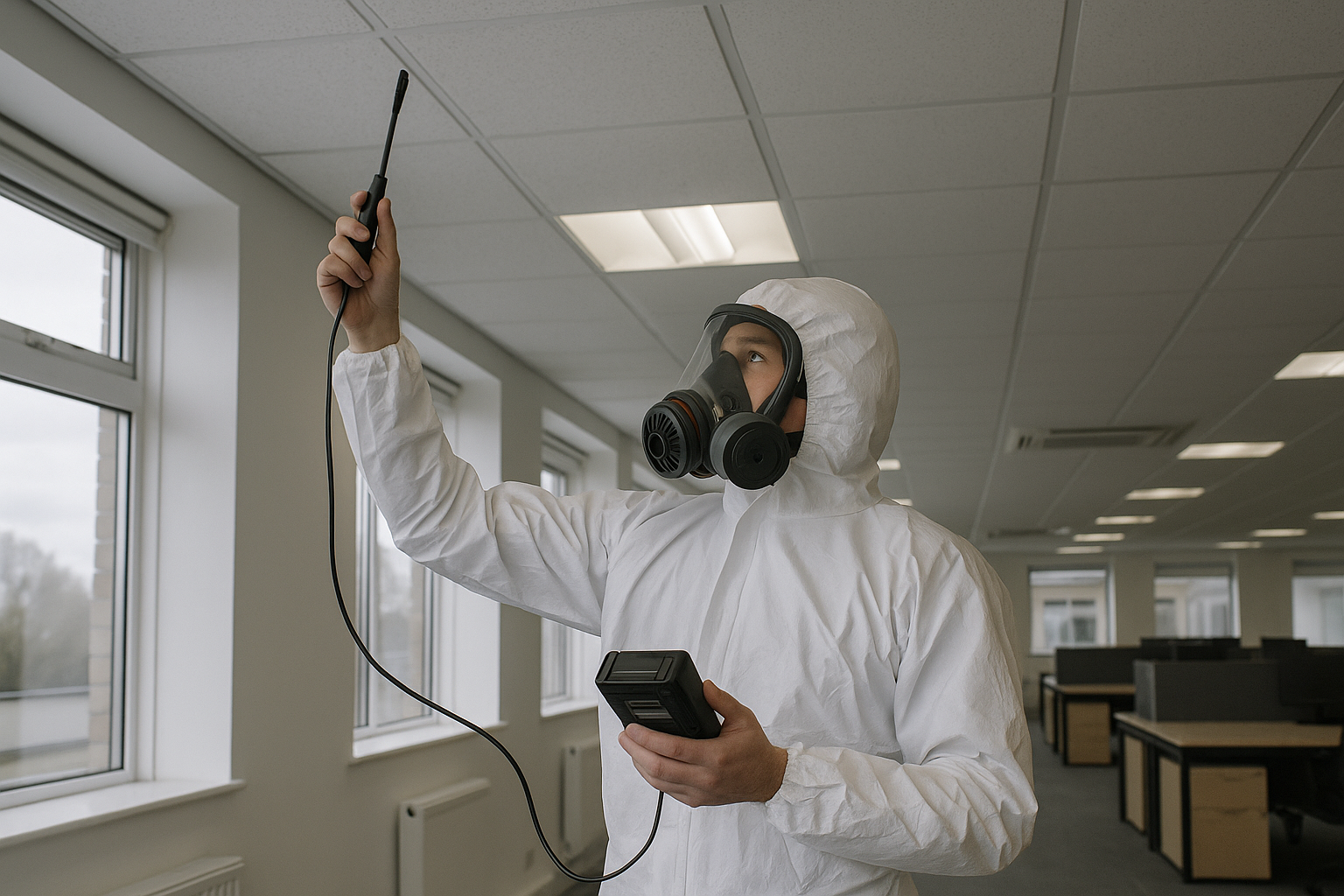
A clear asbestos survey report can save you from expensive delays, unsafe maintenance work and awkward conversations with contractors. When the report is accurate and easy to use, it becomes a practical site document. When it is vague, outdated or poorly structured, it creates risk.
For duty holders, landlords, facilities managers and managing agents, the asbestos survey report is where survey findings turn into action. It tells you what has been found, where it is, what condition it is in and what should happen next. Under the Control of Asbestos Regulations, asbestos in non-domestic premises must be managed properly, and HSE guidance and HSG264 set out what a suitable survey should achieve and how findings should be recorded.
The point is simple: a good report is not paperwork for a file. It is a working document for day-to-day management, contractor control and planning future works.
Why an asbestos survey report matters
The site inspection is only part of the job. The real value sits in the finished asbestos survey report, because that is the document your team will use long after the surveyor has left site.
A reliable report helps you understand whether asbestos-containing materials are present, whether they are likely to be disturbed and what level of control is needed. It should also feed directly into your asbestos register and asbestos management plan.
If asbestos remains in place, the asbestos survey report helps you manage it sensibly rather than reactively. That means fewer surprises during maintenance and a much lower chance of accidental disturbance.
- Identify confirmed or presumed asbestos-containing materials
- Understand the condition and extent of each item
- Prioritise actions based on risk and likely disturbance
- Brief contractors before they start work
- Support your asbestos register and management plan
- Demonstrate that asbestos risks are being managed properly
For occupied buildings, this matters every day. For buildings heading into refurbishment or demolition, it matters before any intrusive work starts.
How an asbestos survey report is produced
A professional asbestos survey report starts well before the surveyor arrives on site. The survey scope needs to be agreed first, including the survey type, the areas to be inspected, access arrangements and any expected limitations.
During the inspection, the surveyor looks for suspect asbestos-containing materials, records their locations, notes their condition and takes samples where appropriate. Those samples are then sent for sample analysis by a suitable laboratory.
Once the inspection findings and laboratory results are complete, everything is compiled into the final asbestos survey report. The report should be technically accurate, easy to follow and practical enough for both compliance and site use.
Typical stages in the process
- Scope agreed – the survey type, building areas and access restrictions are confirmed.
- Site inspection completed – accessible areas are inspected in line with the survey objective.
- Samples taken where needed – representative materials are collected safely for testing.
- Materials assessed – product type, extent, condition and surface treatment are recorded.
- Report issued – findings, plans, photographs, sample results and recommendations are brought together.
If the premises remain occupied, the report needs to be usable by facilities teams and contractors. If major works are planned, it also needs to make clear whether a more intrusive survey is required before work begins.
What should be included in an asbestos survey report
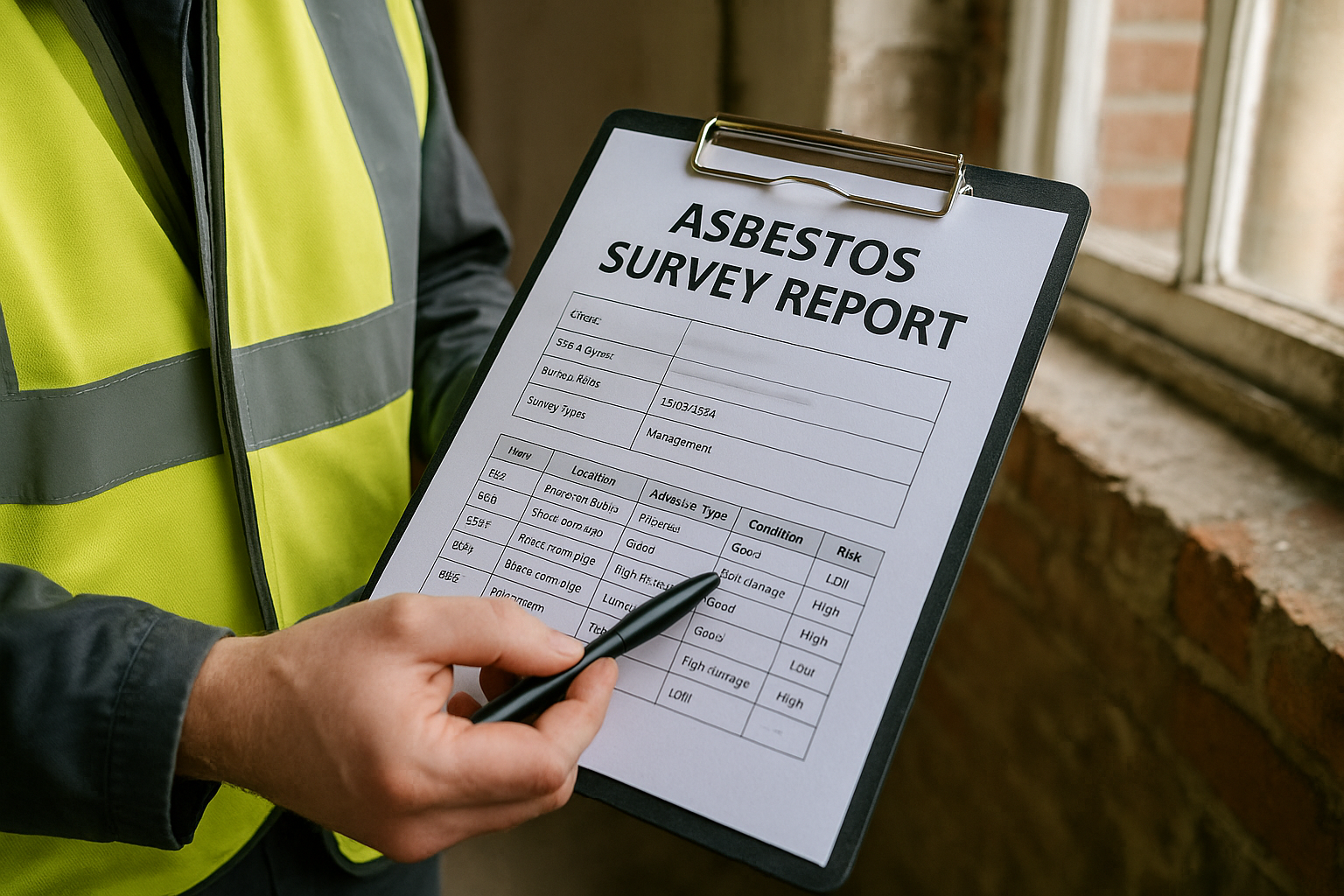
A strong asbestos survey report should be clear enough for non-specialists to use but detailed enough to support legal duties and practical decision-making. The exact layout may vary, but the core content should be easy to find and consistent throughout.
Executive summary
This section gives a concise overview of the premises, the survey type, the main findings and the key actions required. Senior decision-makers often read this first, so it should be direct and free from unnecessary jargon.
Survey scope and methodology
The report should explain what type of survey was completed, which areas were inspected, how access was achieved and what limitations applied. A survey is only reliable within its stated scope, so this section matters far more than many people realise.
Building details
The address, block names, floor references and room identifiers should match the site exactly. Even small errors can cause confusion later, especially when contractors are trying to locate materials quickly.
Sample results
Where samples have been taken, the asbestos survey report should include sample references and laboratory findings. This confirms whether asbestos is present and distinguishes between confirmed materials and those presumed to contain asbestos.
Item-by-item asbestos register information
This is often the section people use most. Each item should be recorded with enough detail for someone on site to find it without guesswork.
Typical entries include:
- Exact location
- Product description
- Extent or quantity
- Condition
- Surface treatment
- Sample reference or presumption
- Material assessment
- Recommended action
Plans and photographs
Clear plans and sharp photographs make a huge difference. A contractor should be able to compare what they see on site with what is shown in the asbestos survey report and identify the right room, riser, void or plant area quickly.
Recommendations
The report should set out practical next steps. That might include managing the material in place, repairing minor damage, sealing exposed edges, restricting access, arranging removal or carrying out a more intrusive survey before works proceed.
Limitations and exclusions
If parts of the building were not accessed, the asbestos survey report must say so clearly. Locked rooms, live electrical areas, unsafe roofs, obstructed risers, sealed voids and heavy storage are common reasons for exclusion.
These limitations should never be buried in small print. If an area was not inspected, it may still contain asbestos and should be treated accordingly until further investigation is completed.
What the report should identify about asbestos-containing materials
The core purpose of an asbestos survey report is not just to say whether asbestos is present. It should explain what the material is, where it is, how much of it exists, what condition it is in and how likely it is to be disturbed.
That context is essential. A cement sheet on an external outbuilding usually presents a very different management issue from damaged insulating board in a service riser. A good report makes that distinction obvious.
Common materials often recorded
- Asbestos insulating board in risers, partitions and ceiling voids
- Textured coatings on walls and ceilings
- Vinyl floor tiles and bitumen adhesive
- Pipe insulation and thermal lagging
- Boiler and plant insulation
- Asbestos cement sheets, soffits, gutters and flues
- Roofing products and wall panels
- Toilet cisterns, sink pads and other legacy items
Key details that should be recorded for each item
- Location – building, floor, room and exact position
- Product type – for example insulating board, cement panel or textured coating
- Extent – dimensions, quantity or approximate area
- Condition – intact, worn, damaged or deteriorating
- Surface treatment – painted, sealed, encapsulated or exposed
- Material assessment – based on product type, damage, surface treatment and asbestos type where known
- Sample result – positive, negative or presumed asbestos
Where sampling is not possible, the asbestos survey report may record a presumption of asbestos. That is often the right approach where access is restricted or where sampling would cause unnecessary damage at that stage.
Different survey types and how they affect the asbestos survey report
Not every asbestos survey report should look the same. The level of detail, the amount of intrusion and the intended use all depend on the survey type.
Using the wrong survey for the wrong task is a common reason for delays. A report prepared for normal occupation may not be suitable if you are about to remove ceilings, replace services or strip out internal finishes.
Management survey
A management survey is usually the standard survey for normal occupation, routine maintenance and ongoing asbestos management. Its purpose is to locate, as far as reasonably practicable, the presence and extent of suspect asbestos-containing materials that could be disturbed during everyday use of the premises.
The resulting asbestos survey report should support your asbestos register and management plan. It is not intended to fully expose hidden materials that may only become relevant during major building work.
Refurbishment survey
If intrusive works are planned, you will usually need a refurbishment survey. This is more intrusive and is designed to locate asbestos in the areas affected by the planned works, including materials hidden behind walls, ceilings, boxing and fixed finishes.
The asbestos survey report for this type of survey should clearly define the work area and identify asbestos-containing materials that could be disturbed during refurbishment.
Demolition survey
Where a building, or part of it, is to be demolished, a demolition survey is usually required before work begins. This is a fully intrusive survey intended to identify asbestos-containing materials throughout the structure so they can be dealt with before demolition proceeds.
The asbestos survey report for demolition works needs to be especially clear because contractors will rely on it during strip-out and enabling works.
Re-inspection survey
Asbestos records should not sit untouched for years. A re-inspection survey helps confirm whether previously identified materials remain in the same condition and whether earlier recommendations are still appropriate.
An updated asbestos survey report supports ongoing management and helps keep your asbestos register accurate over time.
How to check whether an asbestos survey report is reliable
Not all reports are equally useful. Before relying on an asbestos survey report for compliance, maintenance planning or contractor control, check that the information is clear, consistent and fit for purpose.
Accuracy matters because people will use the report to decide where they can work safely. If locations are wrong, plans do not match the register or exclusions are hidden away, the chance of accidental disturbance increases.
What to review before using the report
- Correct building details – address, block names, floors and room references should match the site
- Clear survey type – management, refurbishment or demolition should be stated plainly
- Accurate plans – item references on plans should match the register entries
- Useful photographs – images should show the material and its position clearly
- Consistent descriptions – wording in the register, sample list and plans should agree
- Obvious exclusions – no-access areas should be clearly identified
- Practical recommendations – next steps should be specific and usable
If anything is unclear, ask for clarification before the asbestos survey report is circulated internally. A competent surveyor should be able to explain the findings, confirm the limitations and help you understand what action is required.
What happens after the asbestos survey report is issued
The report is not the end of the process. Once issued, the asbestos survey report should be reviewed promptly and turned into practical site actions.
If higher-risk materials are identified, or if damaged asbestos-containing materials are found in vulnerable locations, immediate controls may be needed. That could include restricting access, isolating an area, arranging repairs or planning removal where required.
Practical next steps for duty holders
- Review the findings straight away – do not leave the report unread in an inbox.
- Update or create the asbestos register – make sure the latest findings are reflected accurately.
- Revise the management plan – actions, responsibilities and review periods should be clear.
- Inform staff and contractors – anyone who may disturb materials should know what is present and where.
- Act on urgent recommendations – damaged or vulnerable materials need prompt control.
- Plan further surveys if needed – especially before refurbishment, strip-out or demolition.
- Schedule re-inspections – materials left in place should be checked at suitable intervals.
This is where a good asbestos survey report proves its worth. It should make those next steps obvious rather than leaving your team to interpret vague wording.
Common problems found in a poor asbestos survey report
A weak asbestos survey report can create just as many problems as having no report at all. If the document is unclear, incomplete or badly organised, contractors may not trust it and projects can slow down while questions are answered.
There are a few warning signs to watch for.
- Room names on the report do not match the actual site layout
- Plans are missing, unclear or inconsistent with the register
- Photographs are too vague to identify the material properly
- Recommendations are generic and not linked to specific items
- Limitations are hidden at the back of the document
- The survey type is unclear or unsuitable for the planned work
- Older findings have not been reviewed or updated
If you spot these issues, do not assume the report is good enough. Clarify the findings or commission the right survey before works proceed.
Practical advice for property managers and duty holders
If you manage multiple sites, consistency matters. Keep every asbestos survey report in a format your team can locate quickly, and make sure the latest version is the one contractors receive.
Do not rely on memory, old PDFs buried in email chains or verbal briefings. If a contractor is due on site, they should have access to the relevant report, register information and any restrictions before work starts.
Simple ways to use the report properly
- Check the survey type matches the work being planned
- Make sure inaccessible areas are followed up where necessary
- Cross-check the report against current room numbering and site plans
- Brief maintenance teams on known asbestos locations
- Stop work if hidden materials are uncovered that are not covered by the report
- Arrange a more intrusive survey before refurbishment or demolition
If you are managing a portfolio across different locations, local support can help speed things up. Supernova provides services including asbestos survey London, asbestos survey Manchester and asbestos survey Birmingham, making it easier to keep reports and follow-up actions consistent across sites.
Choosing the right report for the job
The best asbestos survey report is the one that matches the actual risk and the planned use of the building. If the premises are occupied and only routine maintenance is taking place, a management survey report may be suitable. If walls, ceilings, floors or services are being opened up, it probably will not be.
Before commissioning a survey, ask a few practical questions:
- Is the building occupied or vacant?
- Is the work routine maintenance, refurbishment or demolition?
- Will hidden voids, ducts, risers or structural elements be disturbed?
- Are there any access restrictions that could affect the findings?
- Who needs to use the report once it is issued?
Getting those points right at the start usually means a more useful asbestos survey report at the end.
Frequently Asked Questions
What is the purpose of an asbestos survey report?
An asbestos survey report records where asbestos-containing materials have been identified or presumed, their condition, their extent and what action is recommended. It supports asbestos management, contractor briefing and compliance with the Control of Asbestos Regulations.
Does an asbestos survey report tell me if work can start?
Sometimes, but only if the survey type matches the planned work. A management report may be suitable for normal occupation and routine maintenance, but intrusive works usually require a refurbishment or demolition survey before work starts.
What if parts of the building were not accessed?
The asbestos survey report should list all limitations and exclusions clearly. Any area not inspected may still contain asbestos, so it should be treated with caution until further investigation is completed.
How often should asbestos information be reviewed?
Materials left in place should be checked periodically to confirm their condition has not changed. A re-inspection survey helps keep the asbestos register and management information current.
What should I do if the report is unclear or out of date?
Do not rely on it without clarification. Ask the surveyor to explain the findings, confirm the limitations or arrange an updated survey if the building layout, planned works or material condition has changed.
If you need a clear, practical asbestos survey report that stands up to real site use, Supernova Asbestos Surveys can help. We provide management, refurbishment, demolition and re-inspection surveys nationwide. Call 020 4586 0680 or visit asbestos-surveys.org.uk to arrange a survey or discuss the right service for your property.