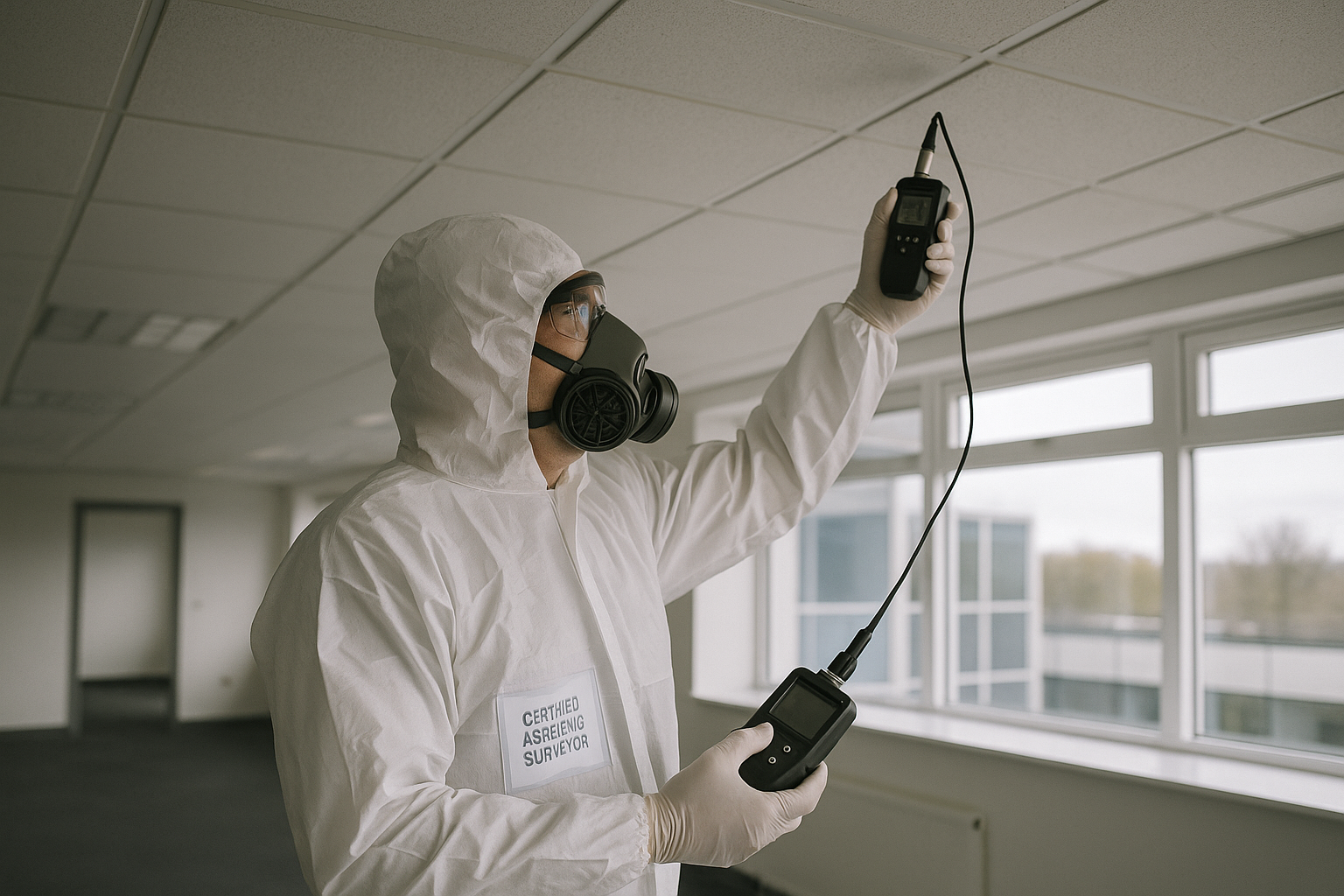
Ignore asbestos until a contractor opens the wrong ceiling void and a straightforward job can turn into a costly shutdown. For anyone responsible for a non-domestic property, arranging the right asbestos survey is one of the clearest ways to protect occupants, brief contractors properly and meet your duties under the Control of Asbestos Regulations.
An asbestos survey is not a paper exercise. It gives you reliable information about suspected asbestos-containing materials, where they are, what condition they are in and whether normal use, maintenance, refurbishment or demolition could disturb them. If that information is missing, decisions are being made on guesswork, and that is exactly what HSE guidance and HSG264 are designed to avoid.
The purpose of an asbestos survey
The right asbestos survey helps a dutyholder understand risk before work starts. It supports an asbestos register, informs a management plan and gives contractors the information they need before they drill, cut, strip out or demolish.
In practical terms, a suitable asbestos survey should help you:
- Locate suspected asbestos-containing materials
- Assess the likelihood of disturbance during normal occupation or planned works
- Decide whether materials can be managed in place or need remedial action
- Provide clear information to maintenance teams and contractors
- Demonstrate a sensible approach to compliance with the Control of Asbestos Regulations
HSG264 sets out the recognised approach for asbestos surveying. That means the survey type, scope, access arrangements, sampling strategy and report format all need to match the purpose of the job.
4. Arrange an asbestos survey
Leaving an asbestos survey until contractors are booked is one of the most common mistakes property managers make. If the wrong survey is commissioned, or access is incomplete, projects can stall while extra inspection work is arranged.
When you arrange an asbestos survey, focus on scope first. Ask what work is planned, which areas will be accessed and whether the property is occupied, undergoing refurbishment or heading for demolition.
Before you book
Gather the basic building information so the surveyor can plan properly. A little preparation usually leads to a better report and fewer limitations.
- Confirm the age, use and layout of the building
- Collect previous asbestos records, plans and refurbishment history
- Identify plant rooms, risers, roof voids, basements and locked areas
- Tell the surveyor about planned maintenance, fit-out or strip-out works
- Check whether parts of the building need to be vacated for intrusive inspection
If the premises remain in normal use, a management survey is usually the starting point. If intrusive works are planned, you may need a refurbishment survey or a demolition survey instead.
A management survey
A management survey is the standard asbestos survey for occupied non-domestic premises and the common parts of domestic buildings. Its purpose is to locate, as far as reasonably practicable, the presence and extent of suspected asbestos-containing materials that could be damaged or disturbed during normal occupation, including routine maintenance.
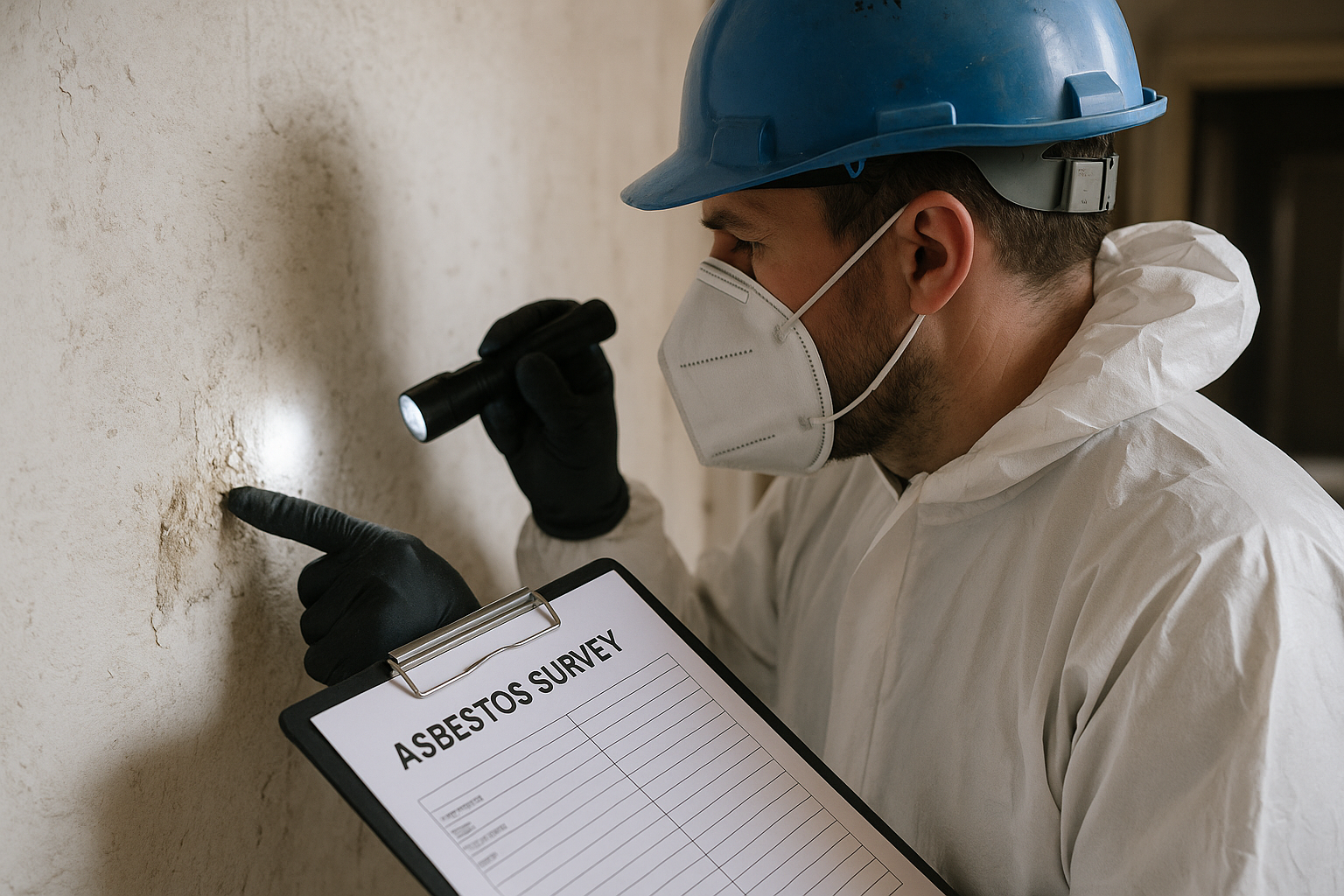
This type of asbestos survey is commonly used in offices, schools, retail units, warehouses, healthcare settings and communal areas in blocks of flats. It is generally non-intrusive or only mildly intrusive, because the building is still being used.
What a management survey looks at
The surveyor inspects accessible areas and may take samples from suspect materials where appropriate. The findings should be clear enough to feed directly into your asbestos register and management plan.
Typical materials reviewed during a management survey include:
- Textured coatings
- Floor tiles and bitumen adhesive
- Asbestos insulating board in partitions, risers and ceiling voids
- Pipe insulation and boiler insulation
- Cement sheets, soffits, gutters and flues
- Ceiling tiles, panels and service duct linings
If suspect materials are in good condition and unlikely to be disturbed, they may be managed in place. That still means keeping records up to date, monitoring condition and making sure anyone who may disturb the material has the right information before work starts.
Refurbishment or demolition surveys
A management survey is not enough if the building fabric will be disturbed. Where intrusive work is planned, the asbestos survey must match the job.
A refurbishment survey is required before refurbishment, structural alteration or intrusive maintenance. A demolition survey is required before a building, or part of a building, is demolished.
Why these surveys are more intrusive
Asbestos is often hidden behind finishes, inside risers, within boxing, above ceilings, below floors and inside service voids. If those areas will be disturbed, they need to be inspected before the work begins.
That is why refurbishment or demolition surveys are intrusive by design. Access usually needs to be unrestricted, and the relevant area may need to be vacated while the asbestos survey is carried out.
If the project does not involve full demolition but does involve strip-out, wall openings, ceiling replacement or major services work, a refurbishment survey is usually the right route. If the structure itself is coming down, a demolition survey is the correct asbestos survey.
Sourcing analysts and surveyors
Choosing the right surveying organisation matters just as much as choosing the right survey type. A poor asbestos survey can create false confidence, leave hidden risks in place and cause avoidable delays once works begin.
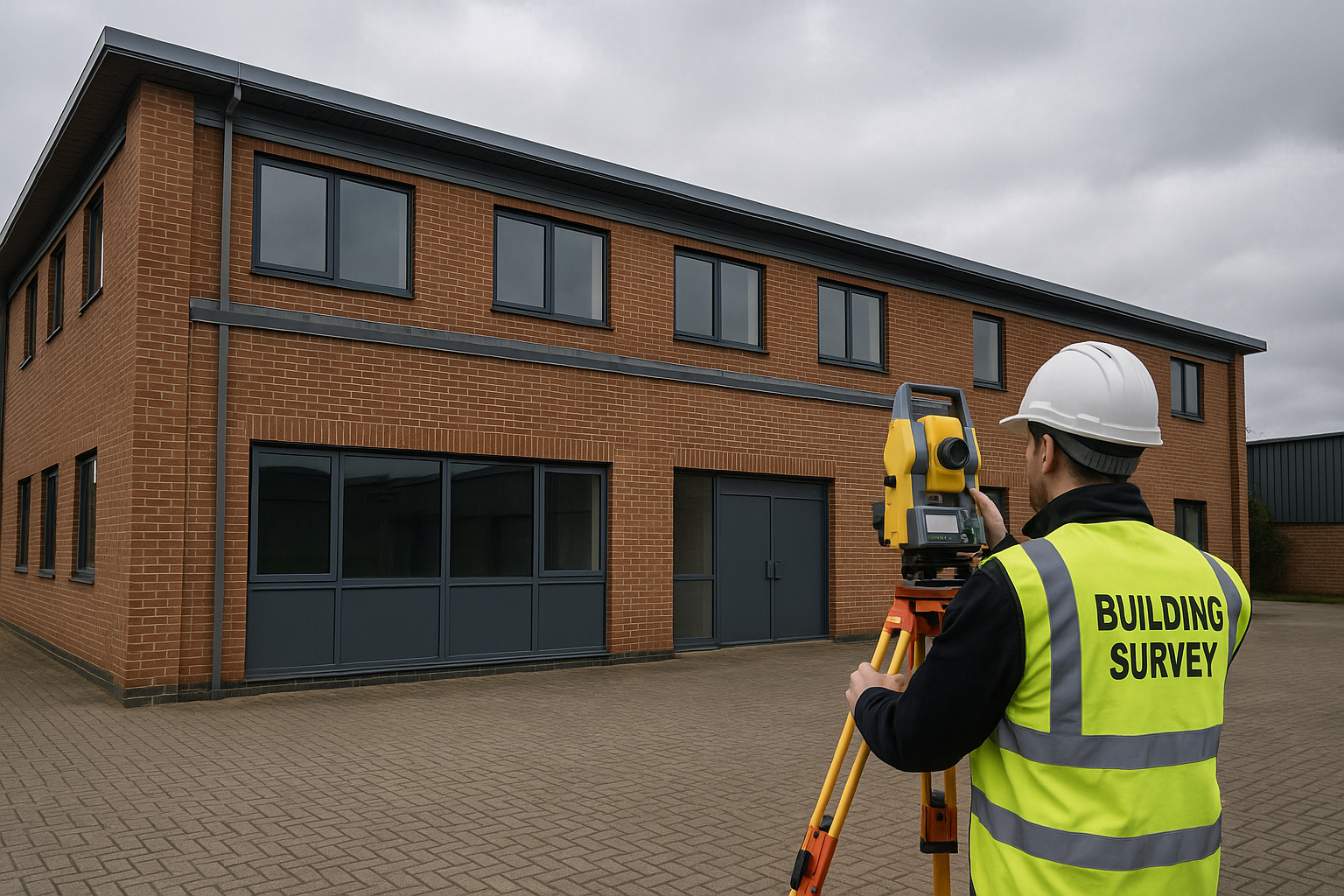
When sourcing analysts and surveyors, look for competence, clear scope planning and reporting that aligns with HSG264. You should also ask how samples will be handled and which laboratory arrangements are in place.
What to ask before appointing a surveyor
- Do you carry out surveys in line with HSG264?
- Which survey type do you recommend for this building and why?
- Will sampling be undertaken where needed?
- How will inaccessible areas and limitations be recorded?
- Will the report clearly distinguish between presumed and confirmed asbestos-containing materials?
- Can you support follow-up actions such as reinspection planning?
For some properties, local support makes access and scheduling easier. Supernova provides regional coverage including asbestos survey London, asbestos survey Manchester and asbestos survey Birmingham services.
Sampling, analysis and what happens on site
Many people assume an asbestos survey is just a visual walk-through. In reality, a proper survey follows a structured process from planning through to reporting.
- Initial review: the surveyor gathers information on the building, its layout, use and any previous asbestos records.
- Scope and access planning: the survey type is confirmed and any access restrictions are identified.
- On-site inspection: relevant areas are inspected for suspect asbestos-containing materials.
- Sampling: where appropriate, small controlled samples are taken safely from suspect materials.
- Analysis: samples are sent to a competent laboratory to determine whether asbestos is present.
- Report writing: findings are compiled into a room-by-room report with locations, assessments and recommendations.
Sampling is often essential because visual inspection alone cannot always confirm whether a material contains asbestos. In some cases, materials may be presumed to contain asbestos, particularly where sampling would cause unnecessary damage. For planned works, however, confirmed analysis is often the better basis for decision-making.
As a dutyholder, you should check that sample locations are recorded clearly and that any disturbed sample points are left safe. If analysis has been carried out, the report should reference the results properly and link them to the material inspected.
The survey report
The survey report is where the asbestos survey becomes useful in day-to-day property management. If the report is vague, generic or full of unexplained limitations, it will not give contractors or facilities teams the clarity they need.
A good asbestos survey report should be easy to follow and practical to use. It should tell you what was inspected, what was found, what could not be accessed and what action is recommended next.
What a strong report should include
- The correct survey type for the intended purpose
- A clear scope of inspection
- Room-by-room findings and location details
- Sample results linked to the materials tested
- Material assessments where relevant
- Photographs or plans where these improve clarity
- Limitations and inaccessible areas listed plainly
- Practical recommendations for management or further action
The report should also distinguish between materials that were sampled and confirmed, and materials that were presumed to contain asbestos. That distinction matters when you are planning works or briefing contractors.
Checking the accuracy of the survey report
Commissioning an asbestos survey is only half the job. You also need to review the report critically and make sure it matches the building and the work you have planned.
If the report is inaccurate or incomplete, the risk does not disappear. It simply gets passed to the next contractor, maintenance team or project manager.
Practical checks to make
- Does the survey type match the intended use of the report?
- Are all key areas included, such as risers, plant rooms, roof voids and service spaces?
- Are inaccessible areas clearly listed rather than hidden in broad wording?
- Are room names, locations and material descriptions specific enough to act on?
- Do the recommendations make sense for the material condition and planned works?
- Are laboratory results clearly tied to the sampled materials?
Red flags to watch for
- Generic wording repeated across multiple rooms
- No clear plans, photos or location references
- Obvious areas missing from the scope
- Confusion between presumed and sampled materials
- Recommendations that do not match the findings
If access was not available on the day, arrange follow-up inspection quickly. Leaving gaps open for months can undermine the value of the entire asbestos survey.
Main menu, resources and practical navigation
When people search for asbestos guidance, they often want quick answers rather than long legal explanations. That is why good resource pages, a clear main menu and sensible navigation matter.
Whether you are reviewing your own internal compliance documents or choosing a surveying company, the useful resources should be easy to find. Survey types, booking routes, contact details, service areas and next-step guidance should not be buried.
Resources that actually help property managers
The most useful resources are the ones that support action. For example, after an asbestos survey you may need to update your register, brief contractors, arrange remedial work or schedule future inspections.
Helpful resources typically include:
- Survey type explanations
- Guidance on management plans and asbestos registers
- Advice on access requirements before surveys
- Information on sampling and laboratory analysis
- Support for follow-up inspections such as a reinspection survey
If your own document system is hard to navigate, fix that early. A clear internal menu structure for asbestos records can save time and prevent mistakes when contractors arrive on site.
Footer, footer links and what should be easy to find
Footer sections on service websites are not just design features. They reflect what building managers need fast access to when a project is moving quickly.
Useful footer links should make it simple to reach the right survey service, check coverage areas, find contact details and request help. The same logic applies to your own asbestos records: key documents should be easy to find, easy to share and current.
For property managers, the essentials should always be close to hand:
- The latest asbestos survey report
- The asbestos register
- The management plan
- Contact details for the surveying organisation
- Records of remedial works and reinspections
If those records are hidden in old email chains or spread across different systems, tidy that up before the next maintenance job starts.
What to do after an asbestos survey
Once the asbestos survey is complete, the next step depends on the findings. Some materials can remain in place and be managed. Others may need repair, encapsulation, labelling, monitoring or removal before work can proceed.
Use the report straight away rather than filing it away for later. The value of an asbestos survey comes from what you do with the information.
- Review the findings and limitations immediately
- Update or create the asbestos register
- Prepare or revise the asbestos management plan
- Share relevant information with contractors and maintenance teams
- Arrange remedial works or further inspection where needed
- Schedule periodic review or reinspection of known materials
For many buildings, asbestos management is ongoing rather than one-off. Materials left in place should still be monitored, and records should be updated whenever condition changes or works affect the area.
Frequently Asked Questions
Is an asbestos survey a legal requirement?
For many non-domestic premises and the common parts of domestic premises, the dutyholder must manage asbestos risk under the Control of Asbestos Regulations. An asbestos survey is often the practical way to identify suspected asbestos-containing materials and gather the information needed for an asbestos register and management plan.
What is the difference between a management survey and a refurbishment survey?
A management survey is used for normal occupation and routine maintenance. A refurbishment survey is needed before intrusive work such as strip-out, structural alteration or major services work, because hidden areas likely to be disturbed must be inspected.
How do I know if the survey report is accurate?
Check that the survey type matches the planned use, that all relevant areas were inspected, and that limitations are clearly listed. A good report should include specific room-by-room findings, clear sample results and practical recommendations.
Can asbestos be managed in place?
Yes, if the material is in good condition and unlikely to be disturbed, it can often be managed in place. That still requires an up-to-date register, a management plan, condition monitoring and clear communication with anyone carrying out work.
When should I arrange an asbestos survey?
Arrange an asbestos survey as early as possible, ideally before maintenance, fit-out, refurbishment or demolition is programmed. Early planning reduces delays, helps define the right survey type and gives contractors the information they need before work starts.
If you need a reliable asbestos survey with clear reporting and practical support, Supernova Asbestos Surveys can help. We provide management, refurbishment, demolition and reinspection surveys nationwide. Call 020 4586 0680 or visit asbestos-surveys.org.uk to arrange your survey.