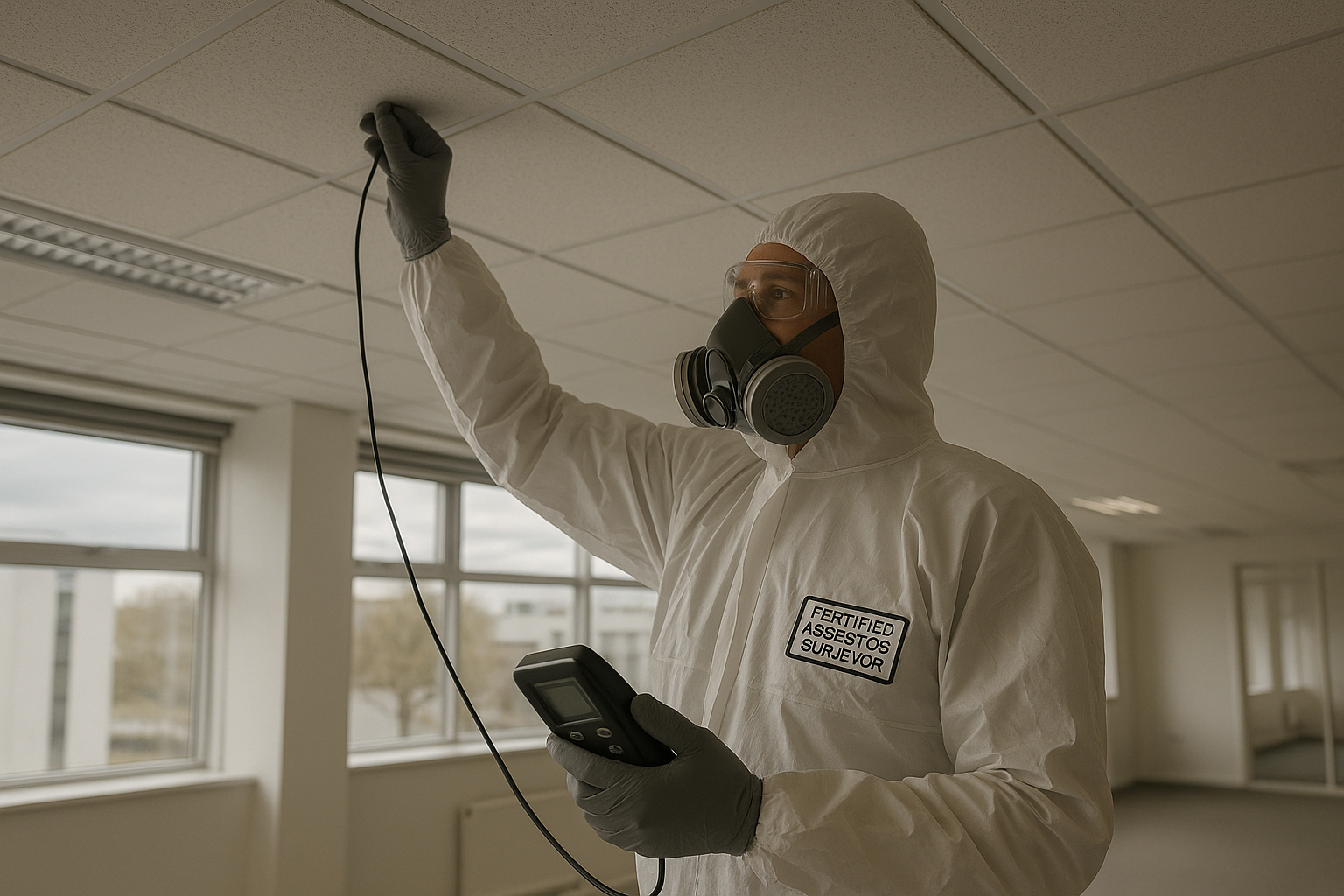
Asbestos rarely makes itself obvious, but across older premises it still shapes maintenance, refurbishment and compliance decisions every day. If you manage property built before 2000, asbestos UK is not a historical issue tucked away in old records; it is a live risk that needs clear information, practical controls and the right survey at the right time.
The safest assumption is simple: asbestos may be present unless a suitable survey or analysis shows otherwise. That approach reflects the Control of Asbestos Regulations, aligns with HSE guidance and follows the survey standards set out in HSG264.
Why asbestos UK still matters in older buildings
Many people hear “asbestos” and assume the problem disappeared when its use was banned. The reality is different. The ban stopped new use, but it did not remove the asbestos already installed in schools, offices, hospitals, shops, warehouses, communal residential blocks and industrial buildings across the country.
That is why asbestos UK remains a daily management issue for landlords, duty holders, facilities teams and managing agents. The danger appears when asbestos-containing materials are damaged, deteriorate with age or are disturbed during routine works.
A straightforward job can trigger a serious problem. Drilling a ceiling, replacing lighting, opening a service riser, fixing pipework or lifting old floor finishes can all release fibres if asbestos has not been identified first.
From a property management perspective, the key point is practical rather than theoretical: you need reliable asbestos information before work starts, not after something suspicious has already been broken.
Who is responsible for managing asbestos?
Under the Control of Asbestos Regulations, the duty to manage asbestos in non-domestic premises sits with the person or organisation responsible for maintenance and repair. That can include:
- Building owners
- Commercial landlords
- Facilities managers
- Managing agents
- Employers in control of premises
- Those responsible for communal areas in residential blocks
This duty is active. It is not enough to assume the building is fine because no issues have been reported recently.
In practice, duty holders need to:
- Find out whether asbestos is present, as far as reasonably practicable
- Assess the risk from any asbestos-containing materials
- Keep an up-to-date record of location, condition and risk
- Make sure anyone who may disturb asbestos has the relevant information
- Review the condition of known materials over time
If contractors arrive on site without access to the asbestos register, the system is already weak. Good compliance depends on information being available before intrusive work begins.
Where asbestos is commonly found in UK properties
One of the biggest mistakes in asbestos UK management is assuming the risk only sits in obvious insulation materials. Asbestos was used in a huge range of products, from high-risk friable materials to more bonded items that still become dangerous when cut, drilled or broken.

Common locations include:
- Pipe lagging and thermal insulation
- Asbestos insulating board in partitions, ceiling tiles, soffits and service risers
- Sprayed coatings on structural elements
- Textured coatings on walls and ceilings
- Vinyl floor tiles and bitumen adhesives
- Cement roof sheets, gutters and downpipes
- Boiler insulation and plant room materials
- Lift shafts and service ducts
- Toilet cisterns, bath panels and boxing
- Garage roofs, sheds and outbuildings
- Fire doors and panels in older buildings
The presence of asbestos does not automatically mean removal is required. Many materials can remain in place safely if they are in good condition, properly recorded and unlikely to be disturbed.
The right response depends on three things: what the material is, what condition it is in and how likely it is to be disturbed during normal use or planned works.
What to do if you suspect asbestos
If you come across a suspicious material, avoid guesswork. A sensible response is:
- Stop work immediately if the material may be disturbed
- Keep people away from the area
- Do not drill, sand, scrape, snap or remove it
- Check existing asbestos records
- Arrange sampling or the correct survey before work continues
This is where quick decisions matter. Trying to save time by pushing on with work often creates delay, cost and avoidable exposure.
What a practical asbestos management system looks like
A strong asbestos management system is not just a survey report saved somewhere on a server. It is a working process that links inspections, records, contractor controls and follow-up actions.
For most organisations, the core elements should include:
- An asbestos register showing location, product type, condition and risk information
- An asbestos management plan setting out actions, responsibilities and review arrangements
- Survey reports for the relevant parts of the estate
- Contractor briefing procedures
- Permit-to-work or pre-start checks for intrusive jobs
- Re-inspection records for materials left in place
- Emergency procedures for accidental disturbance
The best systems are easy to use. Site teams, contractors and managers should be able to access the information they need without hunting through old files or waiting for someone in head office to email a report.
Practical ways to strengthen your system
If you want a more reliable asbestos process across a building or estate, start with the basics:
- Review asbestos information before every intrusive task, not just major projects
- Make the asbestos register available on site
- Train maintenance teams to stop and report suspect materials
- Check survey coverage against current building layouts and planned works
- Schedule re-inspections rather than waiting for someone to remember
- Record what was shared with contractors before they start
These steps are simple, but they prevent many of the failures seen in day-to-day property management.
Choosing the right asbestos survey
Survey choice is where many asbestos problems begin. The wrong survey can leave hidden materials unidentified, delay projects and expose contractors to avoidable risk.
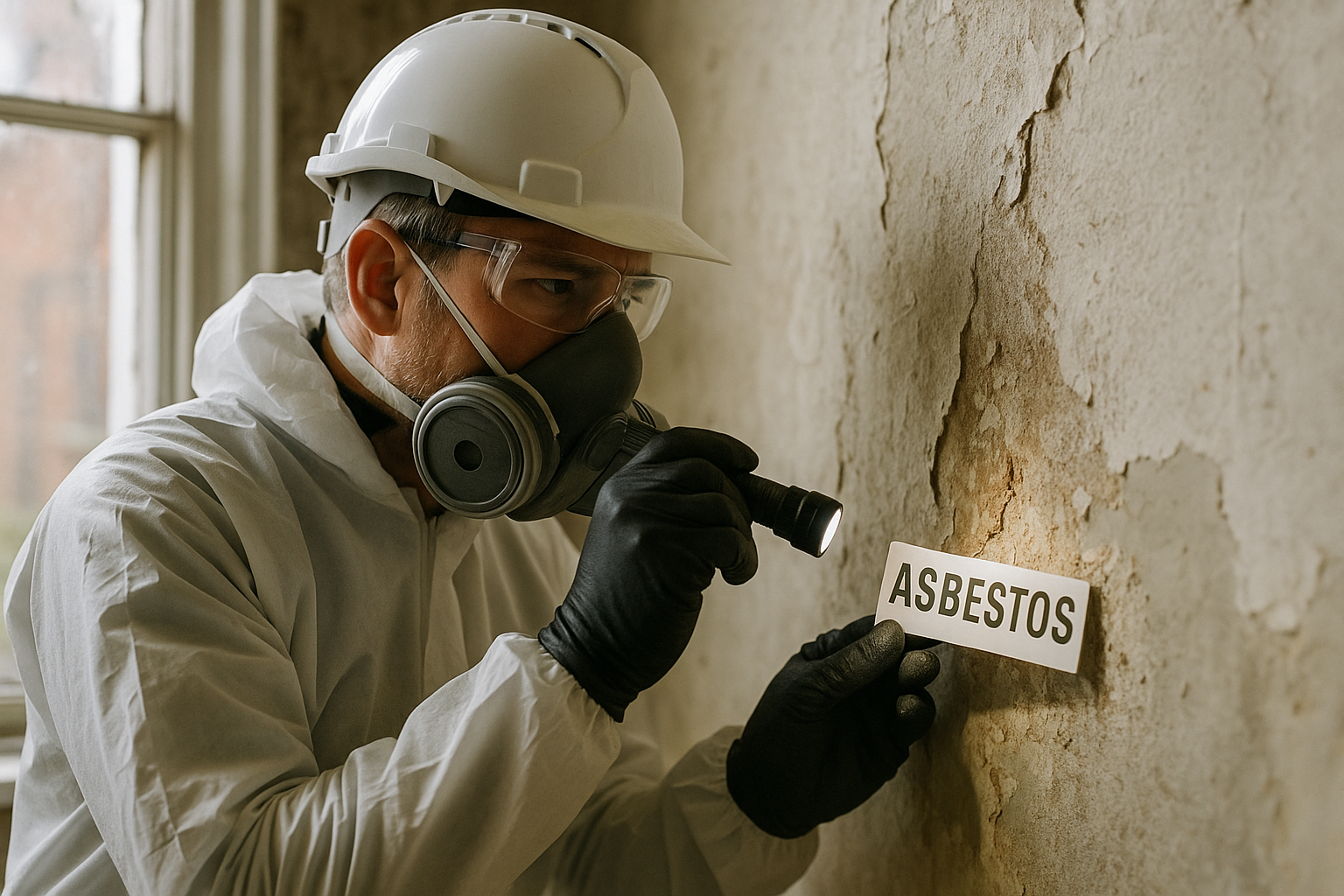
Under HSG264, survey selection depends on how the building is being used and what work is planned. There is no one-size-fits-all answer.
Management survey
A management survey is designed for buildings in normal occupation and routine use. Its purpose is to locate, as far as reasonably practicable, asbestos-containing materials that could be disturbed during everyday occupation, maintenance or minor works.
This is the survey most duty holders rely on to support an asbestos register and management plan. It helps you manage known risks during normal building use, but it is not intended for major intrusive works.
Refurbishment survey
If you are opening up walls, replacing services, changing layouts, stripping out finishes or carrying out intrusive upgrades, a refurbishment survey is usually required. These surveys are intrusive by design because hidden asbestos must be identified before work starts.
This is a common pressure point in asbestos UK compliance. Too many projects begin with only historic records or a management survey, even though the planned works go far beyond routine occupation.
Demolition survey
Where a building or structure is due to be demolished, a demolition survey is needed. This is a fully intrusive inspection intended to locate asbestos throughout the structure so it can be addressed before demolition proceeds.
Without proper asbestos information, demolition creates obvious legal, safety and waste handling problems. It also increases the risk of uncontrolled fibre release.
Re-inspection survey
Finding asbestos once is not the end of the process. If asbestos-containing materials remain in place, they should be reviewed periodically to confirm whether their condition has changed. A re-inspection survey helps you keep records current and identify when encapsulation, repair or removal may be needed.
This is particularly useful across schools, healthcare sites, local authority estates and large commercial portfolios where materials can deteriorate gradually or be damaged over time.
Asbestos testing, sampling and when a kit may help
Sometimes a full survey is not the immediate requirement. You may have a single suspect item such as a ceiling tile, textured coating, garage roof sheet or old floor tile adhesive that needs identification before any decision is made.
In those cases, targeted asbestos testing can be the practical next step. Laboratory analysis confirms whether asbestos fibres are present in the material submitted, giving you a clear answer rather than a visual guess.
Sample analysis for isolated materials
If a sample has already been taken safely and lawfully, sample analysis can help confirm exactly what the material contains. This can be useful where the concern is limited to one specific item and there is no wider need for a building-wide inspection.
That said, a single result does not replace a survey where broader asbestos risks may exist elsewhere in the property. Property managers should be careful not to treat isolated testing as a substitute for proper asbestos management.
When an asbestos testing kit is suitable
For straightforward situations, an asbestos testing kit can offer a practical route to laboratory analysis. It is best suited to clearly defined sample points where access is safe and there is no need for a wider inspection.
You may also see this described simply as a testing kit. In either case, the same limits apply: if the material is damaged, friable, hard to access or likely to release fibres, do not attempt DIY sampling.
When not to sample it yourself
Do not use self-sampling where:
- The material is lagging, loose insulation or debris
- The product is damaged and likely to release fibres
- The sample point is in a communal or heavily occupied area
- You are unsure whether licensed work may be required later
- You need a broader understanding of asbestos across the building
In those situations, arrange professional support instead. For wider options, Supernova also provides asbestos testing services for single samples, multiple materials and larger property portfolios.
How asbestos UK risk affects different sectors
The legal principles are consistent across non-domestic premises, but the practical challenges vary by sector. Understanding where your building type sits helps you prioritise the right controls.
Education
Schools, colleges and universities often operate from ageing estates with phased alterations, holiday works and heavy daily use. Ceiling voids, service ducts and older teaching blocks can create real asbestos management pressure if contractor controls are weak.
Healthcare
Hospitals, clinics and care settings combine complex plant areas with live environments that cannot simply be shut down. Survey planning and access arrangements need to be carefully managed so asbestos information is available without disrupting essential services.
Commercial property
Offices, retail units and mixed-use buildings frequently change hands or undergo tenant fit-outs. In asbestos UK terms, this often means a management survey is no longer enough once intrusive works are planned.
Industrial sites
Factories, workshops, depots and warehouses commonly contain asbestos cement, insulating board and older thermal insulation in hard-to-access locations. Maintenance teams working at pace can be especially exposed if records are incomplete.
Local authority and public estates
Libraries, leisure centres, depots, civic buildings and community assets often have long maintenance histories and mixed-quality records. A structured review of survey coverage can quickly reveal gaps.
Residential blocks
Although the duty to manage applies to non-domestic areas, communal spaces in older blocks can still contain asbestos in risers, plant rooms, meter cupboards, garages and service areas. Managing agents should make sure contractors working in those spaces receive the right information.
Hospitality
Hotels, pubs, restaurants and venues in older buildings often undergo frequent refurbishments. Fast turnaround projects are exactly where asbestos can be missed if survey requirements are not checked early.
Practical advice for maintenance teams and contractors
Workers who disturb building fabric are often the people most at risk. Electricians, plumbers, telecoms engineers, decorators, caretakers and general builders need practical instructions they can act on immediately.
Any team likely to work on walls, ceilings, floors, ducts, risers or plant should follow these steps:
- Check the asbestos register before starting work
- Confirm whether the scope matches the survey information available
- Stop if you uncover a suspicious material
- Do not drill, cut, sand, scrape or break the material
- Keep others away from the area
- Report the issue to the duty holder or site manager
- Arrange testing or the correct survey before work resumes
If your contractors do not know how to access asbestos information, fix that first. A well-written management plan means little if the people doing the work never see it.
Common mistakes that create asbestos problems
Most asbestos failures are not caused by mystery materials. They are caused by weak planning, poor communication or the wrong assumptions.
Common mistakes include:
- Relying on old survey reports without checking whether they still reflect the building layout
- Assuming a management survey is enough for refurbishment works
- Failing to brief contractors before they start
- Leaving known asbestos in place without re-inspection
- Treating one negative sample as proof the whole area is clear
- Allowing urgent maintenance to bypass asbestos checks
- Keeping records that are technically complete but difficult to access on site
Each of these issues is avoidable. The solution is usually better process, not more paperwork.
How to build a stronger asbestos programme across multiple sites
If you manage several properties, reactive decisions quickly become messy. Different survey dates, changing tenants, multiple contractors and inconsistent records can create blind spots across the estate.
A stronger approach is to build a repeatable asbestos process that applies across all sites. That usually means:
- Creating a standard for survey review before any intrusive work
- Keeping registers in a consistent format
- Setting re-inspection intervals and tracking them centrally
- Making asbestos checks part of permit-to-work procedures
- Training local site contacts to escalate concerns quickly
- Reviewing high-risk buildings first, such as older plant-heavy sites
For organisations operating in and around the capital, local response times also matter. If you need support in the city, an asbestos survey London service can help keep projects moving while maintaining compliance.
When removal is needed and when it is not
There is a common assumption that asbestos must always be removed immediately. That is not how effective management works.
If a material is in good condition, sealed, recorded and unlikely to be disturbed, leaving it in place and managing it may be the right option. Removal becomes more likely where the material is damaged, deteriorating, high risk in nature or sits in an area due for intrusive work.
The decision should be based on evidence, not panic. Survey findings, material condition, occupancy, planned works and exposure potential all need to be considered together.
For property managers, the practical takeaway is clear: do not ignore asbestos, but do not assume every discovery means urgent strip-out either. The right action is the one supported by the material type, condition and foreseeable risk.
Frequently Asked Questions
Is asbestos still common in the UK?
Yes. Asbestos is still present in many buildings constructed before 2000, particularly across non-domestic premises and communal areas. The fact that new use stopped does not mean existing materials disappeared, which is why asbestos UK management remains relevant.
Do I need an asbestos survey before refurbishment works?
If the works are intrusive and will disturb the building fabric, a refurbishment survey is normally required. A management survey is not designed to identify all hidden asbestos that may be affected during strip-out or alteration works.
Can I leave asbestos in place if it is not damaged?
Often, yes. If the material is in good condition, properly recorded and unlikely to be disturbed, it may be safer to manage it in place. It should still be monitored and included in your asbestos register and management plan.
Is asbestos testing enough instead of a survey?
Not always. Testing is useful for identifying a specific suspect material, but it does not provide the wider building information that a survey delivers. If there may be asbestos elsewhere in the premises, testing alone is not enough.
How often should asbestos be re-inspected?
There is no one-size-fits-all interval that suits every building. Re-inspection should be based on the type, condition and location of the material, along with the likelihood of disturbance. The key is to review known asbestos regularly and keep records current.
Need reliable advice on asbestos UK compliance, surveys or testing? Supernova Asbestos Surveys has completed more than 50,000 surveys nationwide and can help with management surveys, refurbishment surveys, demolition surveys, re-inspections and sampling. Call 020 4586 0680 or visit asbestos-surveys.org.uk to book support.