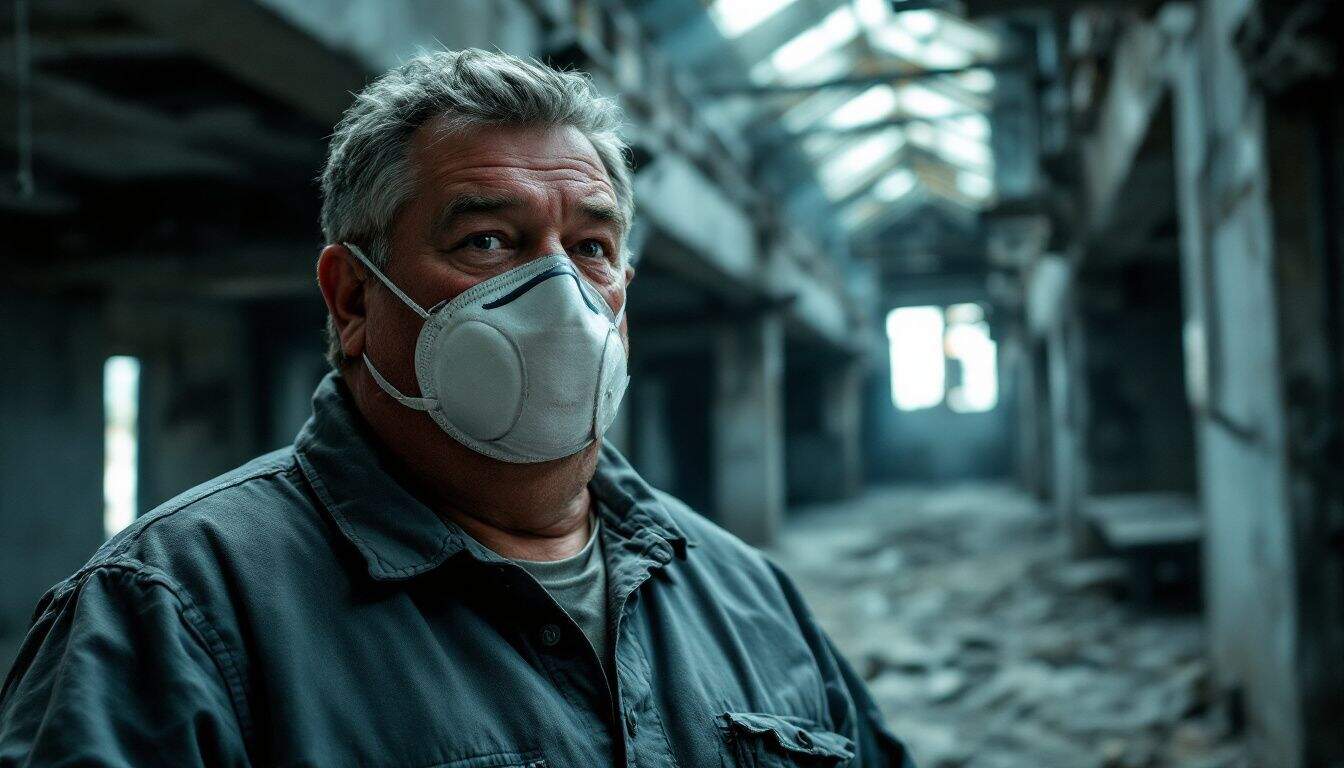
Why Museums Face Unique Asbestos Challenges — And What You Need to Do About It
Museums are among the most complex buildings to manage from an asbestos perspective. Many are housed in Victorian or Edwardian structures, mid-century civic buildings, or post-war extensions — all built during eras when asbestos was used extensively in construction. Asbestos surveys for museums are not simply a legal box-ticking exercise; they are a critical safeguard for visitors, staff, conservators, and the irreplaceable collections housed within.
If you manage or own a museum building, understanding your asbestos obligations is essential. This post covers the types of surveys required, what happens during sampling, and your ongoing legal duties.
Why Asbestos Is a Particular Concern in Museum Buildings
Museum buildings tend to be older, frequently modified, and subject to ongoing maintenance work — all factors that increase asbestos risk. Renovation projects, display installations, and behind-the-scenes infrastructure upgrades can all disturb asbestos-containing materials (ACMs) if they haven’t been properly identified first.
Asbestos was used in a vast range of building materials: ceiling tiles, floor tiles, pipe lagging, spray coatings, partition boards, and roofing felt. In a large museum, ACMs could be present in public galleries, staff offices, storage vaults, mechanical plant rooms, and roof spaces.
The stakes are higher in museums because footfall is high and diverse. Visitors include children, elderly people, and those with underlying health conditions — groups for whom asbestos fibre exposure poses the greatest risk. Staff who work in the building daily face cumulative exposure if ACMs are not properly managed.
The Legal Framework: What Museum Operators Must Know
The Control of Asbestos Regulations places a clear duty on those who manage non-domestic premises to identify, assess, and manage asbestos. Museums — whether publicly or privately operated — fall squarely within the scope of these regulations.
The duty holder (typically the building owner, facilities manager, or organisation responsible for maintenance) must:
- Take reasonable steps to find out if ACMs are present in the building
- Assess the condition of any ACMs found
- Prepare and implement a written asbestos management plan
- Monitor the condition of ACMs and review the plan regularly
- Share information about ACMs with anyone who may disturb them
Failure to comply is not just a regulatory risk — it exposes staff, contractors, and the public to genuine harm. The HSE’s guidance document HSG264 sets out the standards to which asbestos surveys must be conducted, and it applies directly to museum environments.
Types of Asbestos Surveys for Museums
Not all asbestos surveys are the same. The type of survey required depends on what you’re planning to do with the building. For museums, there are three core survey types to understand.
Management Survey
A management survey is the standard survey required for any building in normal occupation and use. It’s designed to locate ACMs that could be damaged or disturbed during everyday activities — maintenance work, minor repairs, or simply the wear and tear of daily operations.
For a museum, this means surveying accessible areas including galleries, corridors, staff areas, plant rooms, and storage spaces. The surveyor will take samples of suspect materials and assess their condition and risk level. The results feed directly into your asbestos register and management plan.
A management survey does not involve destructive inspection. It works within the constraints of a building in use, which is particularly relevant for museums where collections and public access must be protected.
Refurbishment and Demolition Survey
Before any refurbishment, renovation, or demolition work begins — whether that’s a new gallery fit-out, roof repairs, or a major capital project — a demolition survey is legally required. This is a fully intrusive survey that may involve breaking into walls, lifting floors, and accessing concealed voids.
Museums regularly undertake significant building works: new exhibition spaces, HVAC upgrades, accessibility improvements, and structural repairs. Every one of these projects requires a refurbishment or demolition survey in the affected areas before work commences.
This type of survey protects contractors and workers who would otherwise be exposed to ACMs disturbed during construction. It also protects the collections — asbestos fibre contamination in a museum store or gallery would be a serious incident with significant remediation costs.
Re-inspection Survey
Once ACMs have been identified and a management plan is in place, the work doesn’t stop there. A re-inspection survey is carried out periodically — typically annually — to check whether the condition of known ACMs has changed.
In a museum environment, where buildings are in constant use and maintenance activities are frequent, annual re-inspections are particularly important. ACMs that were in good condition when first surveyed can deteriorate over time, especially in areas subject to vibration, humidity changes, or accidental damage.
What Happens During an Asbestos Survey in a Museum?
Understanding the survey process helps museum managers plan effectively and minimise disruption to operations.
Initial Assessment and Planning
Before the surveyor arrives on site, they’ll review any existing asbestos records, building drawings, and previous survey reports. For a large museum, this preparation stage is crucial — it helps the surveyor prioritise areas and plan access to restricted spaces.
You’ll need to coordinate access to all areas of the building, including staff-only zones, plant rooms, roof spaces, and basement areas. Some of these spaces may require advance notice to curators or facilities teams.
Physical Inspection and Sampling
The surveyor will systematically inspect the building, visually assessing materials and taking samples where asbestos is suspected. Samples are collected carefully and sealed to prevent fibre release.
The number of samples taken depends on the size of the building and the variety of suspect materials present. Common ACMs found in museum buildings include:
- Textured coatings (such as Artex) on ceilings and walls
- Asbestos insulating board (AIB) in fire doors, ceiling tiles, and partition walls
- Pipe and boiler lagging in plant rooms and service corridors
- Vinyl floor tiles and the adhesive beneath them
- Roof felt and bitumen products
- Soffit boards and external cladding on mid-century extensions
Sample Analysis
Collected samples are sent to an accredited laboratory for analysis. Accurate sample analysis is fundamental to the reliability of any survey — it determines not just whether asbestos is present, but which type.
The three main types found in UK buildings are chrysotile (white asbestos), amosite (brown asbestos), and crocidolite (blue asbestos), each carrying different risk profiles. Laboratory analysis typically uses polarised light microscopy (PLM), with transmission electron microscopy (TEM) used for more detailed fibre identification where required. Results are usually returned within a few working days.
The Survey Report
Once analysis is complete, the surveyor produces a detailed report. For a museum, this report forms the backbone of your asbestos management plan and should be kept on site and made available to any contractor working in the building.
The report will include:
- A full schedule of ACMs identified, with location, extent, and condition
- A risk assessment for each ACM based on its material assessment score and priority assessment score
- Photographs of ACM locations
- Recommendations for management, monitoring, or removal
- An asbestos register that can be updated over time
Managing Asbestos in a Working Museum: Practical Considerations
Identifying asbestos is only the first step. Day-to-day management in a live museum environment requires careful planning and clear communication across all teams.
Contractor Management
Every contractor working in the building — whether they’re an electrician, a plumber, or an exhibition fit-out company — must be informed of ACM locations before they start work. This is a legal requirement, not a courtesy.
Your asbestos register must be accessible, up to date, and shared as part of your pre-work induction process. Contractors must not disturb ACMs without appropriate controls in place. For higher-risk materials, licensed asbestos removal will be required before work can proceed.
Staff Awareness and Training
Museum staff — particularly those involved in facilities management, maintenance, and collections handling — should receive asbestos awareness training. They need to know where ACMs are located, what they look like, and what to do if they suspect a material has been disturbed.
This doesn’t mean every member of staff needs specialist training, but those with any responsibility for the building fabric should understand the basics. Awareness training is a straightforward step that significantly reduces the risk of accidental disturbance.
Emergency Procedures
Accidents happen. A contractor drills through an asbestos ceiling tile, or a flood damages a section of AIB partition. Your asbestos management plan must include clear emergency procedures: who to call, how to isolate the area, and how to arrange emergency air monitoring and remediation.
Having these procedures written down and understood by key staff before an incident occurs is far preferable to improvising under pressure. Make sure emergency contact details for your asbestos surveyor and a licensed removal contractor are readily available.
Protecting the Collections
This is a concern unique to museums. If an ACM is disturbed and asbestos fibres are released into a gallery or storage area, the collections themselves can become contaminated. Decontaminating artefacts, textiles, or archival materials is a highly specialist and costly process — and in some cases, items may be irreparably damaged.
Your asbestos management plan should explicitly consider collection storage areas and public galleries as priority zones. Any maintenance work near these areas should trigger a review of the asbestos register before tools are picked up.
Asbestos Surveys for Museums Across the UK
Supernova Asbestos Surveys operates nationwide, with particular expertise in complex, high-footfall buildings including museums, galleries, and heritage properties. Whether your museum is in the capital or the regions, our UKAS-accredited surveyors can be on site quickly.
For museums in the capital, our asbestos survey London service covers all boroughs and is familiar with the unique challenges of London’s civic and heritage building stock.
In the North West, our asbestos survey Manchester team regularly works with cultural institutions across Greater Manchester and beyond.
In the Midlands, our asbestos survey Birmingham service is well-placed to support museums and galleries throughout the region.
The Consequences of Getting It Wrong
The risks of failing to carry out proper asbestos surveys for museums are serious and multifaceted.
- Health consequences: Asbestos fibre inhalation causes mesothelioma, asbestosis, and lung cancer. These diseases have long latency periods — symptoms may not appear for decades after exposure. There is no safe level of exposure, and no cure for mesothelioma.
- Legal consequences: Failing to comply with the Control of Asbestos Regulations can result in enforcement action by the HSE, improvement notices, prohibition notices, and prosecution. Fines can be substantial, and individuals — not just organisations — can face personal liability.
- Reputational consequences: A museum that exposes visitors or staff to asbestos faces severe reputational damage. Public trust, which is fundamental to any cultural institution, can be destroyed by a single serious incident.
- Financial consequences: Emergency remediation following an unplanned asbestos disturbance is significantly more expensive than planned management and removal. Insurance claims, legal costs, and temporary closure all add up quickly.
Speak to Supernova Asbestos Surveys
Supernova Asbestos Surveys has completed over 50,000 surveys across the UK, including complex heritage and civic buildings where the stakes are highest. Our UKAS-accredited surveyors understand the operational sensitivities of museum environments and will work around your access requirements to minimise disruption.
Whether you need an initial management survey, a pre-refurbishment inspection, or an annual re-inspection, we can provide a fast, accurate, and fully compliant service. Call us on 020 4586 0680 or visit asbestos-surveys.org.uk to request a quote or discuss your requirements with our team.
Frequently Asked Questions
Are museums legally required to have an asbestos survey?
Yes. Under the Control of Asbestos Regulations, any organisation that manages non-domestic premises — including museums — has a duty to manage asbestos. This begins with identifying whether ACMs are present, which requires a professional asbestos survey. There is no exemption for heritage or cultural buildings.
How often should a museum have its asbestos re-inspected?
Where ACMs are present and being managed in situ, an annual re-inspection survey is standard practice and aligns with HSE guidance. If the condition of ACMs is deteriorating, or if significant maintenance work is planned, more frequent inspections may be necessary. Your asbestos management plan should specify the re-inspection frequency based on the risk profile of identified materials.
What types of asbestos are most commonly found in museum buildings?
Museum buildings — particularly those constructed or extended between the 1950s and 1980s — may contain chrysotile (white asbestos), amosite (brown asbestos), or crocidolite (blue asbestos). Common locations include ceiling tiles, pipe lagging, partition boards, floor tiles, and textured coatings. Laboratory sample analysis will confirm the type and inform the risk assessment.
Can a museum remain open during an asbestos survey?
In most cases, yes. A management survey is designed to be carried out in an occupied building with minimal disruption. The surveyor will work with your facilities team to access different areas at appropriate times. For a refurbishment or demolition survey, the affected areas will need to be cleared, but this can usually be planned around operational requirements.
What should a museum do if asbestos is accidentally disturbed?
Stop all work in the affected area immediately, evacuate the space, and prevent others from entering. Contact a licensed asbestos contractor to carry out emergency air monitoring and, if required, remediation. Notify the relevant parties as required by your asbestos management plan. Do not attempt to clean up disturbed asbestos material without specialist support.