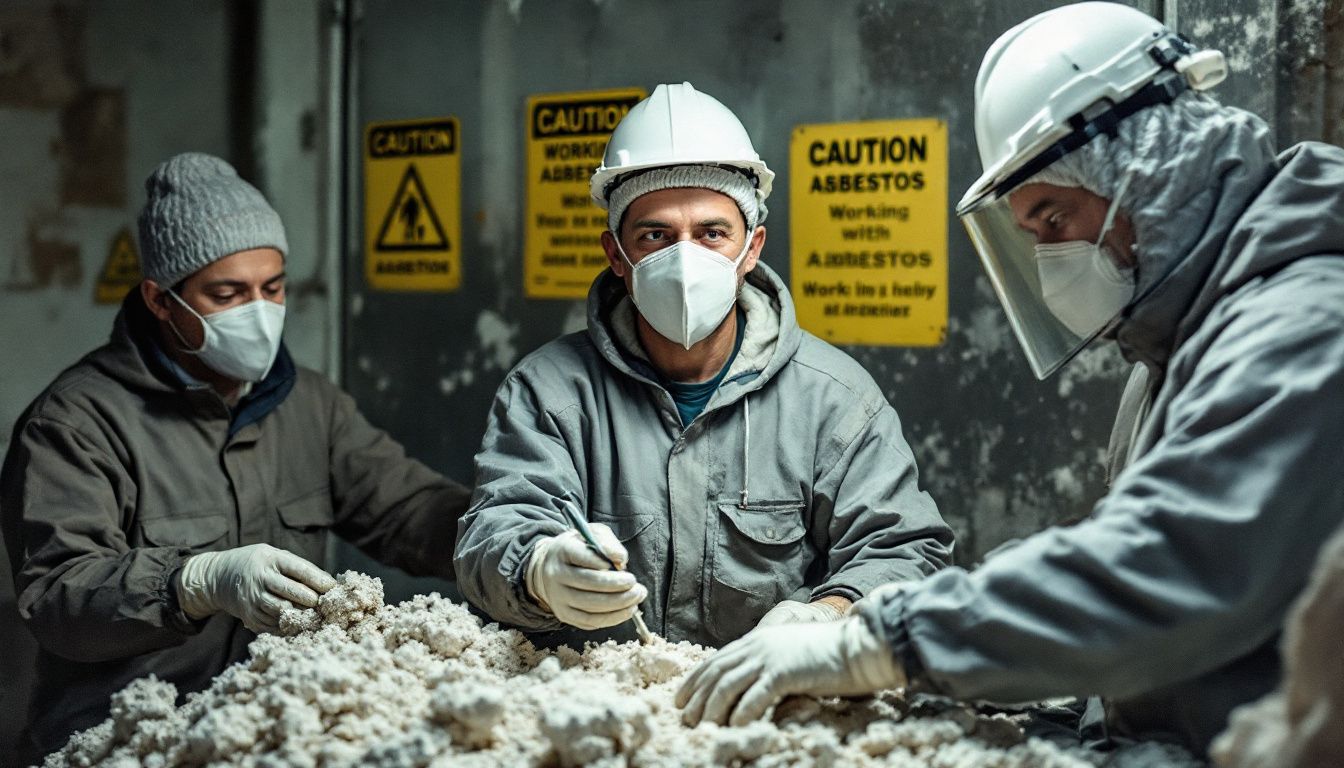
Asbestos Handling: What You Must Know to Stay Safe and Legal
Asbestos handling is one of the most tightly regulated activities in UK workplaces — and for good reason. Disturb the wrong material without the right precautions, and you risk releasing microscopic fibres that can cause fatal lung diseases decades later. Whether you manage a commercial property, oversee a refurbishment project, or work in the trades, understanding how to handle asbestos safely is not optional.
This post sets out the essential health and safety protocols, the legal framework you must follow, and the practical steps that protect workers, building occupants, and duty holders alike.
Why Asbestos Handling Carries Such Serious Risk
Asbestos fibres are invisible to the naked eye. When materials containing asbestos are disturbed — drilled, cut, sanded, or broken — those fibres become airborne and can be inhaled deep into the lungs. The damage they cause is permanent and often fatal.
Diseases linked to asbestos exposure include:
- Mesothelioma — an aggressive cancer of the lining of the lungs or abdomen, almost exclusively caused by asbestos exposure
- Asbestos-related lung cancer — carries a similar death toll to mesothelioma
- Asbestosis — scarring of the lung tissue that causes progressive breathing difficulty
- Pleural thickening — thickening of the membrane surrounding the lungs, leading to breathlessness
What makes asbestos particularly dangerous is the latency period. Symptoms of these diseases typically appear 20 to 40 years after exposure, meaning workers harmed today may not know it for decades.
That delay is precisely why strict asbestos handling protocols exist — to prevent harm that will not be visible until it is far too late.
Know What You Are Dealing With Before You Touch Anything
The single most important step in safe asbestos handling is identification. You cannot manage a risk you have not identified.
Before any refurbishment, maintenance, or demolition work begins on a building constructed or refurbished before the year 2000, you must determine whether asbestos-containing materials (ACMs) are present.
A management survey is the starting point for most duty holders. It identifies ACMs in the areas of a building that are in normal use and assesses their condition and risk. If you are planning intrusive works — renovation, refurbishment, or demolition — you will need a refurbishment survey instead, which is more invasive and covers areas that will be disturbed.
If you suspect a material contains asbestos but are not certain, do not disturb it. Use a testing kit to collect a sample safely, or commission a professional surveyor to do so. Guessing is not a risk management strategy.
Common Locations Where ACMs Are Found
- Ceiling tiles and textured coatings (such as Artex)
- Pipe lagging and boiler insulation
- Floor tiles and the adhesive beneath them
- Roof sheeting, gutters, and soffits (particularly corrugated asbestos cement)
- Partition walls and fire doors
- Sprayed coatings on structural steelwork
- Electrical panels and equipment housings
Safe Asbestos Handling: Step-by-Step Protocols
Once ACMs have been identified and the decision has been made to disturb or remove them, a structured approach to asbestos handling is essential. Cutting corners at any stage puts workers and others at risk.
Step 1 — Risk Assessment and Planning
Before work begins, a thorough risk assessment must be completed. This should identify the type of asbestos present (white, brown, or blue), its condition, the likely level of fibre release, and who may be affected.
A written plan of work is required for all licensed and notifiable non-licensed work. This document is not a formality — it is a working tool that guides every stage of the job.
Step 2 — Site Preparation and Containment
The work area must be properly prepared and isolated before any asbestos is disturbed. This includes:
- Erecting physical barriers to prevent unauthorised access
- Displaying clear warning signage at all entry points
- Sealing off ventilation systems to prevent fibre spread
- Setting up a decontamination unit (DCU) — an airlock system with separate dirty, shower, and clean zones — for licensed work
- Using negative pressure enclosures where required to prevent fibre escape
Step 3 — Personal Protective Equipment (PPE)
All workers involved in asbestos handling must wear appropriate PPE. The level of protection required depends on the type of work and the risk of fibre release, but typically includes:
- Respiratory protective equipment (RPE) — minimum FFP3 disposable mask for low-risk work; powered air-purifying respirators (PAPRs) or full-face respirators for higher-risk tasks
- Disposable coveralls — Type 5 Category 3 coveralls that cover the entire body
- Gloves — disposable nitrile or similar
- Boot covers — to prevent fibre transfer on footwear
- Eye protection — where there is a risk of fibre contact with the eyes
RPE must be face-fit tested for each individual worker. An ill-fitting mask provides no meaningful protection — this is a requirement, not a recommendation.
Step 4 — Controlled Removal Techniques
The method of removal must minimise fibre release. Key techniques include:
- Wet methods — dampening materials before removal significantly reduces airborne fibre levels. Use a low-pressure water spray rather than a high-pressure jet.
- Controlled dismantling — removing materials in large sections rather than breaking them up reduces fragmentation and fibre release
- Avoiding power tools — grinding, sanding, or drilling ACMs dramatically increases fibre release. Hand tools are preferred wherever possible.
- Shadow vacuuming — using an H-class vacuum alongside cutting tools to capture fibres at source
Step 5 — Waste Packaging and Disposal
Asbestos waste is classified as hazardous waste and must be handled accordingly. All removed material must be:
- Double-bagged in heavy-duty polythene sacks, sealed securely
- Clearly labelled with the asbestos warning symbol and appropriate hazard text
- Placed in a rigid, clearly labelled outer container for transport
- Transported only by a registered waste carrier
- Disposed of at a licensed hazardous waste facility
Never place asbestos waste in general skips or mixed waste containers. This is illegal and creates serious risks for others who may come into contact with the material.
Step 6 — Decontamination
After removal work, all workers must go through a full decontamination procedure before leaving the work area. For licensed work, this means progressing through the DCU — removing and bagging contaminated coveralls in the dirty zone, showering thoroughly, and dressing in clean clothing in the clean zone.
Equipment must also be decontaminated or disposed of appropriately. Carrying contaminated tools or clothing out of the work area is a common — and serious — mistake.
Step 7 — Air Monitoring and Clearance
Once removal is complete, the area must be visually inspected and air monitoring carried out before the enclosure is dismantled. For licensed work, a four-stage clearance procedure is required, including a final air test by an independent UKAS-accredited body.
The area must not be reoccupied until clearance has been granted. Skipping this step — or rushing it — puts building occupants at direct risk.
Legal Requirements for Asbestos Handling in the UK
Asbestos handling in the UK is governed by the Control of Asbestos Regulations. These regulations set out the legal framework for managing asbestos risk, and failure to comply can result in significant fines, prosecution, and — most seriously — preventable deaths.
Licensed, Notifiable Non-Licensed, and Non-Licensed Work
Not all asbestos handling requires a licence, but the distinction matters enormously:
- Licensed work — required for the highest-risk activities, such as removing sprayed coatings, pipe lagging, and insulating board. Only contractors holding a current HSE asbestos licence may carry out this work.
- Notifiable non-licensed work (NNLW) — lower-risk work that does not require a licence but must be notified to the relevant enforcing authority before it begins. Workers must have health surveillance and medical records kept for 40 years.
- Non-licensed work — the lowest-risk category, such as minor work with asbestos cement in good condition. Still requires appropriate controls and PPE.
Notification Requirements
For licensed work, duty holders must notify the HSE at least 14 days before work commences. This notification must include details of the work location, the type of asbestos, the methods to be used, and the duration of the work.
Failure to notify is a criminal offence. It is not an administrative oversight — it is a breach of the law.
The Duty to Manage
Under the Control of Asbestos Regulations, owners and managers of non-domestic premises have a legal duty to manage asbestos. This means identifying ACMs, assessing the risk they pose, producing a written asbestos management plan, and keeping an up-to-date asbestos register.
That register must be made available to anyone who may disturb the material — including contractors and maintenance workers. If you already have an asbestos register, it should be reviewed regularly. A re-inspection survey allows you to monitor the condition of known ACMs over time and update your management plan accordingly.
HSG264 — The Survey Standard
All asbestos surveys in Great Britain must be conducted in accordance with HSG264, the HSE’s definitive guidance on asbestos surveying. This sets out the methodology, sampling requirements, and reporting standards that surveyors must follow.
Any survey that does not comply with HSG264 will not satisfy your legal obligations. When commissioning a survey, always confirm that the surveyor works to this standard.
Who Can Legally Handle Asbestos?
This is a question that causes confusion, particularly among tradespeople and small contractors. The short answer is: it depends on the type of work.
For licensed work, only contractors holding a current HSE licence may carry out the removal. This licence is not a qualification — it is a permission granted by the HSE following an assessment of the contractor’s competence, systems, and track record. Engaging an unlicensed contractor for licensed work is a serious criminal offence for both the contractor and the client.
For non-licensed and notifiable non-licensed work, there is no requirement for an HSE licence, but workers must still be adequately trained and supervised. Training requirements are set out in the Control of Asbestos Regulations and must be appropriate to the role.
If you need asbestos removal carried out, always verify the contractor’s licence status with the HSE before work begins. A legitimate licensed contractor will provide their licence number without hesitation.
Asbestos Handling in Domestic Properties
The Control of Asbestos Regulations apply primarily to non-domestic premises, but asbestos is equally present in homes built or refurbished before 2000. Homeowners are not subject to the same legal duties as commercial duty holders, but the health risks are identical.
If you are a homeowner planning renovation work, treat any suspect material as if it contains asbestos until proven otherwise. Do not sand, drill, or cut it without first having it tested. Even small-scale disturbance of high-risk materials such as insulating board or pipe lagging can release dangerous fibre levels.
Many tradespeople working in domestic settings are also at risk. Plumbers, electricians, and builders frequently encounter ACMs without realising it. Proper training and awareness are essential for anyone working in older properties.
Additional Considerations for Building Managers
If you manage a commercial or public building, asbestos handling is just one element of your broader safety obligations. A well-maintained asbestos management plan works alongside other statutory requirements, including fire safety.
A fire risk assessment is a separate legal requirement for most non-domestic premises, and the two disciplines can interact — some fire protection materials installed in older buildings contain asbestos. Ensuring your fire risk assessment and asbestos management plan are both current and consistent is good practice.
Building managers should also ensure that all contractors working on site have sight of the asbestos register before they begin. Providing access to this information is a legal requirement, and failing to do so can expose you to liability if a worker is harmed.
Where to Get Professional Help
Safe asbestos handling starts with knowing what you are dealing with. Before any work begins on a pre-2000 building, commissioning a professional survey is the most important step you can take.
Supernova Asbestos Surveys operates nationwide, with BOHS P402-qualified surveyors covering every region of the UK. Whether you need an asbestos survey in London, an asbestos survey in Manchester, or an asbestos survey in Birmingham, our team delivers surveys that fully comply with HSG264 and the Control of Asbestos Regulations.
With over 50,000 surveys completed across the UK, we have the experience and accreditation to give you accurate, actionable results — not just paperwork.
Call us on 020 4586 0680 or visit asbestos-surveys.org.uk to book your survey or speak to a qualified surveyor today.
Frequently Asked Questions
Can I handle asbestos myself, or do I need a licensed contractor?
It depends on the type of work. Some low-risk tasks — such as minor work with asbestos cement in good condition — can be carried out without an HSE licence, provided appropriate controls and PPE are used. However, high-risk activities such as removing pipe lagging, sprayed coatings, or insulating board require a licensed contractor. If you are unsure which category your work falls into, seek professional advice before proceeding.
What PPE is required for asbestos handling?
At minimum, workers should wear a face-fit-tested FFP3 respirator, Type 5 Category 3 disposable coveralls, disposable gloves, and boot covers. For higher-risk or licensed work, powered air-purifying respirators or full-face respirators may be required. PPE must be appropriate to the specific task and risk level — standard dust masks offer no meaningful protection against asbestos fibres.
What happens if asbestos is disturbed accidentally?
Stop work immediately and clear the area. Do not attempt to clean up the material without proper equipment and training. Seal off the affected area where possible and seek advice from a qualified asbestos professional. If the disturbance was significant, air monitoring may be required before the area can be reoccupied safely.
How do I know if a material contains asbestos?
You cannot tell by looking at a material whether it contains asbestos. The only reliable method is laboratory analysis of a sample. You can use a professional testing kit to collect a sample for analysis, or commission a qualified surveyor to carry out a full survey. Any material in a pre-2000 building that you cannot confirm is asbestos-free should be treated as if it does contain asbestos until tested.
How often should an asbestos management plan be reviewed?
Under the Control of Asbestos Regulations, your asbestos management plan must be reviewed and updated regularly — and whenever there is reason to believe it is no longer accurate. In practice, most duty holders commission a re-inspection survey at least every 12 months to check the condition of known ACMs and update their records accordingly. Any change in building use, occupancy, or planned works should also trigger a review.