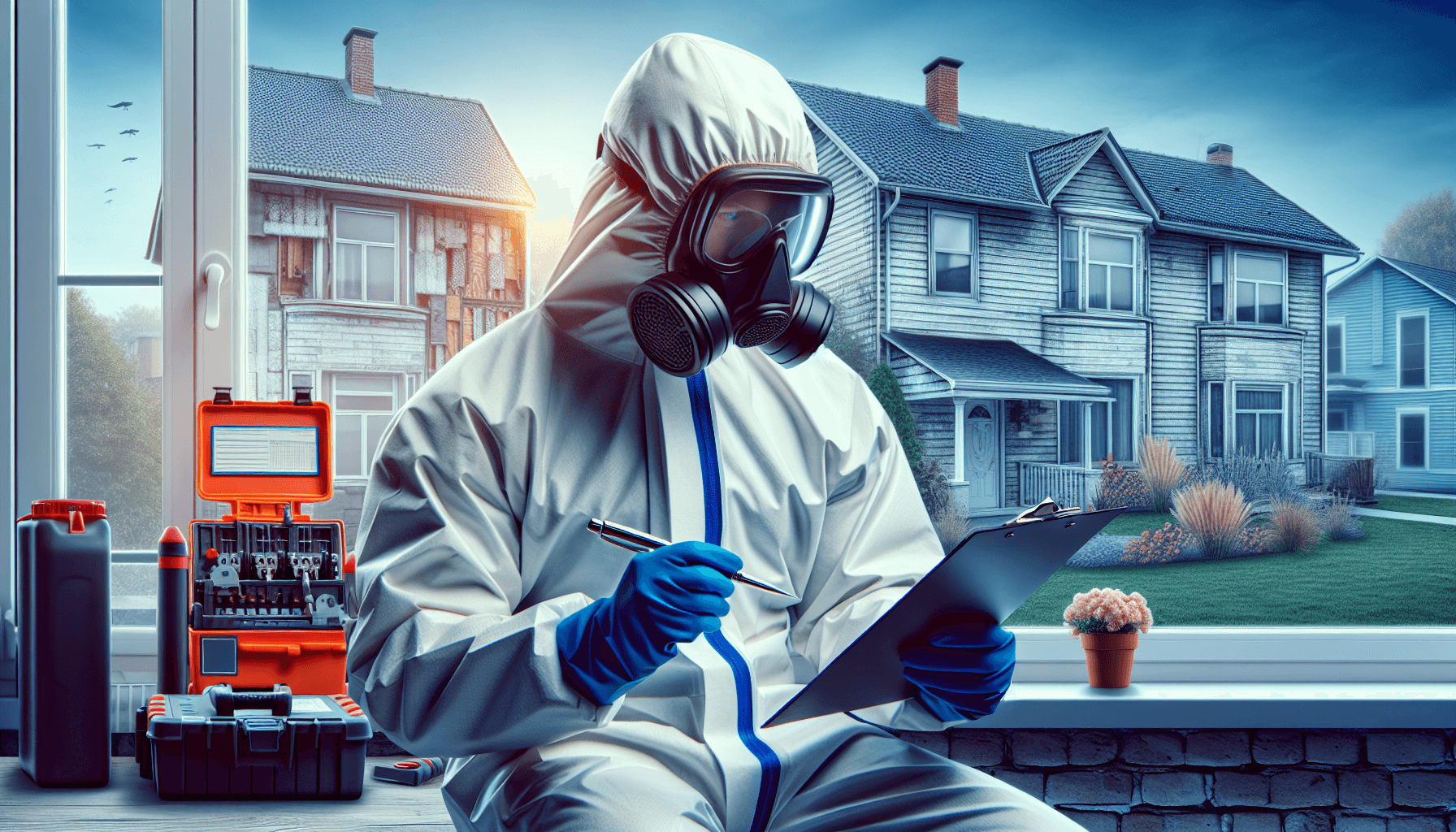
Need an Asbestos Test Near Me? Here’s What You Actually Need to Know
If you’ve typed “asbestos test near me” into a search engine, you already have a specific concern — a suspect material, an upcoming renovation, or a compliance question that needs answering fast. The problem is that search results range from genuinely qualified professionals to companies that look credible but aren’t. This post cuts straight to what matters: how to find a reliable service, what the process actually involves, and how to make sure the work you commission is legally sound and technically accurate.
Why Asbestos Testing Is Never Optional
Asbestos was banned in the UK in 1999, but any building constructed or refurbished before that date may still contain asbestos-containing materials (ACMs). That covers a vast proportion of the UK’s housing stock, schools, offices, hospitals, and industrial premises — far more buildings than most people realise.
The danger isn’t simply having asbestos present. It’s disturbing it. When ACMs are drilled, cut, sanded, or demolished, microscopic fibres become airborne and can be inhaled. That exposure can cause mesothelioma, asbestosis, and lung cancer — diseases that are often diagnosed decades after the original exposure, and for which there is no cure.
Professional asbestos testing identifies what’s present, where it is, and what condition it’s in. That information drives every decision that follows — whether to manage it in place, encapsulate it, or arrange removal. For non-domestic properties, it’s also a legal requirement under the Control of Asbestos Regulations.
Where Asbestos Is Most Commonly Found
Asbestos was used extensively in construction throughout much of the twentieth century, valued for its fire resistance, durability, and insulating properties. You cannot identify it by looking at a material — laboratory analysis is the only reliable confirmation.
These are the locations surveyors check most carefully:
- Insulation boards and lagging — around boilers, pipes, and heating systems
- Textured coatings — Artex-style ceiling and wall finishes frequently contained chrysotile (white asbestos)
- Floor tiles and adhesives — vinyl and thermoplastic tiles, particularly in kitchens and corridors
- Roof sheets and guttering — asbestos cement was widely used for garages, outbuildings, and agricultural buildings
- Ceiling tiles — especially in commercial and educational buildings
- Soffit boards and eaves — common in domestic properties built before the 1980s
- Fire doors and partitioning — particularly in public buildings and commercial premises
- HVAC ducting and pipe insulation — asbestos was routinely used in heating and ventilation systems
If a building predates 2000 and you’re planning any work that could disturb these materials, asbestos testing is the only responsible starting point.
What Type of Asbestos Test Do You Actually Need?
Before you book anything, it’s worth understanding what kind of service your situation calls for. The terminology matters — commissioning the wrong survey type can leave you exposed legally and practically.
Management Survey
This is the standard survey for occupied buildings. A management survey identifies the location, extent, and condition of any ACMs that could be disturbed during normal occupancy or routine maintenance. It’s a legal requirement for duty holders managing non-domestic premises under the Control of Asbestos Regulations and forms the basis of your asbestos register.
Refurbishment Survey
Required before any refurbishment work begins on a pre-2000 building. A refurbishment survey is more intrusive than a management survey — surveyors access areas that would normally remain undisturbed, including wall cavities, floor voids, and above ceilings. If contractors are moving in, this survey must happen first.
Demolition Survey
The most thorough survey type, required before any demolition work. A demolition survey covers the entire structure and is designed to locate all ACMs so they can be removed safely before demolition proceeds. Skipping this step is a serious legal and health risk.
Re-Inspection Survey
If an asbestos register already exists for your property, a re-inspection survey checks whether the condition of known ACMs has changed. These are recommended annually for most managed properties and are a key part of maintaining a robust asbestos management plan.
Asbestos Sampling and Testing
Where a specific material is suspected but a full survey isn’t required, individual samples can be taken and sent for laboratory analysis. Our asbestos testing service covers both site-collected samples and postal submissions. For homeowners who’ve identified a suspect material, our asbestos testing kit offers a quick and affordable way to get a confirmed result without needing a full survey.
How to Find a Reliable Asbestos Test Near Me — What to Check
Not all asbestos surveyors are equal. Before you appoint anyone, verify the following without exception.
UKAS Accreditation
This is non-negotiable. The Health and Safety Executive recognises the United Kingdom Accreditation Service (UKAS) as the sole approving body for asbestos testing laboratories in the UK. Any laboratory analysing your samples must hold UKAS accreditation — specifically to ISO 17025 for testing laboratories.
You can verify this directly on the UKAS website. If a company cannot confirm UKAS-accredited analysis, don’t use them. Full stop.
Surveyor Qualifications
Surveyors should hold a relevant qualification — typically through the British Occupational Hygiene Society (BOHS) or the Asbestos Removal Contractors Association (ARCA). The P402 qualification (Building Surveys and Bulk Sampling for Asbestos) is the benchmark for asbestos surveyors.
Ask directly — a competent company will provide this information upfront without hesitation. If they’re evasive, that tells you everything you need to know.
Clear, Written Reports
A proper asbestos survey produces a written report containing a full asbestos register, photographs, sample analysis results, material assessment scores, and clear recommendations. If a company is vague about what their report will include, that’s a red flag.
The report is a legally important document — it needs to be thorough, accurate, and structured in line with HSG264 guidance.
Transparent Pricing
Get at least two or three quotes, and make sure each one specifies exactly what’s included — number of samples, laboratory analysis, turnaround time, and report format. Some companies quote a low headline price and charge per sample on top. Make sure you’re comparing like for like before making a decision.
Nationwide Coverage with Local Knowledge
A surveyor familiar with typical construction methods in your region can often work more efficiently and spot materials that less experienced surveyors might miss. At Supernova Asbestos Surveys, we provide nationwide coverage across the UK, with experienced surveyors operating locally in most regions — so when you search for an asbestos test near me, we’re genuinely nearby.
What Happens During an Asbestos Survey or Test
Understanding the process helps you prepare properly and ensures you know exactly what you’re paying for.
Initial Assessment
Before the site visit, a reputable company will ask for basic information about the property — age, size, construction type, and the purpose of the survey. This helps allocate the right resource and identify likely risk areas before the surveyor arrives.
Site Inspection
The surveyor conducts a systematic inspection of the property, assessing all materials that could potentially contain asbestos. For management surveys, this covers accessible areas. For refurbishment or demolition surveys, the inspection is more intrusive — surveyors access roof voids, floor voids, and wall cavities.
Sample Collection
Where a material is suspect, small samples are carefully collected using appropriate PPE and containment procedures. The area is sealed and cleaned after sampling. The process is done methodically to minimise any fibre release.
Laboratory Analysis
Samples go to a UKAS-accredited laboratory for analysis. The standard technique for bulk material analysis is polarised light microscopy (PLM), which identifies asbestos type and confirms presence. Results are typically returned within a few working days, with faster turnaround available where needed.
Our sample analysis service provides prompt, accredited results with a full written analysis included.
The Report
You’ll receive a written report detailing every suspect material inspected, whether asbestos was confirmed, its type and condition, a risk-based priority assessment, and recommendations for management or removal. For non-domestic properties, this report forms your asbestos register — a document you are legally required to maintain and make available to anyone working on the premises.
What Affects the Cost of an Asbestos Test?
Costs vary considerably depending on several factors. Here’s a straightforward breakdown:
- Property size and complexity — A small domestic property requires far less surveyor time than a large commercial building, school, or industrial site. Multi-storey buildings and sites with restricted access cost more.
- Survey type — Refurbishment and demolition surveys are more intrusive and time-consuming than management surveys, and are priced accordingly.
- Number of samples — More suspect materials mean more samples, and laboratory analysis is charged per sample. All-inclusive pricing is more common for straightforward residential surveys.
- Turnaround time — Standard laboratory turnaround is typically three to five working days. Same-day or next-day analysis is available at a premium where you need results urgently.
- Additional services — If asbestos is confirmed and removal is required, that cost is separate from the survey. Using a company that provides both survey and removal services can simplify the process and reduce overall project costs.
Asbestos Testing for Homeowners
Private homeowners don’t face the same legal duties as commercial duty holders, but asbestos poses exactly the same health risk regardless of who owns the building. If you’re planning renovations to a pre-2000 property — even something as routine as fitting a new kitchen or bathroom — it’s worth having suspect materials tested before your contractor starts work.
Many contractors will refuse to work on materials that could contain asbestos without clearance, and rightly so. A confirmed test result protects both you and anyone working on your property.
For homeowners who’ve identified a specific suspect material, our postal testing kit offers a quick and affordable route to a confirmed result. Samples are analysed by our UKAS-accredited laboratory and results are returned promptly with a full written analysis.
For broader peace of mind, a domestic management survey will assess the whole property and give you a clear picture of what’s present and in what condition.
What Happens If Asbestos Is Found?
Finding asbestos doesn’t automatically mean immediate danger. Many ACMs in good condition are best managed in place rather than removed — disturbance during removal can create more risk than leaving a stable material alone. Your survey report will include a risk-based assessment to guide that decision.
Where removal is required, the regulatory position depends on the material involved:
- Licensed removal is required for high-risk materials such as sprayed coatings, lagging, and asbestos insulating board (AIB)
- Notifiable non-licensed work (NNLW) covers lower-risk ACMs but still requires notification to the relevant enforcing authority and health surveillance for workers
- Non-licensed work applies to the lowest-risk materials and has fewer regulatory requirements
Our asbestos removal service covers licensed and non-licensed work across the UK. Any company offering to remove licensed asbestos without the appropriate HSE licence is operating illegally — always verify before appointing a contractor.
Why Supernova Asbestos Surveys
Supernova Asbestos Surveys has completed over 50,000 surveys across the UK. Our surveyors hold recognised qualifications, our laboratory analysis is UKAS-accredited, and our reports are produced to the standard required by HSG264 and the Control of Asbestos Regulations.
We work with commercial property managers, housing associations, local authorities, schools, and private homeowners. Whatever the property type, our approach is the same: thorough, accurate, and clearly reported.
We cover the entire UK, so wherever you are when you search for an asbestos test near me, there’s a good chance we already have surveyors working in your area.
To book a survey or request a quote, call us on 020 4586 0680 or visit asbestos-surveys.org.uk.
Frequently Asked Questions
How do I know if I need an asbestos test or a full survey?
If you have a specific suspect material and want a confirmed result quickly, a sample test is usually sufficient. If you’re planning refurbishment, managing a non-domestic property, or need a legally compliant asbestos register, a full survey is the right route. A management survey covers the whole property; a refurbishment or demolition survey is required before intrusive work begins.
Can I take my own asbestos sample?
Homeowners can use a postal testing kit to collect and submit a sample for laboratory analysis. However, sampling should be done carefully, following the instructions provided, with appropriate precautions to avoid disturbing the material unnecessarily. For commercial properties, samples should always be collected by a qualified surveyor.
How long does an asbestos test take?
The site visit for a domestic property typically takes between one and three hours depending on size. Laboratory analysis usually takes three to five working days, with expedited turnaround available if needed. You’ll receive a written report once analysis is complete.
What qualifications should an asbestos surveyor hold?
Look for surveyors holding the BOHS P402 qualification (Building Surveys and Bulk Sampling for Asbestos) as a minimum. Laboratory analysis should be carried out by a UKAS-accredited laboratory to ISO 17025. Both qualifications can be verified independently before you appoint anyone.
Is asbestos testing a legal requirement for homeowners?
Homeowners are not subject to the same legal duties as commercial duty holders under the Control of Asbestos Regulations. However, if you’re employing contractors to carry out work on a pre-2000 property, you have a responsibility to ensure their safety. Testing suspect materials before work begins is strongly recommended and increasingly expected by contractors.