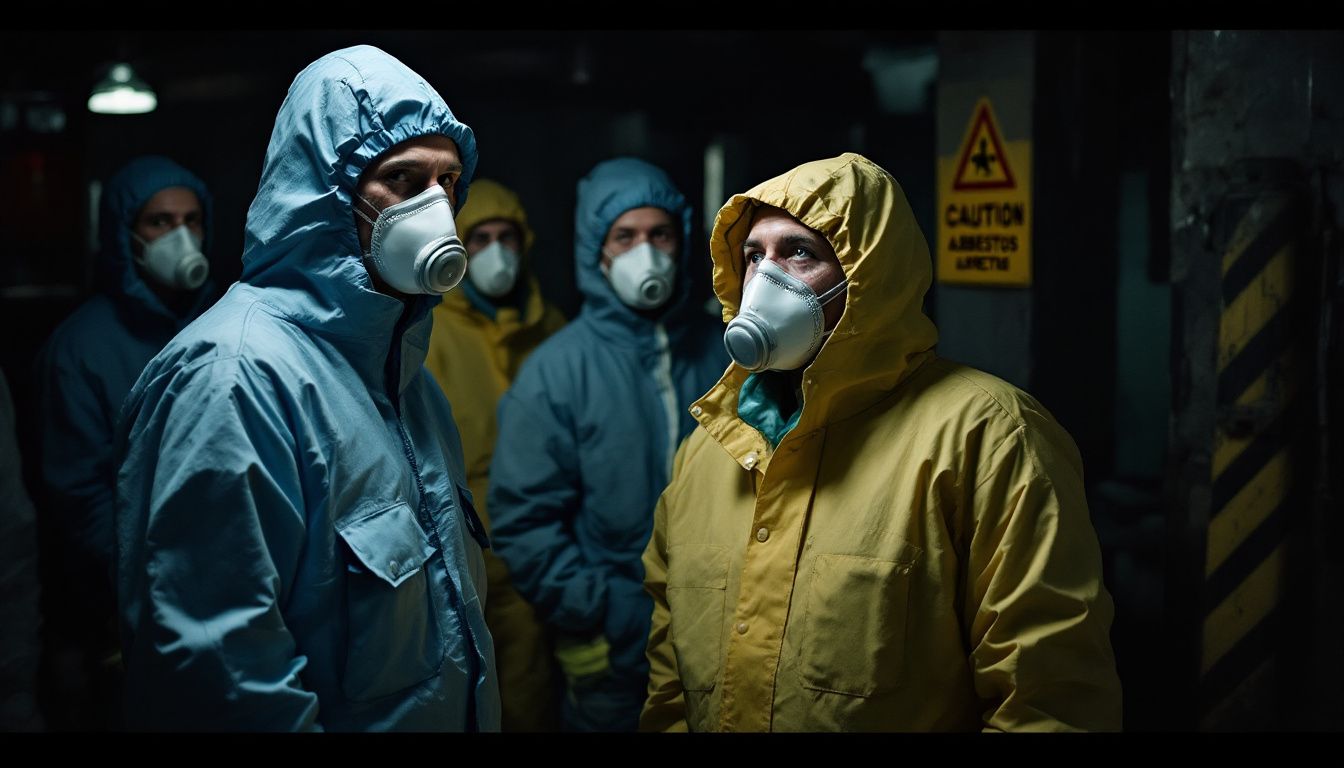
Why Emergency Personnel Face Unique Asbestos Risks — And What Protects Them
When emergency personnel arrive at a fire, structural collapse, or major incident in an older building, asbestos is rarely the first thing on their minds. It should be. The protective measures emergency personnel rely on during asbestos incidents are the difference between a safe response and a slow-developing, irreversible health catastrophe — one that may not become apparent for decades.
Asbestos fibres are invisible, odourless, and lethal. They don’t trigger immediate symptoms, which makes them especially dangerous in the chaos of an emergency response. Understanding the risks, the correct procedures, and the legal framework is not optional for emergency teams — it’s a professional and moral obligation.
Understanding Asbestos Risks for Emergency Personnel
Asbestos was used extensively in UK construction until it was fully banned in 1999. That means any building constructed or refurbished before that date may contain asbestos-containing materials (ACMs) — ceiling tiles, pipe lagging, floor tiles, insulation boards, and more.
When a building is disturbed — by fire, explosion, demolition, or structural failure — those materials can release microscopic fibres into the air. Emergency teams entering these environments without adequate protective measures face serious exposure risks.
The diseases caused by asbestos exposure include mesothelioma, asbestosis, and asbestos-related lung cancer. None of these conditions are curable. They typically develop 20 to 40 years after exposure, which means a firefighter or paramedic exposed today may not receive a diagnosis until well into retirement.
This latency period is precisely what makes asbestos so insidious. Responders don’t feel ill on the day. There’s no immediate warning. The damage is done silently and permanently.
Personal Protective Equipment: The First Line of Defence
The correct use of personal protective equipment (PPE) is central to all protective measures emergency personnel must follow during asbestos incidents. PPE doesn’t eliminate the risk entirely, but when used correctly, it creates a critical barrier between responders and airborne fibres.
Respiratory Protection
A standard dust mask offers no meaningful protection against asbestos fibres. Emergency personnel must use FFP3-rated respirators as a minimum, with full-face powered air-purifying respirators (PAPRs) or self-contained breathing apparatus (SCBA) used in higher-risk scenarios such as active fires in asbestos-containing buildings.
Respirators must be face-fit tested before use. An ill-fitting mask provides a false sense of security. Each person using a tight-fitting respirator should be individually tested and have that test recorded.
Protective Clothing
Disposable Type 5/6 coveralls should be worn over personal clothing. These suits prevent fibre contamination of clothing that would then be taken home, potentially exposing family members — a phenomenon known as secondary or para-occupational exposure.
- Coveralls must cover the entire body with no gaps at the wrists or ankles
- Hoods should be worn and secured properly
- Boots should be covered with disposable overshoes
- Nitrile or similar chemical-resistant gloves should be worn and taped at the wrist
- Eye protection or a full face shield should be used where fibre release is likely
All PPE must be inspected before use. Any item showing damage — a tear in a coverall, a cracked face seal — must be discarded immediately and replaced. There are no shortcuts here.
Donning and Doffing Procedures
How PPE is removed is just as important as wearing it correctly. Incorrect doffing is a common cause of secondary contamination. Personnel should remove PPE in a designated clean-down area, rolling suits inward to contain any fibre contamination, and placing all used items directly into sealed, labelled asbestos waste bags.
Hands should be washed thoroughly after removing gloves. If a shower facility is available on site, personnel should use it before changing into clean clothing.
Establishing and Managing Asbestos Containment Zones
Effective protective measures for emergency personnel during asbestos incidents go beyond individual PPE. The physical environment must be controlled to prevent fibres spreading beyond the immediate incident area.
Setting Up Containment
A proper containment zone uses heavy-duty polythene sheeting — typically at least 1000 gauge — to seal off the affected area from floor to ceiling. All joints, gaps, and penetrations must be taped securely. Air should not be able to move freely in or out of the zone.
A three-stage airlock system is standard practice for higher-risk work. This creates three distinct areas:
- Clean zone: Where personnel prepare and don PPE before entry
- Transition zone: Where decontamination takes place on exit
- Dirty zone: The contaminated work area itself
Negative air pressure units (NPUs) with HEPA filtration should be used to draw air from the clean zone through the dirty zone and exhaust it safely. This prevents fibres from migrating outward. Sticky decontamination mats at exit points help trap fibre-laden dust from boots and equipment.
Access Control
A log should be maintained at the entry point recording every person who enters and exits the containment zone, along with the times. This is not just good practice — it’s essential for health surveillance purposes. If exposure is later suspected, records allow medical professionals to assess risk accurately.
Only personnel with appropriate training, face-fit testing, and PPE should be permitted to enter. A trained supervisor or spotter positioned outside the zone helps enforce this.
Air Quality Monitoring During and After Asbestos Incidents
Air monitoring is a non-negotiable component of protective measures during emergency asbestos incidents. Visual inspection alone cannot confirm whether an area is safe — fibres are invisible to the naked eye.
UKAS-accredited analysts should conduct air testing using phase contrast microscopy (PCM) or, where greater detail is required, transmission electron microscopy (TEM). Sampling should take place:
- Inside the containment zone during work to verify controls are effective
- Outside the zone to confirm fibres are not escaping
- In adjacent areas where occupants or other responders may be present
- After clean-up work is completed, as a final clearance check
Results must be reviewed promptly. If readings exceed safe thresholds, work must stop and controls must be reviewed before resuming. All monitoring data should be documented and retained — under the Control of Asbestos Regulations, records relating to asbestos exposure must be kept for 40 years.
Mobile air monitoring units can remain on site throughout extended incidents, providing real-time data to safety officers. This allows rapid decision-making if conditions change.
Emergency Protocols When Exposure Is Suspected
Despite best efforts, suspected or confirmed asbestos exposure can still occur during emergency incidents. The response in those first minutes matters enormously.
Immediate Steps
If exposure is suspected, all work in the affected area must stop immediately. Personnel should withdraw to a clean area and begin decontamination. The incident must be reported to the site supervisor or incident commander without delay.
Practical steps to take straight away:
- Isolate the area and prevent further entry
- Record the names of all personnel who may have been exposed
- Preserve any evidence — photographs, samples, witness accounts
- Shut down ventilation systems that could distribute fibres further
- Contact a licensed asbestos contractor to assess and manage the scene
- Notify the relevant enforcing authority if required under RIDDOR
Personnel should not return to work in the affected area until a UKAS-accredited analyst has confirmed air quality is safe.
Decontamination of Personnel and Equipment
Decontamination must follow a strict sequence. Protective clothing should be lightly dampened with water before removal to suppress any loose fibres. Suits should be rolled inward and sealed in double-bagged, clearly labelled asbestos waste sacks.
Equipment — tools, radios, torches — should be wiped down with damp cloths in a designated decontamination area. Items that cannot be adequately cleaned should be bagged and disposed of as asbestos waste. All decontamination activity should be logged.
Personnel should shower and change into clean clothes before leaving the site. Contaminated work clothing must never be taken home for washing.
Training and Awareness for Emergency Personnel
No set of protective measures for emergency personnel in asbestos incidents is effective if the people using them don’t understand why each step matters. Training is the foundation on which all other protective measures rest.
Asbestos Awareness Training
Under HSE guidance and the Control of Asbestos Regulations, workers who may encounter asbestos during their normal duties — including emergency responders — must receive asbestos awareness training. This is Category A training under HSG264 and covers:
- What asbestos is and where it’s likely to be found
- The health risks associated with exposure
- How to recognise common ACMs
- What to do if asbestos is discovered or disturbed
- The importance of not disturbing suspected materials
This training must be refreshed regularly — it should not be treated as a one-off tick-box exercise.
Practical Drills and Scenario Training
Awareness training alone is not sufficient for teams likely to enter high-risk environments. Practical drills allow personnel to practise donning and doffing PPE correctly, setting up containment zones under pressure, and running through emergency exposure protocols in realistic conditions.
Drills should simulate different scenarios — a fire in a 1970s office block, a structural collapse in a pre-2000 residential building, a gas explosion in an industrial unit. Each scenario presents different challenges and reinforces the need for consistent, disciplined application of protective measures.
Regular drills also identify gaps. If a team member struggles with face-fit or takes shortcuts during doffing in a low-pressure drill, that behaviour will likely repeat under real emergency conditions.
Legal and Regulatory Obligations
Emergency responders and their employers operate within a clear legal framework. The Control of Asbestos Regulations places duties on employers to protect workers from asbestos exposure, and those duties do not pause during emergency situations.
Key obligations include:
- Providing suitable PPE and ensuring it is properly used
- Ensuring workers are trained before they enter potentially contaminated environments
- Arranging air monitoring by UKAS-accredited analysts
- Maintaining exposure records for 40 years
- Reporting significant exposures under RIDDOR where applicable
- Ensuring any licensed asbestos work is carried out only by HSE-licensed contractors
HSG264 — the HSE’s guidance document on asbestos surveys — provides practical detail on identifying and managing asbestos in buildings. Emergency teams and the organisations that deploy them should be familiar with this guidance.
Failure to comply with these regulations can result in prosecution, substantial fines, and — most critically — preventable deaths. The legal framework exists because the health consequences of asbestos exposure are irreversible.
The Role of Asbestos Surveys in Reducing Emergency Risk
One of the most effective ways to protect emergency personnel is to ensure that asbestos information is available before an incident occurs. When building owners commission a professional asbestos survey, the resulting register gives emergency responders advance knowledge of where ACMs are located, their condition, and the level of risk they present.
Fire and rescue services increasingly request access to asbestos registers for high-risk premises. A well-maintained register can inform tactical decisions from the moment crews arrive on scene — which areas to avoid, which materials may be disturbed, and what level of respiratory protection is needed.
For building owners and facilities managers in major cities, having an up-to-date survey in place is not just a legal duty under the Control of Asbestos Regulations — it’s a direct contribution to the safety of the emergency services. If you manage premises in the capital, commissioning an asbestos survey in London ensures your building’s asbestos register is current, accurate, and accessible when it matters most.
The same principle applies across the country. Organisations managing older properties in the North West should consider an asbestos survey in Manchester to identify and document any ACMs before an emergency situation forces the issue. Likewise, duty holders in the Midlands can arrange an asbestos survey in Birmingham to meet their legal obligations and provide emergency services with the information they need to respond safely.
A management survey identifies the location, type, and condition of ACMs in a building under normal use. A refurbishment and demolition survey goes further, required before any intrusive work is carried out. Both types feed into an asbestos register that should be kept up to date, reviewed regularly, and made available to anyone who may need it — including emergency responders.
Sharing Asbestos Information With Emergency Services
Holding an asbestos register is only useful if the information reaches the people who need it. Building owners and managers should consider proactively sharing asbestos data with local fire and rescue services, particularly for premises with known high-risk materials such as sprayed coatings, asbestos insulating board, or pipe lagging.
Many local authorities and fire services have pre-incident planning programmes. Participating in these programmes means that if an emergency does occur, crews arriving on scene have access to building layout information, hazardous material locations, and other data that directly informs their protective measures.
Where a building has undergone recent refurbishment or where ACMs have been removed, the register should be updated promptly. Outdated information is potentially more dangerous than no information — it can give responders false confidence about areas that have since been disturbed.
Health Surveillance After Potential Exposure
Protective measures for emergency personnel in asbestos incidents don’t end when the scene is cleared. Any personnel who may have experienced exposure — even suspected exposure — should be enrolled in a health surveillance programme.
Under the Control of Asbestos Regulations, employers are required to provide health surveillance for workers who are regularly exposed to asbestos. For emergency responders, this means maintaining detailed records of every potential exposure event, including the date, location, duration, and nature of the work carried out.
Occupational health assessments should be arranged promptly following any significant exposure incident. These assessments create a baseline record that can be compared against future health checks. Given the 20 to 40-year latency period for asbestos-related disease, this documentation may prove critical many years down the line.
Personnel should be encouraged to report any respiratory symptoms — persistent cough, breathlessness, chest pain — to their occupational health provider, regardless of how minor those symptoms may seem. Early detection, while it cannot reverse asbestos-related disease, can significantly affect how the condition is managed.
Frequently Asked Questions
What PPE should emergency personnel wear when asbestos is suspected at an incident?
At a minimum, emergency personnel should wear FFP3-rated respirators, disposable Type 5/6 coveralls, nitrile gloves taped at the wrist, and disposable overshoes. In higher-risk scenarios — such as a fire in an asbestos-containing building — full-face powered air-purifying respirators (PAPRs) or self-contained breathing apparatus (SCBA) should be used. All PPE must be inspected before use and removed using correct doffing procedures to avoid secondary contamination.
Are employers legally required to protect emergency responders from asbestos exposure?
Yes. The Control of Asbestos Regulations places clear duties on employers to protect workers from asbestos exposure, and these duties apply to emergency responders just as they do to any other worker. Employers must provide appropriate PPE, ensure workers are trained, arrange air monitoring by UKAS-accredited analysts, and maintain exposure records for 40 years. Significant exposures must also be reported under RIDDOR where applicable.
What should happen immediately if asbestos exposure is suspected during an emergency incident?
Work in the affected area must stop immediately. All personnel should withdraw to a clean area and begin decontamination. Names of anyone who may have been exposed must be recorded, ventilation systems that could spread fibres should be shut down, and a licensed asbestos contractor should be contacted to assess the scene. Personnel must not re-enter the area until a UKAS-accredited analyst has confirmed the air is safe.
How do asbestos surveys help protect emergency personnel?
A professional asbestos survey produces a register of all ACMs in a building, including their location, type, and condition. This information can be shared with emergency services before an incident occurs, allowing crews to make informed decisions about protective measures the moment they arrive on scene. Building owners have a legal duty under the Control of Asbestos Regulations to manage asbestos in their premises, and an up-to-date survey is the foundation of that duty.
How often should asbestos awareness training be refreshed for emergency personnel?
There is no fixed statutory interval, but HSE guidance makes clear that asbestos awareness training should be refreshed regularly — it must not be treated as a one-off exercise. The frequency of refresher training should reflect the level of risk faced by the individuals concerned. For teams regularly responding to incidents in older buildings, annual refresher training is considered good practice, supplemented by practical drills that simulate realistic emergency scenarios.
Supernova Asbestos Surveys provides professional asbestos surveys across the UK, with over 50,000 surveys completed for commercial, industrial, and residential premises. If you manage a building that may contain asbestos, don’t wait for an emergency to find out. Contact our team today on 020 4586 0680 or visit asbestos-surveys.org.uk to arrange a survey and ensure your asbestos register is accurate, current, and ready when it’s needed most.