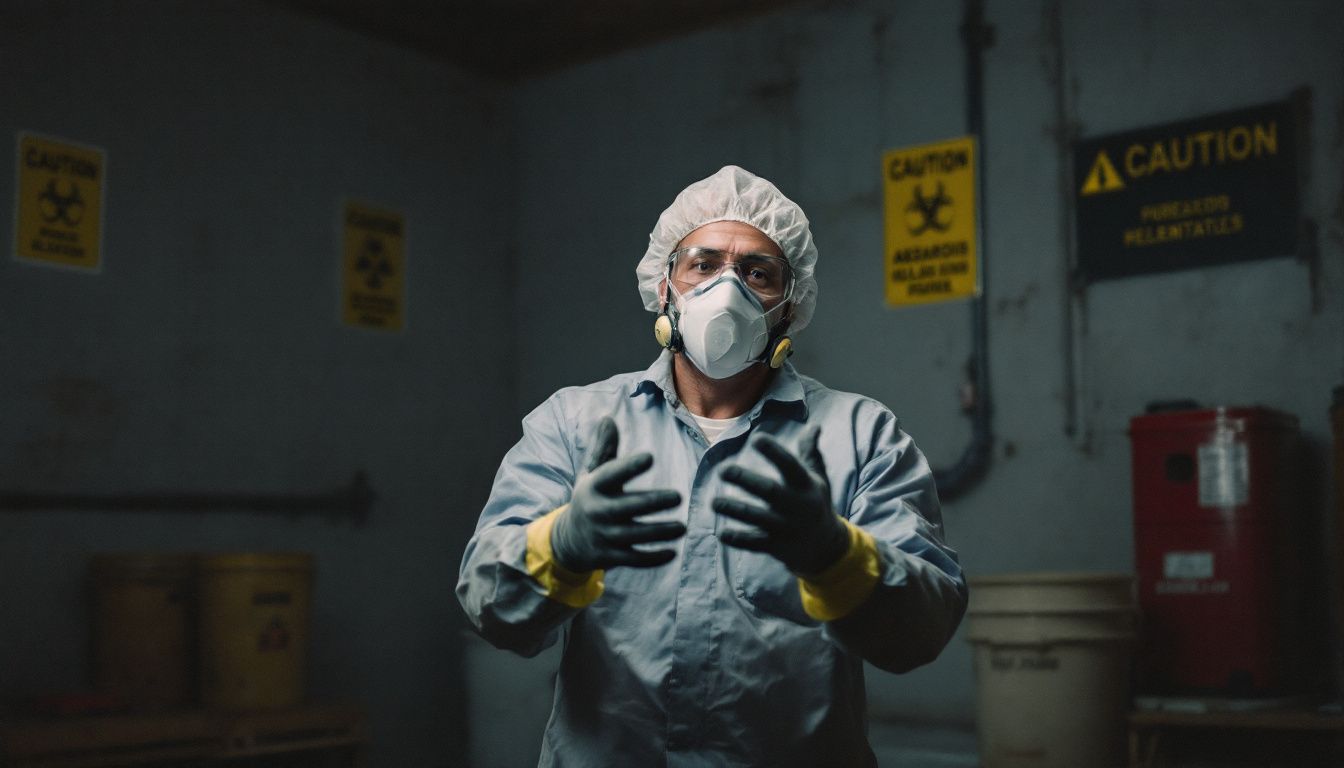
What Are Facilitation Works Before Asbestos Removal — And Why Do They Matter?
Before a licensed contractor can safely carry out asbestos removal, a significant amount of preparatory work needs to happen first. These preparatory steps are known as facilitation works before asbestos removal, and they are far more involved than most property managers and building owners realise.
Skip them — or rush them — and you risk putting workers in danger, breaching the Control of Asbestos Regulations, and facing costly project delays. Get them right, and the actual removal process becomes safer, faster, and far less disruptive.
This post breaks down exactly what facilitation works involve, who is responsible for carrying them out, and what you need to have in place before a licensed contractor sets foot on site.
Defining Facilitation Works Before Asbestos Removal
Facilitation works before asbestos removal refers to all the preparatory, enabling, and support activities that must be completed before — and sometimes during — a licensed asbestos removal project. They are not the removal itself. They are everything that makes the removal possible.
The specific tasks required will vary depending on the building type, the location of the asbestos-containing materials (ACMs), and the overall scope of the removal project.
Common examples include:
- Isolating electrical supplies to the affected area
- Removing fixtures, fittings, furniture, and stored items from the work area
- Erecting scaffolding or installing temporary access platforms
- Isolating or capping off water, gas, and ventilation systems
- Installing temporary weatherproofing or protective sheeting
- Creating safe access routes for the removal team and their equipment
- Establishing welfare facilities and clean/dirty zones on site
- Carrying out structural modifications to allow safe access to ACMs
These tasks are often carried out by trades other than the licensed asbestos removal contractor — electricians, scaffolders, plumbers, and general builders may all be involved. That is precisely why clear coordination and planning are essential from the outset.
Why Facilitation Works Are a Legal and Practical Requirement
The Control of Asbestos Regulations places a duty on those responsible for premises — known as the dutyholder — to manage asbestos safely. Part of that duty includes ensuring that any planned work involving ACMs is properly planned and resourced before it begins.
HSE guidance document HSG264 is equally clear: before any licensed work starts, the work area must be properly prepared. That means the removal contractor must be able to set up an enclosure, establish a decontamination unit, and work without interference from other trades or building users.
If facilitation works are incomplete when the licensed contractor arrives on site, the project cannot begin. That means wasted mobilisation costs, delayed programmes, and potentially a site left in a partially prepared — and therefore more hazardous — state.
Beyond the regulatory picture, there is a straightforward practical logic: licensed asbestos removal is expensive and time-sensitive. Every hour a licensed crew spends waiting for an electrician to isolate a circuit, or a scaffolder to finish a platform, is money wasted and risk extended.
Who Is Responsible for Facilitation Works?
This is where confusion often arises on site. Many clients assume the asbestos removal contractor handles everything. In reality, the responsibility for facilitation works typically sits with the principal contractor or the client themselves — not the licensed removal firm.
On larger projects governed by CDM (Construction Design and Management) regulations, the principal contractor is responsible for coordinating all trades, including facilitation works. On smaller projects, the building owner or their appointed project manager usually takes this on.
Key responsibilities include:
- Appointing competent trades — all workers carrying out facilitation works near ACMs must hold at minimum Category A asbestos awareness training
- Sequencing the works correctly — facilitation tasks must be completed in the right order to avoid disturbing ACMs prematurely
- Communicating with the removal contractor — the licensed team needs to know exactly what has been done and what conditions they are arriving to
- Ensuring a current asbestos survey is in place — no facilitation works should begin without an up-to-date refurbishment and demolition (R&D) survey
If you are managing a project in London, our team can support with the survey stage through our asbestos survey London service before facilitation and removal planning begins.
The Role of the Asbestos Survey in Planning Facilitation Works
You cannot plan facilitation works before asbestos removal without an accurate, current asbestos survey. A management survey alone is not sufficient for this purpose. What you need is a refurbishment and demolition survey — an intrusive inspection that identifies all ACMs in the areas to be worked on.
The R&D survey tells you:
- Exactly where ACMs are located
- What type of asbestos is present
- The condition and extent of each ACM
- Which areas can be safely accessed for facilitation works and which cannot
Without this information, facilitation trades are working blind. An electrician isolating a circuit in a ceiling void could disturb asbestos insulation board without even knowing it. A plumber capping off a water supply could crack lagging on a pipe that turns out to contain chrysotile.
The survey is the foundation of the entire project. Everything else — facilitation works, removal planning, method statements, and risk assessments — flows from it.
Getting the Survey Right First Time
Instructing a competent surveyor is not optional — it is a legal requirement under the Control of Asbestos Regulations. The surveyor must be suitably trained and, where appropriate, hold third-party accreditation such as UKAS accreditation for their laboratory.
For projects requiring both a demolition survey and facilitation works planning, getting the survey instructed early is critical. Delays at the survey stage cascade through every subsequent element of the programme.
Supernova Asbestos Surveys carries out R&D surveys across the UK. If your project is based in the Midlands, our asbestos survey Birmingham team can mobilise quickly to support your programme.
Asbestos Awareness Training for Facilitation Trades
Any worker who may encounter or disturb ACMs during facilitation works must hold asbestos awareness training — this is a non-negotiable requirement under the Control of Asbestos Regulations. This is Category A training.
It does not qualify workers to remove or handle asbestos. What it does is ensure they can:
- Recognise materials that may contain asbestos
- Understand the health risks associated with exposure
- Know what to do if they suspect they have disturbed ACMs
- Follow the correct emergency stop procedures
This training is especially critical for electricians, plumbers, joiners, and other trades who routinely work in older buildings. Facilitation works often take place in exactly the kinds of locations — ceiling voids, service ducts, plant rooms, and roof spaces — where asbestos is most commonly found.
What Happens If Facilitation Trades Disturb Asbestos?
If a worker disturbs ACMs during facilitation works, all work must stop immediately. The area should be evacuated and sealed off. No one should re-enter until a licensed contractor has assessed the situation and, if necessary, carried out emergency remediation.
Air testing should be conducted before the area is re-occupied. Depending on the extent of the disturbance, the original project programme may need to be revised significantly.
This is precisely why the survey, the training, and the sequencing of facilitation works are so important. Prevention is vastly cheaper and safer than emergency response.
Sequencing Facilitation Works: Getting the Order Right
One of the most common mistakes on sites involving asbestos removal is poor sequencing of facilitation works. The order in which tasks are carried out matters enormously, both for safety and for programme efficiency.
A logical sequence for facilitation works before asbestos removal typically looks like this:
- Complete the R&D asbestos survey — establish the full picture of ACMs before any other work begins
- Agree the removal scope and method — the licensed contractor should be involved in planning from this stage
- Isolate services — electrical, gas, water, and ventilation systems serving the affected area should be isolated by competent trades
- Clear the work area — remove furniture, fittings, stored materials, and any items that would obstruct the removal enclosure
- Erect access equipment — scaffolding, mobile elevated work platforms, or temporary staircases as required
- Install temporary protection — weatherproofing, temporary roofing, or structural support where needed
- Establish welfare and decontamination facilities — the removal contractor will need clean and dirty zones, welfare facilities, and waste storage areas
- Conduct a pre-start joint inspection — the client, principal contractor, and licensed removal contractor should walk the site together before licensed work begins
Skipping steps or reversing the order creates risk. Clearing a room after services have been isolated, for example, may require workers to re-enter an area that has already been partially prepared for removal — creating unnecessary exposure risk.
Facilitation Works in Different Building Types
The nature of facilitation works before asbestos removal varies considerably depending on the type of building involved. What is straightforward in a modern commercial office can be extremely complex in an older industrial facility or a historic building.
Commercial and Office Buildings
In commercial buildings, facilitation works commonly involve decanting tenants or staff from affected floors, isolating HVAC systems to prevent fibre spread, and removing suspended ceiling tiles or raised floor panels to allow access to ACMs above or below.
Coordination with building management systems is often required, particularly where fire suppression, security, or air handling systems serve the affected zones. Early engagement with facilities management teams is strongly advisable.
Industrial and Manufacturing Sites
Industrial sites present some of the most complex facilitation challenges. Plant and machinery may need to be isolated, moved, or protected. Structural steelwork coated with asbestos insulation may require temporary propping. Production processes may need to be suspended entirely.
In these environments, the facilitation works programme can be as involved — and as costly — as the removal itself. Early planning and close collaboration between the client, principal contractor, and licensed removal firm is essential.
Residential Properties
In domestic settings, facilitation works are typically less complex but no less important. Residents must be decanted before licensed work begins. Personal belongings need to be removed or protected. Access to adjacent rooms or floors may need to be restricted.
For landlords and housing associations managing large residential portfolios, the logistical challenge of coordinating decants alongside removal programmes should not be underestimated. If you are managing asbestos removal across a residential or commercial portfolio in the North West, our asbestos survey Manchester team can assist with survey and planning support across the region.
Documentation and Method Statements for Facilitation Works
Every element of the facilitation works programme should be documented. This is not bureaucracy for its own sake — it is a practical safeguard that protects everyone involved in the project.
Documentation you should have in place before facilitation works begin includes:
- The R&D asbestos survey report — including the full register of ACMs and their locations
- Method statements and risk assessments for each facilitation trade activity, particularly those working near or adjacent to ACMs
- Evidence of asbestos awareness training for all facilitation workers
- Isolation certificates for electrical, gas, and water services
- Scaffold inspection records and handover certificates where access equipment has been erected
- A pre-start checklist signed off by the principal contractor and the licensed removal contractor confirming the site is ready
This documentation package serves multiple purposes. It demonstrates regulatory compliance if the HSE or an enforcing authority visits the site. It provides a clear audit trail if something goes wrong. And it gives the licensed removal contractor confidence that the site has been properly prepared.
Notifying the HSE Before Licensed Work Begins
Where the asbestos removal work is licensable — which covers the majority of work involving sprayed coatings, lagging, asbestos insulating board, and other higher-risk ACMs — the licensed contractor is required to notify the HSE at least 14 days before work commences. This notification requirement sits with the removal contractor, not the client. However, the client and principal contractor need to be aware of it, because it affects the programme timeline.
Facilitation works can generally proceed during the notification period, provided they do not involve disturbing the ACMs scheduled for removal. This is a useful window in which to complete service isolations, clear the work area, and erect access equipment — so that the licensed team can begin immediately once the notification period expires.
Common Mistakes That Delay Asbestos Removal Projects
Having supported thousands of asbestos removal projects across the UK, certain patterns of error come up again and again. Being aware of them is the first step to avoiding them.
The most frequent causes of delay and additional cost include:
- Starting facilitation works without an R&D survey — trades encounter unexpected ACMs mid-task, work stops, emergency assessment is required
- Assuming the removal contractor will manage facilitation — responsibility is not clearly assigned, tasks fall through the gaps
- Failing to check training records — a worker without Category A awareness training is found on site near ACMs, work is halted
- Poor communication between trades — an electrician isolates a circuit that the scaffolding team needed live for their hoisting equipment, causing programme conflict
- Incomplete service isolations — the removal contractor arrives to find a live electrical feed running through the enclosure area
- Underestimating the decant requirement — occupants or stored materials are still present when the licensed team mobilises
Each of these mistakes is avoidable with proper planning, clear accountability, and the right survey information in place from the outset.
How Supernova Asbestos Surveys Supports Facilitation Works Planning
Facilitation works before asbestos removal only succeed when they are built on accurate, detailed survey data. That is where Supernova Asbestos Surveys comes in.
With over 50,000 surveys completed across the UK, our team has the experience to deliver R&D surveys that give you everything you need to plan and sequence facilitation works with confidence. We work with principal contractors, project managers, facilities teams, and building owners at every stage — from initial survey through to pre-start inspection support.
Our surveyors are available across the UK, with dedicated regional teams covering London, Birmingham, Manchester, and beyond. We understand that programme timelines matter, and we mobilise quickly to avoid delays cascading through your project.
To discuss your project and book a survey, call us on 020 4586 0680 or visit asbestos-surveys.org.uk.
Frequently Asked Questions
What is the difference between facilitation works and asbestos removal?
Facilitation works are all the preparatory tasks that must be completed before a licensed asbestos removal contractor can begin work. They include service isolations, clearing the work area, erecting access equipment, and establishing welfare facilities. The actual removal of asbestos-containing materials is a separate, subsequent activity carried out by a licensed contractor.
Who is responsible for organising facilitation works before asbestos removal?
On larger projects under CDM regulations, the principal contractor is responsible for coordinating facilitation works. On smaller projects, this responsibility typically falls to the building owner or their appointed project manager. The licensed asbestos removal contractor is generally not responsible for facilitation works, although they should be consulted during the planning stage.
Do facilitation workers need asbestos training?
Yes. Any worker who may encounter or disturb asbestos-containing materials during facilitation works must hold Category A asbestos awareness training as a minimum requirement under the Control of Asbestos Regulations. This training does not permit them to handle or remove asbestos — it ensures they can recognise ACMs, understand the risks, and follow the correct procedures if they suspect a disturbance has occurred.
Can facilitation works start before the HSE notification period for licensed removal has ended?
Yes, in most cases facilitation works can proceed during the 14-day HSE notification period, provided they do not involve disturbing the ACMs that are scheduled for removal. This is actually an efficient use of the notification window — completing service isolations, clearing the work area, and erecting access equipment so the licensed team can begin immediately once notification expires.
What survey do I need before facilitation works can begin?
You need a refurbishment and demolition (R&D) survey — not a standard management survey. The R&D survey is an intrusive inspection that identifies all ACMs in the areas to be worked on, including those hidden within the fabric of the building. Without it, facilitation trades are working without the information they need to avoid disturbing asbestos, which creates serious health and legal risks.