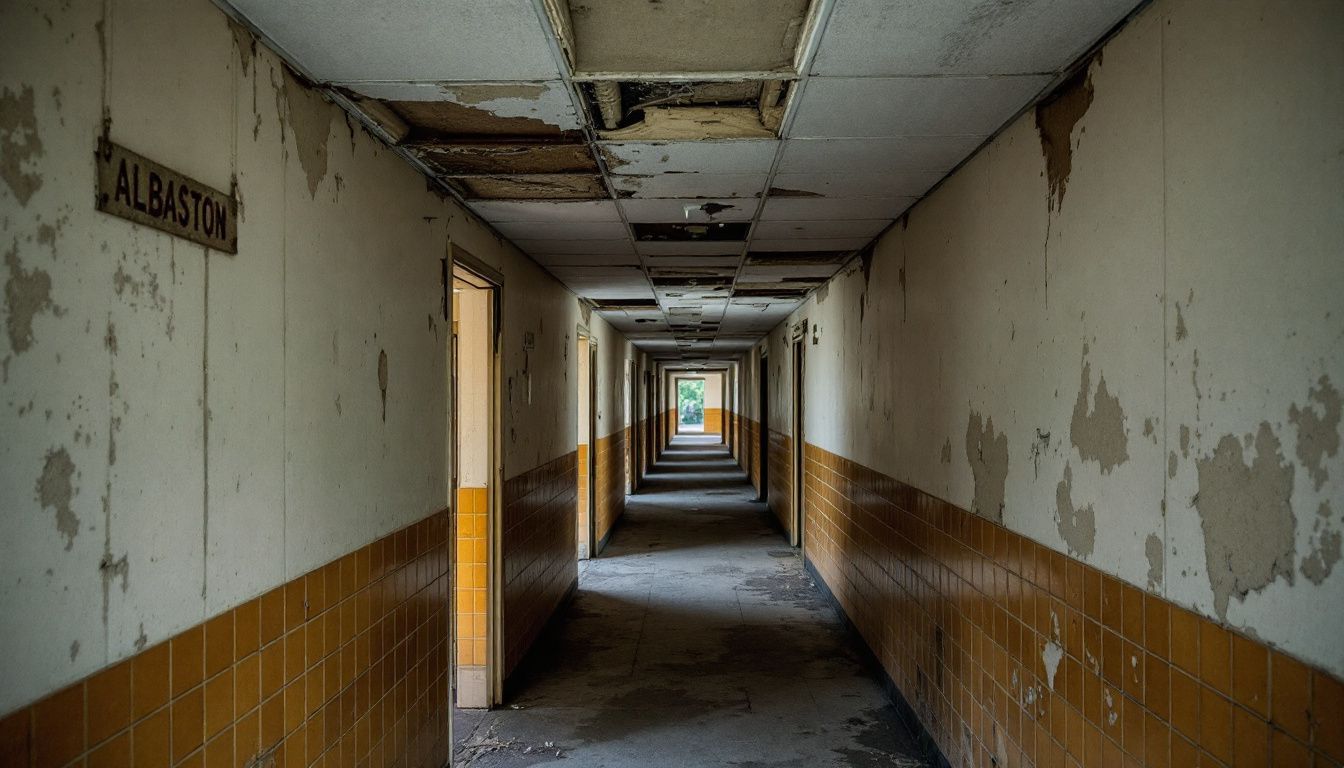
When Asbestos Is Disturbed: What Building Managers Must Do Right Now
Asbestos emergencies don’t announce themselves. A contractor drills into a ceiling tile, a pipe bursts and damages old lagging, a renovation uncovers suspicious material — and suddenly you’re dealing with a potential exposure incident in a building full of people.
Having a robust asbestos emergency response plan isn’t a box-ticking exercise. It’s the difference between a controlled incident and a public health crisis. This post walks through exactly what that plan should contain, who’s responsible for what, and how to stay on the right side of UK law when things go wrong.
Why Asbestos Incidents in Public Buildings Demand Immediate Action
Asbestos fibres are invisible to the naked eye and completely odourless. By the time anyone realises something has gone wrong, fibres may already be airborne and circulating through ventilation systems.
Public buildings — schools, hospitals, council offices, leisure centres — often have high footfall, which dramatically increases the number of people potentially at risk. Any building constructed or refurbished before 2000 may contain asbestos-containing materials (ACMs).
The Control of Asbestos Regulations places a legal duty on those responsible for non-domestic premises to manage asbestos risk proactively — and that duty becomes critically important the moment an incident occurs. Delays in response don’t just endanger health. They can also expose duty holders to serious legal liability under RIDDOR and the Health and Safety at Work Act.
Identifying an Asbestos Emergency: What Counts as an Incident?
Not every discovery of asbestos constitutes an emergency, but it’s far safer to treat any unplanned disturbance as one until proven otherwise. Common triggers include:
- Accidental drilling, cutting, or breaking of materials suspected to contain asbestos
- Flood or fire damage to areas where ACMs are present
- Structural collapse or deterioration exposing asbestos materials
- Discovery of damaged or deteriorating ACMs during routine maintenance
- Unauthorised work disturbing materials listed in an asbestos register
If you’re unsure whether a material contains asbestos, treat it as if it does. Sampling and laboratory analysis by a UKAS-accredited laboratory is the only way to confirm or rule out the presence of asbestos fibres. Acting cautiously costs far less than the consequences of getting it wrong.
The First 30 Minutes: Your Asbestos Emergency Response Protocol
Speed matters, but panic doesn’t help anyone. A well-rehearsed asbestos emergency response protocol gives your team a clear sequence to follow under pressure. Here’s what that sequence looks like.
Step 1: Stop All Work in the Affected Area
Anyone working in the area must stop immediately — tools down. Do not sweep or vacuum with standard equipment, as both actions spread fibres further. The area should be cleared of all personnel without delay.
Step 2: Evacuate and Isolate
Move everyone out of the immediate area calmly and via designated escape routes. Once people are clear, seal the area — close all doors and windows, and switch off any HVAC systems serving that zone to prevent fibres circulating through ductwork.
Erect physical barriers and post clear warning signage: DANGER — ASBESTOS HAZARD. DO NOT ENTER. Use barrier tape and, where possible, lock all access points.
Step 3: Account for All Occupants
Run a headcount at your pre-designated assembly point. Ensure no one has re-entered the building to retrieve belongings. Record the names of everyone who was in the affected area at the time of the incident — this information will be needed for health monitoring purposes.
Step 4: Notify the Right People Immediately
Contact your licensed asbestos contractor or specialist response team without delay. Simultaneously, notify your internal Estates or Facilities management team and escalate to senior management.
Depending on the severity, you may also need to contact the local authority and the Health and Safety Executive. Under RIDDOR, certain asbestos-related incidents must be reported to the HSE. Your emergency plan should have these notification procedures documented and rehearsed well in advance.
Securing the Affected Area: Containment Is Critical
Once the immediate evacuation is complete, the priority shifts to containment. Preventing fibres from spreading beyond the incident zone is one of the most important actions your team can take before licensed contractors arrive.
Your response team — those with appropriate training and personal protective equipment — should:
- Seal gaps around doors using tape or plastic sheeting
- Place wet rags or damp cloths at the base of doors to prevent fibre migration
- Avoid any activity that could disturb settled dust or debris
- Maintain a log of everyone who enters or exits the cordoned area
Do not attempt to clean up asbestos debris without licensed personnel present. Standard vacuum cleaners and mops will spread fibres rather than contain them. Only HEPA-filtered equipment is suitable for asbestos clean-up operations.
Roles and Responsibilities in an Asbestos Emergency
A clear command structure prevents confusion and duplication of effort. Every public building’s asbestos emergency response plan should define the following roles before an incident ever occurs.
The Duty Holder / Building Manager
Responsible for initiating the emergency response, coordinating evacuation, and ensuring the correct contractors and authorities are notified. They should have direct access to the building’s asbestos register and management plan at all times — not locked in a filing cabinet that only one person knows about.
The Asbestos Consultant or Surveyor
Provides expert assessment of the incident, advises on the extent of contamination, and oversees air quality monitoring. Their guidance determines whether areas can be safely reoccupied.
If your building is based in the capital, arranging an asbestos survey in London with a specialist team means you have qualified professionals familiar with your site before an emergency ever arises. The same principle applies to buildings in the North West — having a trusted team carry out an asbestos survey in Manchester puts expert support within reach when you need it most.
Licensed Asbestos Removal Contractors
Only contractors licensed by the HSE can carry out certain categories of asbestos removal work. They handle the physical decontamination, removal of ACMs, and waste disposal in accordance with the Control of Asbestos Regulations. You can find out exactly what this process involves on our dedicated asbestos removal services page.
Emergency Services Liaison
If fire, police, or ambulance services attend, someone must brief them on the asbestos hazard before they enter the building. Emergency responders need to know exactly what they’re walking into — lives can depend on it.
Communications Lead
Manages messaging to building occupants, the public, and media if necessary. Clear, factual communication prevents panic and misinformation — both of which make an already difficult situation considerably worse.
Decontamination and Safe Removal of Asbestos Materials
Once licensed contractors are on site, the decontamination process follows a strict sequence. This is not work that can be improvised or rushed.
Personal Protective Equipment
All personnel entering the contaminated zone must wear appropriate PPE: disposable coveralls (Type 5/6), half-face or full-face respirators with P3 filters, nitrile gloves, and disposable boot covers. PPE must be donned before entering and removed in a decontamination unit before leaving the area.
Wet Suppression and Careful Removal
Asbestos materials should be dampened before removal to suppress fibre release. Materials are carefully removed — never broken, drilled, or sanded — and placed directly into correctly labelled asbestos waste bags.
Double-Bagging and Waste Disposal
All asbestos waste must be double-bagged in heavy-duty polythene bags marked with the appropriate hazard warning. Bags must be sealed and stored securely until collection by a licensed waste carrier. Every stage of waste transfer must be documented with a consignment note.
HEPA Cleaning and Air Testing
Following removal, the area is cleaned using HEPA-filtered vacuum equipment and damp wiping. Air monitoring is conducted throughout and after the clean-up by a UKAS-accredited analyst. The area cannot be reoccupied until clearance air testing confirms fibre levels are below the clearance indicator.
Air Quality Monitoring: Before, During, and After
Air monitoring is not a single snapshot — it’s an ongoing process throughout the entire asbestos emergency response. UKAS-accredited analysts take samples from multiple locations to build an accurate picture of fibre levels across the affected zone.
Monitoring happens at three distinct stages:
- Background monitoring — before work begins, to establish baseline fibre levels
- Reassurance monitoring — during removal work, to check containment is effective
- Clearance monitoring — after clean-up, to confirm the area is safe for reoccupancy
Only when clearance air testing meets the required standard — as set out in HSG264 and associated HSE guidance — can the area be signed off for return. This is a non-negotiable step.
No licensed contractor should give verbal clearance without the supporting air test data. If they do, that’s a serious warning sign.
Communicating With Occupants and the Public
How you communicate during an asbestos incident matters enormously. Poor communication causes panic; no communication causes rumour. Your plan should include pre-approved messaging templates that can be adapted quickly.
Key principles for communication during an asbestos emergency:
- Be factual and calm — avoid language that either minimises or sensationalises the risk
- Explain clearly what has happened, what actions are being taken, and what occupants should do
- Provide regular updates even when there is nothing new to report
- Identify a single spokesperson to avoid conflicting messages reaching the public
- Keep records of all communications for your incident log
Anyone who was present in the affected area at the time of the incident should be advised to inform their GP and to keep a record of the date, time, and duration of potential exposure. This is important for any future health monitoring.
Legal and Regulatory Compliance
The Control of Asbestos Regulations sets out the legal framework for managing asbestos in non-domestic premises. Duty holders must have an asbestos management plan in place, keep an up-to-date asbestos register, and ensure that anyone liable to disturb ACMs is informed of their location and condition.
When an incident occurs, additional obligations apply:
- RIDDOR — certain asbestos-related incidents and exposures must be reported to the HSE
- HSG264 — the HSE’s guidance on asbestos surveying and management provides the technical framework for post-incident assessment
- Environmental regulations — asbestos waste disposal is tightly regulated and must be handled by licensed carriers with appropriate documentation
- CDM Regulations — if the incident occurs during construction or refurbishment work, additional duties apply under the Construction (Design and Management) Regulations
Building owners who fail to respond appropriately — or who attempt to manage an incident without licensed contractors — risk prosecution, significant fines, and civil liability. The legal protections available to duty holders who follow correct procedures are substantial; those who cut corners have very little to stand on.
For organisations managing multiple sites across the Midlands, ensuring each location has a current survey on record is a practical first step. Commissioning an asbestos survey in Birmingham for your premises means your asbestos register is accurate and your legal obligations are met before any incident arises.
Testing and Rehearsing Your Emergency Plan
An emergency plan that has never been tested is little more than a document gathering dust. Regular drills and tabletop exercises are essential to ensure your team can execute the plan under real pressure.
Your testing programme should include:
- Annual tabletop exercises involving all key role-holders
- Practical drills covering evacuation procedures and area containment
- Review of the asbestos register and management plan at least annually
- Refresher training for staff on recognising potential ACMs and understanding their responsibilities
- Post-incident reviews to capture lessons learned and update the plan accordingly
A plan that’s reviewed and rehearsed regularly will perform under pressure. One that isn’t will fail precisely when you need it most.
What Should an Asbestos Emergency Response Plan Actually Contain?
If you’re building or reviewing your plan from scratch, it should cover the following as a minimum:
- Contact details for your licensed asbestos contractor, asbestos consultant, and HSE emergency line — accessible 24/7
- A copy of or direct reference to your current asbestos register and management plan
- Defined roles and responsibilities for all key personnel, with named deputies
- A step-by-step evacuation and containment procedure specific to your building layout
- Pre-approved communication templates for staff, occupants, and external stakeholders
- RIDDOR reporting procedures and thresholds
- Waste disposal documentation requirements
- A post-incident review process and incident log template
The plan should be stored both digitally and in hard copy, accessible to all relevant personnel — not just the Estates Manager. If the person who holds the plan is off sick or unreachable, the response shouldn’t grind to a halt.
Prevention Is Still the Best Emergency Response
The most effective asbestos emergency response is the one you never have to use. Keeping your asbestos register up to date, ensuring all contractors are briefed on ACM locations before they start work, and commissioning re-inspections when building conditions change — these measures dramatically reduce the likelihood of an unplanned disturbance occurring in the first place.
Regular management surveys, refurbishment surveys before any intrusive work begins, and prompt action on deteriorating ACMs all form part of a proactive asbestos management approach that keeps buildings and their occupants safe.
When the unexpected does happen, the quality of your preparation determines the outcome. A practised, well-documented asbestos emergency response plan — backed by relationships with licensed contractors and accredited surveyors — gives you the best possible chance of managing the incident safely, legally, and with minimal disruption.
Frequently Asked Questions
What should I do first if asbestos is disturbed in my building?
Stop all work in the affected area immediately and evacuate everyone from the zone. Do not sweep or vacuum. Seal the area by closing doors and windows, switch off any HVAC systems serving that part of the building, and contact a licensed asbestos contractor as quickly as possible. Record the names of anyone who may have been exposed.
Do I have to report an asbestos incident to the HSE?
Certain asbestos-related incidents and exposures are reportable under RIDDOR. The specific triggers depend on the nature and severity of the incident. Your asbestos emergency response plan should include clear RIDDOR reporting thresholds and procedures so there is no ambiguity when an incident occurs. If in doubt, seek advice from a licensed asbestos consultant.
Can I clean up asbestos myself after an incident?
No. Attempting to clean up asbestos debris without licensed personnel and appropriate equipment will spread fibres rather than contain them. Only HEPA-filtered vacuum equipment is suitable for asbestos clean-up, and in many cases the work must be carried out by an HSE-licensed contractor. Standard domestic or commercial cleaning equipment must not be used.
When can a building be reoccupied after an asbestos incident?
A building or affected area cannot be reoccupied until clearance air testing by a UKAS-accredited analyst confirms that fibre levels are below the required clearance indicator, as set out in HSG264 and HSE guidance. Verbal reassurance from a contractor is not sufficient — you need the written air test data before any area is signed off for return.
How often should an asbestos emergency response plan be reviewed?
Your plan should be reviewed at least annually, and immediately following any incident or near-miss. It should also be updated whenever there are significant changes to the building, its use, key personnel, or the asbestos register. A plan that reflects current conditions and staffing will always outperform one that hasn’t been touched since it was first written.
Get Expert Support From Supernova Asbestos Surveys
Supernova Asbestos Surveys has completed over 50,000 surveys across the UK, supporting building managers, facilities teams, and duty holders in managing asbestos safely and legally. Whether you need a management survey to underpin your emergency planning, a refurbishment survey before works begin, or specialist advice following an incident, our accredited team is ready to help.
Call us on 020 4586 0680 or visit asbestos-surveys.org.uk to speak with a qualified surveyor today.