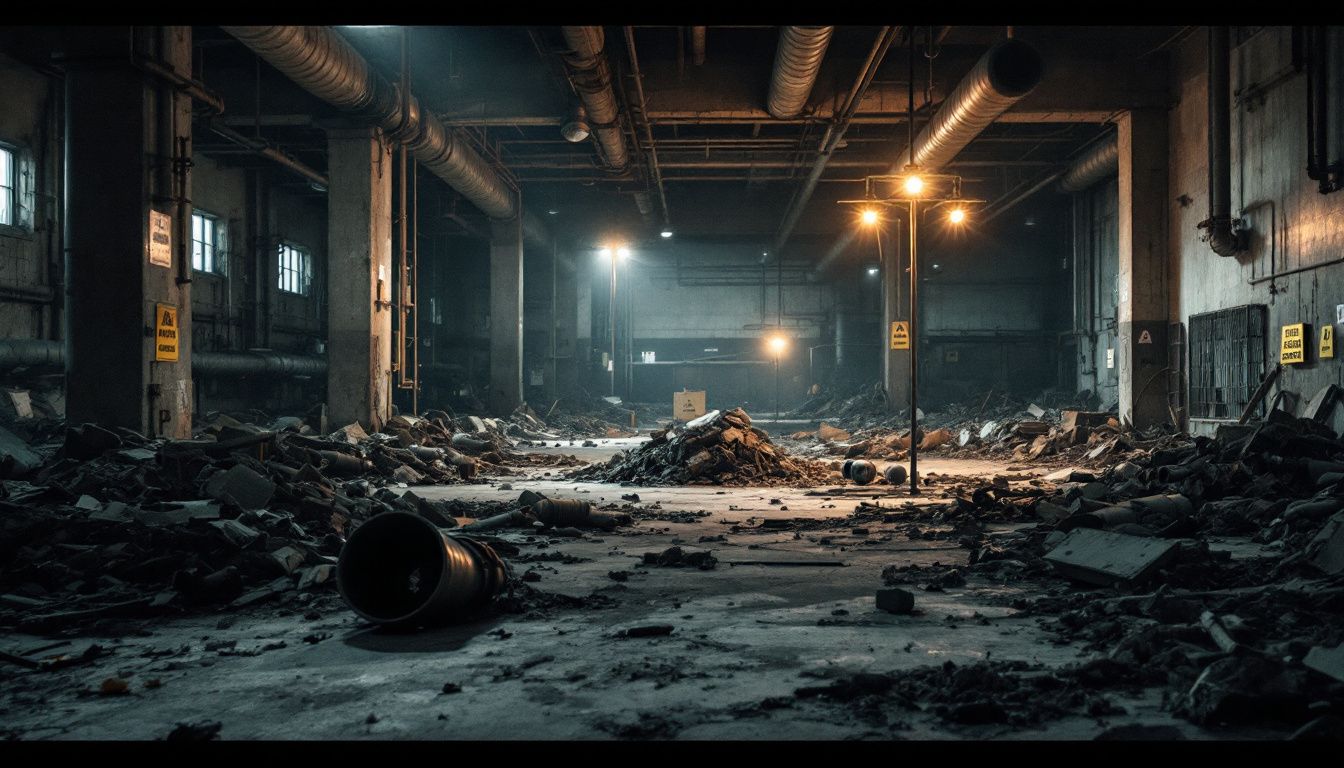
What Is an Asbestos Reassurance Air Test — and When Do You Actually Need One?
An asbestos reassurance air test is one of the most misunderstood services in asbestos management. Many building owners and property managers assume it’s only relevant during large-scale licensed removal work — but that assumption can put people at serious risk.
In reality, a reassurance air test applies in far more situations: from minor disturbances during routine maintenance to post-emergency scenarios where asbestos-containing materials have been disturbed without warning. If work has been carried out in a building that contains asbestos, or if you suspect materials have been disturbed, a reassurance air test gives you the documented evidence you need to confirm the environment is safe.
Without it, you’re relying on guesswork.
Why Airborne Asbestos Fibres Are So Dangerous
Asbestos fibres are invisible to the naked eye. When asbestos-containing materials are disturbed — through drilling, cutting, accidental damage, or fire — microscopic fibres are released into the air. These fibres can remain airborne for hours and, once inhaled, embed permanently in lung tissue.
The Health and Safety Executive is unambiguous on this point: there is no safe level of asbestos exposure. Even brief exposure to elevated fibre concentrations carries long-term health risks, including mesothelioma, asbestosis, and lung cancer — diseases with latency periods of 20 to 40 years. Symptoms may not appear until decades after exposure, by which point the damage is irreversible.
An asbestos reassurance air test uses calibrated sampling equipment to measure the concentration of airborne fibres in a given space. The results tell you definitively whether the air is safe to breathe — or whether further remediation is needed before the area can be reoccupied.
When Is a Reassurance Air Test Required?
There are several situations where an asbestos reassurance air test is either legally required or strongly advisable. Understanding which scenario applies to your situation helps you act quickly and correctly.
After Non-Licensed Asbestos Work
Not all asbestos work requires a licensed contractor. Certain lower-risk materials and small-scale tasks fall under non-licensed or notifiable non-licensed work (NNLW) categories. However, even after this type of work, a reassurance air test is essential to confirm that fibre levels have returned to background concentrations before the area is reopened.
This isn’t optional good practice — it’s a fundamental part of demonstrating that the work has been completed safely and that no ongoing risk exists for building occupants.
Following Licensed Asbestos Removal
After licensed asbestos removal, a four-stage clearance procedure is legally required before an enclosure can be signed off. Stage four of this process is the final air test — carried out by an independent UKAS-accredited analyst — which must confirm that airborne fibre concentrations are below the clearance indicator of 0.01 fibres per millilitre of air.
This clearance certificate is the legal proof that the area is safe. Without it, the enclosure cannot be dismantled and the area cannot be reoccupied. No licensed removal project should conclude without this step.
During and After Emergency Situations
Fires, flooding, structural collapses, and accidental impacts can all disturb asbestos-containing materials without warning. In these scenarios, emergency responders and building managers need rapid air quality data to make informed decisions about evacuation, access restrictions, and remediation priorities.
Background air testing in the immediate aftermath of an incident establishes a baseline. Ongoing monitoring then tracks whether fibre levels are rising, stable, or falling — giving emergency teams the real-time intelligence they need to protect workers and the public.
When Occupants Report Concerns
Sometimes a reassurance air test is requested not because planned work has taken place, but because occupants are worried. Perhaps a ceiling tile has been damaged, a contractor has drilled into a suspect wall, or an asbestos register has flagged materials in deteriorating condition.
In these cases, a reassurance test provides documented evidence that the environment is safe — or identifies a problem that needs addressing before it becomes a serious incident. Either outcome is valuable.
How an Asbestos Reassurance Air Test Works
The process requires specialist equipment and a qualified analyst. Here’s what to expect from start to finish.
Sampling Equipment and Method
Air samples are collected using a calibrated pump that draws a measured volume of air through a membrane filter, which captures any airborne fibres present. Sampling typically runs for a minimum of four hours to collect a statistically valid sample — shorter sampling periods can produce unreliable results.
The filters are then sent to a UKAS-accredited laboratory, where analysts examine them under phase contrast microscopy (PCM) or electron microscopy, depending on the level of detail required. Results are expressed as fibres per millilitre of air and compared against the relevant clearance indicators or occupational exposure limits.
Personal Air Monitoring for Workers
During active asbestos removal work, workers wear personal air monitoring pumps — typically clipped to the lapel or collar, as close to the breathing zone as possible. These devices measure the actual exposure of each individual worker throughout the working day.
Licensed asbestos removal contractors are legally required to monitor and record worker exposure levels. This data forms part of the health surveillance records that must be maintained for each employee. Personal monitoring also validates whether the control measures in place — RPE, enclosures, ventilation — are actually working as intended.
Who Can Carry Out the Test?
Not just anyone can conduct a valid asbestos air test. Analysts must hold the relevant BOHS qualifications — specifically P403 (carrying out air testing and four-stage clearances) and P404 (personal air sampling) — and must operate within a UKAS-accredited organisation working to ISO 17025 standards.
Independence matters too. For four-stage clearance procedures following licensed removal, the air testing analyst must be independent from the removal contractor. This separation of roles is a legal requirement under the Control of Asbestos Regulations, not merely a recommendation. It ensures the person certifying the area as safe has no commercial interest in the outcome of the removal work.
The Role of Asbestos Surveys in Preventing Emergencies
An asbestos reassurance air test is a reactive measure. The most effective way to protect building occupants is to have a robust asbestos management strategy in place before any disturbance occurs — and that starts with knowing exactly where asbestos is located in your building.
A management survey is the foundation of any asbestos management plan. It identifies the location, condition, and extent of asbestos-containing materials throughout a property during normal occupation, producing an asbestos register that must be kept up to date and made available to anyone who might disturb the fabric of the building — including contractors, emergency services, and maintenance teams.
Before any refurbishment or demolition work, a refurbishment survey is required. This is a more intrusive investigation that checks all areas likely to be disturbed by the planned works. Carrying out this survey before work begins means contractors know exactly what they’re dealing with — and can plan their approach accordingly, including arranging any necessary removal before the main works start.
Asbestos-containing materials don’t stay in the same condition indefinitely. Damage, deterioration, and changes to building use can all affect risk levels. A re-inspection survey provides a periodic check on the condition of known asbestos materials, updating the register and flagging any changes that require action. Without regular re-inspections, your asbestos register becomes outdated — and outdated information is dangerous information.
What to Do If Asbestos Is Disturbed Unexpectedly
If you suspect asbestos-containing materials have been disturbed without warning, the steps you take in the first few minutes matter enormously. Acting quickly and correctly can prevent a localised incident from becoming a widespread contamination problem.
- Stop all work immediately and evacuate the affected area. Do not attempt to clean up dust or debris yourself.
- Isolate the area with physical barriers and clear warning signage. Prevent anyone from entering until the situation has been assessed by a competent person.
- Do not use a domestic vacuum cleaner. Standard vacuums cannot capture asbestos fibres and will spread contamination further. Only H-class (HEPA-filtered) vacuum equipment is suitable.
- Contact a licensed asbestos contractor to assess the situation and carry out any necessary remediation. Do not reoccupy the area until a reassurance air test has confirmed it is safe.
- Notify the relevant authorities if required. Under RIDDOR, certain asbestos incidents must be reported to the HSE.
- Commission an asbestos reassurance air test once remediation is complete. This is the only way to confirm with certainty that the air is safe to breathe.
Emergency teams and building managers should have clear asbestos location maps readily available — ideally as part of a broader asbestos management plan — so that first responders can identify risk areas quickly without needing to wait for a survey to be commissioned.
Asbestos Testing Options for Property Owners
If you’re unsure whether materials in your property contain asbestos, bulk sample asbestos testing is the logical starting point. Samples of suspect materials are collected and sent to a laboratory for analysis under polarised light microscopy — this tells you definitively whether asbestos is present and, if so, which type.
For smaller properties or straightforward situations, a postal testing kit allows you to collect samples yourself and send them for professional laboratory analysis. This is a cost-effective option when you need a quick answer about a specific material without commissioning a full survey.
For a broader picture of asbestos risk across a property, professional asbestos testing carried out by a qualified surveyor provides a more thorough assessment, with full documentation and a risk-rated report that supports your ongoing management obligations.
Mapping Asbestos for Emergency Preparedness
One of the most practical things a building owner or facilities manager can do is ensure that asbestos location maps are accurate, up to date, and easily accessible. In an emergency, every minute counts.
If fire crews, paramedics, or structural engineers need to enter a building and don’t know where the asbestos is, the risk of inadvertent disturbance — and subsequent exposure — increases significantly. Asbestos registers should include floor plan overlays showing the precise location of all known asbestos-containing materials, along with their condition rating and risk assessment.
- Store digital copies securely with reliable backup
- Keep paper copies on site and accessible to key personnel
- Ensure the register is updated after every re-inspection or disturbance incident
- Share relevant sections with contractors before any work begins
- Make the register available to emergency services on request
This kind of preparedness doesn’t just protect building occupants — it protects the building owner from legal liability. Under the Control of Asbestos Regulations, the duty holder has a legal obligation to manage asbestos in non-domestic premises and to ensure that anyone liable to disturb it is informed of its location and condition.
Asbestos Air Testing and Surveys Across the UK
Whether you’re managing a commercial property in the capital or overseeing a portfolio of buildings across the country, professional asbestos services are available nationwide. If you need an asbestos survey in London, an asbestos survey in Manchester, or an asbestos survey in Birmingham, Supernova’s qualified surveyors cover the full length of the country with rapid response times and consistent quality standards.
Supernova has completed over 50,000 surveys nationwide. Whether you need a reassurance air test following an emergency, a management survey to establish your asbestos register, or a clearance test after licensed removal, our UKAS-accredited analysts and qualified surveyors are ready to help.
Call us on 020 4586 0680 or visit asbestos-surveys.org.uk to book your asbestos reassurance air test or discuss your requirements with our team.
Frequently Asked Questions
What is an asbestos reassurance air test?
An asbestos reassurance air test is a specialist air sampling procedure that measures the concentration of asbestos fibres in a given space. It is used to confirm that the air is safe to breathe following asbestos removal work, an accidental disturbance, or an emergency incident involving asbestos-containing materials. The test must be carried out by a UKAS-accredited analyst using calibrated sampling equipment.
Is an asbestos air test legally required after removal work?
Yes, following licensed asbestos removal, a four-stage clearance procedure is a legal requirement under the Control of Asbestos Regulations. The fourth stage is an independent air test carried out by a UKAS-accredited analyst, which must confirm fibre concentrations are below 0.01 fibres per millilitre of air. Without this clearance certificate, the area cannot legally be reoccupied. A reassurance air test is also strongly advisable — and considered best practice — following non-licensed asbestos work.
How long does an asbestos air test take?
Air sampling typically runs for a minimum of four hours to collect a statistically valid sample. Shorter sampling periods can produce unreliable results and may not be accepted as valid evidence of clearance. Once samples are collected, they are sent to a laboratory for analysis, with results typically available within one to two working days depending on the urgency of the situation.
Who is qualified to carry out an asbestos air test?
Analysts must hold BOHS qualifications P403 (air testing and four-stage clearances) and P404 (personal air sampling), and must operate within a UKAS-accredited organisation working to ISO 17025 standards. For four-stage clearance procedures following licensed removal, the analyst must also be independent from the removal contractor — this is a legal requirement, not simply good practice.
What should I do if asbestos is disturbed unexpectedly in my building?
Stop all work immediately and evacuate the affected area. Isolate the space with barriers and signage, and do not attempt to clean up dust or debris with a standard vacuum cleaner. Contact a licensed asbestos contractor to assess and remediate the situation, and notify the HSE under RIDDOR if required. Once remediation is complete, commission an asbestos reassurance air test before allowing anyone to reoccupy the area.