Efficient Asbestos Removal: How to Handle, Dispose and Stay Legal
Asbestos doesn’t announce itself. It sits quietly inside walls, ceiling tiles, floor coverings and pipe lagging — perfectly stable until someone drills, saws or demolishes without knowing what’s there. Efficient asbestos removal isn’t just about speed; it’s about doing the job safely, legally, and without creating a bigger hazard than the one you started with.
Whether you’re managing a commercial property, overseeing a refurbishment, or dealing with a residential building that predates the 1999 ban, understanding the removal and disposal process properly could save you from serious health consequences and significant legal liability.
Why Asbestos Is Still a Live Issue in UK Buildings
The UK banned the import, supply and use of all asbestos in 1999. But that ban didn’t remove the material already installed in millions of buildings. The Health and Safety Executive acknowledges that asbestos remains present in the majority of buildings constructed before 2000 — schools, offices, hospitals, factories, and homes alike.
Asbestos-related diseases, including mesothelioma and asbestosis, continue to claim thousands of lives in the UK every year. Most of those deaths trace back to exposures that happened decades ago. That’s the insidious nature of asbestos: the damage is done long before symptoms appear.
This is precisely why efficient asbestos removal — carried out by licensed professionals following current HSE guidance — matters so much. Getting it wrong doesn’t just risk a fine. It risks lives.
Identifying Asbestos Before Any Work Begins
Before removal can happen, you need to know what you’re dealing with. Asbestos cannot be identified by sight alone — laboratory analysis is required to confirm its presence. There are, however, clear indicators that should always prompt a professional survey before any work proceeds.
Buildings and Materials Most Likely to Contain Asbestos
Any building constructed or refurbished before 2000 should be treated as potentially containing asbestos until proven otherwise. Common locations include:
- Ceiling tiles and textured coatings such as Artex
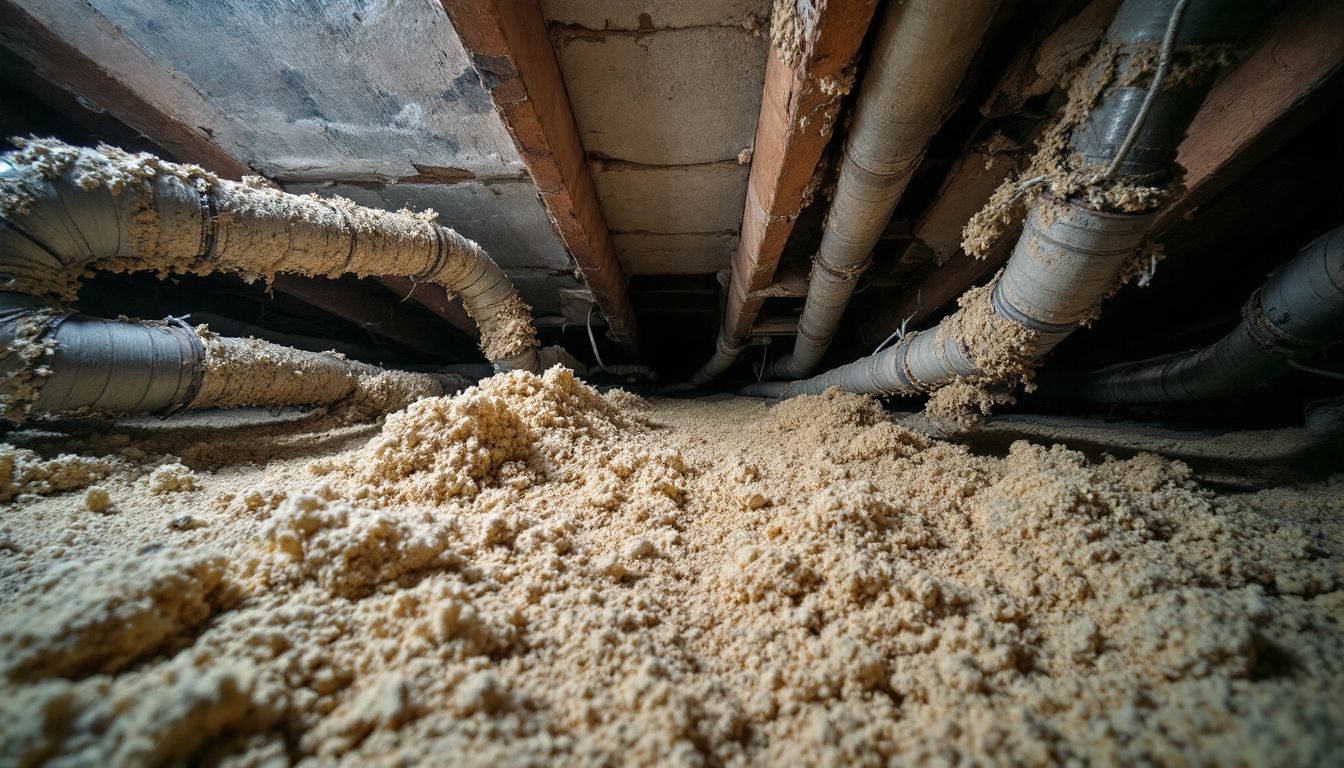
- Pipe and boiler lagging
- Insulation boards around fireplaces, partitions and ceiling voids
- Corrugated roofing sheets and guttering
- Floor tiles and the adhesive beneath them
- Sprayed coatings on structural steelwork
- Gaskets and seals in older plant and machinery
- Roofing felt and bitumen products
Asbestos cement products typically contain around 10–15% chrysotile (white asbestos). Insulation boards can contain up to 40% amosite (brown asbestos). Sprayed coatings are the most hazardous — they can be up to 85% asbestos by content and are highly friable, meaning fibres are released very easily when disturbed.
The Role of an Asbestos Survey
An asbestos management survey identifies materials likely to contain asbestos during normal occupation and is the standard starting point for any duty holder’s legal obligations. A demolition survey goes further — it’s required before any intrusive work begins and involves destructive inspection to locate all asbestos-containing materials (ACMs) that could be disturbed.
HSG264, the HSE’s guidance on asbestos surveys, sets out the standards that surveyors must follow. Choosing a UKAS-accredited surveyor ensures the results are reliable and legally defensible.
If you need an asbestos survey London clients can trust, working with a specialist who understands the city’s complex mix of Victorian, Edwardian and post-war building stock is essential.
Understanding the Legal Framework for Asbestos Removal
The Control of Asbestos Regulations is the primary legislation governing how asbestos must be managed, removed and disposed of in the UK. These regulations set out who can carry out removal work, what training and licensing is required, and how waste must be handled.
Not all asbestos removal requires a licence — but the most hazardous work does. Licensed contractors are required for work involving:
- Asbestos insulation and insulation board
- Sprayed asbestos coatings
- Any work where the risk assessment indicates significant fibre release
Some lower-risk work — such as removing asbestos cement sheets or floor tiles — may be carried out by non-licensed but notifiable contractors, provided strict controls are in place. Unlicensed removal of high-risk materials is a criminal offence.
Duty holders — anyone responsible for the maintenance of non-domestic premises — have a legal obligation to manage asbestos in their buildings. This includes identifying its location, assessing its condition, and ensuring it is either safely managed in place or removed by competent contractors. A management survey is the standard starting point for fulfilling that duty.
What Efficient Asbestos Removal Actually Looks Like
Efficient doesn’t mean fast and careless. In the context of asbestos removal, efficiency means a well-planned, properly resourced job that minimises disruption while maintaining full compliance with HSE requirements and protecting everyone on and around the site.
Step 1: Pre-Removal Planning and Notification
Licensed contractors must notify the relevant enforcing authority — usually the HSE — at least 14 days before licensed work begins. A written plan of work must be produced, detailing the scope of removal, the methods to be used, and the controls in place.
The plan of work should cover risk assessment findings, the type and condition of ACMs, the sequence of work, and emergency procedures. This isn’t paperwork for its own sake — it’s the foundation of a safe job.
Step 2: Setting Up the Work Area
Before any asbestos is disturbed, the work area must be properly prepared:
- The area is sealed off with polythene sheeting and warning signs posted
- Negative air pressure units (NPUs) are installed to ensure air flows into the enclosure, not out
- A three-stage decontamination unit (DCU) is set up at the entry and exit point
- HEPA-filtered air extraction units are positioned to maintain clean air within the enclosure
This containment setup prevents fibres from migrating to other areas of the building. It’s one of the most critical elements of the entire operation.
Step 3: Personal Protective Equipment
Workers entering the enclosure must wear appropriate PPE throughout. This includes:
- A full-face or half-face respirator with a P3 filter, or a powered air-purifying respirator for higher-risk work
- Disposable Type 5 coveralls
- Gloves
- Disposable boot covers
PPE is the last line of defence, not the first. Proper enclosure and engineering controls take precedence — but PPE must still be correctly fitted, maintained and used consistently throughout the job.
Step 4: The Removal Itself
Where possible, materials are wetted before removal to suppress fibre release. Tools are kept to a minimum — hand tools are preferred over power tools, which generate significantly more dust.
Materials are removed in manageable sections and immediately double-bagged in clearly labelled asbestos waste sacks. Throughout the process, air monitoring is conducted inside and outside the enclosure to verify that fibre levels remain within acceptable limits. Records of all monitoring results must be kept.
Step 5: Clearance Inspection and Air Testing
Once removal is complete, a four-stage clearance procedure is followed:
- Visual inspection of the enclosure to confirm all ACMs have been removed and surfaces are clean
- Thorough cleaning of the enclosure
- Second visual inspection
- Air testing by an independent UKAS-accredited analyst — the enclosure cannot be released until results confirm fibre levels are below the clearance indicator
This independent clearance testing is non-negotiable. It’s what gives you documented proof that the area is safe to reoccupy — and it’s a legal requirement, not an optional extra.
Legal and Safe Disposal of Asbestos Waste
Asbestos waste is classified as hazardous waste under UK legislation. Its disposal is tightly regulated, and failure to comply can result in significant penalties for both the contractor and the client.
Packaging and Labelling Requirements
All asbestos waste must be double-bagged in heavy-duty polythene sacks clearly marked with the appropriate asbestos warning label. Larger items — such as roofing sheets — should be wrapped in polythene sheeting and sealed with tape before labelling.
Bags and packages must not be overfilled or damaged during handling. The integrity of the packaging is what prevents fibre release during transport and at the disposal site.
Transport and Waste Transfer Documentation
Asbestos waste must be transported by a licensed waste carrier. The movement of hazardous waste must be documented using a waste transfer note or consignment note, depending on the quantity involved. These documents must be retained for a minimum of three years.
The Carriage of Dangerous Goods Regulations apply to the transportation of asbestos waste. Vehicles must be appropriate for the load, and drivers must be trained in the handling of hazardous materials.
Licensed Disposal Facilities
Asbestos waste must go to a licensed landfill site permitted to accept hazardous waste. It cannot be disposed of in general skips, taken to standard household waste recycling centres, or incinerated.
Reputable licensed contractors will manage the entire waste chain — from packaging on site through to delivery at an approved facility — and provide you with the documentation to prove it. Always ask for this paperwork. It protects you legally if questions are ever raised about how the waste was handled.
Asbestos Recycling: Is It a Viable Option?
Traditional landfill disposal carries environmental costs, and the industry has been exploring alternatives. Several recycling technologies have been developed that can render asbestos fibres inert and allow the resulting material to be reused in other applications.
Current Recycling Methods
- Thermal treatment: High-temperature processing breaks down the crystalline structure of asbestos fibres, converting them into harmless silicate materials
- Chemical treatment: Acid or alkaline solutions alter the fibre structure, neutralising the hazard
- Microwave treatment: Directed microwave energy destroys fibre structure without the high energy demands of thermal processing
- Encapsulation: In some contexts, ACMs can be encapsulated rather than removed, effectively sealing fibres in place and preventing release
Processed asbestos can in some cases be incorporated into construction aggregates or composite materials. However, these technologies are not yet widely available across the UK, and most asbestos waste continues to go to licensed landfill. The regulatory position on recycling continues to evolve, so it’s worth discussing options with your contractor.
What to Do If You Suspect Improper Asbestos Work
If you witness or suspect that asbestos is being handled incorrectly — whether by an unlicensed individual, a contractor cutting corners, or work proceeding without a survey — act immediately. Stop the work if it is safe to do so and contact the HSE.
Do not re-enter an area where asbestos disturbance may have occurred until it has been independently assessed and cleared. Fibre contamination can spread rapidly through a building via air handling systems and foot traffic, so the sooner the situation is contained, the better.
Document everything you can — photographs, dates, names of contractors involved. If you are the duty holder or client, you may have your own liability exposure to consider, and seeking professional advice promptly is in your interests.
Regional Considerations: Getting the Right Contractor
The principles of efficient asbestos removal are the same whether you’re in London, Manchester or Birmingham — but local knowledge matters. Building types, planning constraints, and the availability of licensed disposal facilities can all vary by region.
If you’re based in the North West and need an asbestos survey Manchester specialists can carry out, you’ll want a team familiar with the area’s industrial heritage and the types of ACMs commonly found in former mill buildings, warehouses and terraced housing stock.
Similarly, if you’re commissioning an asbestos survey Birmingham property owners can rely on, experience with the city’s significant post-war commercial and residential building stock is a genuine advantage.
Local surveyors understand what materials were commonly used in specific eras and building types — that knowledge speeds up surveys and improves accuracy. It also means fewer surprises during the removal phase, which is where delays and cost overruns tend to originate.
Choosing a Contractor: What to Look For
Not every contractor offering asbestos removal services is equally qualified or equally scrupulous. Before appointing anyone, verify the following:
- HSE licence: For licensable work, the contractor must hold a current HSE asbestos licence. You can verify this on the HSE website.
- UKAS accreditation: For survey and air testing work, look for UKAS-accredited organisations.
- Insurance: Confirm they hold adequate public liability and professional indemnity cover.
- References and track record: Ask for examples of comparable projects and client references you can actually contact.
- Written plan of work: Any reputable licensed contractor will provide this as a matter of course.
- Waste documentation: Confirm they will provide full hazardous waste consignment notes for all material removed.
Price is not a reliable indicator of quality in this sector. A significantly lower quote can sometimes reflect corners being cut on PPE, air monitoring, or waste disposal. The liability for improper disposal does not rest solely with the contractor — it can extend to the client who commissioned the work.
Managing Asbestos in Place: When Removal Isn’t the Answer
Efficient asbestos removal is sometimes the right answer — but not always. Where asbestos-containing materials are in good condition, are unlikely to be disturbed, and are not in a high-traffic area, managing them in place can be a safer and more proportionate response than removal.
The duty to manage under the Control of Asbestos Regulations requires duty holders to assess the condition of ACMs and put a management plan in place. That plan must be reviewed and updated regularly, and anyone who might disturb the materials — maintenance contractors, for example — must be informed of their location.
Encapsulation can extend the viable life of ACMs that are beginning to deteriorate but are not yet at the point of requiring removal. This involves applying a sealant or covering that binds fibres and prevents release. It is not a permanent solution, but it can be a practical interim measure.
The decision between removal and management should always be based on a current, professional survey — not on assumption, cost alone, or the preference of a contractor who stands to benefit financially from removal.
Frequently Asked Questions
Do I need a licensed contractor for all asbestos removal work?
No — but the most hazardous work does require an HSE-licensed contractor. This includes removal of asbestos insulation, insulation board and sprayed coatings. Some lower-risk work, such as removing asbestos cement products or floor tiles, can be carried out by non-licensed but trained and notifiable contractors under strict controls. If you’re unsure which category your work falls into, a professional survey and risk assessment will clarify this before any work begins.
How long does efficient asbestos removal typically take?
It depends entirely on the type, quantity and location of the ACMs involved. A small domestic job might be completed in a day or two. A large commercial removal involving multiple material types across several floors could take several weeks. The 14-day notification period to the HSE must be factored into any project timeline for licensed work, so early planning is essential.
What happens to asbestos waste after removal?
Asbestos waste is classified as hazardous waste and must be disposed of at a licensed landfill site permitted to accept it. It cannot go into general skips or standard waste streams. Licensed contractors are responsible for packaging, labelling, transporting and disposing of the waste correctly, and must provide you with waste transfer documentation. Keep these records — you may need them to demonstrate compliance.
Can I dispose of small amounts of asbestos myself?
Householders can take small quantities of asbestos waste — such as a few cement sheets — to a licensed household waste recycling centre that accepts asbestos, provided it is correctly packaged and labelled. However, any work involving licensable materials must be carried out by a licensed contractor. Attempting to remove or dispose of high-risk asbestos without the appropriate licence is a criminal offence under the Control of Asbestos Regulations.
What is a clearance certificate and why does it matter?
A clearance certificate — or certificate of reoccupation — is issued by an independent UKAS-accredited analyst following the four-stage clearance procedure after licensed asbestos removal. It confirms that air testing results are below the required clearance indicator and that the area is safe to reoccupy. Without it, the area legally cannot be handed back for use. It also provides you with documented evidence that the removal was completed correctly, which is important for property records, insurance and any future transactions.
Get Expert Help from Supernova Asbestos Surveys
Supernova Asbestos Surveys has completed over 50,000 surveys nationwide, working with property managers, facilities teams, contractors and building owners across the UK. Whether you need a survey before a refurbishment, advice on managing ACMs in place, or help identifying a licensed removal contractor, our team can support you at every stage.
We operate across the UK — including London, Manchester, Birmingham and beyond — and all our surveys are carried out by UKAS-accredited professionals following HSG264 and current HSE guidance.
Call us on 020 4586 0680 or visit asbestos-surveys.org.uk to discuss your requirements or book a survey.