Partial removal can leave a building in a more dangerous position than doing nothing at all. Asbestos partial removal health risks arise when some asbestos-containing materials are removed, but damaged, hidden or poorly recorded materials remain behind and are later disturbed by maintenance, refurbishment or demolition.
For property managers, duty holders, employers and contractors, that creates a false sense of security. One room may look clear, one contractor may have signed off their section, yet the wider asbestos risk can still be active across risers, ceiling voids, ducts, plant rooms and service routes.
Abstract: the central issue is simple. Leaving asbestos in place can be lawful and sensible where materials are in good condition and properly managed, but partial removal without the right survey, testing, records and follow-up controls can increase exposure risk. The safest decision depends on the material, its condition, its location and the work planned around it.
Article Menu
- Why partial removal is risky
- What are the health risks from asbestos?
- Leaving asbestos in place versus removing it completely
- Where will I find guidance and publications on asbestos?
- Employers and employees: who does what?
- Practical steps before work starts
- Surveys, testing and sample analysis
- Need help?
- Frequently Asked Questions
Why asbestos partial removal health risks are often underestimated
Asbestos is not automatically dangerous just because it exists in a building. The real danger comes when fibres are released and inhaled, which usually happens when asbestos-containing materials are damaged, drilled, cut, broken, sanded or otherwise disturbed.
That is why asbestos partial removal health risks can be so misleading. A limited removal job may deal with the obvious material in one area, while leaving hidden, adjacent or newly damaged asbestos elsewhere. The site then appears safer on paper, but the actual risk may be harder to control than before.
This usually happens when localised works are planned around budget, access or programme pressures rather than around the full asbestos picture. If survey information is incomplete, if the remaining materials are not assessed properly, or if records are not updated straight away, future contractors can walk into a live asbestos risk without realising it.
Common problems after partial removal
- Nearby asbestos materials are disturbed during access or removal works
- Residual materials are cracked, cut, loosened or contaminated with debris
- Hidden asbestos in voids, risers, ducts, soffits or service penetrations is missed
- The asbestos register is not updated accurately
- Labels, plans and room references no longer match site conditions
- Future contractors assume the area is asbestos-free
- Minor works later disturb materials that were left behind
Under the Control of Asbestos Regulations, those responsible for non-domestic premises must identify asbestos risks, assess them properly and prevent exposure so far as reasonably practicable. HSE guidance and HSG264 are clear that surveys must be suitable for the intended work and records must reflect what is actually present.
If only part of the asbestos is removed, the remaining material still needs to be identified, recorded, managed and monitored. Anything less creates a gap between the paperwork and the building itself, and that gap is where many asbestos incidents start.
What are the health risks from asbestos?
The health risks from asbestos exposure are serious because airborne fibres can lodge in the lungs and stay there for life. Disease may not develop for many years, which is one reason asbestos partial removal health risks are sometimes dismissed at the time of exposure.
The main diseases linked to asbestos exposure include:
- Mesothelioma – a cancer affecting the lining of the lungs or abdomen
- Asbestos-related lung cancer – lung cancer linked to asbestos fibre inhalation
- Asbestosis – scarring of lung tissue that causes progressive breathing problems
- Pleural thickening – thickening of the lung lining that can restrict breathing
The level of risk depends on factors such as the type of asbestos, the condition of the material, how much fibre is released, how the work is carried out and how often exposure occurs. Higher-risk materials such as pipe lagging, sprayed coatings and asbestos insulating board generally need tighter controls than lower-risk materials such as asbestos cement, but any asbestos can become hazardous if it is damaged or worked on without proper precautions.
Who can be affected?
The danger is not limited to specialist asbestos workers. People commonly put at risk by poor planning or incomplete removal include:
- Maintenance teams
- Electricians
- Plumbers
- Heating and ventilation engineers
- Telecoms and data installers
- Decorators and joiners
- General builders
- Facilities staff
- Occupants and visitors in poorly controlled areas
One of the most overlooked asbestos partial removal health risks is secondary disturbance. A contractor may not be exposed during the original removal itself, but months later another trade may drill into a wall, open a riser or lift a ceiling tile in the mistaken belief that all asbestos in that area has already been dealt with.
How exposure happens after partial removal
Partial removal often changes the surrounding building fabric. Access panels are opened, finishes are cut back, voids are exposed and service routes are disturbed. Even where the original scope is narrow, the impact on nearby materials can be much wider.
Typical examples include:
- Removing one section of asbestos insulating board while leaving damaged board in the same riser
- Taking out ceiling tiles but leaving asbestos debris in the void above
- Stripping pipe lagging in one plant room while leaving adjacent lagging exposed and vulnerable
- Removing textured coating from one room but damaging asbestos-containing materials in access routes
- Replacing part of a roof while leaving deteriorating asbestos cement sheets nearby
- Carrying out localised works without checking boxing, hidden voids or service penetrations
Where the handover information is poor, the problem gets worse. If drawings, labels and registers are not updated, the next team may assume everything has been removed. In practical terms, bad information is one of the biggest drivers of asbestos partial removal health risks in occupied buildings.
Leaving asbestos in place versus removing it completely
There is no blanket rule that all asbestos must always be removed. In many premises, leaving asbestos in place is the safer option if the material is in good condition, sealed or enclosed, unlikely to be disturbed and managed under a proper asbestos management plan.
Complete removal may be the better choice where materials are damaged, deteriorating, difficult to monitor, repeatedly disturbed by maintenance or certain to be affected by planned works. The right answer depends on the material, its condition, its accessibility and the future use of the building.
When leaving asbestos in place may be appropriate
- The material is in good condition
- It is sealed, enclosed or otherwise protected from damage
- It is unlikely to be disturbed during normal occupation or routine maintenance
- There is an up-to-date asbestos register
- The material can be inspected regularly
- Anyone who may work on the building has access to the asbestos information
When full removal may be the better option
- The material is damaged or deteriorating
- Refurbishment or demolition will disturb it
- It sits in a vulnerable location such as a service riser or ceiling void
- Repeated maintenance makes accidental disturbance likely
- Historic records are poor or previous works are unclear
- Repair or enclosure would not provide a reliable long-term solution
The difficulty usually starts when a project stops halfway. Partial removal can be a sensible decision in some situations, but only where the scope is based on suitable survey information, the remaining asbestos is left safe and the records are updated immediately afterwards. Without those steps, asbestos partial removal health risks can outweigh the intended benefit of the work.
Where will I find guidance and publications on asbestos?
If you need official guidance, start with the HSE. HSE guidance, approved codes of practice and publications explain how asbestos should be identified, managed, surveyed and controlled in workplaces and non-domestic premises.
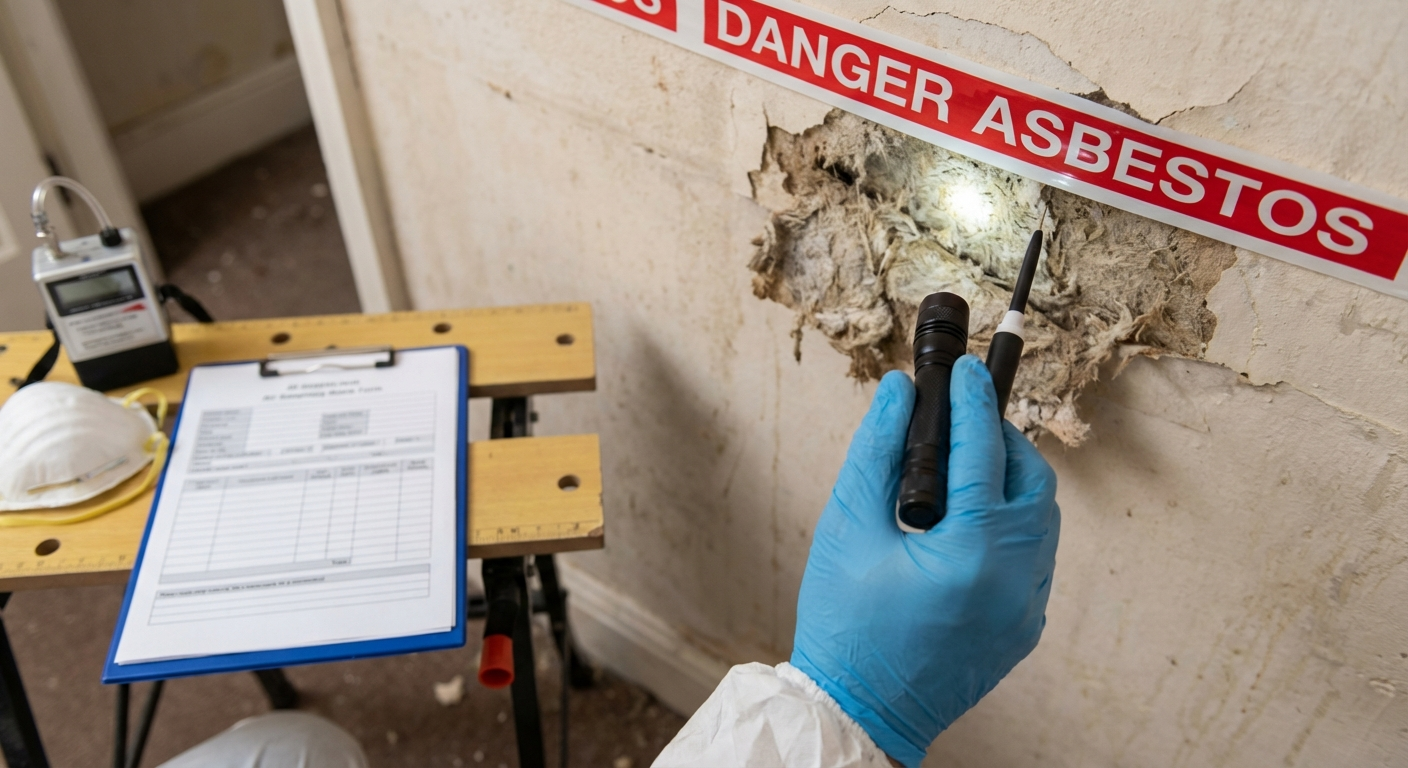
For survey standards, HSG264 is the key publication. It sets out what a suitable asbestos survey should achieve, how survey types differ and why the survey must match the intended work.
Where can I get hold of HSE publications about asbestos?
You can access asbestos publications and guidance directly through the HSE website. Search for asbestos guidance, duty to manage information, survey guidance and task-specific advice relevant to your building and planned works.
Useful HSE material typically includes:
- General asbestos guidance for duty holders
- Information on managing asbestos in non-domestic premises
- Survey expectations under HSG264
- Task sheets and practical advice for lower-risk work
- Guidance on training, risk assessment and control measures
- Information on licensed, notifiable non-licensed and non-licensed work
If you are managing a property portfolio, keep a central record of the guidance you rely on and make sure your contractors are working to current HSE expectations. Do not rely on old reports, inherited files or verbal assurances alone.
What guidance should property managers actually use?
Start with three essentials:
- The Control of Asbestos Regulations for the legal framework
- HSG264 for survey standards
- Relevant HSE guidance for management, maintenance and work controls
Then match the guidance to the job. Routine occupation needs a management approach. Intrusive works need the right pre-work survey. Ongoing occupation after asbestos is left in place needs inspection, record updates and communication to anyone who may disturb the material.
That practical link between legal duty and day-to-day site control is where many organisations fall short. The law is only useful if it changes what happens before someone starts cutting into a wall or opening a ceiling void.
Employers and employees: who is responsible?
Responsibility is shared, but the main duty for planning, control and protection sits with the employer and, where relevant, the duty holder. Workers have legal responsibilities too, but they should not be expected to discover asbestos by accident while carrying out routine tasks.
What employers and duty holders should do
- Obtain the right asbestos information before work starts
- Arrange suitable surveying and testing where needed
- Carry out a suitable and sufficient risk assessment
- Prepare a plan of work where required
- Provide information, instruction and training
- Use competent contractors for surveying, testing and removal
- Provide suitable control measures, PPE and RPE where required
- Stop work if suspect materials are found unexpectedly
- Update records after any work affecting asbestos
Where previous localised works have taken place, employers should verify exactly what was removed and what remains. Historic paperwork should never be treated as complete unless it matches current site conditions.
What employees should do
- Follow training and site procedures
- Use control measures, PPE and RPE correctly
- Check asbestos information before starting work
- Stop work if a suspect material is uncovered
- Avoid disturbing the area further
- Report the issue immediately to a supervisor or duty holder
- Never carry out asbestos work they are not trained or authorised to do
Good asbestos management depends on both sides doing their part. Employers must provide clear information and safe systems. Employees must follow them and challenge unsafe assumptions.
Support for managers and site teams
Support should be practical, not just procedural. That means giving contractors access to current asbestos registers, marked-up plans, permit systems where needed, clear escalation routes and named contacts who can authorise further inspection if suspect materials are found.
If your team cannot answer basic questions about what is present, what has been removed and what remains, you do not have enough control over asbestos partial removal health risks.
Practical steps before any work starts
You cannot reliably identify asbestos by sight alone. Many asbestos-containing materials look like non-asbestos products, and some of the highest-risk materials are hidden behind finishes or within service areas.
Materials commonly associated with asbestos include:
- Pipe lagging
- Sprayed coatings
- Asbestos insulating board
- Cement sheets and roof panels
- Vinyl floor tiles and bitumen adhesive
- Textured coatings
- Gaskets, rope seals and insulation products
The only reliable way to confirm whether a material contains asbestos is through proper inspection and laboratory analysis. If there is any doubt before work starts, arrange professional testing rather than relying on assumptions.
A practical pre-work checklist
- Check the age, history and previous use of the building
- Review the asbestos register and earlier survey reports
- Match the planned work to the correct survey type
- Identify suspect materials in the work area and nearby access routes
- Consider hidden voids, risers, boxing and service penetrations
- Arrange testing where materials are uncertain
- Carry out a suitable risk assessment before work begins
- Brief contractors using current information, not old assumptions
- Stop the job immediately if unexpected suspect materials are found
- Update records once works are complete
These steps prevent many incidents. They also reduce the chance of creating new asbestos partial removal health risks by disturbing materials that were never included in the original scope.
Do you need a risk assessment before asbestos work?
Yes. If work could disturb asbestos, a suitable and sufficient risk assessment is required before the job starts. This is not a box-ticking exercise. It is the basis for deciding whether the work can proceed safely, what controls are needed and whether specialist contractors are required.
A proper assessment should identify:
- What asbestos-containing materials are present or suspected
- Their type, condition and extent
- Who may be exposed
- What work is being carried out
- What controls are needed to prevent fibre release
- How waste will be handled and disposed of
- What emergency arrangements apply if suspect materials are found unexpectedly
Where asbestos partial removal health risks exist, the assessment must also consider what remains after the work is complete. That includes whether residual material is still safe, whether the asbestos register needs updating and whether further remedial action is required.
Questions to ask before authorising the job
- Has the correct survey been completed for the planned work?
- Are all suspect materials identified, not just the obvious ones?
- Will adjacent materials be affected by access, cutting or removal?
- Is the work licensed, notifiable non-licensed or non-licensed?
- Are workers trained for the specific task?
- Will the area be safe for reoccupation afterwards?
- Has someone checked what remains, not only what is being removed?
If any answer is unclear, the work should pause until the information is in place.
Surveys, testing and sample analysis
Choosing the right survey is one of the most effective ways to control asbestos risk. HSG264 makes clear that the survey must be suitable for the purpose, which means matching the inspection to the work you actually intend to carry out.
Management survey
For normal occupation and routine maintenance, a management survey helps locate asbestos-containing materials that could be disturbed during everyday use, minor works or standard building operations. This supports the duty to manage asbestos in non-domestic premises.
It is not designed for major intrusive works. If you rely on a management survey for strip-out, structural alteration or deep access into hidden areas, you increase the chance of missing materials and creating asbestos partial removal health risks.
Demolition survey
Before major intrusive works, strip-out or structural change, a demolition survey is required for the relevant area. Despite the name, this survey is also used where refurbishment or intrusive works will disturb concealed materials.
It is more invasive because hidden asbestos must be identified before the work begins. Without that level of inspection, partial removal decisions are often based on incomplete information.
Re-inspection survey
If asbestos is being left in place, monitoring is essential. A scheduled re-inspection survey helps confirm whether remaining materials are still in good condition or have deteriorated since the last assessment.
This is particularly important after localised removal works. Nearby materials may have changed condition, become more exposed or been affected by access routes and follow-on trades.
Asbestos testing and sample analysis
Where a material is uncertain, arrange asbestos testing before work starts. Testing is often the quickest way to avoid assumptions, delays and accidental disturbance.
If you already have a suspect sample collected through the correct process, laboratory sample analysis can confirm whether asbestos is present. For clients looking for fast access to testing support, this asbestos testing service page explains the available options.
Testing and surveys work best together. A sample result can confirm a material, but it does not replace a suitable survey where the wider extent, location and condition of asbestos need to be understood.
Information property managers should keep after any asbestos work
One of the biggest failures after partial removal is poor record control. Once the work is complete, you need clear information showing what was removed, what remains and what condition the remaining materials are in.
Keep the following together in one accessible place:
- Current asbestos register
- Latest survey reports
- Marked-up plans showing affected areas
- Testing and laboratory results
- Risk assessments and plans of work where relevant
- Waste documentation where applicable
- Photographic records if useful for future identification
- Notes of any areas not accessed and why
- Recommendations for monitoring or further action
This information should be available to anyone planning maintenance, small works, fit-out or intrusive access. If your records are scattered across inboxes, old folders and contractor handovers, your asbestos management system is weaker than it looks.
Author services, information and support for decision-makers
Property managers often inherit asbestos information from previous owners, managing agents or contractors. The challenge is turning that paperwork into something usable. You need information that supports decisions on access, maintenance, budgeting and contractor control.
Think of your asbestos documentation as an internal author service for the people who sign off work. It should help them answer practical questions quickly:
- What materials are present?
- Where are they?
- What condition are they in?
- What has already been removed?
- What still needs monitoring or action?
- What survey is needed before the next phase of work?
That level of support matters when projects move quickly. If the information is vague, outdated or incomplete, teams make assumptions. That is exactly how asbestos partial removal health risks slip into everyday building operations.
How to build better internal support
- Nominate a responsible person for asbestos information control
- Review old reports against current layouts and room references
- Require contractors to confirm they have reviewed the asbestos information before starting
- Update records immediately after any removal, repair or sampling
- Schedule re-inspections where asbestos remains in place
- Escalate uncertainty early rather than letting works proceed on assumptions
Good support is not about producing more paperwork. It is about making sure the right person has the right information at the point a decision is made.
Need help?
If you are unsure whether a previous project has left residual asbestos risk behind, get the site reviewed before further works begin. That is especially important where there has been localised strip-out, service upgrades, ceiling works, riser access or piecemeal refurbishment over time.
Supernova Asbestos Surveys can help with surveys, testing and practical advice for occupied buildings, maintenance planning and intrusive works. Whether you need an asbestos survey London, an asbestos survey Manchester or an asbestos survey Birmingham, the priority is the same: identify what is present, understand what remains and make sure nobody is exposed through poor information or incomplete planning.
If you suspect partial removal has left gaps in your records, do not wait until the next contractor uncovers a problem. Arrange the right survey, confirm suspect materials by testing where needed and bring your asbestos register back into line with what is actually on site.
Need expert help now? Contact Supernova Asbestos Surveys for professional asbestos surveys, re-inspections and testing support nationwide. Call 020 4586 0680 or visit asbestos-surveys.org.uk.
Frequently Asked Questions
Is partial asbestos removal ever the right option?
Yes, sometimes. Partial removal can be appropriate where the scope is clearly defined, the correct survey has been carried out, adjacent materials have been assessed and the remaining asbestos can be left safe and properly managed. The problem is not partial removal by itself, but partial removal carried out with incomplete information or poor record updates.
Can I rely on an old asbestos survey before refurbishment works?
Not automatically. A survey must be suitable for the intended work. For intrusive works, refurbishment or strip-out, you may need a more intrusive survey than the one already on file. Old reports should also be checked against current site conditions, room layouts and any works completed since the survey was issued.
What should I do if contractors uncover a suspect material during works?
Stop work immediately in the affected area, prevent further disturbance and report it to the responsible person or duty holder. The material should be assessed properly, and testing or further surveying should be arranged before work resumes.
Is leaving asbestos in place always unsafe?
No. If asbestos-containing materials are in good condition, protected from damage and unlikely to be disturbed, leaving them in place can be the safer and more proportionate option. They must still be recorded, managed and inspected at suitable intervals.
How do I reduce asbestos partial removal health risks in an occupied building?
Use the correct survey for the planned work, confirm uncertain materials through testing, brief contractors properly, control access during works, inspect what remains after the job and update the asbestos register immediately. The key is making sure the building records match the real conditions on site.