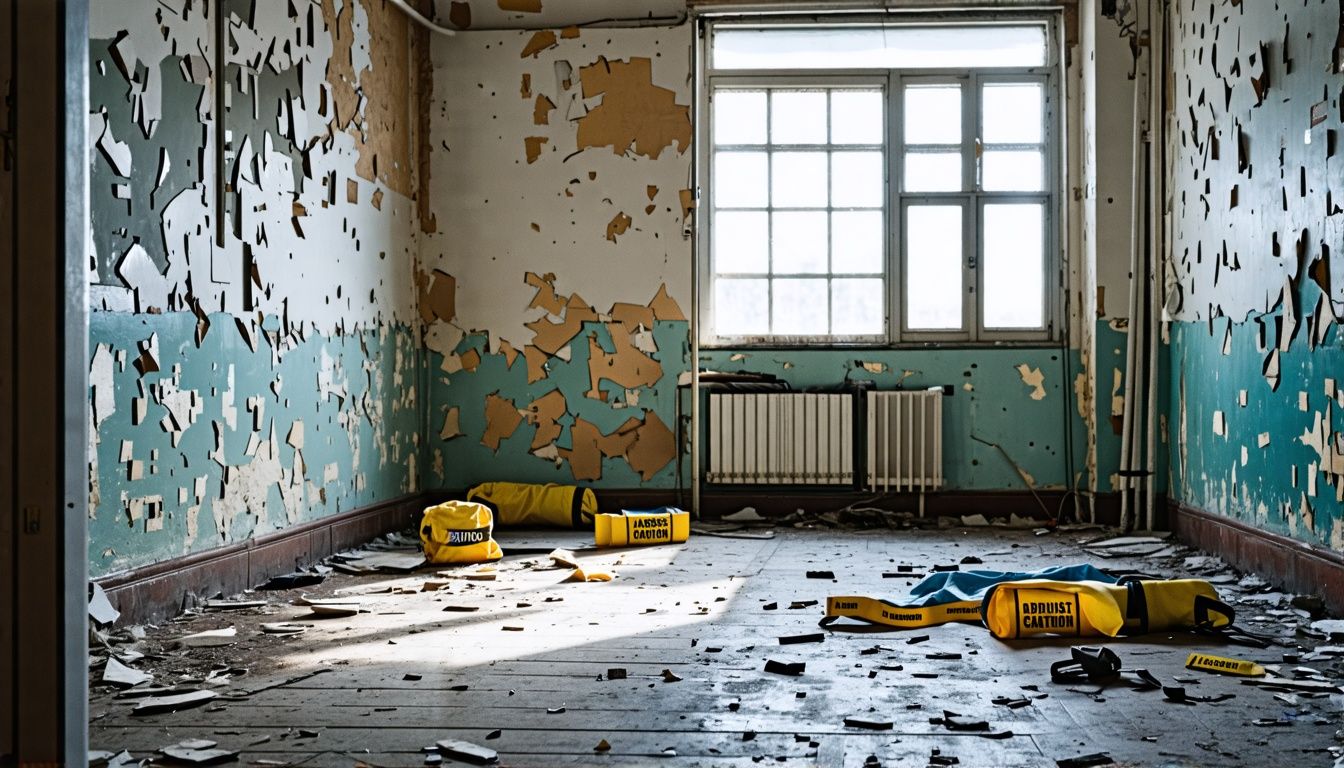
Inadvertent Asbestos Exposure: Emergency Procedures You Must Follow
Asbestos fibres are invisible to the naked eye. You cannot smell them, taste them, or feel them entering your lungs — and that is precisely what makes accidental disturbance so dangerous.
In the case of inadvertent exposure, what are the emergency procedures that should be followed? Every person working in or managing a pre-2000 building needs to know the answer before an incident occurs, not after.
Whether a contractor has unknowingly disturbed a ceiling tile, a maintenance worker has drilled through pipe lagging, or a demolition team has encountered unexpected asbestos-containing materials, the response must be immediate, structured, and properly documented. Getting it wrong does not just affect the individuals directly involved — it can contaminate an entire building and expose others to risk, including people who were nowhere near the original disturbance.
Why Emergency Procedures for Asbestos Exposure Matter
Asbestos-related diseases — including mesothelioma, asbestosis, and asbestos-related lung cancer — have a latency period measured in decades. Symptoms may not appear for 20 to 40 years after the original exposure took place.
That means the consequences of an incident today may not be felt until long after the event has been forgotten. This is not a reason to be complacent — it is a reason to act decisively the moment exposure is suspected.
The actions taken in the first few minutes and hours after an incident can significantly limit the scale of contamination and the number of people affected. Under the Control of Asbestos Regulations, duty holders and employers have clear legal responsibilities when accidental disturbance occurs. Failing to follow correct emergency procedures is not just a health risk — it is a prosecutable offence.
In the Case of Inadvertent Exposure, What Are the Emergency Procedures That Should Be Followed?
Here is the sequence every responsible duty holder, employer, and site manager needs to know — and be prepared to act on without hesitation.
1. Stop Work Immediately
The moment asbestos disturbance is suspected or confirmed, all work in the affected area must stop. No exceptions.
Workers should not attempt to clean up the material, continue the task, or assess the damage without proper protection in place. Instruct everyone in the immediate vicinity to cease activity and move away from the area without disturbing anything further. The instinct to tidy up or take a closer look can make things considerably worse.
2. Evacuate and Restrict Access
Clear the affected area immediately. Everyone — workers, building occupants, visitors — should leave the zone promptly and calmly.
Do not allow people to re-enter for any reason until the area has been assessed and declared safe by a competent person. Physically restrict access using barriers, signage, and where necessary, locking doors. If the area sits within a larger building, consider whether ventilation systems could be spreading fibres to adjacent spaces and isolate them if possible.
3. Do Not Use Standard Cleaning Equipment
This is one of the most critical points — and one of the most commonly misunderstood. A standard vacuum cleaner, broom, or compressed air line will make contamination dramatically worse by dispersing fibres into the air.
Never use these tools in a suspected asbestos incident area. Leave the area undisturbed until a licensed professional can assess and manage the situation, even if there is visible debris on the floor.
4. Identify Everyone Who May Have Been Exposed
Compile a list of everyone who was in the affected area at the time of the incident and in the period immediately following it. This includes workers, building occupants, contractors, and any visitors who passed through.
Record their names, contact details, and the estimated duration of their presence in the area. This information is essential for health surveillance purposes and may be required by the HSE or enforcing authority during any subsequent investigation.
5. Notify the Relevant Authorities
Depending on the nature and scale of the incident, you may be legally required to notify the HSE or the relevant local authority enforcing body. Under RIDDOR (Reporting of Injuries, Diseases and Dangerous Occurrences Regulations), certain asbestos-related incidents must be reported.
If the incident involves a significant release of asbestos in a workplace, this constitutes a dangerous occurrence and must be reported to the HSE. Do not delay this notification — it is a legal requirement, not a discretionary step.
6. Contact a Licensed Asbestos Specialist
Once the area is evacuated and access restricted, contact a licensed asbestos surveying and removal specialist without delay. They will assess the extent of contamination, carry out air monitoring, and advise on the appropriate remediation approach.
Do not attempt to manage the remediation internally unless you have suitably qualified and licensed personnel on site. For most organisations, this means bringing in external specialists. The cost of professional intervention is considerably lower than the cost of mismanaging a contamination incident.
What Happens After the Immediate Emergency Response
The initial emergency steps are only the beginning. Once the area is secured and specialists are on site, a structured process of assessment, remediation, and clearance must follow.
Air Monitoring and Fibre Assessment
A competent analyst will take air samples to determine the concentration of airborne asbestos fibres in and around the affected area. These readings establish the extent of contamination and directly inform the remediation strategy.
Background monitoring of adjacent areas may also be required, particularly if there is any possibility that fibres have migrated through ventilation systems or open doorways. The results will determine whether the contamination is localised or has spread further.
Material Identification and Sample Analysis
If the material that was disturbed has not already been confirmed as asbestos, samples must be taken and submitted for laboratory analysis. Accurate sample analysis from a UKAS-accredited laboratory will confirm whether asbestos is present and identify the fibre type — information that directly affects the remediation approach and the level of risk to those who were exposed.
Do not assume a material is or is not asbestos based on visual inspection alone. Only laboratory analysis provides definitive confirmation, and attempting to guess can lead to entirely the wrong remediation response.
Surveying the Wider Area
An inadvertent exposure incident often reveals that an adequate asbestos survey was not in place before work began. Following the immediate response, a full management survey of the wider building should be carried out to identify any other asbestos-containing materials that may be at risk of disturbance.
If the building is undergoing refurbishment or demolition work, a demolition survey will be required before any further intrusive work can proceed. This is a legal requirement under the Control of Asbestos Regulations, not a recommendation.
Remediation and Decontamination
Depending on the extent of contamination, remediation may involve encapsulation, controlled removal, or full decontamination of the affected area. All remediation work involving significant quantities of asbestos must be carried out by a licensed contractor.
The work area must be enclosed, negative pressure maintained, and all debris and contaminated materials disposed of as hazardous waste in accordance with current regulations. Once remediation is complete, independent clearance air testing must confirm that fibre levels are below the statutory clearance indicator before the area can be reoccupied.
For work requiring the physical removal of asbestos-containing materials, asbestos removal by a licensed contractor is the only legally compliant route available.
Health Surveillance for Those Who Were Exposed
Everyone identified as having been present during an inadvertent exposure incident should be referred for appropriate health surveillance. This is not a bureaucratic formality — it is a critical step in protecting individuals from long-term harm.
Under the Control of Asbestos Regulations, workers who undertake notifiable non-licensed work must be enrolled in health surveillance. Following an accidental exposure incident, employers should consult an occupational health physician to determine the appropriate level of monitoring for all affected individuals, regardless of their employment status.
Health records for workers exposed to asbestos must be retained for a minimum of 40 years. Ensure that records from the incident — including the date, duration, and estimated level of exposure — are properly documented and retained in a retrievable format.
Legal Duties of Employers and Duty Holders
The Control of Asbestos Regulations place clear duties on employers and those responsible for non-domestic buildings. In the case of inadvertent exposure, what are the emergency procedures that should be followed from a legal standpoint? The answer is unambiguous: follow the hierarchy of controls, notify the relevant authorities, document everything, and ensure affected individuals receive appropriate health surveillance.
Failure to act appropriately following an accidental asbestos disturbance can result in:
- HSE enforcement action
- Improvement or prohibition notices
- Substantial financial penalties
- Criminal prosecution in serious cases
The duty holder’s responsibility does not end when the area is cleared. It extends to the ongoing management of those who were exposed and the prevention of future incidents through proper asbestos management planning.
Documentation and Incident Records
Every aspect of the incident and the response to it must be documented in writing. Thorough records protect both the individuals involved and the organisation responsible for the building.
Your incident documentation should include:
- The date, time, and location of the incident
- A description of what happened and how the disturbance occurred
- The names and contact details of all individuals present
- The estimated duration and nature of exposure for each person
- The emergency actions taken and by whom
- Air monitoring results and sample analysis reports
- Details of any notifications made to the HSE or enforcing authority
- The remediation approach and clearance testing results
- Health surveillance arrangements for affected individuals
This documentation forms part of your legal duty and may be requested by the HSE during any subsequent investigation. Keep records secure and accessible for the full retention period required.
Preventing Inadvertent Exposure Before It Happens
The best emergency procedure is the one you never need to use. Inadvertent asbestos exposure almost always occurs because adequate surveys were not carried out before work began, or because the information from an existing asbestos register was not communicated to those undertaking the work.
Every pre-2000 building should have an up-to-date asbestos management plan based on a competent survey. Before any maintenance, refurbishment, or intrusive work begins, the person responsible for the building must ensure that contractors are made aware of any known or suspected asbestos-containing materials in the areas where they will be working.
The HSE’s guidance document HSG264 sets out clearly how asbestos surveys should be planned and conducted. Following this guidance is not optional for duty holders — it is the baseline standard expected by regulators and courts alike.
Regional Survey Coverage Across the UK
Supernova Asbestos Surveys operates nationwide, with qualified surveyors available to respond quickly wherever you are based.
If you need an asbestos survey in London, our team covers the capital and all surrounding areas. We also provide a full survey and management service for those requiring an asbestos survey in Manchester, with rapid response times across the North West. For clients in the Midlands, our asbestos survey in Birmingham service delivers the same rigorous standards with local knowledge.
With over 50,000 surveys completed across the UK, we have the experience, accreditation, and capacity to support you — whether you need a routine management survey, urgent post-incident assessment, or full remediation support.
Frequently Asked Questions
In the case of inadvertent exposure, what are the emergency procedures that should be followed first?
The very first step is to stop all work in the affected area immediately and instruct everyone present to move away from the zone without disturbing anything further. Do not attempt to clean up debris or assess the damage. Once people are clear, restrict access using barriers and signage, and contact a licensed asbestos specialist as quickly as possible.
Do I have to report an accidental asbestos disturbance to the HSE?
In many cases, yes. Under RIDDOR, a significant release of asbestos in a workplace constitutes a dangerous occurrence that must be reported to the HSE. Even where the incident falls below the formal reporting threshold, it is advisable to document everything and seek specialist guidance on your notification obligations. Failing to report when required is a criminal offence.
Can I use a regular vacuum cleaner to clean up after an asbestos disturbance?
No — this is one of the most dangerous mistakes people make. A standard vacuum cleaner will disperse asbestos fibres into the air rather than contain them, dramatically worsening the contamination. Only specialist H-type (HEPA) vacuums designed for asbestos work should ever be used, and only by licensed professionals wearing appropriate respiratory protective equipment.
How long do health records need to be kept after an asbestos exposure incident?
Under the Control of Asbestos Regulations, health records for workers exposed to asbestos must be retained for a minimum of 40 years. Given the long latency period of asbestos-related diseases, this retention period exists to ensure that medical history is available if symptoms develop decades after the original exposure. Records should be stored securely and remain retrievable throughout that period.
What survey do I need before refurbishment or demolition work on a pre-2000 building?
Before any intrusive refurbishment or demolition work begins, a refurbishment and demolition survey is legally required under the Control of Asbestos Regulations. This is a more intrusive survey than a standard management survey and is designed to locate all asbestos-containing materials in areas that will be disturbed. Carrying out such work without this survey in place is a breach of your legal duty and significantly increases the risk of inadvertent exposure.
Speak to Supernova Asbestos Surveys Today
If you have experienced a suspected asbestos disturbance, need an urgent survey, or want to put proper management procedures in place before work begins, Supernova Asbestos Surveys is ready to help.
Call us on 020 4586 0680 or visit asbestos-surveys.org.uk to speak with a qualified surveyor. With nationwide coverage and over 50,000 surveys completed, we are the team duty holders across the UK trust when it matters most.