
Asbestos warts still get mentioned on building sites, but the phrase can send people in the wrong direction. If you manage a property, instruct contractors, or oversee maintenance, the real danger is rarely the skin lesion itself. The serious risk is asbestos fibre release and inhalation when asbestos-containing materials are disturbed without proper controls.
That matters because asbestos warts are an old informal term, while the legal duties around asbestos are very current and very real. Under the Control of Asbestos Regulations, supported by HSE guidance and HSG264 for surveying, duty holders and contractors must identify asbestos risks properly, plan work correctly, and prevent exposure.
If your building was constructed or refurbished before 2000, guesswork is not enough. A material that looks harmless can still contain asbestos, and a short uncontrolled task can contaminate an area quickly. The practical answer is simple: identify suspect materials before work starts, use the correct survey, and stop work immediately if anything unexpected is uncovered.
What are asbestos warts?
Asbestos warts is an informal description sometimes used for small rough skin growths or thickened lesions that may develop after repeated handling of asbestos materials. You may also hear the older term asbestos corns. The idea is that tiny fibres can become embedded in the outer skin, causing local irritation and a hardened area.
That said, the term is not a formal diagnosis in the way many people assume. It can be misleading because it makes asbestos sound like a skin problem first, when the main health hazard is actually airborne fibre inhalation.
For property managers and maintenance teams, the key point is this: visible skin irritation does not tell you whether a person has inhaled asbestos fibres. Someone can have no sign on their hands at all and still have been exposed if asbestos-containing materials were drilled, cut, broken, scraped, or removed unsafely.
Why the term causes confusion
- It sounds like a formal medical condition when it is really an informal site term.
- It can distract from the far more serious respiratory risks linked to asbestos exposure.
- It may lead workers to focus on skin contact rather than airborne dust and fibres.
- It can create a false sense of security if no skin symptoms appear.
If a worker develops a persistent skin lesion after handling suspect materials, they should seek medical advice. From a building safety point of view, though, the urgent question is whether asbestos fibres may have been released into the work area.
Are asbestos warts dangerous?
On their own, asbestos warts are generally discussed as benign skin lesions rather than life-threatening disease. They may be uncomfortable or unsightly, but they are not the reason asbestos is so tightly controlled in the UK.
The real concern is what asbestos warts may suggest about past working practices. If someone has been repeatedly handling asbestos-containing materials without suitable controls, there is a wider possibility that fibres have also been released and inhaled.
That is why you should never stop your assessment at the skin symptom. Ask the practical questions that actually matter for compliance and health protection:
- What material was being handled?
- Was it confirmed to contain asbestos?
- Was the material damaged, friable, or dusty?
- Was the task licensed, notifiable non-licensed, or non-licensed work?
- Were suitable controls, PPE, and RPE in place?
- Who else may have been exposed nearby?
If those answers are unclear, stop the job and get specialist advice. Delaying for the sake of programme pressure often makes the situation more expensive and more difficult to manage.
The real health risks behind asbestos exposure
When people search for asbestos warts, they are often really trying to understand what asbestos can do to the body. That is the right concern. The most serious asbestos-related diseases are linked to inhaling fibres, usually after materials are disturbed during maintenance, refurbishment, strip-out, or removal.
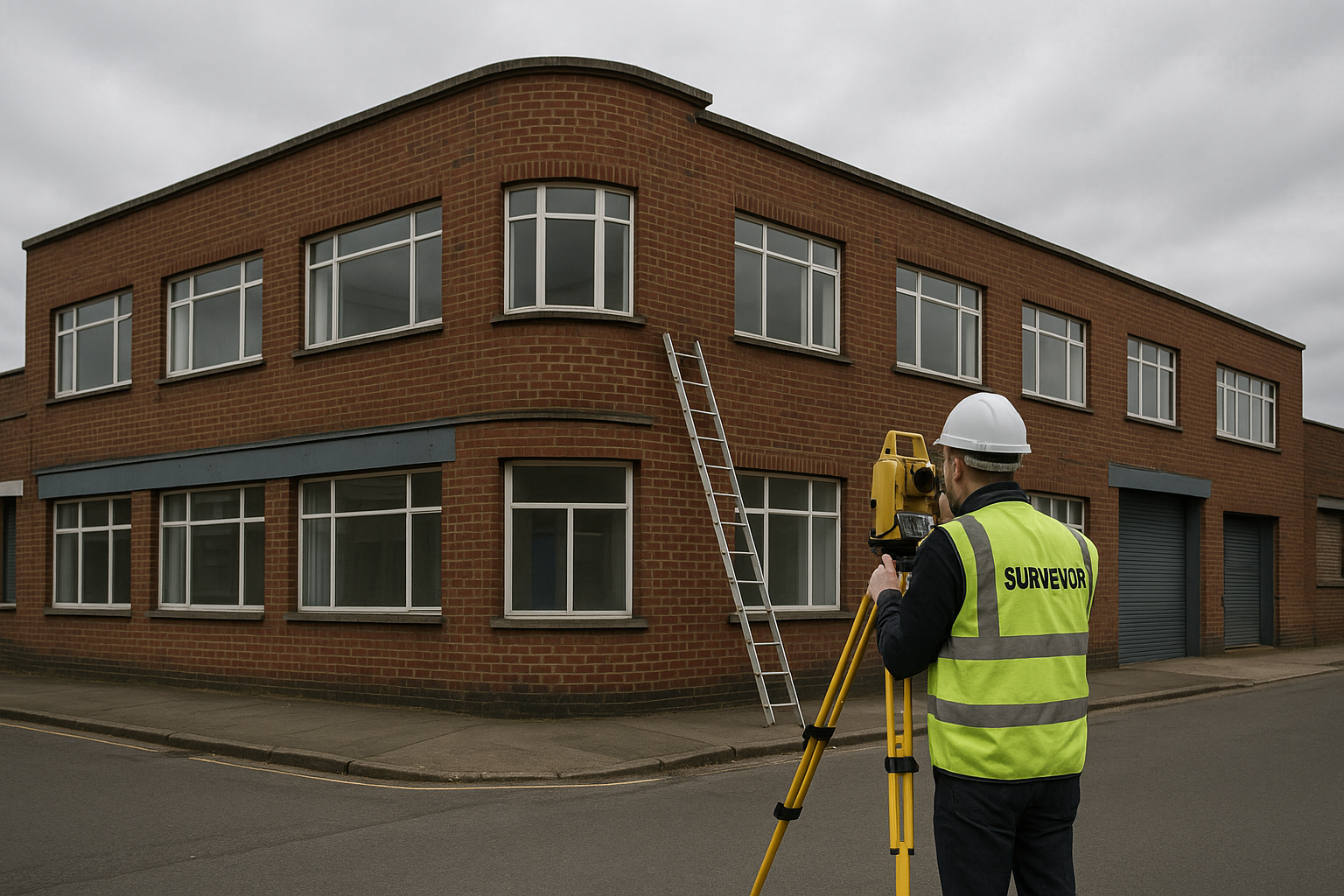
These diseases often take many years to develop. That long latency is one reason asbestos remains a major issue in property management, even where the original work happened decades ago.
Asbestosis
Asbestosis is a chronic scarring of lung tissue caused by significant asbestos fibre inhalation over time. As the lungs become scarred, breathing becomes harder and oxygen transfer becomes less efficient.
Symptoms can include breathlessness, fatigue, a persistent cough, and reduced exercise tolerance. The damage is irreversible, which is why prevention matters far more than trying to respond after exposure has already happened.
Mesothelioma
Mesothelioma is an aggressive cancer affecting the lining of the lungs or, less commonly, the abdomen. It is strongly associated with asbestos exposure and can develop long after the original exposure event.
For anyone managing works, the lesson is straightforward: even a brief uncontrolled disturbance must be taken seriously. You cannot judge future risk by whether someone feels fine on the day.
Lung cancer
Asbestos exposure is also a recognised cause of lung cancer. The risk can be higher in smokers, but asbestos itself is a known hazard in its own right.
From a practical site perspective, there is no value in trying to estimate risk by eye once dust has been created. If fibres may have been released, the exposure incident needs to be assessed properly and managed without delay.
Pleural thickening and pleural plaques
Asbestos exposure can also lead to pleural changes around the lungs. Diffuse pleural thickening may affect lung function and contribute to breathlessness. Pleural plaques are often benign but can indicate past exposure.
Again, these are inhalation-related outcomes. Asbestos warts may be the phrase people remember, but respiratory disease is what drives the legal controls and the need for competent asbestos management.
How exposure happens during maintenance, refurbishment and removal
Asbestos is most dangerous when materials are disturbed. A product in good condition and left alone may present a lower immediate risk. Once it is drilled, snapped, sanded, cut, broken, stripped out, or cleaned up incorrectly, the risk changes quickly.
Common situations where exposure happens include:
- Removing asbestos insulating board during refurbishment works
- Breaking asbestos cement sheets during roofing work
- Scraping textured coatings without suitable controls
- Disturbing lagging in plant rooms, risers, and ceiling voids
- Demolishing internal partitions without the correct pre-works survey
- Cleaning up debris after accidental impact damage
- Lifting old floor finishes and disturbing adhesive residues
Even a short task can release fibres if the material is friable or already damaged. That is why assumptions are dangerous, particularly in older offices, schools, warehouses, retail units, and mixed-use premises.
Higher-risk asbestos materials
Some asbestos-containing materials are more likely to release fibres than others. Higher-risk materials often include:
- Sprayed coatings
- Pipe and boiler insulation
- Loose fill insulation
- Asbestos insulating board
Lower-risk materials that still need control
Lower-risk does not mean no risk. Materials can still become hazardous if damaged or worked on incorrectly. These may include:
- Asbestos cement sheets and rainwater goods
- Vinyl floor tiles and bitumen adhesive
- Textured coatings
- Roofing products
- Certain gaskets, ropes, and seals
The only reliable approach is proper identification before work starts. If a material has not been assessed, treat it as suspect until competent surveying or sampling proves otherwise.
What UK regulations require from duty holders and contractors
The Control of Asbestos Regulations place clear duties on those who manage non-domestic premises and those carrying out work that could disturb asbestos. If you are a duty holder, landlord, managing agent, facilities manager, principal contractor, or employer, you need a working system for identifying and controlling asbestos risk.
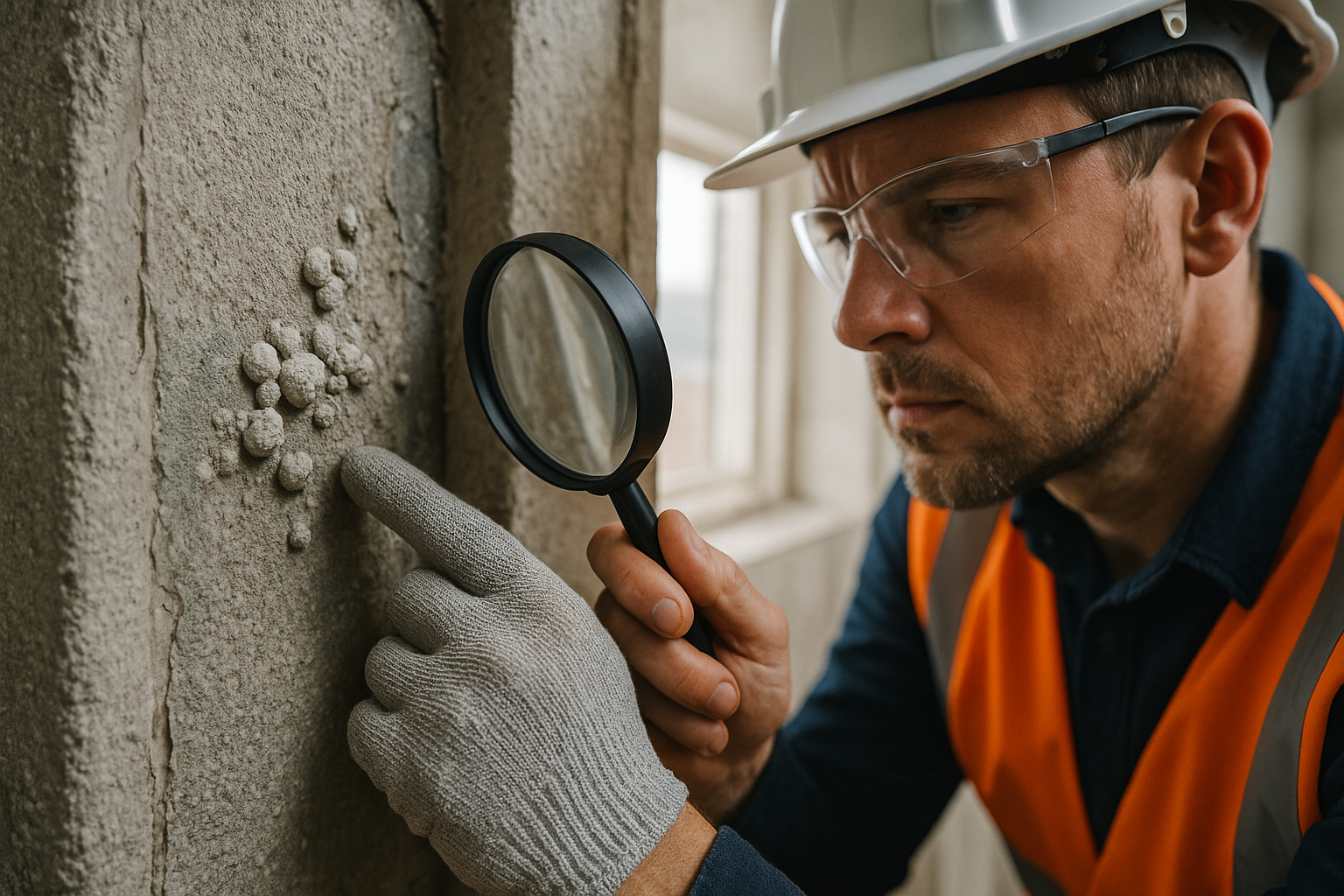
In practice, that usually means:
- Knowing whether asbestos is present, or presuming it is until checks prove otherwise
- Keeping an asbestos register where required
- Assessing the condition of known or presumed asbestos-containing materials
- Providing relevant information to anyone liable to disturb those materials
- Ensuring the right survey is completed before intrusive works
- Using competent specialists for surveying, sampling, and removal
- Reviewing and updating records when conditions change
HSG264 sets out the accepted approach to asbestos surveying. It helps determine what type of survey is needed, how materials should be inspected, and how findings should be recorded so that decisions can be made safely.
HSE guidance is equally clear on the practical point: if work may disturb asbestos, it must be planned, risk assessed, and controlled by people with the right level of competence. Some tasks require a licensed contractor. Others do not. All require proper control measures.
Licensed, notifiable and non-licensed work
Not all asbestos work needs a licence, but that does not mean it is automatically low risk. The classification depends on the type of material, its condition, and the nature of the planned activity.
If there is any doubt, get advice before works begin. Misclassifying the task can expose workers, spread contamination, delay the project, and create serious compliance issues.
Why the right asbestos survey matters more than assumptions
The best way to prevent exposure is to identify asbestos before anyone starts work. That is where surveys matter. If the building is occupied and in normal use, a management survey helps locate asbestos-containing materials that could be disturbed during routine occupation or maintenance.
If the building is heading for major strip-out or demolition, a demolition survey is used to identify materials likely to be disturbed during demolition. For refurbishment projects, the affected area needs an intrusive pre-works survey appropriate to the planned scope.
This is where many avoidable incidents begin. A contractor is booked, the programme is tight, and someone assumes an old register or a basic survey will do. It will not. A management survey is not a substitute for an intrusive survey where the building fabric will be disturbed.
Practical checks before any work starts
- Review the age and history of the building.
- Check the asbestos register and all previous survey reports.
- Match the survey type to the actual planned works.
- Make sure the survey covers the exact work area, not just the site generally.
- Share findings with every contractor before mobilisation.
- Stop work if suspect materials are found that are not covered by the survey.
Those six steps prevent a large share of asbestos incidents. They also help you demonstrate that asbestos risk has been managed sensibly rather than reactively.
What safe asbestos removal looks like in practice
Safe asbestos work is controlled, documented, and carried out by competent professionals. It is not a quick strip-out with a paper mask and a few dust sheets.
Where removal is necessary, use a specialist provider for asbestos removal. Removal is not just about taking material out of the building. It is about preventing fibre release at every stage of the job.
A safe removal process will typically include:
- Identification of the asbestos-containing material by survey and, where needed, sampling
- A suitable risk assessment and plan of work
- Correct classification of the task
- Appropriate enclosure, segregation, or local controls
- Suitable respiratory protective equipment and protective clothing
- Methods that minimise fibre release, such as controlled wetting where appropriate
- Decontamination procedures
- Correct packaging, labelling, transport, and disposal of waste
- Clearance procedures where required
Red flags that suggest unsafe work
- No survey has been carried out before intrusive works
- Workers are breaking suspect materials dry
- Dust is spreading beyond the work area
- Waste is left loose, broken, or unlabelled
- There is no clear segregation of the area
- Contractors cannot explain the plan of work
- Occupants are still moving through the area without controls
If you see any of those signs, stop the work and escalate it immediately. Waiting to see what happens next is the wrong approach where asbestos is concerned.
What to do if suspected asbestos has already been disturbed
If a material has been damaged and asbestos is suspected, act quickly but do not make the contamination worse. Keep people out of the area and avoid sweeping, vacuuming, or attempting an improvised clean-up.
Take these steps:
- Stop work immediately.
- Restrict access to the affected area.
- Switch off systems that may spread fibres, if safe to do so.
- Do not dry sweep or use a standard vacuum cleaner.
- Report the incident to the responsible manager or duty holder.
- Arrange competent inspection, sampling, and advice.
- Record who may have been present and what activity was taking place.
Do not rely on appearance alone. Many asbestos-containing materials look similar to non-asbestos alternatives, and contamination is often impossible to judge without proper assessment.
If there is a concern about exposure, document the incident clearly. Record the location, time, material involved, contractors present, and the immediate controls put in place. Good records help with follow-up decisions and show that the issue was handled responsibly.
Practical advice for property managers, landlords and facilities teams
If you are responsible for a portfolio, isolated decisions are not enough. You need a repeatable asbestos management process that works across routine maintenance, emergency repairs, tenant works, and capital projects.
Start with the basics:
- Keep your asbestos information current and accessible.
- Make sure contractors receive relevant asbestos information before starting work.
- Challenge vague method statements and generic RAMS.
- Check that the survey type matches the planned scope.
- Train staff to stop work when suspect materials are found.
- Review incidents so the same mistake is not repeated elsewhere.
Location also matters when response times are tight. If you need local support in the capital, arranging an asbestos survey London service can help keep projects moving safely. The same applies for regional portfolios where an asbestos survey Manchester appointment or an asbestos survey Birmingham visit is needed before maintenance or refurbishment begins.
The common thread is planning. The more clearly asbestos risk is identified before work starts, the less likely you are to face emergency stoppages, contamination incidents, or expensive remedial action.
Common myths about asbestos warts and asbestos exposure
If there are no asbestos warts, there was no exposure
False. Asbestos warts are not a reliable indicator of exposure. A person may inhale fibres without any immediate skin symptoms at all.
Only removal work is risky
False. Exposure can happen during routine maintenance, minor repairs, cable installation, decorating preparation, and accidental damage. Removal is only one of several high-risk scenarios.
Asbestos cement is always safe
False. It is generally lower risk than friable materials, but it can still release fibres if broken, cut, drilled, or badly degraded. It still needs proper assessment and control.
An old survey covers every future job
False. Survey suitability depends on the planned works and the exact area affected. A management survey does not automatically cover intrusive refurbishment or demolition work.
You can identify asbestos by sight
False. Some materials may look familiar, but visual inspection alone is not enough to confirm or rule out asbestos. Competent surveying and sampling are what count.
Frequently Asked Questions
Are asbestos warts a sign of serious asbestos disease?
Not usually. Asbestos warts are generally described as benign skin lesions linked to repeated handling of asbestos materials. The serious health risks from asbestos are mainly caused by inhaling airborne fibres, not by the skin lesion itself.
Can you get asbestos exposure without any symptoms?
Yes. Asbestos exposure often causes no immediate symptoms at all. That is one reason asbestos incidents must be taken seriously even when nobody feels unwell at the time.
What should I do if a contractor finds a suspect material during works?
Stop work straight away, restrict access, and arrange competent asbestos assessment. Do not let anyone continue until the material has been properly identified and the correct controls are in place.
Do I need a survey before refurbishment works?
Yes, if the works will disturb the building fabric. A suitable intrusive survey is needed for the affected area before refurbishment starts. A standard management survey is not enough for intrusive work.
Who should I contact for asbestos surveys or removal?
You should use a competent specialist with experience in surveying, sampling, and removal planning. Supernova Asbestos Surveys provides asbestos surveys nationwide, along with expert support for removal projects and compliance planning.
Need clear advice on asbestos warts, suspected asbestos materials, or the right survey before work starts? Speak to Supernova Asbestos Surveys for fast, practical support across the UK. Call 020 4586 0680 or visit asbestos-surveys.org.uk to book a survey or discuss your project.