
One asbestos report filed away years ago will not protect your building today. If you are asking how often should asbestos surveys be carried out, the real answer is simple: as often as needed to keep your asbestos information accurate, usable and safe for anyone who works in or on the property.
For duty holders, landlords, facilities managers and managing agents, asbestos compliance is not a one-off task. Under the Control of Asbestos Regulations, you must identify asbestos-containing materials so far as reasonably practicable, assess the risk, and keep that information up to date. A survey starts the process, but active management is what keeps people protected.
How often should asbestos surveys be carried out in practice?
There is no universal legal expiry date for an asbestos survey. HSE guidance and HSG264 focus on whether the information remains reliable, not whether a report has reached a certain age.
That means how often should asbestos surveys be carried out depends on the building, the materials present, their condition, how likely they are to be disturbed, and whether the premises are changing. For many occupied non-domestic properties, an annual review or re-inspection survey is a sensible benchmark. Some sites need more frequent checks, while lower-risk areas may justify longer intervals if the risk assessment supports that decision.
The practical test is this: does your asbestos survey, asbestos register and management plan still reflect the building as it exists now? If not, action is needed.
Why asbestos surveys do not simply expire after a set period
An asbestos survey can remain useful for years if the building has not changed and any known or presumed ACMs remain in the same condition. Equally, a recent report can become unreliable very quickly if work has taken place, damage has occurred or access arrangements have changed.
That is why the better question is not whether a survey is technically still valid. The better question is whether it is still safe to rely on.
Outdated asbestos information creates real risk. Contractors may drill, cut or disturb materials that were not recorded properly. Maintenance teams may rely on old plans. Occupants may be exposed because a management plan no longer matches the reality on site.
Common signs your survey may no longer be reliable
- Known or presumed ACMs have deteriorated
- Maintenance work has taken place near asbestos materials
- Refurbishment is planned
- The building layout or use has changed
- There has been fire, flooding, leaks, impact damage or vibration
- Previously inaccessible areas have become accessible
- The asbestos register has not been reviewed for a long period
- New suspect materials have been found
If any of these apply, how often should asbestos surveys be carried out stops being a diary question and becomes a risk question.
Which type of asbestos survey do you actually need?
One reason people struggle with how often should asbestos surveys be carried out is that different surveys serve different purposes. A survey for day-to-day occupation is not the same as a survey for intrusive building work.
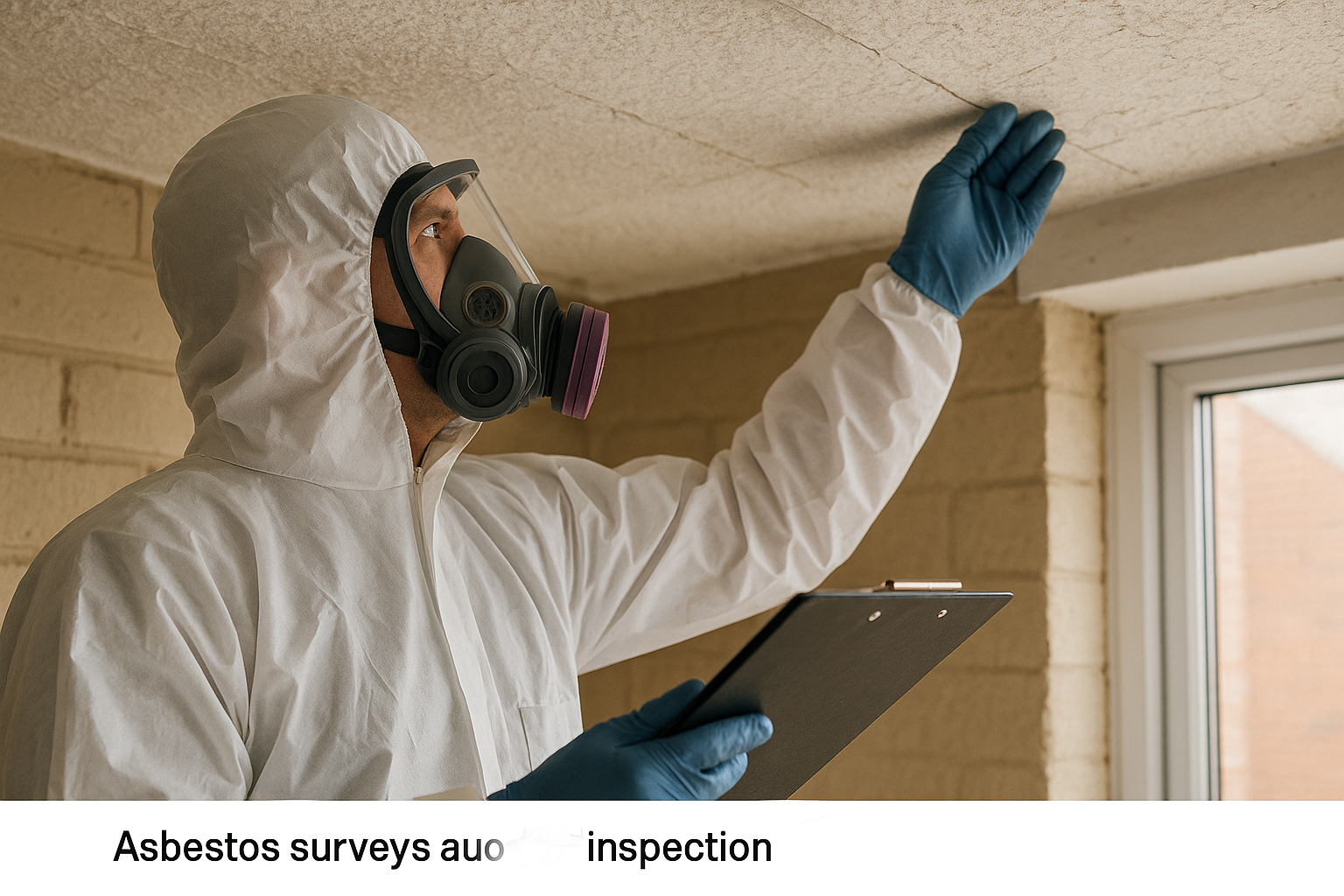
Choosing the wrong survey is a common compliance failure. It can also delay projects and create avoidable exposure risks.
Management survey
A management survey is usually the starting point for occupied non-domestic premises. Its purpose is to locate, so far as reasonably practicable, the presence and condition of ACMs that could be disturbed during normal occupation, routine maintenance or foreseeable installation work.
If your building has never had an asbestos management survey, that is normally the first survey to arrange. It supports the asbestos register, informs the management plan and gives contractors a working picture of asbestos risks in the premises.
Refurbishment survey
A refurbishment survey is required before intrusive refurbishment or upgrade works. This survey is more invasive and focuses on the specific area affected by the planned project.
A standard management survey is not enough if walls, floors, ceilings, risers, ducts or service voids are going to be opened. If works are planned, stop asking only how often should asbestos surveys be carried out and ask whether the correct pre-work survey has been commissioned.
Demolition survey
A demolition survey is needed before demolition work. It is fully intrusive and aims to identify all ACMs so far as reasonably practicable, so they can be managed and removed before the structure is demolished.
Historic management information is not enough for demolition. The survey scope must match the actual demolition work.
Re-inspection survey
For many duty holders, the practical answer to how often should asbestos surveys be carried out after the initial survey is regular re-inspection. Re-inspections review known or presumed ACMs to confirm whether they remain in the same condition, whether the risk has changed, and whether the asbestos register and management actions still make sense.
What actually drives survey frequency?
Survey frequency should be based on risk, not habit. Two buildings of a similar age can need very different arrangements depending on how they are used and what materials are present.
Condition of the material
Damaged, deteriorating or friable materials need closer control than sealed products in good condition. Pipe lagging, sprayed coatings and asbestos insulation board usually justify tighter management than intact asbestos cement.
Location and accessibility
Materials in plant rooms, service risers, ceiling voids, corridors, ducts and maintenance areas are more likely to be disturbed. If contractors regularly work nearby, inspections should usually be more frequent.
Use of the building
A quiet office with limited changes is different from a school, hospital, warehouse, retail unit or industrial site. More people, more maintenance and more alterations usually mean more frequent review.
Environmental factors
Leaks, moisture, heat, vibration and accidental impact can all affect ACM condition. Buildings with these issues often need shorter re-inspection intervals.
Planned works
If intrusive works are planned, the question is no longer only how often should asbestos surveys be carried out. The urgent question is whether the right survey has been arranged before the work starts.
Annual review is common, but not always enough
Many duty holders adopt annual re-inspection as standard because it is practical, easy to schedule and often proportionate. In many occupied non-domestic properties, that is a sensible baseline.
But annual review is not a magic rule. Some ACMs in busy or vulnerable areas may need checking more often. Some low-risk materials in sealed, low-access locations may justify a longer interval where your risk assessment clearly supports it.
When you may need more frequent checks
- ACMs are damaged or starting to deteriorate
- Materials are in high-traffic or high-risk areas
- Maintenance teams regularly access the area
- The building is undergoing frequent changes
- There is vibration, moisture, heat or impact risk
- The material is friable or historically higher risk
When a longer interval may be reasonable
- The ACM is in good condition
- It is sealed or encapsulated
- It is in a locked or rarely accessed area
- There is little chance of disturbance
- Your asbestos register and risk assessment are current and robust
If you choose a longer interval, document why. A clear, risk-based decision is far easier to defend than an assumption that an old report is still good enough.
Make the asbestos register a live document
A survey report on its own is not enough. HSE guidance expects duty holders to maintain an asbestos register and use it to manage risk in practice.
Your register should be current, accessible and easy for the right people to understand. Contractors, maintenance teams and facilities staff should not be left guessing where asbestos is or relying on outdated reports buried in old compliance folders.
What your asbestos register should include
- Location of each identified or presumed ACM
- Product or material type
- Extent or quantity where relevant
- Condition of the material
- Asbestos type if confirmed
- Material and priority risk information
- Recommended action
- Date of inspection
- Date for next review or re-inspection
If there is uncertainty about a suspect material, sample analysis can help confirm whether asbestos is present and improve the accuracy of your records.
What a practical asbestos risk assessment should consider
- Whether the material is intact, sealed, damaged or deteriorating
- Whether the surface is painted, encapsulated, exposed or friable
- Where it is located within the premises
- How easy it is to access or accidentally damage
- How the area is occupied and by whom
- How often maintenance teams or contractors work nearby
- Whether vibration, heat, moisture or impact are likely
This is where HSG264 becomes practical. The survey identifies materials; the register and risk assessment tell you how to manage them day to day.
When should the asbestos register and survey information be updated?
It should be updated whenever new information becomes available. If the register is wrong, the management plan is wrong as well.
As a minimum, review records after each re-inspection. Beyond that, update them whenever anything changes that affects asbestos information.
Common triggers for updating records
- After a re-inspection survey
- After repair, encapsulation or asbestos removal
- After maintenance work near known ACMs
- After damage, leaks, fire, flooding or impact
- Before and after refurbishment projects
- When previously hidden areas are exposed
- When new analysis confirms or rules out asbestos
One of the biggest practical risks in property management is contractors working from old asbestos information. That is where avoidable incidents happen.
How often should asbestos surveys be carried out for different property types?
The answer to how often should asbestos surveys be carried out is rarely identical across a whole portfolio. Different property types create different levels of disturbance, maintenance activity and access risk.
Offices
Many office buildings can be managed with a current management survey and annual re-inspection, provided ACMs are low risk and there is limited disturbance. Refits, cabling, partition changes and HVAC upgrades are common triggers for additional surveying.
Schools and colleges
Education settings need close control because of heavy occupancy, regular maintenance and the need to protect staff, pupils and contractors. Annual review is often treated as a sensible minimum, with more frequent checks where ACMs are vulnerable or in active areas.
Hospitals and care environments
Healthcare buildings often contain complex services, retained older fabric and regular upgrade works. Records need careful attention because hidden materials may sit behind later refurbishments.
Industrial and manufacturing sites
These sites may involve vibration, heat, impact and frequent engineering access. That can justify more frequent inspections, especially where ACMs are present in plant areas or service routes.
Retail, hospitality and leisure
Fit-outs change regularly in these sectors. Even where a management survey is current, intrusive works should trigger the correct pre-work survey for the affected area.
Social housing common parts and managed estates
Communal areas, service cupboards, risers, plant rooms and bin stores need clear and current records. The larger the estate, the more important it becomes to standardise review dates, document control and contractor access to information.
How often should asbestos surveys be carried out for different asbestos products?
The product type matters because some ACMs are more easily damaged and more likely to release fibres if disturbed. That affects how often they should be checked.
Higher-risk materials
- Pipe lagging
- Sprayed coatings
- Asbestos insulation board
- Loose insulation where present
These materials usually need tighter management, clearer access control and more frequent review if they remain in place.
Lower-risk materials when in good condition
- Asbestos cement sheets
- Cement gutters and flues
- Floor tiles and bitumen adhesive
- Textured coatings
- Some ceiling tiles
- Rope seals and gaskets
Lower risk does not mean no risk. These products can still become hazardous if they are drilled, sanded, broken, cut or removed without proper controls.
Practical steps for duty holders and property managers
If you manage several buildings, asbestos should sit inside your routine compliance system rather than being treated as a specialist issue that only appears when a contractor asks a question. That makes deadlines easier to track and reduces the chance of relying on outdated information.
- Check each building has the right base survey. If not, arrange one before relying on historic files.
- Set a default review schedule. Annual re-inspection is a sensible starting point for many non-domestic properties unless risk indicates otherwise.
- Review asbestos information before instructing works. Never assume a management survey is enough for intrusive work.
- Keep the asbestos register accessible. Site teams and contractors need current information before work starts.
- Record changes immediately. Repairs, damage, removals and new findings should update the register without delay.
- Escalate suspect materials quickly. If there is doubt, arrange inspection or testing rather than making assumptions.
- Audit your document control. Make sure only current versions are being used across the portfolio.
If you operate across multiple locations, local support can help keep surveys current and projects moving. Supernova provides services including asbestos survey London, asbestos survey Manchester and asbestos survey Birmingham.
Frequently Asked Questions
Is there a legal requirement to renew an asbestos survey every year?
No. There is no fixed legal expiry date that applies to every asbestos survey. Under the Control of Asbestos Regulations, the duty is to keep asbestos information up to date and manage the risk. Annual re-inspection is often good practice, but the right interval depends on risk.
Can I rely on an old management survey before refurbishment works?
Not if the planned works are intrusive. A management survey is for normal occupation and routine maintenance. Refurbishment work usually requires a dedicated refurbishment survey for the specific area affected.
What happens if asbestos materials are found to be damaged?
You should restrict access if needed, review the risk immediately, update the asbestos register and take advice on the correct next step. That may involve repair, encapsulation, closer monitoring or removal depending on the material and its condition.
Do domestic properties need asbestos surveys?
Single private homes are not covered by the duty to manage in the same way as non-domestic premises, but asbestos can still be present in older homes. Surveys are often needed before refurbishment or demolition, and they are sensible where trades may disturb suspect materials.
How do I know whether a re-inspection survey is enough?
A re-inspection survey is appropriate where known or presumed ACMs remain in place and you need to review their condition. If intrusive works are planned, or if significant changes have occurred, you may need a different survey type instead.
Need clear asbestos advice for your building portfolio?
If you are still weighing up how often should asbestos surveys be carried out, the safest approach is to base the answer on the actual risk in your premises, not guesswork or old paperwork. Supernova Asbestos Surveys has completed more than 50,000 surveys nationwide and can help with management surveys, refurbishment surveys, demolition surveys, re-inspections, sampling and asbestos support across the UK.
Call 020 4586 0680 or visit asbestos-surveys.org.uk to arrange the right survey for your property.