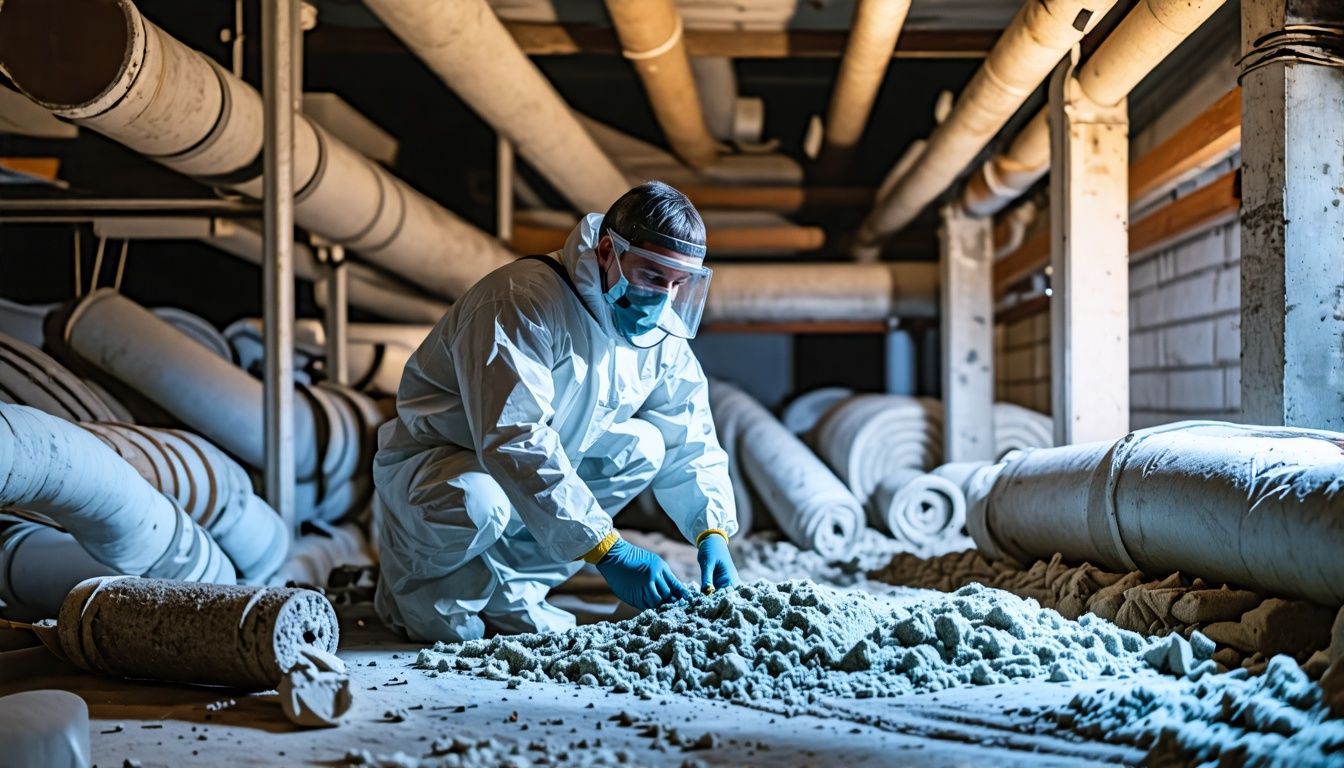
Asbestos Waste Classification: What It Means and Why Getting It Wrong Is Costly
Asbestos disposal is one of the most legally and technically demanding aspects of managing asbestos-containing materials (ACMs) in UK buildings. At the heart of every compliant disposal process is asbestos waste classification — identifying what type of waste you have, which regulatory category it falls into, and what that means for how it must be packaged, transported, and disposed of.
Get the classification wrong and you are not just looking at a fine. You are potentially exposing workers, waste collectors, and the public to serious health risk — and placing yourself in direct breach of UK law.
What Is Asbestos Waste Classification?
In the UK, asbestos waste is classified as hazardous waste under the Hazardous Waste Regulations (known as special waste in Scotland). This is not a grey area — it applies to virtually all asbestos-containing waste, regardless of quantity or condition.
Hazardous waste classification carries specific legal obligations around how the waste is handled, stored, moved, and ultimately disposed of. These obligations apply to the person or organisation that produces the waste, not just the contractor who removes it.
The classification itself is determined by three key factors:
- The type of asbestos fibre present
- The nature of the material it is bound within
- Whether that material is friable or non-friable
Each of these factors influences the risk level — and therefore the controls required throughout the disposal chain.
The Three Asbestos Fibre Types Found in UK Buildings
Before you can classify asbestos waste correctly, you need to know what you are dealing with. There are three fibre types commonly found in UK buildings:
- Chrysotile (white asbestos) — the most widely used historically, found in roof sheets, floor tiles, textured coatings, and cement products
- Amosite (brown asbestos) — commonly used in insulation boards, ceiling tiles, and fire protection materials
- Crocidolite (blue asbestos) — considered the most hazardous, historically used in pipe insulation, spray coatings, and some thermal insulation products
All three are classified as hazardous waste when removed. However, the fibre type alone does not determine the disposal method — the physical form of the material matters just as much.
Crucially, you cannot identify asbestos fibre type by sight. The only reliable method is laboratory analysis of a properly collected sample. If you are unsure whether a material contains asbestos, professional asbestos testing is the only way to get a confirmed answer before any work begins.
Friable vs Non-Friable: The Classification That Drives Disposal Decisions
Within asbestos waste classification, the distinction between friable and non-friable material is arguably the most important factor in determining how waste must be handled.
Friable Asbestos Waste
Friable asbestos can be crumbled, pulverised, or reduced to powder by hand pressure. This includes sprayed coatings, pipe lagging, loose-fill insulation, and heavily deteriorated materials. Because fibres are released easily, friable waste presents the highest risk and requires the most stringent controls throughout the disposal chain.
Work involving friable ACMs almost always requires a licensed asbestos contractor under the Control of Asbestos Regulations. The waste generated must be packaged, labelled, and transported under full hazardous waste procedures with no exceptions.
Non-Friable Asbestos Waste
Non-friable asbestos is bound within another material — cement, vinyl, or resin, for example. Asbestos cement sheets, floor tiles, and certain insulation boards fall into this category. When intact, they pose a lower immediate risk.
But once broken, drilled, or cut, they release fibres just as readily as friable materials. Non-friable waste is still classified as hazardous waste and must be disposed of through the same licensed channels. The packaging requirements may differ slightly — larger sheets go into rigid sealed containers rather than polythene bags — but the legal obligations are identical.
Condition Changes Everything
A material that was once non-friable can become effectively friable through age, water damage, physical impact, or previous disturbance. Always assess condition at the point of removal, not based on what the material looked like in a previous survey.
If in doubt, treat it as friable. That is the safer and legally defensible position.
The UK Regulatory Framework Governing Asbestos Waste Classification
Several pieces of legislation work together to govern asbestos waste classification and disposal in the UK. Understanding which rules apply to your situation is essential before any work starts.
The Control of Asbestos Regulations
The Control of Asbestos Regulations set out the core duties for managing asbestos in non-domestic premises. For disposal purposes, the key requirement is that most work involving friable or high-risk ACMs must be carried out by a licensed asbestos contractor.
Some lower-risk work is notifiable but unlicensed, and a narrow category of tasks is neither licensed nor notifiable. If you are unsure which category your work falls into, get professional advice before proceeding. Misclassifying the work type — and therefore using the wrong contractor — is a compliance failure with serious consequences.
The Hazardous Waste Regulations
Under the Hazardous Waste Regulations, asbestos waste must be:
- Consigned separately from all other waste
- Accompanied by a completed consignment note from site to disposal facility
- Transported only by a registered hazardous waste carrier
- Delivered only to a permitted disposal site authorised to accept hazardous waste
Producers of hazardous waste in England must notify the Environment Agency if they produce more than 500kg per year from a single premises — though for most asbestos removal projects, the consignment note system applies regardless of volume.
The Environmental Protection Act — Duty of Care
The duty of care provisions in the Environmental Protection Act place legal responsibility on anyone who handles, stores, or transfers waste — including asbestos. You cannot hand asbestos waste to someone without verifying they are authorised to handle it.
Always confirm your waste carrier is registered with the Environment Agency (England), Natural Resources Wales, or SEPA (Scotland) before they take anything off your site. Keep records. If something goes wrong further down the chain, your documentation is what protects you.
How Asbestos Waste Must Be Packaged and Labelled
Correct asbestos waste classification feeds directly into packaging requirements. The physical form of the waste determines how it must be contained, but certain rules apply universally.
Bagged Waste
For loose or friable materials, the standard procedure is:
- Double-bag in heavy-duty polythene bags — minimum 1,000 gauge (250 microns)
- Seal using a gooseneck fold and tape securely — do not use knots, which can split
- Label each bag clearly with ASBESTOS WASTE and the appropriate hazard warning
- Wipe down the outer bag with a damp cloth before it leaves the work area
Rigid Containers for Larger ACMs
Bulkier items — asbestos cement sheets, insulation boards, and similar materials — must go into rigid, sealed containers such as specialist skips or drums. These must be clearly labelled and covered during transport.
Where possible, remove asbestos cement sheets whole rather than breaking them. Unnecessary breakage increases fibre release and complicates the disposal process.
Storage Before Collection
Packaged asbestos waste must be stored in a locked, clearly signed area until collected by a licensed carrier. It must not be placed in open skips, mixed with general waste, or left where it could be accessed or disturbed by unauthorised persons.
The Role of Professional Surveys in Correct Asbestos Waste Classification
You cannot classify asbestos waste accurately without first knowing what you have. A professional asbestos survey is the foundation of every compliant disposal process — and in most commercial or public buildings, it is a legal requirement before refurbishment or demolition work begins.
There are three survey types relevant to disposal decisions:
- A management survey identifies ACMs under normal occupancy conditions and forms the basis of your asbestos register and management plan
- A refurbishment survey is required before any invasive work and covers all areas likely to be disturbed
- A demolition survey is the most thorough type, required before a building is demolished, and must identify all ACMs so they can be removed before structural work begins
Each survey type generates the information needed to classify waste correctly — fibre type, material condition, location, and extent. Without this data, you are guessing. And guessing with asbestos waste is not a position you want to be in.
If you need a sample confirmed before committing to a full survey, our sample analysis service provides laboratory-confirmed results quickly. Alternatively, our testing kit allows you to collect a sample from a domestic property and send it in for analysis — a practical first step when you suspect ACMs are present but are not yet certain.
Licensed Removal and the Chain of Custody
Once waste has been correctly classified and packaged, it must be removed by a contractor with the appropriate authorisation. For most friable and high-risk ACMs, this means a licensed asbestos removal contractor — not a general builder, and not a DIY job.
Professional asbestos removal contractors will manage the full chain of custody: correct packaging, a completed consignment note, a registered hazardous waste carrier, and delivery to a permitted disposal facility. They will provide you with copies of the consignment notes, which you are legally required to retain for a minimum of three years.
If you are based in London and need a survey to precede removal work, our asbestos survey London service covers the capital and surrounding areas. For those in the north of England, our asbestos survey Manchester team operates across Greater Manchester and beyond.
Common Asbestos Waste Classification Mistakes
These are the errors that most commonly lead to enforcement action, fines, and health incidents:
- Mixing asbestos waste with general waste — illegal, and puts waste collectors at serious risk
- Using an unregistered waste carrier — places you in breach of your duty of care, regardless of what happens to the waste
- Skipping the consignment note — required by law and your only documentary proof of compliant disposal
- Disposing at a household recycling centre — these facilities are not permitted to accept hazardous waste under any circumstances
- Assuming intact materials do not need professional handling — condition can deteriorate rapidly, and classification always requires confirmed asbestos testing
- Failing to keep records — consignment notes and survey reports protect you if your disposal process is ever questioned
- Treating all asbestos waste as identical — friable and non-friable materials have different risk profiles and may require different packaging, even though both are classified as hazardous
Asbestos Waste Classification in Domestic Properties
Homeowners occupy a slightly different legal position to commercial property owners and employers. The Control of Asbestos Regulations do not apply to domestic occupiers carrying out work in their own homes. However, the hazardous waste regulations still apply — and asbestos waste from a domestic property is still classified as hazardous waste for disposal purposes.
In practice, this means a homeowner cannot simply bag up asbestos and put it in the general bin or take it to a household tip. Disposal must still go through a registered hazardous waste carrier to a permitted facility.
Given the complexity and the genuine health risks involved, the strong advice is to use a professional for both the removal and the disposal — even in a domestic setting. The cost of getting it wrong, in terms of health risk and potential liability, far outweighs the cost of doing it properly.
Some local authorities do operate limited asbestos drop-off schemes for small quantities from domestic properties — typically sealed asbestos cement sheets only. Contact your local authority directly to find out whether such a scheme exists in your area and what conditions apply. Do not assume a scheme is available, and never turn up at a tip with unpackaged or unlabelled asbestos waste.
What Happens If Asbestos Waste Is Misclassified or Illegally Disposed Of?
The consequences of getting asbestos waste classification wrong extend well beyond a fixed penalty notice. Enforcement action can come from multiple directions simultaneously — the Health and Safety Executive, the Environment Agency, and local authorities all have powers to investigate and prosecute.
Penalties for illegal disposal of hazardous waste, including asbestos, can include unlimited fines and custodial sentences for the most serious cases. Directors and individual managers can be held personally liable — not just the company. Fly-tipping of asbestos waste is treated particularly seriously by enforcement bodies.
Beyond the legal consequences, there is the reputational damage to consider. For property managers, contractors, and developers, a prosecution for illegal asbestos disposal is not something that disappears quietly. It affects contracts, insurance, and the ability to operate.
The straightforward way to avoid all of this is to start with a proper survey, get the classification right, use licensed contractors, and keep your paperwork in order. Every compliant disposal starts with knowing exactly what you have — and that means professional identification before any work begins.
Frequently Asked Questions
Is all asbestos waste classified as hazardous in the UK?
Yes. In England and Wales, all asbestos-containing waste is classified as hazardous waste under the Hazardous Waste Regulations. In Scotland, it is classified as special waste. This classification applies regardless of the quantity involved or whether the material is intact or damaged. The legal obligations around packaging, transport, consignment notes, and disposal at a permitted facility apply in every case.
What is the difference between friable and non-friable asbestos waste?
Friable asbestos can be crumbled or reduced to powder by hand pressure — it includes materials like sprayed coatings, pipe lagging, and deteriorated insulation. Non-friable asbestos is bound within a matrix such as cement or vinyl, making it less likely to release fibres when undisturbed. Both are classified as hazardous waste, but friable materials carry a higher immediate risk and require more stringent handling controls. Non-friable materials can become effectively friable if broken, cut, or damaged.
Can I dispose of asbestos waste at a household recycling centre?
No. Household recycling centres — commonly known as tips or civic amenity sites — are not permitted to accept hazardous waste. Even if you are a homeowner dealing with a small quantity of asbestos from a domestic property, you cannot use these facilities for disposal. Some local authorities operate separate, limited drop-off schemes for small quantities of sealed asbestos cement — contact your local authority to check. All other asbestos waste must go through a registered hazardous waste carrier to a permitted disposal facility.
Do I need a consignment note for every asbestos waste removal?
Yes. A consignment note must accompany every movement of asbestos waste from the point of production to the disposal facility. This is a legal requirement under the Hazardous Waste Regulations and applies regardless of the quantity being moved. The note must be completed correctly and copies retained by all parties involved in the transfer. You are legally required to keep your copies for a minimum of three years.
How do I know what type of asbestos is in a material before disposal?
You cannot determine asbestos fibre type by visual inspection alone. The only reliable method is laboratory analysis of a sample taken from the material. A professional asbestos survey will include sampling and analysis as part of the process, providing confirmed identification of fibre type, material condition, and extent. If you need a quick answer before committing to a full survey, a sample analysis service or a testing kit for domestic properties can provide laboratory-confirmed results as a first step.
Get Expert Help Today
If you need professional advice on asbestos in your property, our team of qualified surveyors is ready to help. With over 50,000 surveys completed across the UK, Supernova Asbestos Surveys delivers clear, actionable reports you can rely on.
Call us on 020 4586 0680 or visit asbestos-surveys.org.uk for a free, no-obligation quote.