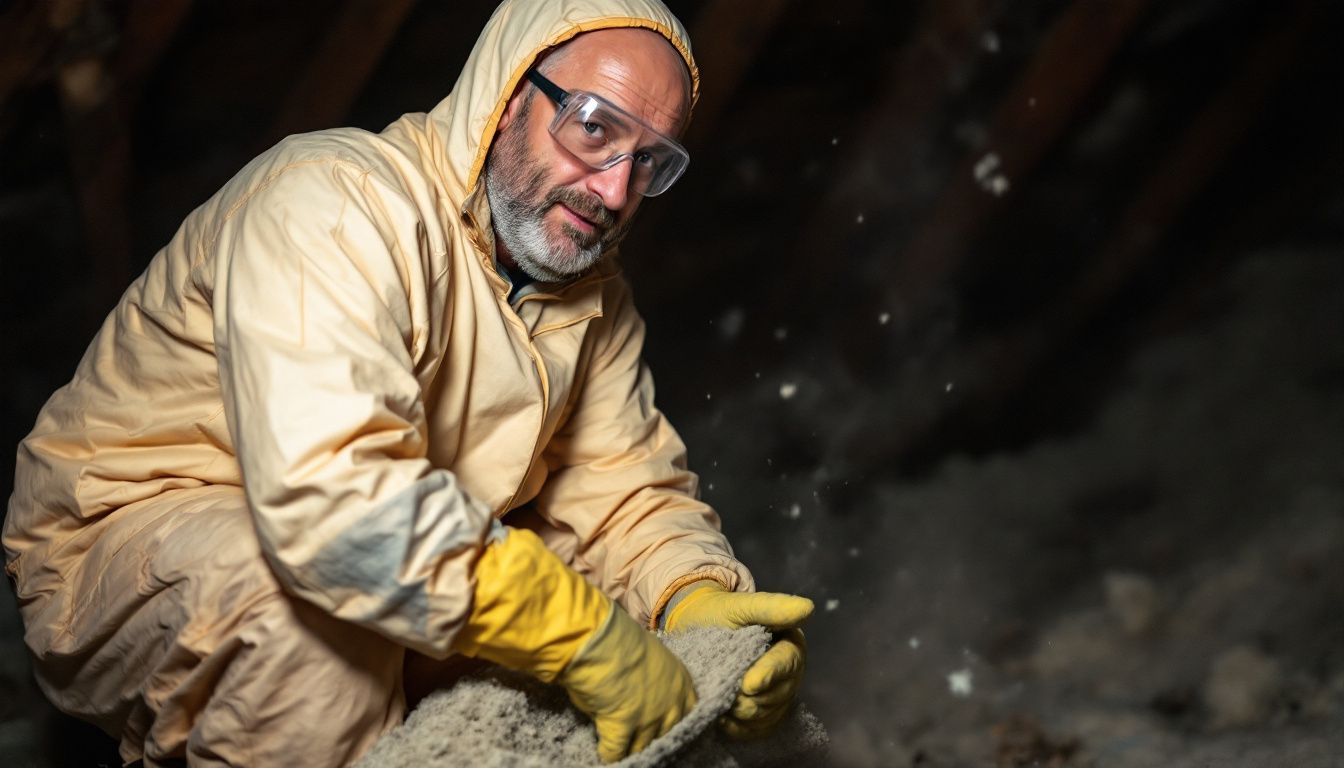
What Asbestos Contamination Cleaning Actually Involves — And Why Getting It Wrong Is Dangerous
Asbestos contamination cleaning is not a job you can tackle with a mop and a pair of rubber gloves. When asbestos-containing materials are disturbed, they release microscopic fibres that lodge permanently in lung tissue — and the consequences can be fatal.
Mesothelioma, asbestosis, and lung cancer are all linked to asbestos fibre inhalation, and the UK still records thousands of deaths from asbestos-related disease every year. Whether you’ve discovered damaged insulation in a commercial property, disturbed old floor tiles during a renovation, or inherited a building with an unknown asbestos history, understanding the correct process for asbestos contamination cleaning is essential.
This is not a DIY task — but knowing what licensed professionals should be doing on your behalf protects you, your occupants, and your legal position.
Where Asbestos Contamination Comes From
Asbestos was used extensively in UK construction until its full ban in 1999. Any building constructed or refurbished before that date may contain asbestos-containing materials (ACMs). The risk of contamination arises when those materials are damaged, disturbed, or deteriorate over time.
Common sources of asbestos contamination include:
- Damaged or crumbling asbestos insulation on pipes, boilers, and ductwork
- Broken or drilled ceiling tiles containing chrysotile or amosite
- Disturbed asbestos insulating board (AIB) in partition walls and ceiling voids
- Degraded asbestos cement roofing or cladding panels
- Sanded or scraped floor tiles containing asbestos
- Old textured coatings such as Artex that have been dry-sanded or machined
- Lagging that has been physically damaged during maintenance work
In some cases, contamination spreads well beyond the immediate area. Asbestos fibres are invisible to the naked eye and can travel through ventilation systems, on workers’ clothing, or via foot traffic.
This is precisely why professional asbestos contamination cleaning must address the full extent of the affected zone — not just the obvious source.
Identifying the Extent of Contamination Before Any Cleaning Begins
Before a single fibre can be safely cleaned up, the full extent of contamination must be established. Attempting to clean an area without first understanding what you’re dealing with is one of the most common — and most dangerous — mistakes made in contaminated buildings.
Visual Inspection and Bulk Sampling
A licensed asbestos surveyor will carry out a thorough visual inspection of the affected area, identifying all suspect materials. Where materials are in doubt, bulk samples are taken and sent to an accredited laboratory for analysis under polarised light microscopy — this confirms whether asbestos is present and identifies the fibre type.
This step is non-negotiable. You cannot safely plan an asbestos contamination cleaning programme without knowing exactly which materials are involved and where they are located.
Air Monitoring
Air monitoring uses calibrated pumps to draw air samples through membrane filters, which are then analysed under phase contrast microscopy. This establishes the baseline fibre concentration in the affected area and informs the level of controls required during cleaning.
Air monitoring is also used during and after the cleaning process to verify that fibre levels remain within safe limits and that the area has been successfully decontaminated.
Surface Wipe Sampling
Surface wipe tests check for settled asbestos dust on horizontal surfaces — shelving, floors, windowsills, and equipment. These are particularly useful in areas where contamination may have spread from a primary source, such as a duct or ceiling void.
If you need a professional survey to establish the scope of contamination, our team provides asbestos survey London services covering all property types across the capital.
The Asbestos Contamination Cleaning Process: Step by Step
Professional asbestos contamination cleaning follows a structured sequence governed by the Control of Asbestos Regulations and associated HSE guidance, including HSG264. Cutting corners at any stage creates legal liability and puts lives at risk.
Step 1: Risk Assessment and Method Statement
Before work begins, the licensed contractor must produce a written risk assessment and method statement (RAMS) specific to the site. This document identifies all hazards, outlines the controls to be applied, specifies the PPE required, and sets out the sequence of work.
The RAMS should also include an emergency procedure — what happens if unexpected ACMs are discovered, or if a worker’s PPE is compromised during the cleaning operation.
Step 2: Site Preparation and Containment
The affected area must be isolated before cleaning begins. This typically involves:
- Removing all moveable items from the contaminated zone
- Sealing air vents, windows, and doors with heavy-duty polythene sheeting and adhesive tape
- Erecting physical barriers and posting warning signage
- Setting up a three-stage decontamination unit (DCU) at the entrance — dirty end, shower, clean end
- Installing negative pressure ventilation with HEPA filtration to prevent fibres escaping the enclosure
- Laying polythene sheeting on floors to catch falling debris and dust
Negative pressure enclosures are critical. They ensure that any air movement draws inward rather than outward, preventing contaminated air from migrating to clean areas of the building.
Step 3: Wet Cleaning of Contaminated Surfaces
Dry sweeping or vacuuming with standard equipment is strictly prohibited. Dry disturbance of asbestos dust dramatically increases airborne fibre concentrations.
Instead, surfaces are cleaned using wet methods — damp cloths, wet mops, or low-pressure water sprays — which bind fibres and prevent them becoming airborne. All cleaning materials used in the contaminated zone are treated as asbestos waste and disposed of accordingly. Nothing leaves the enclosure in an uncontrolled manner.
Step 4: HEPA Vacuuming
Following wet cleaning, all surfaces within the enclosure are vacuumed using Type H (HEPA) industrial vacuum equipment. Standard vacuums must never be used — they lack the filtration to capture asbestos fibres and will simply redistribute them into the air.
HEPA vacuums filter particles down to 0.3 microns with 99.97% efficiency, making them the only appropriate tool for fine asbestos dust removal. All surfaces — floors, walls, ledges, pipework, and equipment — must be vacuumed systematically, working from high to low.
Step 5: Removal of Asbestos-Containing Materials
Where the source of contamination is an ACM that requires removal, this must be carried out by a licensed contractor for most higher-risk materials, or a notifiable non-licensed contractor (NNLC) for lower-risk work. Our asbestos removal service covers the full range of ACM types across all property categories.
The removal process involves careful dismantling — keeping materials wet throughout, using hand tools rather than power tools wherever possible, and removing sections in controlled pieces to minimise fibre release.
All removed ACMs are double-bagged in heavy-duty polythene bags, clearly labelled with asbestos hazard warnings, and placed in rigid asbestos waste containers for transport to a licensed disposal facility. Asbestos waste cannot go to a standard skip or general waste site.
Step 6: Final Clean and Inspection
Once the primary cleaning and removal work is complete, the enclosure undergoes a final thorough clean — another round of HEPA vacuuming followed by wet wiping of all surfaces. A visual inspection is then carried out by the contractor’s supervisor before the independent clearance inspection begins.
Clearance Testing: Confirming the Area Is Safe
Clearance testing is carried out by an independent body — not the contractor who performed the cleaning work. This independence is a legal requirement for licensed asbestos work and is fundamental to the integrity of the process.
The clearance procedure follows the HSE’s four-stage clearance process:
- Stage 1: Visual inspection of the enclosure by the independent analyst
- Stage 2: Visual inspection after the enclosure is dismantled
- Stage 3: Air testing using aggressive air sampling techniques — such as using a leaf blower to disturb any remaining fibres
- Stage 4: Final visual inspection of the cleared area
The area cannot be reoccupied until air fibre concentrations fall below the clearance criterion of 0.01 fibres per millilitre of air. This figure is set by the HSE and represents the threshold below which the area is considered safe for normal occupancy.
If you’re managing a property in the Midlands, our asbestos survey Birmingham service can help establish the scope of any contamination before remediation work is planned.
When a Refurbishment Survey Is Required Before Cleaning Work
If asbestos contamination cleaning is being carried out as part of a wider refurbishment or demolition project, a refurbishment survey must be completed before any intrusive work begins. This is a legal requirement under the Control of Asbestos Regulations.
A refurbishment survey is more invasive than a standard management survey. It involves accessing areas that would normally be undisturbed — ceiling voids, floor cavities, wall interiors — to locate and characterise all ACMs that could be encountered during the planned works.
Skipping this step is not just a legal failing — it’s how workers end up unknowingly disturbing asbestos and creating a contamination incident that could have been entirely prevented.
For ongoing premises management, a management survey provides the foundation for your asbestos register and helps duty holders monitor the condition of known ACMs over time.
Legal Responsibilities for Duty Holders
Under the Control of Asbestos Regulations, duty holders — those responsible for the maintenance and repair of non-domestic premises — have a legal obligation to manage asbestos risks. This includes ensuring that any asbestos contamination cleaning is carried out correctly and that records are maintained.
Key legal obligations include:
- Maintaining an up-to-date asbestos register for the premises
- Ensuring that anyone liable to disturb ACMs has access to the register
- Using licensed contractors for notifiable licensed work
- Notifying the HSE at least 14 days before licensed asbestos work begins
- Retaining records of all asbestos work for a minimum of 40 years
- Ensuring workers carrying out notifiable non-licensed work are medically supervised
Failure to comply with these duties can result in prosecution, unlimited fines, and — in the most serious cases — custodial sentences. Beyond the legal consequences, the human cost of inadequate asbestos management is devastating and irreversible.
For properties in the North West, our asbestos survey Manchester team provides thorough management and refurbishment surveys to support duty holders in meeting their obligations.
Personal Protective Equipment During Asbestos Contamination Cleaning
Workers carrying out asbestos contamination cleaning must wear appropriate PPE throughout the entire operation. The level of protection required depends on the nature and extent of the contamination, but for licensed work this typically includes:
- Full-face respirator with P3 filters — provides the highest level of respiratory protection against asbestos fibres
- Disposable Type 5/6 coveralls — full-body protection that is disposed of as asbestos waste after each session
- Disposable gloves — to prevent skin contact with contaminated materials
- Disposable boot covers or rubber boots — cleaned within the DCU before removal
- Eye protection where a full-face respirator is not in use
All PPE is donned in the clean end of the decontamination unit and removed in the dirty end before showering. Used disposable PPE is bagged and labelled as asbestos waste — it cannot be taken home, washed, or reused.
Fit testing of respiratory protective equipment is a legal requirement. Workers must be individually fit-tested for their specific face mask to confirm an adequate seal — a poorly fitting respirator offers no meaningful protection against asbestos fibres.
Asbestos Waste Disposal: What Happens After Cleaning
Asbestos waste is classified as hazardous waste under UK environmental legislation, and its disposal is tightly controlled. Every stage of the disposal chain — from the point of removal to the licensed landfill — must be documented.
The disposal process involves:
- Double-bagging all asbestos waste in red UN-approved polythene sacks, clearly labelled with the asbestos hazard warning symbol
- Placing bagged waste into rigid, sealable asbestos waste containers (skips or drums depending on volume)
- Completing a consignment note that tracks the waste from site to disposal facility
- Using only a licensed waste carrier registered with the Environment Agency (or SEPA in Scotland, Natural Resources Wales in Wales)
- Retaining copies of all consignment notes — these form part of the site’s asbestos records
Fly-tipping asbestos waste, or disposing of it in a general skip, is a criminal offence carrying significant penalties. If you’re appointing a contractor, always verify their waste carrier licence before work begins.
Choosing the Right Contractor for Asbestos Contamination Cleaning
Not all asbestos contractors are equal. For licensed asbestos work — which covers the majority of higher-risk ACMs including asbestos insulation, asbestos insulating board, and asbestos lagging — the contractor must hold a licence issued by the HSE.
When evaluating contractors, check the following:
- HSE licence: Verify the licence is current and covers the type of work being undertaken. The HSE maintains a public register of licensed contractors.
- UKAS-accredited analysts: The independent analyst carrying out clearance testing should be accredited by UKAS for asbestos air testing.
- Insurance: Contractors should hold adequate public liability and employers’ liability insurance specific to asbestos work.
- References and track record: Ask for evidence of similar projects and check that the contractor is familiar with your property type.
- Method statement quality: A well-prepared RAMS is a reliable indicator of a contractor’s competence. Vague or generic documents are a warning sign.
Never appoint a contractor on price alone. The consequences of inadequate asbestos contamination cleaning — both to health and to your legal position — far outweigh any short-term saving.
Frequently Asked Questions
Can I clean up asbestos contamination myself?
No. Asbestos contamination cleaning must be carried out by trained, licensed professionals using specialist equipment. Attempting to clean up asbestos without the correct controls, PPE, and disposal arrangements is illegal for most higher-risk materials and extremely dangerous. Even for lower-risk work, strict HSE guidance applies. Always appoint a licensed contractor and an independent analyst for clearance testing.
How long does asbestos contamination cleaning take?
The duration depends on the extent of the contamination, the type of ACMs involved, and the size of the affected area. A small, localised contamination incident might be resolved in one to two days. Larger or more complex projects — involving multiple areas, extensive fibre spread, or difficult access — can take considerably longer. Your contractor should provide a realistic programme as part of the method statement.
What is the four-stage clearance process?
The four-stage clearance process is the HSE-approved procedure for confirming that a licensed asbestos work area is safe to reoccupy. It involves two visual inspections (before and after enclosure removal), aggressive air sampling to disturb any remaining fibres, and a final visual check. The area can only be signed off when air fibre concentrations fall below 0.01 fibres per millilitre. This process must be carried out by an independent, UKAS-accredited analyst — not the cleaning contractor.
Do I need a survey before asbestos contamination cleaning begins?
Yes. Before any cleaning or remediation work can be safely planned, the full extent of contamination must be established through a professional survey, bulk sampling, and air monitoring. If the cleaning is part of a refurbishment project, a refurbishment survey is a legal requirement under the Control of Asbestos Regulations. A management survey is appropriate for ongoing premises management where no intrusive work is planned.
How is asbestos waste disposed of after cleaning?
Asbestos waste is classified as hazardous waste and must be double-bagged in UN-approved polythene sacks, placed in rigid sealed containers, and transported by a licensed waste carrier to a permitted disposal facility. Every movement of asbestos waste must be documented using consignment notes, copies of which must be retained as part of the site’s asbestos records. Disposing of asbestos waste in a general skip or via fly-tipping is a criminal offence.
Get Professional Help With Asbestos Contamination Cleaning
Supernova Asbestos Surveys has completed over 50,000 surveys across the UK, supporting property managers, duty holders, and building owners in managing their asbestos obligations safely and compliantly. From initial survey and sampling through to clearance testing support, our team provides the expertise you need at every stage of the process.
Whether you’re dealing with an active contamination incident or planning ahead for refurbishment work, speak to our team today. Call us on 020 4586 0680 or visit asbestos-surveys.org.uk to find out how we can help.