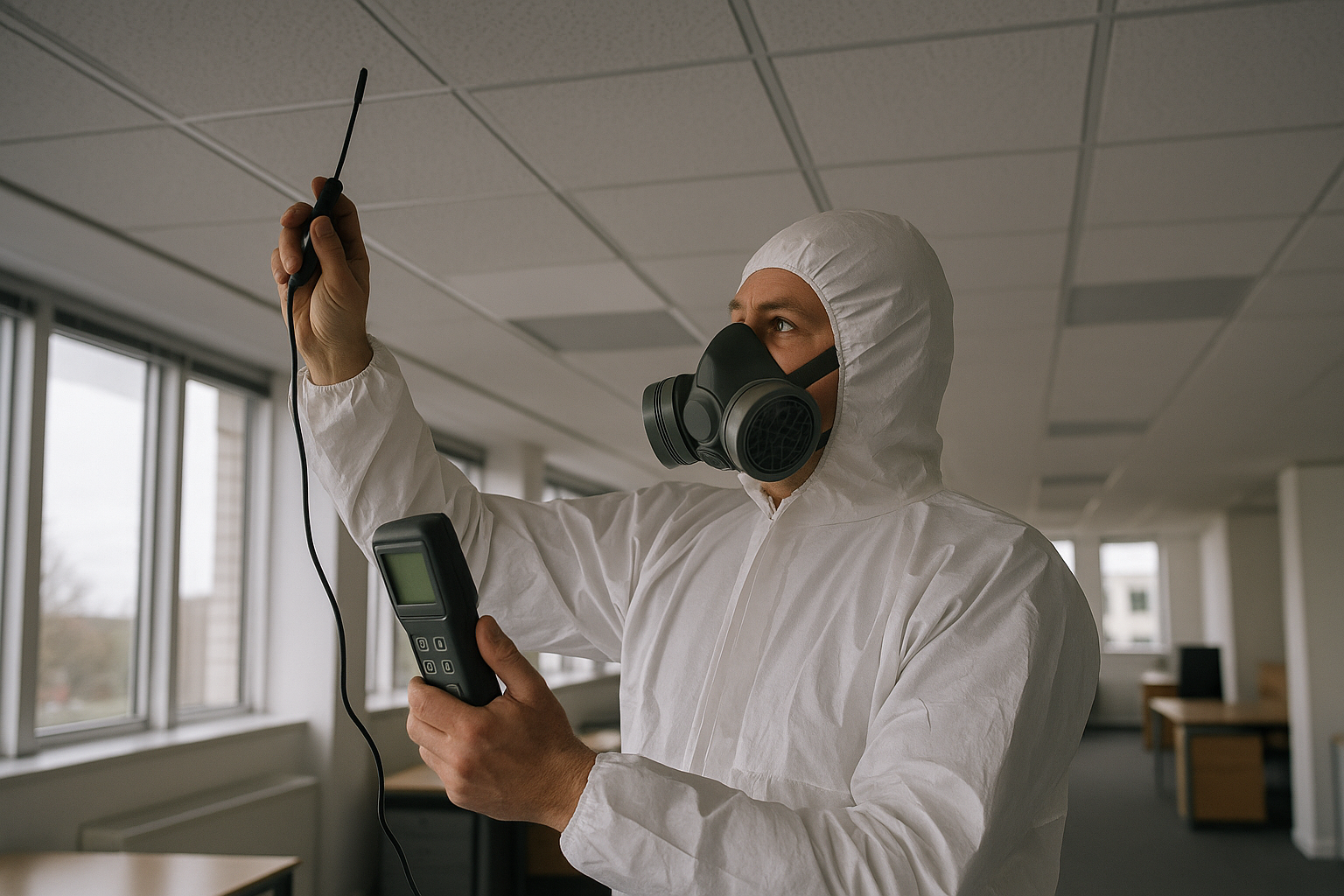
A ceiling tile, boiler panel or garage roof can look completely ordinary and still contain asbestos. That is the problem with asking what does asbestos look like to the human eye: in most UK buildings, asbestos does not announce itself. It is usually bound into everyday products, hidden by paint, dust, age and later refurbishments, which is why visual checks alone are never enough.
For property managers, landlords, contractors and dutyholders, the real risk is false confidence. A material that looks harmless may still need to be managed under the Control of Asbestos Regulations, assessed in line with HSE guidance, and surveyed using the principles set out in HSG264. If work is planned, the safe question is not just what does asbestos look like to the human eye, but whether the material could contain asbestos and whether disturbance is likely.
What does asbestos look like to the human eye in real buildings?
The short answer is frustrating but accurate: there is no single visual signature. In raw mineral form, asbestos can appear fibrous, silky or needle-like. In a finished building product, those fibres are usually too small to see and are mixed into cement, board, coatings, paper, textiles, insulation or adhesive.
That means two materials can look identical on site while only one contains asbestos. A painted soffit board, old floor tile, pipe wrap or service riser panel may look no different from a non-asbestos equivalent.
That is why visual identification is unreliable:
- Asbestos fibres are microscopic
- Paint and surface coatings disguise the original finish
- Weathering changes colour and texture
- Manufactured products were designed to look like standard building materials
- Later repairs may cover or conceal older asbestos-containing materials
If you are responsible for an older property, treat age and product type as clues, not proof. Confirmation requires a competent survey and, where needed, sampling and laboratory analysis.
Latest news: why visual identification is still catching people out
The latest news in asbestos management is not that asbestos has changed. It is that buildings are ageing, refurbishments are accelerating, and more hidden materials are being disturbed during maintenance, fit-outs and energy upgrade works. Older premises are being repurposed, stripped back and reopened, often revealing materials that were boxed in for decades.
That creates a practical issue for dutyholders. Teams on site often expect asbestos to be obvious, perhaps fluffy, blue, white or visibly fibrous. In reality, the material uncovered during intrusive works is more likely to look like plain board, cement sheet, felt, paper lining or old insulation debris.
Current best practice remains straightforward:
- Check existing asbestos records before any work starts
- Review whether the planned task is maintenance, refurbishment or demolition
- Arrange the right survey for the work scope
- Do not rely on photos or verbal descriptions alone
- Stop work if suspect material is uncovered unexpectedly
For multi-site portfolios, consistency matters. Whether you need an asbestos survey London service for a city office or support for a regional industrial unit, the process should be the same: identify suspect materials properly before they are disturbed.
Commonly used asbestos types and their correct names
When people search what does asbestos look like to the human eye, they often mean the raw mineral rather than the building product. That distinction matters. There are six recognised asbestos minerals, and each has a correct name.
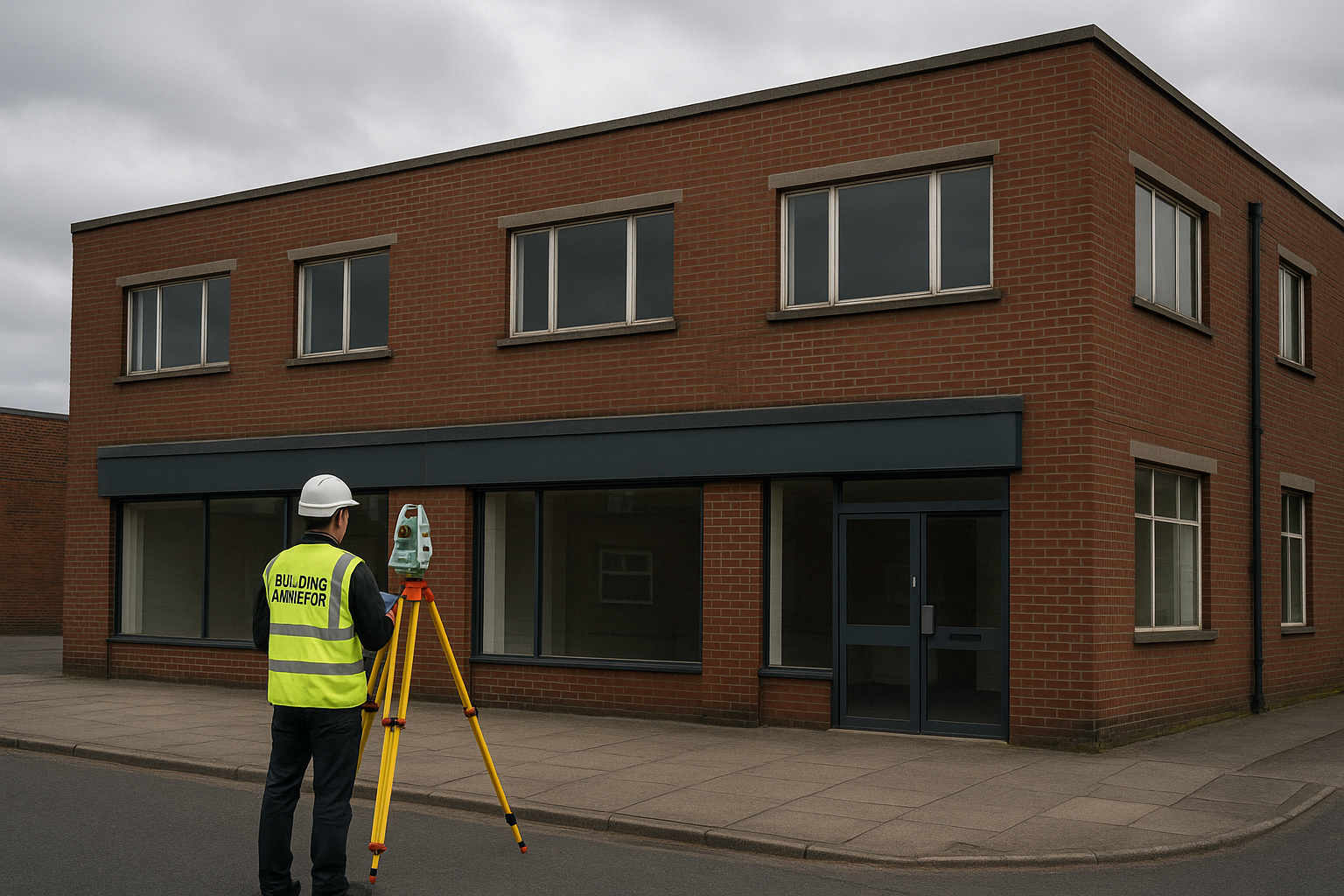
Serpentine asbestos
The serpentine family contains one type only: chrysotile. Its fibres are curly and more flexible than the amphibole group.
Amphibole asbestos
The amphibole family includes:
- Amosite
- Crocidolite
- Tremolite
- Actinolite
- Anthophyllite
These fibres are generally straighter, more needle-like and more brittle in raw form.
How the six asbestos types may appear in raw form
- Chrysotile – often white, grey-white or silky, with curly fibres
- Amosite – often brownish, grey-brown or pale yellow, with straighter fibres
- Crocidolite – often blue-grey or lavender-blue
- Tremolite – may appear white, grey, greenish or translucent
- Actinolite – often green or grey-green
- Anthophyllite – often grey, off-white, brownish or yellowish
These colour descriptions are of limited use in buildings. Once asbestos is processed into a finished product, the raw appearance is no longer a reliable guide.
Chrysotile asbestos
Chrysotile asbestos, often referred to as white asbestos, was the most widely used asbestos type in UK buildings. If someone asks what does asbestos look like to the human eye, chrysotile is usually what they have in mind, but even here the answer is not simple.
In raw form, chrysotile can look soft, pale and fibrous. In buildings, it was commonly mixed into other materials, so you are more likely to find it in:
- Asbestos cement sheets
- Textured coatings
- Floor tiles
- Bitumen adhesives
- Gaskets and seals
- Certain papers and felts
Once bound into these products, chrysotile does not usually look visibly fibrous. A garage roof made with asbestos cement, for example, often just looks like an old corrugated roof. A floor tile containing chrysotile may look like any other dated vinyl or thermoplastic tile.
That is why chrysotile asbestos is so often misjudged. People expect a white fluffy material and instead encounter plain cement, board or tile.
Asbestos materials commonly found in UK properties
A more useful version of what does asbestos look like to the human eye is this: what do common asbestos materials look like in real premises? For building owners and managers, that is the practical question.
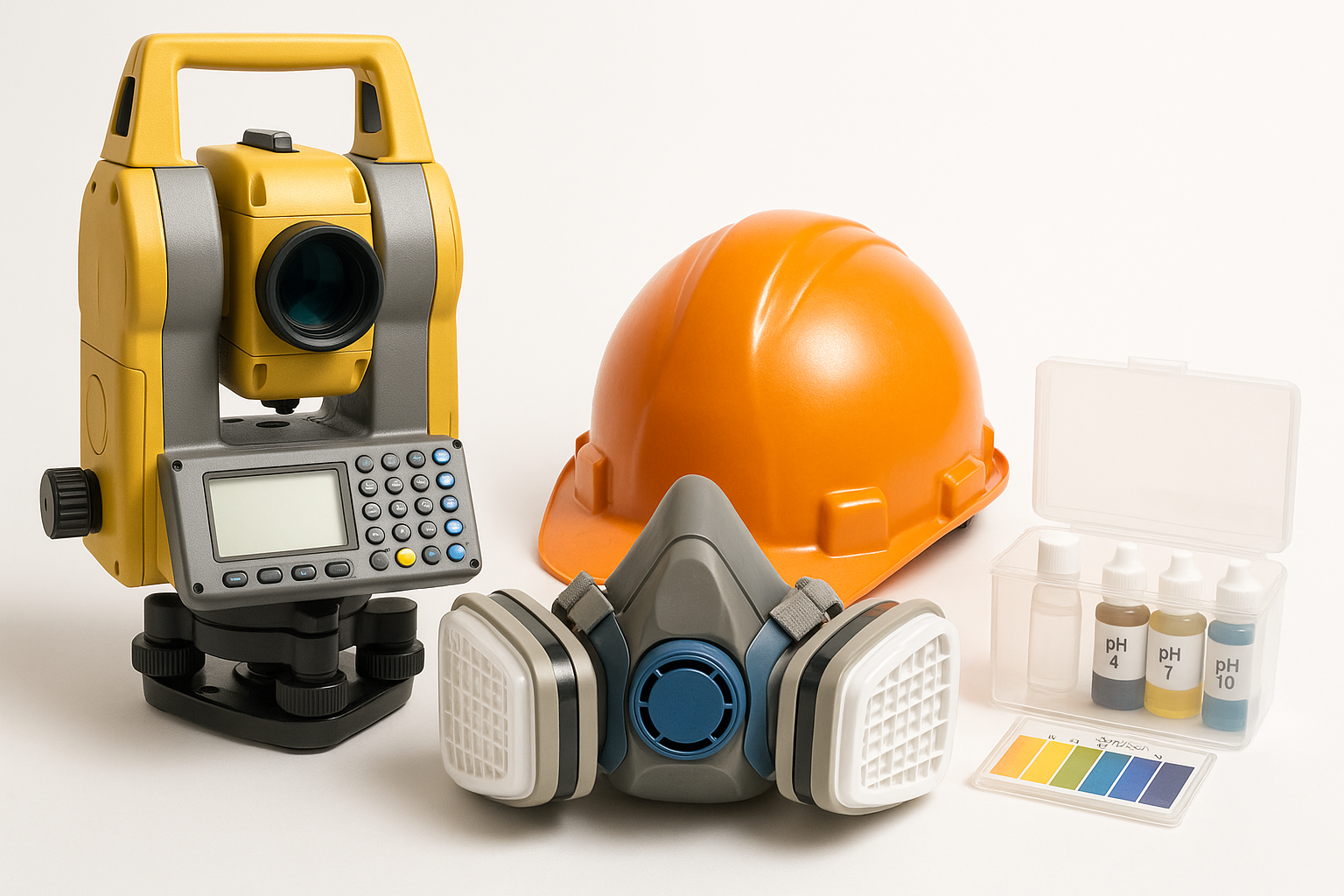
Asbestos insulation board
Asbestos insulation board, often called AIB, is a flat sheet material used in partitions, ceiling tiles, soffits, service risers, fire protection panels and door linings. It often looks like grey or off-white board with a relatively smooth surface.
It is commonly mistaken for ordinary board products. That matters because AIB is more friable than asbestos cement and can release fibres more readily when cut, drilled, broken or removed.
Asbestos cement
Asbestos cement was widely used for roofs, wall cladding, flues, gutters, downpipes, tanks and panels. It usually looks hard, grey and cement-like, either corrugated or flat.
Older asbestos cement may show:
- Moss or lichen growth
- Surface staining
- Weathering
- Minor edge damage
- Paint coatings applied later
None of these signs proves asbestos, but they are common features on older products that should be assessed before work starts.
Textured coatings
Textured coatings on walls and ceilings can have stippled, swirled or patterned finishes. They are often painted over many times, so the original appearance may be hidden.
By eye, asbestos-containing textured coatings can look the same as non-asbestos versions. If a ceiling is going to be drilled, scraped, sanded or removed, testing is the sensible step.
Floor tiles and adhesives
Older floor tiles may be square, marbled, speckled or plain. Colours vary widely, including black, brown, cream, green, blue and red. The tile may contain asbestos, and the bitumen adhesive beneath it may also contain asbestos.
During refurbishments, these materials are often disturbed during stripping works. That is one of the most common avoidable mistakes in older buildings.
Sprayed coatings
Sprayed asbestos coatings were used for insulation and fire protection on structural steel, ceilings and plant areas. They may look rough, uneven, thick or fluffy, although overpainting can make them appear more solid than they are.
These materials can be highly friable. If they are suspected, stop work and seek specialist advice immediately.
Asbestos thermal insulation
Asbestos thermal insulation is one of the most serious categories to understand because it can be far more likely to release fibres if disturbed. When people ask what does asbestos look like to the human eye, they often imagine pipe lagging or loose insulation, and sometimes that image is closer to reality than with cement or board products.
Thermal insulation may be found around:
- Pipes
- Boilers
- Calorifiers
- Ducts
- Plant equipment
Its appearance varies. It may look:
- Plaster-like
- Bandaged or wrapped
- Rough and crumbly
- Layered beneath paint
- Boxed in behind later coverings
Do not assume concealed insulation is safe simply because it is hidden. Boxings, casings and service risers can contain high-risk materials behind an ordinary-looking outer panel.
If your site team uncovers lagging or thermal insulation unexpectedly, the safest response is to stop work, isolate the area and get it assessed. This is especially relevant during plant upgrades, heating replacements and intrusive maintenance.
Asbestos paper
Asbestos paper is one of the lesser-known asbestos materials, but it did exist in a range of products. It was used where heat resistance, insulation or separation layers were needed.
Asbestos paper may have been used in:
- Backing layers
- Insulating wraps
- Certain electrical applications
- Linings around heat-producing equipment
- Composite products where the paper is not obvious at first glance
To the human eye, asbestos paper may look thin, greyish, off-white or simply like old industrial paper or card. It may tear, crease or flake like other aged paper-based materials.
That makes it easy to overlook. During strip-out works, old linings and wraps are sometimes treated as low-value waste before anyone checks what they are made from. If an older paper-like material is associated with heat, plant, ducts or service equipment, it should be treated with caution until properly assessed.
ASBpro Portable Asbestos Analyser and on-site screening
The ASBpro Portable Asbestos Analyser is often mentioned in discussions about rapid asbestos identification. It is part of a wider move towards quicker on-site screening and better decision-making during surveys and inspections.
That said, property managers should keep one point clear: portable analysers do not replace the need for competent asbestos management. Survey planning, material assessment, sampling strategy and interpretation still matter. A device does not remove the duty to follow the Control of Asbestos Regulations, HSE guidance and HSG264-aligned survey practice.
If you hear a contractor say they can tell what does asbestos look like to the human eye or confirm it instantly without a proper process, be cautious. Technology can support decision-making, but it should sit within a competent inspection regime, not replace one.
Practical advice:
- Ask what method is being used to identify suspect materials
- Check whether results are being used for screening or formal confirmation
- Make sure any intrusive work is based on suitable evidence
- Keep records of findings, locations and actions taken
Asbestos warning signs to look for
You cannot confirm asbestos by sight, but you can spot warning signs that tell you a material needs attention. These signs are especially useful for caretakers, facilities teams and property managers carrying out routine inspections.
Common asbestos warning signs include:
- Older board, cement or insulation products in pre-refurbishment areas
- Pipe lagging or boiler insulation in plant rooms
- Corrugated cement sheets on garages, outbuildings or industrial roofs
- Ceiling tiles, riser panels or soffits that appear original to an older building
- Textured coatings on ceilings or walls due for alteration
- Paper-like wraps or linings near heat sources
- Gaskets, rope seals and washers in older plant or service equipment
- Unlabelled debris left after historic maintenance works
There are also management warning signs:
- No asbestos register for a non-domestic property
- Outdated survey information
- Refurbishment works planned without intrusive survey data
- Contractors relying on assumption rather than evidence
If any of these apply, do not wait until work starts. Review the records and arrange the right inspection first.
Damaged or crumbling material
Damaged or crumbling material deserves special attention because condition affects risk. Damage does not prove a material contains asbestos, but if the material does contain asbestos, breakage and deterioration can increase the chance of fibre release.
Look out for:
- Cracks, chips or snapped edges
- Powdering surfaces
- Debris beneath boards, lagging or panels
- Frayed insulation
- Water damage causing softness or delamination
- Impact damage around access panels and service ducts
- Dust generated from recent drilling, cutting or stripping works
If you find suspect damaged material:
- Stop any work nearby
- Keep people away from the area
- Avoid sweeping or dry brushing debris
- Do not use a standard vacuum cleaner
- Do not break off a sample yourself
- Arrange professional advice and assessment
This is where assumptions become expensive. A small break in a suspect panel can trigger delays, emergency controls and remediation costs if the issue was not identified early.
Does asbestos have a colour, taste or odour?
Colour is one of the biggest sources of confusion. While raw asbestos minerals are often described by colour, those labels are not dependable for identifying asbestos-containing materials in buildings.
For example:
- Chrysotile is often called white asbestos
- Amosite is often called brown asbestos
- Crocidolite is often called blue asbestos
In real properties, the material may be painted, weathered, stained or mixed with binders, so the final product may be grey, cream, brown, green, black or almost any other shade.
As for taste or odour, asbestos is not something you should ever try to identify that way. Suspect materials should never be touched unnecessarily, broken open, smelled closely or sampled informally on site.
If someone on a project is still asking what does asbestos look like to the human eye as though there should be one obvious appearance, the safer message is simple: there is not.
Where asbestos is commonly found
Asbestos was used because it improved fire resistance, insulation, strength and durability. That means it can be found in a wide range of building products, often in places people do not expect.
Common locations include:
- Textured coatings on ceilings and walls
- Asbestos insulation board in partitions and risers
- Ceiling tiles and soffits
- Pipe lagging and boiler insulation
- Cement roofs, wall sheets, gutters and downpipes
- Vinyl floor tiles and bitumen adhesives
- Toilet cisterns, bath panels and water tanks
- Fire doors, rope seals and gaskets
- Lift shaft linings and plant room materials
- Sprayed coatings used for fire protection or insulation
- Paper linings and wraps in specialist applications
If you are planning work in the Midlands, arranging an asbestos survey Birmingham inspection before intrusive works can prevent unsafe assumptions and costly project delays.
When asbestos removal may be needed
Asbestos removal is not always the first or only option. Many asbestos-containing materials can remain in place and be managed safely if they are in good condition and unlikely to be disturbed. The right approach depends on material type, condition, location and planned work.
Removal may be necessary when:
- The material is damaged or deteriorating
- Refurbishment or demolition will disturb it
- It is in a vulnerable location and cannot be protected
- Maintenance access makes repeated disturbance likely
- Encapsulation is not suitable
Before removal is discussed, make sure the material has been properly identified. Removal decisions based on guesswork can lead to wasted cost or, worse, unsafe work. In many cases, the correct sequence is survey, sampling, risk assessment and then a clear management or removal plan.
If works are planned in the North West, an asbestos survey Manchester service can help establish what is present before contractors begin opening up the building fabric.
What a competent surveyor actually looks for
A competent asbestos surveyor does not walk through a building looking for something that simply appears asbestos-like. They assess the property systematically, taking account of product type, age, location, condition, accessibility and the likelihood of disturbance.
Key factors include:
- The age and history of the building
- Known refurbishments or alterations
- The type of material and whether it matches known asbestos products
- Its condition and any visible damage
- How accessible it is
- Whether planned works will disturb it
- Whether concealed areas need to be opened up
That is why the question what does asbestos look like to the human eye only takes you so far. Surveying is about evidence, not guesswork. On a live site, that difference protects people, programmes and budgets.
Practical steps if you suspect asbestos
If you come across a material that could contain asbestos, do not rely on appearance alone. Take a controlled approach.
- Stop work if the material may be disturbed
- Prevent access to the immediate area
- Do not drill, cut, scrape or break the material
- Check the asbestos register and any existing survey information
- Arrange a competent inspection if the material is not already identified
- Record the location so others are aware
- Review the work plan before restarting any task
For property managers, this should be part of routine contractor control. Before permits are issued or maintenance starts, make sure asbestos information is available, current and relevant to the scope of work.
Frequently Asked Questions
Can you tell what asbestos looks like to the human eye?
Not reliably. Some raw asbestos minerals have fibrous appearances, but in buildings asbestos is usually mixed into products such as cement, board, tiles, coatings or insulation. You cannot confirm asbestos content by sight alone.
What does chrysotile asbestos look like?
In raw form, chrysotile asbestos can appear white or grey-white with curly fibres. In buildings, it is commonly bound into products such as cement sheets, floor tiles, textured coatings and gaskets, so it often looks like ordinary building material.
What are the warning signs that a material may contain asbestos?
Warning signs include older insulation, AIB panels, corrugated cement roofing, textured coatings, pipe lagging, paper-like heat-resistant linings and damaged materials in older properties. Missing or outdated asbestos records are also a warning sign from a management perspective.
Should damaged or crumbling material always be treated as asbestos?
Damage does not prove asbestos is present, but suspect damaged material should be treated cautiously until assessed. Stop work, keep people away and arrange professional advice rather than trying to clean up or sample it yourself.
Do I need asbestos removal if I find a suspect material?
Not always. Some asbestos-containing materials can be managed safely in place if they are in good condition and unlikely to be disturbed. Removal is usually considered where materials are damaged, deteriorating or affected by planned refurbishment or demolition.
If you need clear answers rather than guesswork, Supernova Asbestos Surveys can help with management surveys, refurbishment and demolition surveys, and sampling across the UK. Call 020 4586 0680 or visit asbestos-surveys.org.uk to book a survey and get reliable advice before work starts.