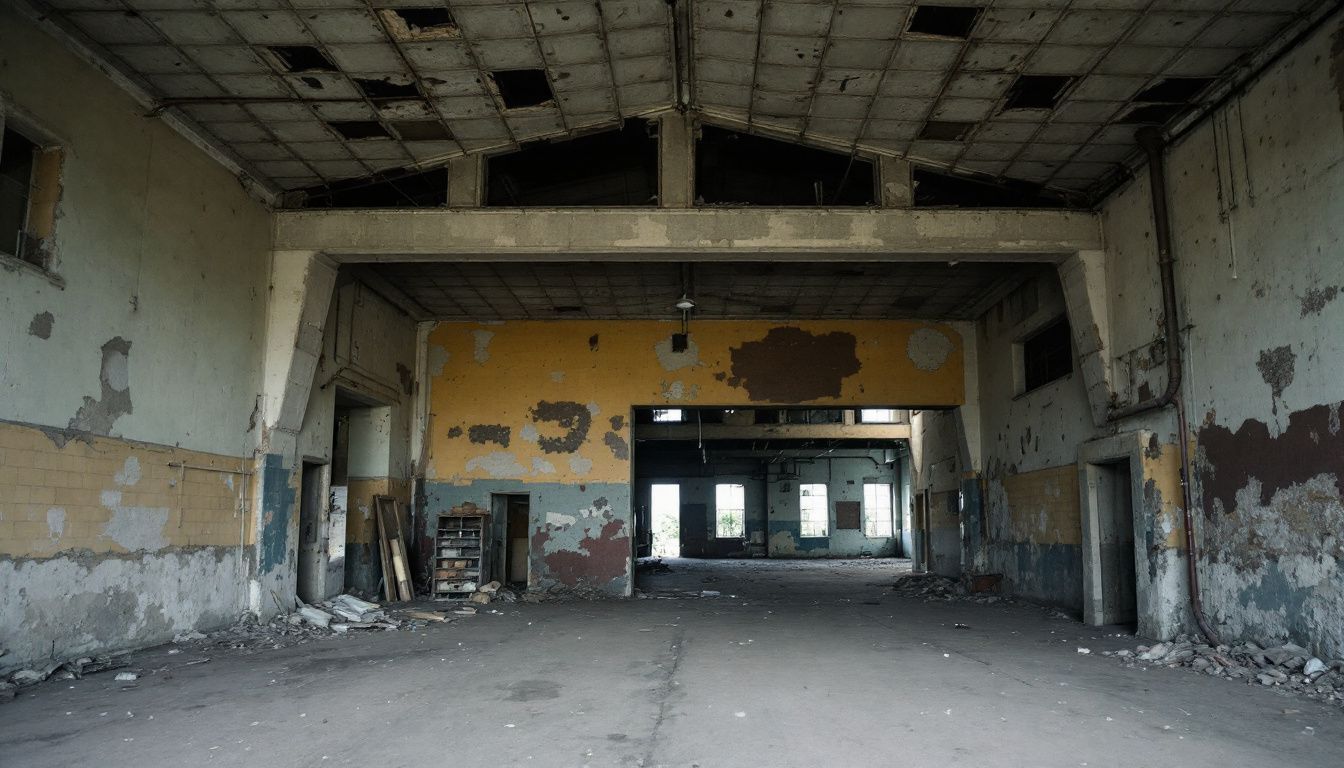
What Percentage of Buildings Built Before 2000 Contain Asbestos — And Why You Cannot Afford to Guess
If you manage, own, or maintain a building constructed before the year 2000, asbestos may well be present somewhere inside it right now. Understanding what percentage of buildings built before 2000 contain asbestos is not idle curiosity — it has direct consequences for your legal duties, the safety of everyone who enters that building, and every maintenance or refurbishment decision you make.
The proportion is far higher than most people expect. The Health and Safety Executive (HSE) estimates that asbestos-containing materials (ACMs) are present in around half a million non-domestic buildings in Great Britain alone. Factor in residential properties, and the scale of the problem becomes even more striking.
What makes this genuinely dangerous is the persistent myth that asbestos is purely a concern in Victorian terraces or post-war tower blocks. A school built in 1993, a retail unit refurbished in 1996, or a block of flats completed in 1998 could all contain ACMs — and the people working or living in those buildings may have absolutely no idea.
Why So Many Pre-2000 Buildings Contain Asbestos
Asbestos was not banned in the UK until 1999. White asbestos (chrysotile) — the last type to be prohibited — was still being incorporated into construction materials well into the 1990s. That single fact dismantles the assumption that asbestos is only a problem in older properties.
The construction industry genuinely valued it. Asbestos offered exceptional heat resistance, durability, and sound insulation at very low cost. Manufacturers incorporated it into hundreds of different building products — roof sheets, floor tiles, textured coatings, pipe lagging, ceiling panels, fire doors, and more.
By the time its dangers were fully understood and legislation caught up, asbestos had been woven into the fabric of the UK’s built environment across multiple decades.
The 1980s and 1990s Are Not Safe Decades
Many property managers assume that a building constructed in the 1980s or 1990s is unlikely to contain asbestos. That assumption is wrong, and it is one of the most common reasons people are caught out.
Blue asbestos (crocidolite) and brown asbestos (amosite) were banned earlier, but chrysotile remained in widespread use throughout this period. A building refurbished in 1997 may contain asbestos in its ceiling tiles, floor adhesive, or pipe insulation — materials that look entirely ordinary and give no visual indication of what they contain.
Age alone is not a reliable guide.
Stockpiled Materials and Post-Ban Risks
Even buildings constructed after the 1999 ban are not entirely immune. Contractors working with stockpiled materials, or sourcing components from older supply chains, occasionally introduced ACMs into structures built after the prohibition came into force.
This is not the norm, but it does happen. It is one reason why a professional survey should always precede significant refurbishment or demolition work, regardless of when a building was erected.
Where Asbestos Hides in Pre-2000 Buildings
Asbestos was used in such a wide range of building materials that it can turn up almost anywhere. Visual inspection is never sufficient — many ACMs are indistinguishable from non-asbestos equivalents without laboratory analysis.
Common Locations in Residential Properties
- Artex and other textured coatings on ceilings and walls
- Floor tiles and the adhesive used to fix them
- Pipe lagging and boiler insulation
- Roof panels, soffits, and corrugated roofing sheets
- Garage roofs and outbuildings, particularly cement-based panels
- Insulating boards around fireplaces and in airing cupboards
- Guttering and downpipes in older properties
Common Locations in Commercial and Public Buildings
- Suspended ceiling tiles
- Sprayed coatings on structural steel and concrete
- Pipe and duct insulation throughout plant rooms
- Partition walls and ceiling panels
- Electrical switchgear and cable insulation
- Fire doors, particularly older composite designs
- Roofing materials and external cladding panels
The breadth of this list is precisely why a professional survey is essential. You cannot look at a ceiling tile or a textured wall coating and determine whether it contains asbestos. Only accredited laboratory analysis can confirm the presence or absence of fibres.
The Health Risks: Serious, Long-Lasting, and Still Happening Now
There is no known safe level of asbestos exposure. Every inhalation of asbestos fibres carries a risk, and the cumulative effect of repeated low-level exposure over time can be just as devastating as a single high-level incident.
What makes asbestos particularly insidious is the latency period. Diseases linked to asbestos exposure can take anywhere from 20 to 40 years to develop. A tradesperson exposed to fibres during a refurbishment today may not experience symptoms until decades from now — by which time the disease is often at an advanced and untreatable stage.
Diseases Caused by Asbestos Exposure
- Mesothelioma — a cancer of the lining of the lungs or abdomen, almost exclusively caused by asbestos exposure, and typically carrying a very poor prognosis.
- Asbestos-related lung cancer — asbestos exposure significantly increases the risk of lung cancer, particularly in those who also smoke.
- Asbestosis — chronic scarring of the lung tissue caused by prolonged fibre inhalation, leading to progressive and irreversible breathing difficulties.
- Pleural thickening — thickening of the membrane surrounding the lungs, which can impair breathing and cause significant ongoing discomfort.
The UK continues to record some of the highest rates of mesothelioma deaths in the world — a direct legacy of the widespread use of asbestos throughout the 20th century. The danger is not historical. People are still being diagnosed today as a result of exposures that occurred years or decades ago.
Your Legal Obligations as a Dutyholder
If you own, manage, or have maintenance responsibilities for a non-domestic building, you are almost certainly a dutyholder under the Control of Asbestos Regulations. This is a legal obligation — not a recommendation — and failure to comply carries serious consequences, including prosecution and unlimited fines.
What the Regulations Require
The Control of Asbestos Regulations, supported by HSE guidance document HSG264, set out clear duties for those responsible for premises:
- Identify whether asbestos is present, or presume materials contain asbestos until proven otherwise through sampling and analysis.
- Assess the condition and risk posed by any ACMs identified.
- Produce and maintain an asbestos register documenting the location, type, and condition of all known or presumed ACMs.
- Create an asbestos management plan outlining how ACMs will be managed, monitored, and — where necessary — removed.
- Share information about ACM locations with anyone who may disturb them, including contractors and maintenance teams.
- Review and update the register and management plan regularly, and following any changes to the building or its ACMs.
Residential landlords with common areas — entrance halls, stairwells, plant rooms — also fall within scope. Private homeowners have no legal duty to survey their own home for personal occupation, but a survey is required before any significant renovation or before selling with full disclosure.
Licensed and Non-Licensed Asbestos Work
Not all asbestos work is treated the same under the regulations. Some activities require a licensed contractor; others must be notified to the HSE before work begins; and some can be carried out by competent, trained workers under controlled conditions.
A qualified surveyor will advise which category applies to any given situation — but the starting point is always knowing what is present in the building.
What Percentage of Buildings Built Before 2000 Contain Asbestos — Choosing the Right Survey
A professional asbestos survey is the only reliable way to understand what is in your building. Making assumptions based on a property’s age, appearance, or construction era is not a defensible position — legally or practically. Different surveys serve different purposes, and choosing the right one matters.
Management Survey
A management survey is the standard survey for occupied buildings. It locates and assesses ACMs that could be disturbed during normal occupation, maintenance, and minor refurbishment.
This is the survey required to comply with your ongoing dutyholder obligations under the Control of Asbestos Regulations. If you do not already have one in place, commissioning a management survey is the single most important step you can take right now.
Refurbishment Survey
A refurbishment survey is required before any refurbishment work begins. It is more intrusive than a management survey and ensures that all ACMs in the areas to be worked on are identified before contractors start.
This protects both the building occupants and the workers carrying out the refurbishment. Proceeding without one exposes everyone involved to serious health and legal risk.
Demolition Survey
A demolition survey is the most comprehensive type, required before a building is demolished. It identifies all ACMs throughout the entire structure so they can be safely removed before demolition commences. This is a legal requirement and cannot be skipped.
Re-Inspection Survey
A re-inspection survey is a follow-up survey carried out at regular intervals — typically annually — to check that known ACMs remain in a safe condition and that the management plan remains accurate.
ACMs can deteriorate over time, and your register must reflect current conditions rather than historical ones. An out-of-date survey is not a compliant survey.
Asbestos Testing: When You Need Answers About a Specific Material
If you suspect a particular material may contain asbestos but do not yet need a full survey, asbestos testing is available as a standalone option. Supernova offers a postal asbestos testing kit that allows you to take a sample safely and have it analysed by a UKAS-accredited laboratory, with results typically returned within a few working days.
However, testing a single material does not give you the complete picture of a building’s asbestos status. For any building where ongoing management obligations apply, a full survey will always be necessary.
The asbestos testing route is best suited to specific queries — for example, confirming whether a ceiling coating or floor tile contains ACMs before a small piece of maintenance work is carried out. If you are based in or around the capital and need prompt, professional assistance, our asbestos survey London service covers the full range of survey types with fast turnaround times.
What Happens When Asbestos Is Found?
Finding asbestos in a building does not automatically mean it needs to be removed. In many cases, ACMs that are in good condition and are unlikely to be disturbed are best managed in place — monitored regularly and documented accurately in your asbestos register.
Asbestos removal is generally required when:
- Materials are deteriorating, damaged, or friable
- Refurbishment or demolition work is planned in the affected area
- The risk assessment determines that leaving the material in place creates an unacceptable ongoing risk
All higher-risk asbestos removal work must be carried out by a licensed contractor. Attempting to remove asbestos yourself is not only extremely dangerous — it is a serious criminal offence. The risk of fibre release during amateur removal is significant, and the legal consequences are considerable.
Practical Steps for Property Managers and Owners
If you are responsible for a building constructed or refurbished before 2000, there are clear, practical steps you should be taking now:
- Commission a management survey if you do not already have one — or review the currency of any existing survey to ensure it still reflects the building’s current condition.
- Maintain your asbestos register — keep it up to date and make it accessible to all relevant contractors and maintenance staff before they begin any work.
- Arrange re-inspection surveys at regular intervals — ACMs deteriorate over time, and your register must reflect current conditions.
- Brief all contractors — anyone carrying out work on your building must be informed of known or presumed ACM locations before they start. This is a legal duty, not a courtesy.
- Commission the appropriate survey before any refurbishment or demolition — a management survey alone is not sufficient once structural or significant cosmetic work is planned.
- Use a testing kit for targeted queries — if you need a quick answer about a specific material ahead of minor maintenance, a postal testing kit provides accredited results without the need for a full survey.
- Act on your findings — an asbestos register that sits in a filing cabinet and is never reviewed or acted upon does not constitute compliance.
The question of what percentage of buildings built before 2000 contain asbestos matters because it reframes how you should approach any pre-2000 property. The honest answer is: enough that you should never assume your building is clear without professional confirmation. Presumption of absence is not a safe or legally defensible strategy.
Frequently Asked Questions
What percentage of buildings built before 2000 contain asbestos in the UK?
The HSE estimates that ACMs are present in around half a million non-domestic buildings in Great Britain. When residential properties are included, the number is considerably higher. Any building constructed or significantly refurbished before the 1999 ban should be treated as potentially containing asbestos until a professional survey and laboratory analysis confirms otherwise.
Does a building from the 1990s really need an asbestos survey?
Yes. White asbestos (chrysotile) was still legally used in construction materials until 1999. Buildings from the 1980s and 1990s commonly contain ACMs in ceiling tiles, floor adhesives, pipe insulation, and textured coatings. The decade of construction does not determine safety — only a professional survey and laboratory analysis can do that.
Is asbestos always dangerous if found in a building?
Not necessarily. ACMs that are in good condition and are unlikely to be disturbed can often be safely managed in place. The risk arises when fibres are released into the air — typically through damage, deterioration, or disturbance during maintenance or refurbishment. A risk assessment carried out by a qualified surveyor will determine the appropriate course of action for each material identified.
Who is legally responsible for managing asbestos in a building?
Under the Control of Asbestos Regulations, the dutyholder is the person who owns, manages, or has maintenance responsibilities for a non-domestic building. This includes commercial landlords, facilities managers, employers, and residential landlords where common areas are involved. Failure to fulfil dutyholder obligations can result in prosecution and unlimited fines.
Can I test for asbestos myself without commissioning a full survey?
For specific materials, a postal asbestos testing kit allows you to take a sample and have it analysed by a UKAS-accredited laboratory. This is useful for targeted queries ahead of minor maintenance work. However, it does not replace a full management survey for buildings where ongoing dutyholder obligations apply. If you need to understand the complete asbestos status of a building, a professional survey is required.
Talk to Supernova Asbestos Surveys
Supernova Asbestos Surveys has completed over 50,000 surveys nationwide. Whether you need a management survey for an occupied building, a refurbishment or demolition survey ahead of planned works, or a re-inspection to keep your register current, our UKAS-accredited surveyors provide fast, thorough, and fully compliant results.
Call us on 020 4586 0680 or visit asbestos-surveys.org.uk to book your survey or request a quote. Do not leave asbestos management to chance — the consequences of getting it wrong are too serious.