
One damaged ceiling tile, one rushed cable run, one contractor drilling where they should not — that is often how the question starts: how much asbestos exposure is dangerous? For commercial property managers, dutyholders and employers, the uncomfortable truth is simple. There is no known safe level of asbestos exposure, and the right response is never guesswork.
In non-domestic premises built before 2000, asbestos-containing materials may still be present in ceiling voids, risers, plant rooms, service ducts, floor finishes, insulation products and partition systems. If those materials are damaged or disturbed, fibres can become airborne without any obvious smell, colour change or immediate warning sign.
That is why the legal and practical position in the UK is clear. Under the Control of Asbestos Regulations, those responsible for non-domestic premises must manage asbestos risk, identify asbestos-containing materials where required, and prevent exposure so far as reasonably practicable. Surveys and management decisions should align with HSG264 and current HSE guidance.
For most commercial clients, the real issue is not abstract medical theory. It is operational risk. If a maintenance task, refurbishment project or access activity could disturb suspect materials, you need to know what is there before work starts.
How much asbestos exposure is dangerous?
The most accurate answer is also the least convenient: any asbestos exposure carries some risk, but repeated, heavy or poorly controlled exposure carries much greater risk. There is no universal cut-off point where exposure becomes harmless below one level and dangerous above another.
When people ask how much asbestos exposure is dangerous, they are usually asking one of three different questions:
- Is a one-off exposure likely to cause serious illness?
- Is ongoing low-level exposure in a building dangerous?
- At what point does an exposure incident become a legal and management emergency?
Each needs a slightly different answer.
One-off exposure
A single short incident is generally lower risk than months or years of occupational exposure. But lower risk does not mean no risk. If the material was friable, badly damaged, or heavily disturbed in an enclosed space, a brief event can still be significant.
Examples include drilling asbestos insulation board, breaking lagging, entering a contaminated ceiling void, or dry sweeping asbestos debris. In those situations, the amount of fibre released matters far more than whether anyone felt unwell at the time.
Repeated low-level exposure
This is often underestimated in commercial buildings. Small fibre releases from damaged materials can add up over time, especially where maintenance staff, cleaners, engineers or contractors repeatedly access the same areas.
Repeated low-level exposure may happen where:
- Asbestos insulation board is damaged in risers or service cupboards
- Pipe lagging is deteriorating in plant rooms
- Debris has been left in ceiling voids after earlier works
- Old floor finishes are lifted without asbestos checks
- Poor cleaning methods spread settled dust
These are common property management failures, not rare edge cases.
High-intensity occupational exposure
The clearest disease patterns have historically been seen in people with sustained occupational exposure. That includes insulation work, demolition, construction trades, shipbuilding, plant maintenance and heavy industry.
For modern dutyholders, the lesson is practical. Serious exposure does not only happen on major demolition jobs. It can happen during routine maintenance, intrusive inspection, cable installation, fire stopping works or refurbishment preparation.
What is asbestos exposure?
Asbestos exposure happens when airborne asbestos fibres are inhaled. Those fibres are microscopic, durable and easily missed without proper assessment and control.
Exposure does not mean simply being in a building that contains asbestos. Many asbestos-containing materials are stable if they are in good condition and left undisturbed. The problem starts when fibres are released into the air and breathed in.
That release can happen during:
- Drilling, cutting or sanding
- Breaking or removing building materials
- Maintenance in hidden voids or service areas
- Water damage or deterioration
- Improper cleaning, including dry sweeping
- Previous poor-quality works that leave contamination behind
From a management point of view, asbestos exposure is usually a control failure. Either the material was not identified, the risk was not assessed properly, or the work was allowed to proceed without suitable precautions.
What affects how dangerous asbestos exposure is?
If you are trying to judge how much asbestos exposure is dangerous in a real building, you need to look at the details of the incident. Not every exposure event carries the same level of risk.
Type of material
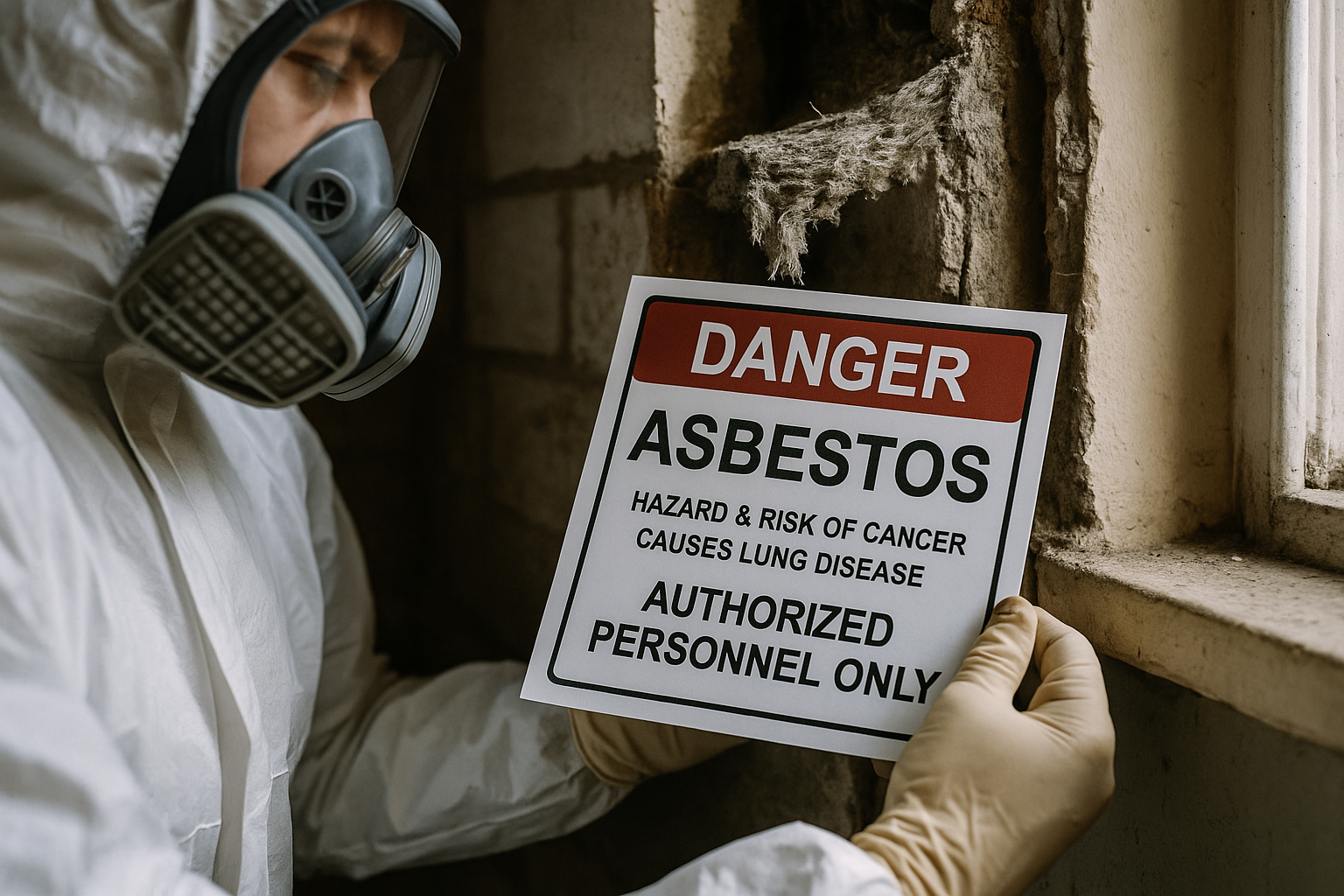
Friable materials release fibres more easily and usually present a higher immediate risk when disturbed. Higher-risk materials often include pipe lagging, sprayed coatings, loose fill insulation, thermal insulation debris and asbestos insulation board.
Lower-friability materials such as asbestos cement sheets, floor tiles, bitumen products and some textured coatings can still be dangerous if they are drilled, broken, cut, weathered or degraded.
Condition of the material
Intact materials in good condition are less likely to release fibres than materials that are cracked, delaminating, water-damaged or crumbling. Damage from previous works is a common problem, especially in service areas that are rarely inspected properly.
Activity that disturbed it
Mechanical disturbance sharply increases risk. Drilling, sanding, sawing, cable pulling, stripping finishes, removing fixtures and breaking panels can all generate airborne fibres.
Cleaning methods matter too. Standard vacuums, dry brushing and sweeping can spread contamination rather than control it.
Duration and frequency
A person walking past a damaged panel once is not in the same position as someone working beside it every week. Duration matters, but so does cumulative exposure from repeated smaller incidents.
That is one reason there is no tidy threshold answer to how much asbestos exposure is dangerous. Frequency can turn a seemingly minor issue into a serious long-term risk.
Ventilation and enclosure
Confined spaces such as risers, service cupboards, ceiling voids and plant rooms can concentrate airborne fibres. Poor ventilation may allow fibres to remain suspended or settle and be disturbed again later.
Type of asbestos fibre
The three main asbestos types encountered in UK buildings are chrysotile, amosite and crocidolite. Some are generally regarded as more hazardous than others in certain scenarios, but none should ever be treated as safe.
In practice, the building material, its condition and the way it was disturbed are just as important as fibre type.
Smoking and personal factors
Smoking increases the risk of asbestos-related lung cancer. It does not reduce the dutyholder’s responsibilities, and it does not make exposure acceptable. Risk control must apply to everyone on site.
How bad is one-time exposure to asbestos?
This is one of the most common questions after an incident. In most cases, a one-time exposure is less dangerous than repeated occupational exposure over a long period. But it should never be dismissed automatically.
How bad one-time exposure is depends on what actually happened. Briefly passing through an area where intact asbestos cement is present is very different from drilling into asbestos insulation board in a confined riser.
A one-off exposure is more concerning where:
- The material was friable
- The disturbance was aggressive, such as drilling or breaking
- The area was enclosed or poorly ventilated
- Visible dust or debris was generated
- The person was close to the source
- No controls or respiratory protection were in place
There are usually no immediate symptoms after exposure. That does not mean nothing happened. Asbestos-related disease has a long latency period, so the absence of short-term effects is not proof of safety.
For property managers, the right response to one-time exposure is practical:
- Stop work immediately.
- Prevent anyone else entering the area.
- Do not sweep, vacuum or tidy the debris yourself.
- Record who may have been exposed and what activity took place.
- Arrange urgent assessment by a competent asbestos professional.
- Review whether further sampling, air testing or remediation is needed.
If the incident happened in the capital, arranging a fast asbestos survey London service can help you identify the material and regain control before the problem spreads.
Occupational exposure in commercial settings
Occupational exposure remains one of the clearest routes to serious asbestos disease. In commercial property, the people most at risk are often not office staff. They are the people who disturb the building fabric.
That includes:
- Maintenance teams
- Electricians
- Plumbers
- HVAC engineers
- Refurbishment contractors
- Demolition workers
- Joiners and fit-out trades
- Cleaners working in contaminated areas
- Facilities staff accessing plant and service spaces
Occupational exposure can happen during planned works, but it also happens during small routine tasks. Replacing a light fitting, opening a riser panel, drilling for signage, lifting old floor coverings or tracing pipework can all disturb asbestos if the building is not properly surveyed.
Why occupational exposure is often missed
Many incidents happen because people assume a task is too minor to need asbestos checks. That is a costly mistake. The lower the perceived risk of the job, the more likely someone is to bypass the asbestos register, skip permit controls or rely on memory.
Practical controls for occupational exposure include:
- Keeping the asbestos register accurate and accessible
- Reviewing refurbishment plans before intrusive work starts
- Using refurbishment and demolition surveys where required
- Briefing contractors before they begin work
- Restricting access to known asbestos locations
- Inspecting asbestos-containing materials regularly
- Acting quickly when damage is reported
For regional portfolios, fast local support matters. If you manage premises in the North West, booking an asbestos survey Manchester service before maintenance or fit-out work starts can prevent avoidable exposure incidents.
Environmental exposure
Environmental exposure refers to exposure outside traditional high-risk occupations. In commercial property, this usually means people being exposed because asbestos-containing materials in the building have deteriorated, been damaged, or been disturbed during nearby works.
Environmental exposure may affect:
- Office staff
- Visitors
- Tenants
- Cleaners
- Reception teams
- Security staff
- Members of the public near damaged external materials
Examples include debris in a shared corridor after unauthorised works, damaged asbestos insulation board in a tenancy riser, weathered cement materials shedding fragments, or contamination carried from plant areas into occupied spaces.
Environmental exposure is often lower intensity than historic occupational exposure, but it still matters. If fibres become airborne and people inhale them, there is risk. The correct response is to identify the source, isolate the area and manage the incident professionally.
For multi-site owners in the Midlands, a prompt asbestos survey Birmingham appointment can be the fastest route to identifying suspect materials before they create wider environmental exposure concerns.
How asbestos fibres cause disease
Asbestos is dangerous because the fibres are small enough to be inhaled deep into the lungs. Once there, the body struggles to break them down or remove them effectively.
Some fibres remain in lung tissue. Others can migrate to the pleura, the lining around the lungs. Over time, they may trigger inflammation, scarring and cellular damage.
This process is why how much asbestos exposure is dangerous cannot be answered with a neat number for every situation. Disease risk depends on the dose, the type of fibres, the pattern of exposure and the body’s response over many years.
Latency is a major issue. Symptoms and diagnosis may come decades after exposure. That delay is one reason businesses must take every incident seriously, even when nobody appears to be affected at the time.
Types of cancers caused by exposure to asbestos
Asbestos exposure is associated with several serious cancers. For commercial dutyholders, understanding these outcomes helps explain why prevention matters so much.
Mesothelioma
Mesothelioma is a cancer of the lining of the lungs or, less commonly, the abdomen. It is strongly associated with asbestos exposure.
One of the reasons mesothelioma is so feared is that it can occur after relatively limited exposure in some cases. That does not mean every brief exposure will lead to disease, but it does mean short-term incidents should never be brushed off as irrelevant.
Asbestos-related lung cancer
Asbestos can also cause lung cancer. The risk is generally higher with substantial cumulative exposure, and smoking increases that risk further.
In practical terms, this is why long-term occupational exposure remains such a concern in maintenance, construction and industrial settings.
Laryngeal cancer
Exposure to asbestos is also linked with cancer of the larynx. This is less commonly discussed in building management conversations, but it remains part of the recognised health impact of asbestos exposure.
Ovarian cancer
Asbestos exposure is associated with ovarian cancer as well. Again, this is not always front of mind for property managers, but it reinforces the point that asbestos risk is wider than many people assume.
Other diseases caused by asbestos exposure
Cancer is not the only concern. Other diseases caused by asbestos exposure include serious non-malignant conditions that can still have a major effect on health, breathing capacity and quality of life.
Asbestosis
Asbestosis is a chronic scarring of lung tissue caused by inhaling asbestos fibres. It is most often associated with heavy or prolonged exposure rather than a single short incident.
The scarring reduces lung elasticity and can lead to progressive breathing problems. Typical features include:
- Shortness of breath
- Persistent cough
- Fatigue
- Chest tightness
- Reduced exercise tolerance
Asbestosis is irreversible. That is why preventing exposure in the first place matters far more than trying to deal with consequences later.
Pleural plaques
Pleural plaques are localised areas of thickening or calcification on the pleura. They are generally taken as markers of past asbestos exposure.
They do not always cause symptoms, but they indicate that fibres have been inhaled at some point.
Pleural thickening
Pleural thickening refers to thickening of the pleural lining around the lungs. When it is more extensive, it may be described as diffuse pleural thickening.
This can restrict lung expansion and may cause breathlessness, chest discomfort and reduced lung function. In a commercial risk context, pleural thickening is another reminder that asbestos harm is not limited to cancer diagnoses.
Diffuse pleural thickening
Diffuse pleural thickening is more extensive than pleural plaques and can have a greater effect on breathing. It may follow significant asbestos exposure and can interfere with day-to-day activity in more severe cases.
Where clients focus only on mesothelioma, they can miss the broader picture. Asbestos can cause multiple forms of lasting respiratory damage.
Common questions about asbestos exposure
Property managers usually ask the same practical questions after an incident. The answers need to be clear, because delay and improvisation often make matters worse.
Can you smell or taste asbestos in the air?
No. Asbestos fibres are microscopic. You cannot rely on smell, taste or visible dust alone to judge whether exposure has occurred.
Does intact asbestos always need removing?
No. If asbestos-containing materials are in good condition and unlikely to be disturbed, management in situ may be the right approach. Removal is not automatically the safest option in every case.
Is asbestos cement as dangerous as lagging or sprayed coating?
Not usually in the same condition. Asbestos cement is generally lower risk when intact because it binds fibres more firmly. But if it is cut, broken, drilled, weathered or mishandled, it can still create exposure.
Can one exposure cause disease?
A single exposure is usually lower risk than repeated heavy exposure, but it cannot be said to be risk-free. The seriousness depends on the material, the disturbance, the dust released and the duration of the event.
Should staff keep working if a suspect material has been disturbed?
No. Work should stop, the area should be isolated, and the material should be assessed by a competent asbestos professional before activity resumes.
What to do if you suspect asbestos exposure at work
If you think asbestos has been disturbed in a commercial building, the first few actions matter. A poor response can spread contamination and increase exposure.
- Stop the task immediately. Do not carry on to finish the job.
- Keep people out of the area. Close doors, restrict access and prevent traffic through the space.
- Do not clean up debris yourself. Avoid sweeping, brushing or using a normal vacuum cleaner.
- Report the incident internally. Notify the dutyholder, facilities manager or responsible person straight away.
- Check the asbestos register and survey information. Confirm whether the material was already identified.
- Arrange competent assessment. This may include inspection, sampling and advice on remediation.
- Record potential exposure. Note who was present, what work was taking place and how long the disturbance lasted.
- Review your controls. Work out why the incident happened and how to prevent a repeat.
Where refurbishment or intrusive maintenance is planned, the best action is earlier action. Do not wait for damage. Commission the right survey before work begins, brief contractors properly, and make sure the asbestos register is actually used rather than filed away.
Practical advice for dutyholders and property managers
If you manage non-domestic premises, the safest way to answer how much asbestos exposure is dangerous is to avoid exposure altogether. That starts with control, not reaction.
Use this checklist:
- Identify whether the building age and construction suggest asbestos may be present
- Maintain an up-to-date asbestos register
- Review survey coverage for all relevant areas
- Commission refurbishment and demolition surveys before intrusive works
- Inspect known asbestos-containing materials regularly
- Label or otherwise communicate risk where appropriate
- Make sure contractors see relevant asbestos information before starting work
- Use permit-to-work systems for higher-risk tasks
- Respond quickly to damage, leaks or unauthorised alterations
- Keep records of incidents, inspections and remedial actions
One of the biggest failures in commercial buildings is assuming the survey done years ago is still enough. Buildings change. Tenancies change. Service routes change. Damage happens. Your asbestos information needs to reflect the reality on site.
Why there is no safe shortcut on asbestos risk
Clients often want a reassuring line: it was only a little dust, only a short job, only one hole, only one room. That is understandable, but it is not how asbestos risk works.
The question how much asbestos exposure is dangerous does not have a comforting threshold you can rely on. Some exposures are clearly higher risk than others, but no one should treat asbestos fibre inhalation as acceptable simply because the event was brief.
From a commercial perspective, the sensible rule is straightforward:
- If a material could contain asbestos, do not disturb it until it has been assessed.
- If asbestos is known or presumed to be present, manage it properly.
- If an incident occurs, act quickly and professionally.
That approach protects staff, contractors, tenants, visitors and your organisation’s legal position.
Frequently Asked Questions
How much asbestos exposure is dangerous in a workplace?
Any inhalation of asbestos fibres carries some risk, and there is no known safe level of exposure. The greatest risk is usually linked to repeated or heavy occupational exposure, but even short-term incidents should be taken seriously and assessed properly.
How bad is one-time exposure to asbestos?
One-time exposure is generally less dangerous than repeated long-term exposure, but it is not automatically harmless. The level of risk depends on the type of material, how badly it was disturbed, how much dust was released and how long people were exposed.
What diseases can asbestos exposure cause?
Asbestos exposure can cause mesothelioma, asbestos-related lung cancer, laryngeal cancer, ovarian cancer, asbestosis, pleural plaques and pleural thickening, including diffuse pleural thickening.
What should I do if asbestos is accidentally disturbed?
Stop work, keep people out of the area, avoid cleaning the debris yourself, report the incident and arrange assessment by a competent asbestos professional. Do not restart work until the risk has been properly managed.
Does every building with asbestos need removal work?
No. If asbestos-containing materials are in good condition and unlikely to be disturbed, they can often be managed in place. The correct approach depends on the material, condition, location and planned activities in the building.
If you need clear advice, fast turnaround and reliable surveying support, speak to Supernova Asbestos Surveys. We provide asbestos surveys for commercial properties across the UK, including management surveys, refurbishment and demolition surveys, and urgent support after accidental disturbance. Call 020 4586 0680 or visit asbestos-surveys.org.uk to book your survey.