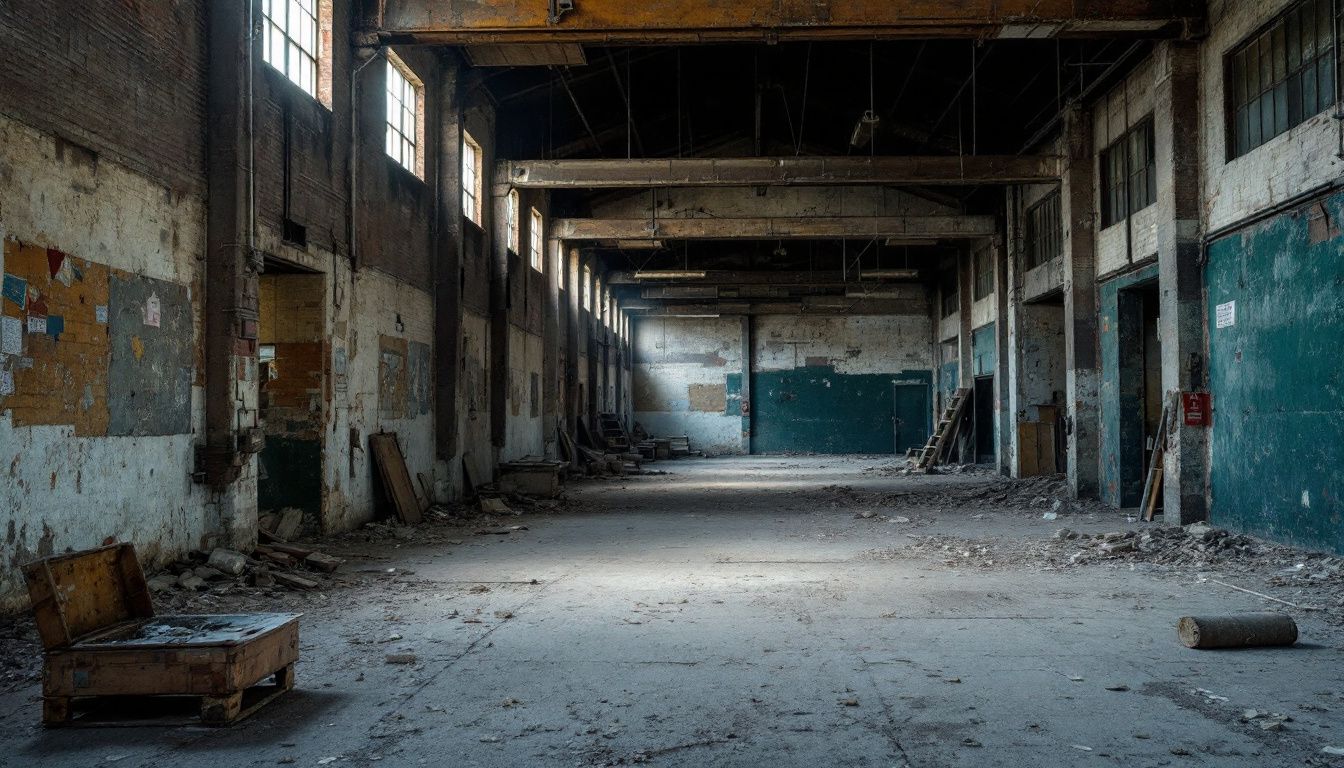
Real Asbestos Case Studies: What Happened When the Dust Settled
Asbestos has never been an abstract threat. It has names, addresses, and death certificates attached to it. Across the UK, real people — factory workers, housewives, schoolchildren, and office staff — have paid the ultimate price for exposure to a material used in everything from ceiling tiles to pipe lagging. These asbestos case studies reveal not just the scale of the tragedy, but the specific ways exposure occurred, who was affected, and what lessons must be carried forward.
If you manage a property, work in construction, or simply live or work in a building constructed before 2000, these stories are directly relevant to you.
The Turner & Newall Factory in Clydebank: A Community Poisoned
One of the most well-documented asbestos case studies in UK history centres on the Turner & Newall asbestos factory in Clydebank, Scotland. The factory was a major employer in the area for decades, and workers handled asbestos-containing products daily — without adequate respiratory protection, and without any meaningful understanding of the risks.
The consequences were catastrophic. Workers brought asbestos dust home on their clothes, their hair, and their skin. Families who had never set foot inside the factory began developing mesothelioma and asbestosis. The surrounding streets and homes became contaminated as fibres drifted beyond the factory walls.
The Scale of Contamination
When investigators assessed the former Turner site, they uncovered a contaminated area stretching approximately 1,200 metres long, 50 metres wide, and 8 metres deep. The clean-up operation ultimately cost £8.4 million — a figure that reflects not just the physical extent of the pollution, but the decades of unchecked asbestos use that preceded it.
Air quality studies from the mid-1970s revealed that urban areas near asbestos factories contained significantly more airborne asbestos fibres than rural locations. In Glasgow and the wider Clydeside region, entire communities were breathing contaminated air simply by stepping outside their front doors.
What This Case Tells Us Today
The Clydebank case is a reminder that asbestos risk is not confined to the person holding the drill or the lagging. It radiates outward — into streets, homes, schools, and lungs that had no connection to industry whatsoever. For anyone managing or surveying older properties in industrial areas, this history is essential context.
A thorough management survey is the starting point for understanding what you are dealing with and how to protect the people in your building. Without that baseline knowledge, you are managing risk blind.
June Hancock and the Landmark Secondary Exposure Case
In 1995, June Hancock won a landmark legal case that changed how the UK understood asbestos exposure. Hancock had developed mesothelioma despite never working directly with asbestos. Her exposure came from her father, who worked at the Turner & Newall factory and regularly returned home covered in white dust.
As a child, she had played near her father’s work clothes. She had breathed in fibres that clung to fabric and settled on furniture. Decades later, she was dying from a cancer caused by that childhood exposure.
Why This Case Mattered
The Hancock ruling established a legal precedent for secondary or para-occupational asbestos exposure — the principle that people who never worked with asbestos could still hold employers liable for their illness. It opened the door for hundreds of similar claims and forced a reckoning with the true breadth of asbestos-related harm.
Her case also drew attention to a pattern researchers had already begun to document: women, in particular, were developing mesothelioma at significant rates despite having no direct occupational exposure. A substantial proportion of female mesothelioma patients were exposed through washing or handling a family member’s contaminated work clothing.
Secondary Exposure: The Forgotten Victims in Asbestos Case Studies
When most people think of asbestos victims, they picture factory workers or construction labourers. But some of the most affecting asbestos case studies involve people who were exposed in their own homes, through no fault of their own and with no awareness of the danger.
Washing Clothes, Breathing Fibres
The mechanism is straightforward and devastating. A worker returns home after a shift. Their overalls are coated in asbestos dust. A partner or parent collects those clothes, shakes them out, and puts them in the wash. In that moment — repeated hundreds or thousands of times over a working life — microscopic fibres are released into the air of a family home.
Children playing nearby, partners doing laundry, family members eating at the same table — all of them potentially inhaling fibres that would lodge permanently in lung tissue. The disease might not appear for 20, 30, or even 40 years. By then, the source of exposure is a distant memory.
Nancy Tait and the Birth of SPAID
Nancy Tait lost her husband to mesothelioma. Recognising that she was far from alone, she founded the Society for the Prevention of Asbestosis and Industrial Diseases (SPAID) in 1978 — one of the earliest organisations in the UK dedicated specifically to advocating for asbestos victims, including those affected by secondary exposure.
Tait’s work helped give a voice to a group of victims who had largely been invisible in both medical literature and legal proceedings. Her legacy is a reminder that behind every asbestos statistic is a family whose life was reshaped by a material they never chose to encounter.
The Health Consequences: What These Case Studies Reveal
Across all the asbestos case studies documented in the UK, certain health outcomes appear repeatedly. Understanding them is not just a matter of historical interest — it is essential for anyone who may have been exposed, or who manages buildings where asbestos-containing materials may still be present.
Mesothelioma
Mesothelioma is a cancer of the lining of the lungs, abdomen, or heart. It is almost exclusively caused by asbestos exposure, and it carries a poor prognosis. The latency period — the time between first exposure and diagnosis — is typically between 20 and 50 years, which means people diagnosed today may have been exposed in the 1970s or 1980s.
The UK has one of the highest rates of mesothelioma in the world, a direct consequence of widespread industrial asbestos use throughout the twentieth century. Thousands of new cases are registered each year, and the disease remains incurable in the vast majority of patients.
Asbestosis
Asbestosis is a chronic scarring of the lung tissue caused by prolonged inhalation of asbestos fibres. Unlike mesothelioma, it is not a cancer — but it is progressive, debilitating, and irreversible. Patients experience worsening breathlessness, chronic cough, and fatigue.
There is no treatment that reverses the scarring; management focuses on slowing progression and improving quality of life. Early documentation of asbestosis dates back to the late nineteenth century, when factory inspectors noted unusually high rates of lung disease among textile workers. Despite this, meaningful regulation took decades to arrive.
Lung Cancer and Other Conditions
Asbestos exposure significantly increases the risk of lung cancer, particularly in individuals who also smoked. It is also associated with pleural plaques — areas of thickened tissue on the lung lining — and pleural effusion, a build-up of fluid around the lungs.
These conditions may not always be fatal, but they cause significant long-term health problems and serve as markers of past exposure. They are also a stark reminder of why prevention, not reaction, must be the guiding principle for anyone responsible for a building that may contain asbestos.
Asbestos in Buildings: Case Studies from the Surveying Frontline
Beyond the industrial tragedies of the twentieth century, asbestos case studies continue to emerge from everyday property management. Asbestos-containing materials were used extensively in UK construction until the full ban in 1999, meaning millions of buildings still contain them today.
Schools and Public Buildings
Some of the most concerning contemporary case studies involve asbestos discovered in schools and public buildings — places where children and staff spend significant time, and where the consequences of disturbance can be severe. Asbestos was commonly used in ceiling tiles, floor tiles, pipe insulation, and spray coatings in buildings constructed from the 1950s through to the 1980s.
When these materials are damaged — by routine maintenance, renovation work, or simple wear and tear — fibres can be released into the air. The key principle under the Control of Asbestos Regulations is that asbestos in good condition and left undisturbed poses minimal risk. The danger arises when it is disturbed without proper precautions.
Practical steps for those managing schools and public buildings include:
- Commissioning a management survey before any refurbishment work begins
- Maintaining an up-to-date asbestos register accessible to all contractors
- Ensuring maintenance staff are trained to recognise asbestos-containing materials
- Arranging regular condition monitoring of known asbestos-containing materials
- Never allowing drilling, cutting, or sanding in areas where asbestos presence is unknown
Residential Properties
Homeowners and landlords have also featured in asbestos case studies where DIY work — removing an old ceiling, drilling through a textured wall coating, or ripping out old floor tiles — has inadvertently released asbestos fibres. Many people are unaware that their home may contain asbestos, and without a proper survey, there is no way to know.
HSE guidance under HSG264 sets out the standards for asbestos surveying in non-domestic premises, but residential properties are not exempt from risk. Any property built before 2000 should be treated with caution before any refurbishment or demolition work begins. If in doubt, always survey before you start work — not after.
Commercial Refurbishments Gone Wrong
Several well-documented asbestos case studies involve commercial refurbishment projects where contractors disturbed asbestos-containing materials without prior survey work. In some cases, this has led to enforcement action by the HSE, significant remediation costs, and — most seriously — potential exposure for workers and building occupants.
The financial and legal consequences of getting this wrong are substantial. Properly planned asbestos removal carried out correctly from the outset is always less costly than emergency remediation after an uncontrolled release.
What UK Regulations Say: Lessons Drawn from These Cases
The legal and regulatory framework around asbestos in the UK has been shaped, in large part, by the kinds of tragedies described in these asbestos case studies. The Control of Asbestos Regulations place a clear duty on those responsible for non-domestic premises to manage asbestos risk — including commissioning management surveys, maintaining asbestos registers, and ensuring that any work involving asbestos-containing materials is carried out by licensed contractors.
The HSE oversees compliance and licences asbestos removal contractors. Firms carrying out licensed asbestos work are subject to inspection and must meet strict standards for containment, personal protective equipment, and waste disposal.
Key duties under the regulations include:
- Identify whether asbestos-containing materials are present in your premises
- Assess the condition and risk level of any materials found
- Produce and maintain an asbestos register and management plan
- Share this information with anyone who may disturb the materials
- Review the plan regularly and update it when conditions change
The lesson from decades of asbestos case studies is consistent: the risks are not theoretical. They are documented, they are ongoing, and they are entirely preventable with the right approach.
Asbestos Surveys Across the UK: Acting on the Lessons of the Past
The tragedies documented in these asbestos case studies did not happen because asbestos was an unknown hazard. They happened because the hazard was minimised, ignored, or managed too late. The same pattern plays out today when property managers, landlords, or contractors proceed without proper survey work.
Whether you are managing a Victorian terrace, a 1970s office block, or a post-war school building, the obligation is the same: know what is in your building before anyone disturbs it. For those based in the capital, an asbestos survey London can be arranged quickly through Supernova, with results that give you a clear picture of what is present and how to manage it safely.
In the north-west, where industrial heritage means many buildings have a complex asbestos history, an asbestos survey Manchester provides the same rigorous assessment tailored to local building stock. And across the Midlands, an asbestos survey Birmingham ensures that property managers and employers in one of the UK’s most densely built urban environments are meeting their legal duties and protecting the people in their care.
The geography changes. The obligation does not.
How to Avoid Becoming an Asbestos Case Study Yourself
Every case study in this article began with a failure of knowledge, process, or accountability. The good news is that each of those failures is preventable. Here is what responsible property management looks like in practice:
- Survey before you act. Never commission refurbishment or demolition work in a pre-2000 building without an asbestos survey first. This is not optional — it is a legal requirement under the Control of Asbestos Regulations.
- Maintain your asbestos register. A survey is only useful if its findings are documented, accessible, and kept up to date. Your asbestos register must be shared with any contractor who works on the premises.
- Train your maintenance team. The people most likely to disturb asbestos-containing materials are often those carrying out routine repairs. Awareness training is a straightforward and cost-effective way to reduce risk.
- Use licensed contractors for removal. Certain categories of asbestos work — including work on sprayed coatings, lagging, and loose-fill insulation — must be carried out by HSE-licensed contractors. Do not cut corners here.
- Act on deteriorating materials promptly. Asbestos in good condition can often be managed in situ. Asbestos that is damaged, friable, or in a high-traffic area needs professional assessment and may need to be removed.
- Document everything. In the event of an HSE inspection or a legal claim, your documentation is your defence. Keep records of surveys, management plans, contractor appointments, and condition monitoring.
None of this is complicated. It requires commitment, not expertise — because the expertise is what surveyors like Supernova provide.
Frequently Asked Questions
What are the most common health conditions linked to asbestos exposure in UK case studies?
The most frequently documented conditions in UK asbestos case studies are mesothelioma, asbestosis, lung cancer, pleural plaques, and pleural effusion. Mesothelioma is the most serious, as it is almost exclusively caused by asbestos exposure and carries a very poor prognosis. All of these conditions have long latency periods, meaning symptoms may not appear until decades after the original exposure.
Can I be affected by asbestos even if I have never worked with it directly?
Yes. Secondary or para-occupational exposure is well-documented in UK case studies. People have developed asbestos-related diseases after exposure through a family member’s contaminated work clothing, by living near asbestos factories, or by occupying buildings where asbestos-containing materials were disturbed without proper precautions. The June Hancock case established a legal precedent confirming that employers can be held liable for secondary exposure.
Do I need an asbestos survey if my building looks fine and has had no recent work done?
Appearance is not a reliable indicator of asbestos risk. Many asbestos-containing materials look perfectly normal and pose no immediate danger — until they are disturbed. If your building was constructed before 2000 and you do not have a current asbestos register, you are likely in breach of your duties under the Control of Asbestos Regulations. A management survey will tell you exactly what is present, its condition, and how to manage it safely.
What should I do if asbestos is accidentally disturbed during building work?
Stop work immediately and evacuate the affected area. Do not attempt to clean up any debris yourself. Contact a licensed asbestos removal contractor to assess the situation and carry out any necessary remediation. You should also notify the HSE if the disturbance was significant. Document everything from the point of discovery onwards. This is precisely the scenario that a pre-work asbestos survey is designed to prevent.
How do I find a reputable asbestos surveying company in the UK?
Look for a company whose surveyors hold BOHS P402 qualifications or equivalent, and which operates under UKAS-accredited laboratory analysis. Check that any removal contractors they recommend hold a current HSE licence for asbestos work. Supernova Asbestos Surveys operates nationwide with over 50,000 surveys completed, providing independent, accredited survey services for commercial, residential, and public sector clients.
Get the Right Survey Before It Becomes a Case Study
The asbestos case studies documented here are not historical curiosities. They are the direct result of decisions made — or not made — by people responsible for buildings and workplaces. The regulatory framework exists because of these tragedies. The duty to act exists because the alternative has already been lived out, repeatedly, by real families across the UK.
Supernova Asbestos Surveys has completed over 50,000 surveys nationwide. Our qualified surveyors work across all property types — commercial, residential, industrial, and public sector — delivering clear, actionable reports that meet HSE and HSG264 standards. We are available nationwide, with dedicated teams covering London, Manchester, Birmingham, and every major region in between.
Call us on 020 4586 0680 or visit asbestos-surveys.org.uk to book a survey or speak to a member of our team. Do not wait for a problem to find you — find out what is in your building first.