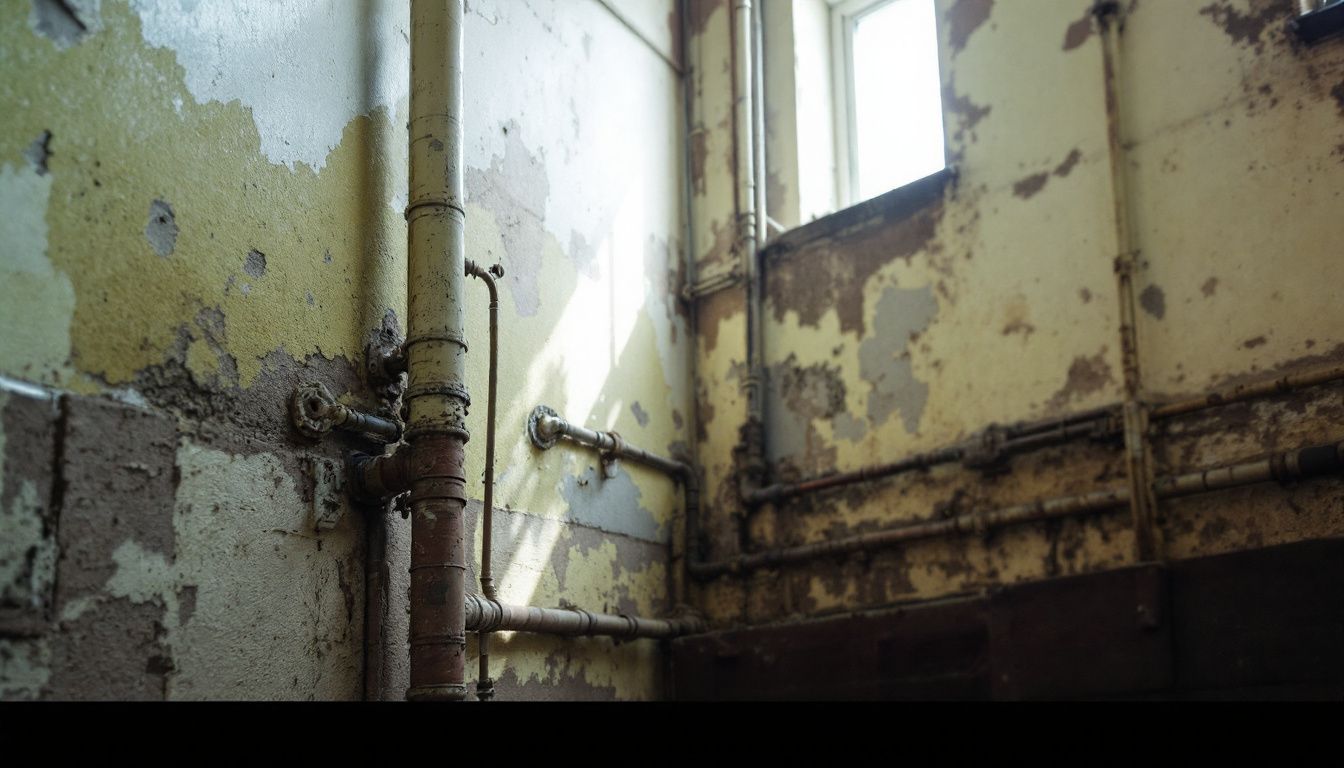
More Than 5,000 Deaths a Year — and the Danger Is Still in Your Building
More than 5,000 people die from asbestos-related diseases in the UK every single year. That figure has barely shifted in decades, and yet the material responsible still sits inside millions of homes, schools, hospitals, and offices across Britain. The hidden dangers and untold stories of asbestos in the UK are not ancient history — they are unfolding right now, in buildings people live and work in every day.
Understanding where asbestos hides, what it does to the body, and what the law requires of you is not optional. For anyone who owns, manages, or works in a pre-2000 building, it is essential knowledge.
Where Asbestos Hides in UK Buildings
Asbestos was used extensively in British construction throughout most of the twentieth century. It was cheap, fire-resistant, and easy to work with — which is precisely why it ended up in almost every type of building material imaginable.
An estimated 14 million UK homes still contain asbestos in some form. In public buildings, the figures are even more striking: around 81% of UK schools and approximately 90% of NHS buildings are believed to contain asbestos-containing materials (ACMs).
Common Locations in Residential Properties
In homes built before 2000, asbestos can appear in a surprising range of places. Many homeowners have no idea it is there until they begin renovation work — which is exactly when the risk becomes serious.
- Artex and textured ceiling coatings
- Floor tiles and the adhesive beneath them
- Roof and garage cement sheets
- Bath panels and toilet cisterns
- Pipe lagging and boiler insulation
- Insulating board in walls and partitions
- Soffit boards and fascias
- Mortar and render in older properties
The material does not announce itself. It looks like ordinary building fabric, which is why professional identification matters so much before any work begins.
Asbestos in Commercial and Public Buildings
Commercial properties face the same legacy problem. At least 210,000 non-domestic buildings in the UK are known to contain asbestos. Office blocks, warehouses, factories, and public buildings constructed in the post-war decades were frequently built with sprayed asbestos coatings, asbestos insulating board, and asbestos cement products.
Schools present a particular concern. Prefabricated classrooms built in the 1960s and 1970s often used asbestos insulating board extensively. When these materials deteriorate or get damaged — by something as routine as a pupil pushing a drawing pin into a wall panel — fibres can be released into the air that children and teachers breathe every day.
If you manage a commercial property and need to understand what ACMs are present, a management survey is the correct starting point. It identifies the location, condition, and risk level of any asbestos in the building, and forms the basis of your legal duty to manage.
The Hidden Dangers and Untold Stories of Asbestos in the UK: What It Does to the Body
Asbestos fibres are microscopic. When disturbed, they become airborne and can be inhaled deep into the lungs, where the body cannot expel them. They lodge permanently in lung tissue and the lining of internal organs, causing damage that may not become apparent for decades.
The latency period — the gap between exposure and disease — typically ranges from 10 to 70 years, with most cases emerging 30 to 40 years after initial contact. This delay is one of the reasons asbestos deaths continue to rise even as use of the material has long since stopped.
Diseases Caused by Asbestos Exposure
Asbestos exposure is linked to several serious and often fatal conditions:
- Mesothelioma — a cancer of the lining of the lungs, abdomen, or heart, almost exclusively caused by asbestos exposure
- Asbestos-related lung cancer — particularly prevalent in those who also smoked
- Asbestosis — progressive scarring of lung tissue, causing increasing breathlessness
- Pleural thickening — thickening of the membrane surrounding the lungs, restricting breathing capacity
- Pleural plaques — areas of fibrous tissue on the pleura, indicating significant past exposure
There is no safe level of asbestos exposure. Even relatively brief contact with disturbed asbestos can cause disease if fibres are inhaled.
Mesothelioma: The Scale of the Crisis
Mesothelioma is the most closely tracked asbestos-related disease in the UK, and the statistics are sobering. In 2021 alone, 2,268 people died from mesothelioma — including 401 women, a figure that reflects the secondary exposure many women experienced from washing their husbands’ work clothes.
The prognosis remains poor. People diagnosed at stage 1 typically survive around 21 months. Those diagnosed at stage 4 often survive for approximately 12 months. Early detection matters enormously, but the long latency period means many cases are not caught until the disease is advanced.
Between 2017 and 2023, asbestos claimed the lives of 94 workers in education and 53 workers in healthcare — professions not traditionally associated with asbestos exposure, but ones where daily contact with deteriorating building materials in older stock has had devastating consequences.
Real Lives Affected: The Human Stories Behind the Statistics
Statistics can obscure the human reality of what asbestos has done to communities across Britain. Behind every number is a person who worked hard, raised a family, and had no idea that the building they entered each day was slowly making them fatally ill.
June Hancock and the Fight for Justice
June Hancock grew up near an asbestos factory in Leeds and developed mesothelioma as a result of neighbourhood exposure — not occupational exposure. In 1995, she won a landmark legal case against Turner and Newall, the company responsible for the factory, establishing that manufacturers could be held liable for harm caused to people living near their sites.
Her case was groundbreaking. It opened the door for community victims — not just workers — to seek compensation, and it led directly to the creation of the June Hancock Mesothelioma Research Fund, which has since supported vital research into treatments for the disease.
Teachers, Nurses, and the Everyday Risk
The victims of asbestos in the UK are not only shipyard workers or construction labourers from decades past. The hidden dangers and untold stories of asbestos in the UK include people whose exposure came from simply going to work in a public building:
- Teachers who pinned work to asbestos insulating board panels in ageing classrooms
- Nurses who worked in hospitals where pipe lagging was crumbling
- Office workers in 1970s tower blocks where sprayed asbestos coatings were flaking from structural columns
These are not edge cases. They represent the quiet, ongoing toll of a material that was embedded into the fabric of British public life and has never been fully removed from it.
For property managers in major cities, understanding the specific risks in their area is vital. Whether you are responsible for a building in the capital, an asbestos survey Manchester specialist can account for the particular construction methods and materials common to the North West’s built environment, just as local expertise matters in every region.
Secondary Exposure and Family Members
One of the most distressing aspects of the asbestos story in the UK is secondary exposure. Asbestos workers routinely brought fibres home on their clothing, hair, and skin. Family members — particularly wives who laundered work clothes — inhaled those fibres without ever setting foot in a workplace where asbestos was used.
The rising number of women dying from mesothelioma reflects this hidden exposure pathway. It is a reminder that the consequences of asbestos use extended far beyond the job site, touching families who had no knowledge of the risk they faced.
The Legal Framework: What UK Law Requires
The UK’s approach to asbestos regulation has evolved significantly over the past four decades, driven by mounting evidence of the material’s lethal effects and sustained campaigning by victims and their families.
The Timeline of Asbestos Bans
Asbestos was not banned overnight. The process was incremental, and each stage of restriction came only after considerable pressure:
- 1985 — Blue asbestos (crocidolite) and brown asbestos (amosite) were banned in the UK due to their strong links to mesothelioma and lung cancer
- 1999 — White asbestos (chrysotile) was finally banned, completing a full prohibition on the importation, supply, and use of all asbestos types
- Post-1999 — Regulations have focused on managing the vast quantities of asbestos already present in existing buildings
The fact that white asbestos remained legal until 1999 — more than a decade after blue and brown asbestos were banned — meant that significant quantities continued to be installed in buildings throughout the late 1980s and 1990s.
Current Duties Under the Control of Asbestos Regulations
The Control of Asbestos Regulations place a clear legal duty on those responsible for non-domestic premises to manage asbestos. This means identifying whether asbestos is present, assessing its condition and risk, and putting a written management plan in place.
Key obligations include:
- Conducting a suitable and sufficient survey before any refurbishment or demolition work
- Maintaining an up-to-date asbestos register for the building
- Ensuring anyone likely to disturb ACMs is informed of their location and condition
- Arranging regular re-inspection of known ACMs to monitor deterioration
- Using only licensed contractors for the removal of certain higher-risk asbestos materials
Failure to comply with these duties can result in fines of up to £20,000 for individuals, with unlimited fines and potential custodial sentences for serious breaches prosecuted in the Crown Court. The HSE takes enforcement action seriously, and ignorance of the regulations is not accepted as a defence.
What the Regulations Mean for Homeowners
Homeowners have no legal duty to remove asbestos from their own homes, but they do have responsibilities if they are employing contractors to carry out work. Before any renovation, refurbishment, or extension work on a pre-2000 property, it is strongly advisable — and in many cases legally required of the contractor — to establish whether asbestos is present.
Disturbing asbestos without knowing it is there is one of the most common routes to accidental exposure in the UK today. A survey before the work begins is the single most effective way to prevent it.
Misconceptions That Put People at Risk
Despite decades of public health messaging, a number of persistent myths about asbestos continue to circulate — and each one has the potential to put lives at risk.
Myth: The Ban Means Asbestos Is No Longer a Problem
The 1999 ban stopped new asbestos being installed. It did nothing to remove the asbestos already in place. With 14 million homes and hundreds of thousands of commercial buildings still containing ACMs, the material remains as present as ever. The ban addressed future use; it did not address the existing legacy.
Myth: Asbestos Is Only Dangerous If You Work With It Directly
This is demonstrably false. Secondary exposure, neighbourhood exposure (as in June Hancock’s case), and low-level cumulative exposure in poorly maintained buildings have all caused fatal disease. Any situation in which asbestos fibres become airborne — however briefly — carries risk.
Myth: If It Looks Intact, It’s Safe to Leave Alone
Intact, undisturbed asbestos in good condition does present a lower immediate risk than damaged or friable material. However, condition can change. Building work nearby, vibration, water ingress, or simple deterioration over time can all cause previously stable ACMs to release fibres. Regular monitoring by a competent professional is essential — not a one-off assessment.
Myth: Modern Buildings Don’t Contain Asbestos
Any building constructed or refurbished before the year 2000 may contain asbestos. That covers an enormous proportion of the UK’s existing building stock. The assumption that a building is safe simply because it appears modern is a dangerous one — particularly where internal refurbishment work was carried out in earlier decades.
The Geographic Spread: Asbestos Risk Across the UK
The asbestos legacy is not confined to any single region. Industrial centres, port cities, and areas with heavy post-war construction activity all carry significant concentrations of ACMs in their building stock.
London’s commercial property market includes vast quantities of 1960s and 1970s office space, much of which was built using asbestos-containing materials. An asbestos survey London from a specialist team ensures that the particular construction methods and materials common to the capital’s built environment are properly accounted for.
In the Midlands, the industrial heritage of the region means that commercial and manufacturing premises frequently contain legacy asbestos in plant rooms, roofing, and insulation. An asbestos survey Birmingham carried out by experienced surveyors familiar with local building types provides the assurance that property managers need.
Across all regions, the principle is the same: local expertise and national standards working together deliver the most reliable outcomes for building owners and managers.
What Responsible Management Looks Like in Practice
Managing asbestos in a building is not a single action — it is an ongoing process. The HSE’s guidance document HSG264 sets out the methodology for asbestos surveys and is the benchmark against which all professional survey work should be measured.
Responsible management involves:
- Commissioning a survey — carried out by a qualified, accredited surveyor before any intrusive work, or as part of routine management of a non-domestic property
- Maintaining an asbestos register — a live document that records the location, type, condition, and risk rating of all known ACMs
- Communicating with contractors — ensuring that anyone working on the building has access to the register before they begin
- Re-inspecting regularly — ACMs in situ should be re-assessed at least annually, or more frequently where conditions suggest deterioration
- Acting on findings — where materials are in poor condition or present a high risk, remediation or removal by a licensed contractor is required
The duty to manage is not discharged by a single survey. It is a continuing obligation that reflects the fact that asbestos conditions change over time.
Why Professional Surveys Are the Only Reliable Answer
Visual inspection by an untrained person cannot reliably identify asbestos. Many ACMs are indistinguishable from non-asbestos materials without laboratory analysis. The only way to know with certainty whether a material contains asbestos is to have it sampled and tested by a qualified professional.
Accredited surveyors work to the standards set out in HSG264 and are trained to identify ACMs in locations that are not immediately obvious — above ceiling tiles, within wall cavities, beneath floor coverings, and inside plant and equipment. Attempting to assess asbestos risk without professional support is not a cost saving; it is a liability.
At Supernova Asbestos Surveys, our team has completed over 50,000 surveys across the UK. We work with residential and commercial clients, local authorities, housing associations, schools, and healthcare providers — anywhere that the hidden dangers and untold stories of asbestos in the UK are still playing out in the fabric of real buildings.
Frequently Asked Questions
Is asbestos still present in UK buildings today?
Yes. Despite the 1999 ban on all forms of asbestos, the material remains present in an estimated 14 million UK homes and hundreds of thousands of commercial and public buildings. The ban prevented new asbestos from being installed, but did not require the removal of materials already in place. Any building constructed or refurbished before 2000 may contain asbestos-containing materials.
What are the most dangerous types of asbestos?
All types of asbestos are hazardous, but blue asbestos (crocidolite) and brown asbestos (amosite) are generally considered the most dangerous due to their fibre structure and strong association with mesothelioma. White asbestos (chrysotile) is also harmful and was not banned in the UK until 1999. No type of asbestos is safe to disturb or inhale.
Do I legally have to survey my building for asbestos?
If you are the dutyholder for a non-domestic property — which includes landlords of commercial premises — the Control of Asbestos Regulations require you to manage asbestos. This involves identifying whether ACMs are present, assessing their condition, and maintaining a written management plan. A management survey is the standard starting point for meeting this duty. Homeowners in domestic properties do not face the same legal obligation, but should commission a survey before any renovation or refurbishment work on a pre-2000 property.
Can I remove asbestos myself?
In most cases involving higher-risk asbestos materials — such as asbestos insulating board, sprayed coatings, and lagging — removal must be carried out by a licensed contractor under the Control of Asbestos Regulations. Some lower-risk materials, such as asbestos cement, may be handled by a non-licensed contractor following strict HSE guidance. However, attempting to remove any suspected ACM without professional assessment first is strongly inadvisable and potentially illegal.
How long after exposure do asbestos-related diseases develop?
The latency period for asbestos-related diseases typically ranges from 10 to 70 years, with most cases presenting 30 to 40 years after initial exposure. This long delay means that people diagnosed today were often exposed during the 1970s, 1980s, or even earlier. It also means that exposure occurring now — through undisclosed or unmanaged asbestos in buildings — may not result in disease for several decades.
Get Expert Help from Supernova Asbestos Surveys
The hidden dangers and untold stories of asbestos in the UK are not going away on their own. The material is still there, in buildings across every region of the country, and the obligation to manage it falls on property owners and managers right now.
Supernova Asbestos Surveys provides accredited asbestos surveys for residential and commercial properties across the UK. With over 50,000 surveys completed, our qualified surveyors work to HSG264 standards and deliver clear, actionable reports that meet your legal obligations and protect the people in your building.
Call us on 020 4586 0680 or visit asbestos-surveys.org.uk to book your survey or speak to a member of our team.