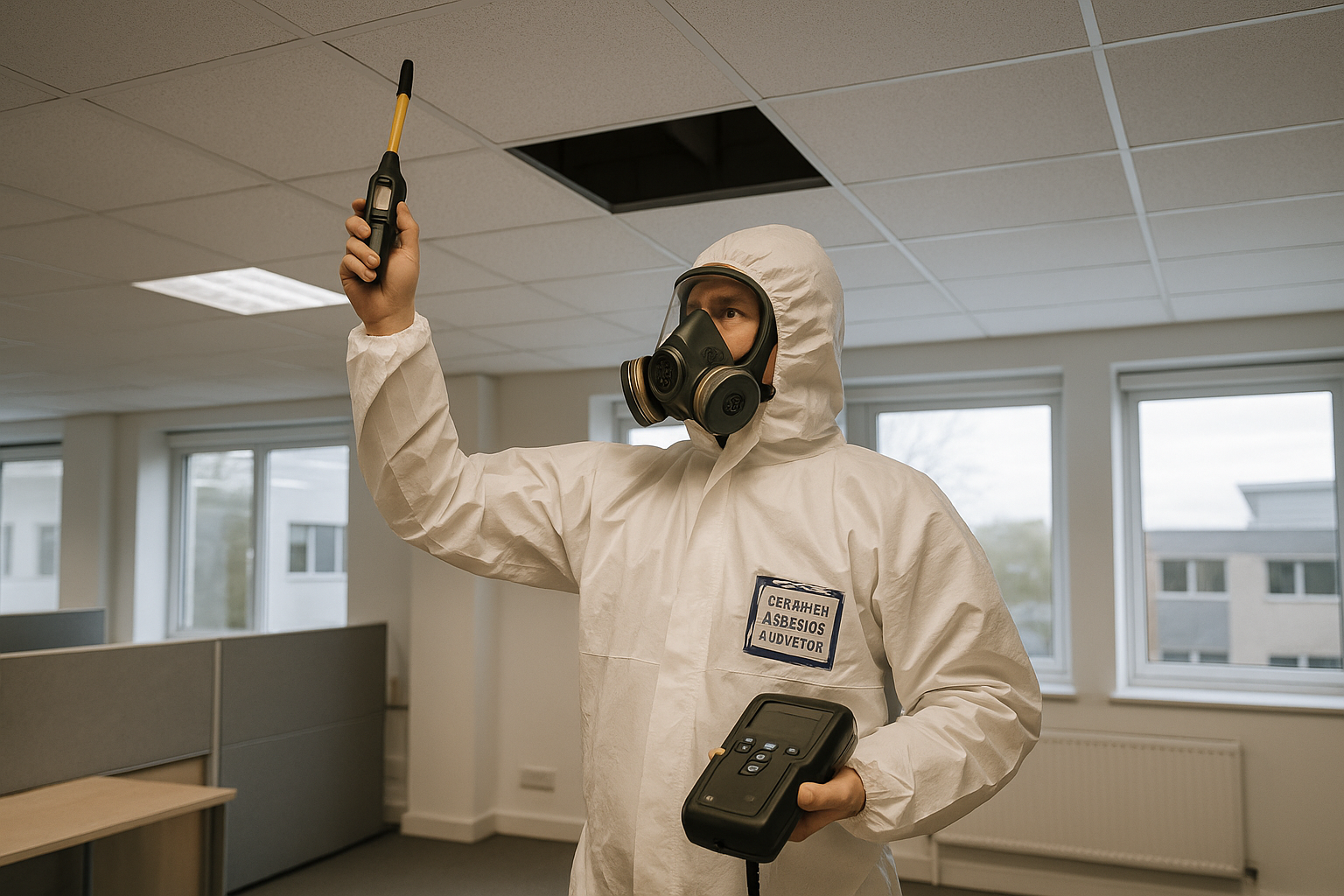
You can’t sign off asbestos risk on build date alone. Even when asbestos should not be found in buildings built later than the main period of asbestos use, that phrase is only a rule of thumb, not proof. If a routine inspection turns up a suspect material, the right response is to stop, assess and verify before anyone disturbs it further.
That matters for property managers, facilities teams, landlords and contractors alike. A calm, legally sound response protects occupants, avoids unnecessary fibre release and keeps projects from sliding into delays, extra cost and enforcement problems.
Why asbestos should not be found in buildings built later is not a guarantee
People often assume newer premises are automatically asbestos-free. In practice, buildings are altered, extended, repaired and refitted over time, and those changes can bring older materials into places you would not expect.
So while asbestos should not be found in buildings built after asbestos use had ended, there are still situations where asbestos-containing materials appear during inspection, maintenance or intrusive work.
How asbestos can still appear in newer-looking premises
- Older materials were left in place during partial refurbishment.
- An extension is newer than the original structure.
- Service risers, plant rooms, ceiling voids or ducts contain legacy materials.
- Replacement works covered older components instead of removing them.
- Records are incomplete or based on assumption rather than survey evidence.
- Salvaged or stored materials were used during earlier works.
The practical lesson is simple: treat the completion date as one clue, not the answer. If there is any doubt, verify the material before work starts.
What happens if asbestos is found during a routine building inspection?
The first priority is preventing further disturbance. Do not keep drilling, lifting tiles, opening panels or brushing away debris to get a better look.
If a material is suspected to contain asbestos, act straight away and keep the response controlled.
Immediate steps to take
- Stop work immediately. This includes maintenance, inspection and contractor activity in the affected area.
- Restrict access. Use barriers, signage or lock the area if needed.
- Do not clean up dust or debris yourself. Sweeping and standard vacuuming can spread fibres.
- Record what has been found. Note the location, condition, photographs if safe, and what activity was taking place.
- Arrange professional assessment. A competent surveyor or analyst can confirm whether asbestos is present and what action is needed.
If the material has already been damaged, the response may need to go further. That can include isolating the area, reviewing possible exposure, arranging specialist cleaning and planning remedial work or removal.
Your legal duties under the Control of Asbestos Regulations
For non-domestic premises, the duty to manage asbestos usually sits with the duty holder. That may be the building owner, employer, managing agent, facilities manager or anyone responsible for repair and maintenance.
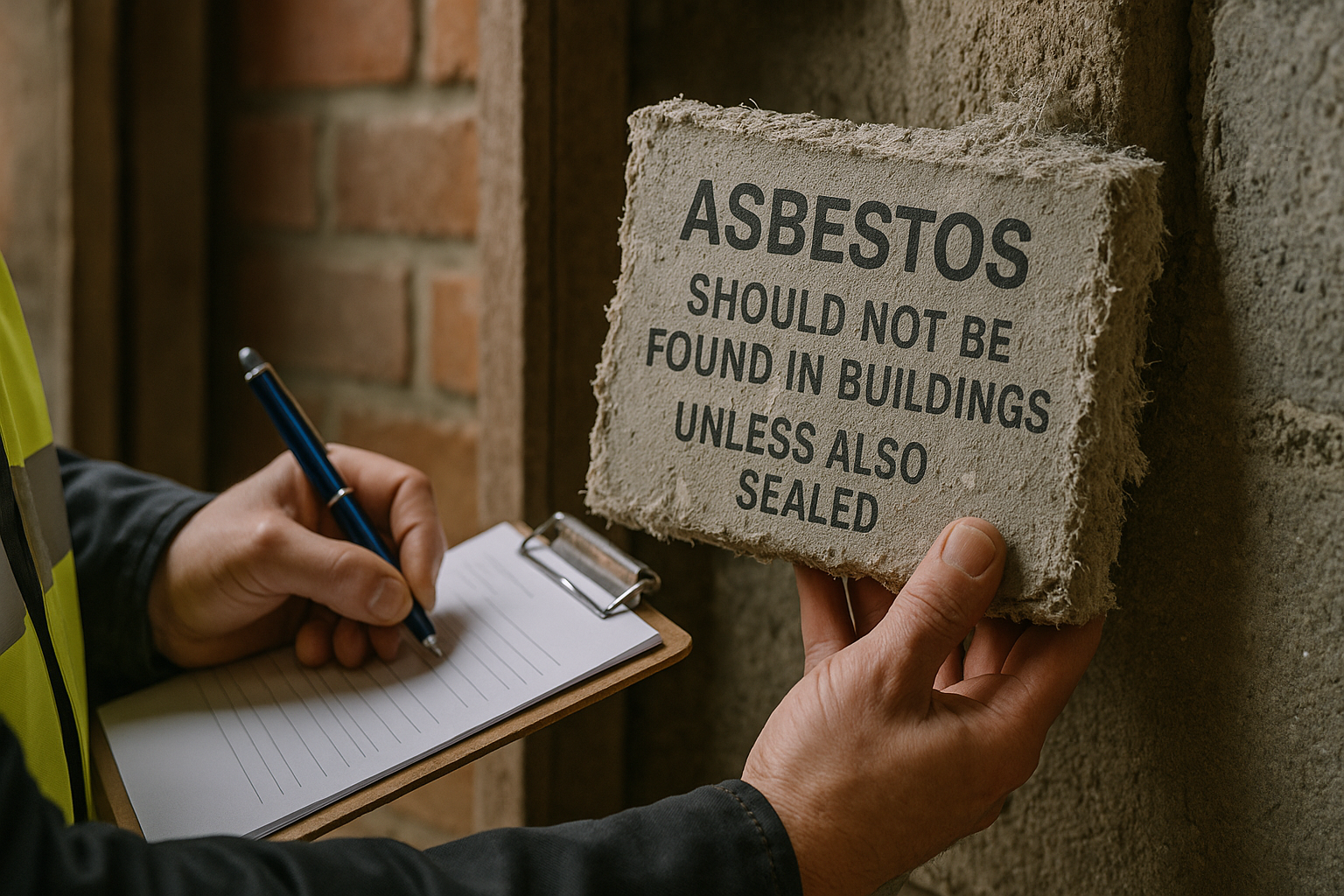
Under the Control of Asbestos Regulations, duty holders must take reasonable steps to find out whether asbestos is present, assess the risk and manage it so nobody is exposed to fibres. HSE guidance supports this approach, and HSG264 sets out how asbestos surveys should be planned, carried out and reported.
What duty holders need to have in place
- An asbestos register that reflects the building as it actually stands
- An asbestos management plan
- Risk assessments for known or presumed asbestos-containing materials
- A system for sharing information with contractors and maintenance teams
- Regular review and re-inspection where materials remain in place
A vague note in an old file is not enough. If contractors are likely to disturb materials, they need clear, current information before they start.
Domestic properties are treated differently, but that does not remove asbestos risk. If refurbishment or repair work is planned in a home, suspect materials still need to be checked so workers and occupants are protected.
Which asbestos survey should you arrange?
The right survey depends on what is happening in the building. Choosing the wrong one can leave hidden asbestos undiscovered until work has already begun.
Management survey
If the building is occupied and you need to manage asbestos during normal use and routine maintenance, a management survey is usually the starting point. It aims to locate, as far as reasonably practicable, materials that could be disturbed during everyday occupation or minor works.
This is often the right option after a routine inspection raises concern but before any major intrusive work is planned.
Refurbishment survey
Before upgrades, fit-outs or intrusive works, a refurbishment survey is needed. This is more invasive because it is designed to find asbestos in the areas affected by the planned works.
If walls will be opened, ceilings removed, services replaced or layouts altered, this is the survey you should arrange before the contractor starts.
Demolition survey
If a building or part of it is due to come down, a demolition survey is required. Its purpose is to identify all asbestos-containing materials so they can be removed or managed before demolition proceeds.
This is the most intrusive survey type because hidden materials must be found before structural work begins.
Re-inspection survey
Where asbestos has already been identified and left in place, a re-inspection survey helps confirm whether the materials remain in good condition. This is a practical part of ongoing compliance rather than a box-ticking exercise.
If you manage multiple sites, build re-inspection dates into your compliance calendar so records stay current.
Testing and confirmation: never guess
Visual checks can raise suspicion, but they do not confirm asbestos. Many non-asbestos materials look similar, and some asbestos-containing products look harmless until sampled and analysed.
The safest route is professional asbestos testing carried out through controlled sampling and laboratory analysis. That gives you evidence you can act on and helps determine whether the material should be managed, encapsulated or removed.
When a testing kit may be suitable
If you only need to check one specific material and it can be sampled safely, an asbestos testing kit can be useful. Some people search for a simple testing kit when they want a straightforward route to lab analysis.
That said, sampling is not risk-free. If the material is damaged, friable, overhead, in a service area or likely to release dust, do not attempt it yourself. Use a surveyor instead.
For clients who need local support and fast reporting, Supernova also provides asbestos testing services with practical advice on the next step.
Common places asbestos is found during inspections
When people assume asbestos should not be found in buildings built later, they often stop looking in the exact places where legacy materials tend to survive. In reality, asbestos is frequently discovered in hidden, low-traffic or service areas rather than obvious front-of-house spaces.
- Textured coatings and decorative finishes
- Floor tiles and bitumen adhesives
- Ceiling tiles and debris in ceiling voids
- Asbestos insulating board in partitions and risers
- Pipe lagging, boiler insulation and plant room materials
- Cement sheets, soffits, gutters and flues
- Roofing sheets in garages, stores and outbuildings
- Gaskets, rope seals and older plant components
- Panels behind heaters or electrical equipment
Location matters as much as material type. A bonded cement sheet in good condition is a very different risk from damaged insulating board in an area regularly accessed by contractors.
How risk is assessed after asbestos is found
Once asbestos is suspected or confirmed, the next question is not simply whether it exists. The real issue is the level of risk in that specific setting.
A proper assessment looks at the material itself, its condition, how accessible it is and how likely it is to be disturbed during occupation or work.
Key factors in asbestos risk assessment
- Product type: some materials release fibres more easily than others.
- Condition: cracked, broken or deteriorating materials present greater concern.
- Surface treatment: sealed or painted materials may present lower immediate risk if intact.
- Location: materials in circulation routes, risers or work areas are more vulnerable to disturbance.
- Occupancy and activity: frequent access increases management challenges.
This is why blanket rules are not enough. One asbestos-containing material may be suitable for management in place, while another in the same building may need urgent action.
Your options once asbestos is confirmed
There are usually three broad responses: leave it in place and manage it, encapsulate it, or remove it. The right choice depends on the survey findings, the material condition and what work is planned nearby.
1. Manage it in place
If the asbestos-containing material is in good condition and unlikely to be disturbed, leaving it in place is often the safest and most proportionate option. Removal is not automatically better, because removal itself creates disturbance.
If you keep asbestos in place, make sure you:
- Record it accurately in the asbestos register
- Mark or identify the area where appropriate
- Inform contractors and maintenance teams before work begins
- Monitor the condition over time
- Schedule follow-up inspections
2. Encapsulate it
Encapsulation involves sealing the material to reduce the chance of fibre release. This can be effective for some materials that are slightly damaged or in a vulnerable position but do not yet require removal.
Encapsulation is a management measure, not a reason to forget the material exists. It still needs to remain on the register and be reviewed periodically.
3. Remove it
Where materials are high risk, damaged, in poor condition or likely to be disturbed by planned works, removal may be necessary. Some asbestos work must be carried out by licensed contractors, depending on the material and the nature of the task.
If removal is required, use a specialist provider for asbestos removal. The work should be planned properly, controlled on site and supported by suitable waste handling and clearance arrangements where applicable.
Practical advice for property managers and duty holders
If you manage offices, schools, healthcare premises, retail units, warehouses or mixed-use blocks, asbestos should sit within your wider compliance system. It should never be treated as a one-off survey that gets filed and forgotten.
A practical approach is to keep asbestos information live, accessible and linked to maintenance planning.
A workable asbestos management routine
- Check whether you already have an asbestos register and management plan.
- Confirm the information is current and reflects the present layout.
- Review upcoming maintenance and fit-out works for intrusive activity.
- Arrange the correct survey before works begin.
- Share asbestos information at tender stage and again before site access.
- Update records after sampling, remediation or removal.
- Schedule re-inspections for materials that remain in place.
If your portfolio includes sites in the capital, arranging an asbestos survey London service can help keep local projects moving without guesswork.
What if the building was completed after asbestos use had ended?
This is where assumptions cause trouble. The statement that asbestos should not be found in buildings built later may be broadly reasonable, but it is not a safe basis for signing off work.
Instead, ask practical questions before anyone starts drilling, stripping or opening up the fabric.
- Was the whole building constructed at the same time?
- Have there been refurbishments, extensions or retained older sections?
- Are there outbuildings, risers, plant areas or roof spaces that may contain legacy materials?
- Do your records come from an actual survey or from assumption?
- Will the planned work disturb hidden materials?
If you cannot answer those questions with confidence, commission the appropriate survey. That is usually faster and cheaper than dealing with an unexpected asbestos issue after work has already started.
How to avoid asbestos surprises during routine inspections
Routine building inspections are often where asbestos concerns first surface, especially in older stock or buildings with patchy records. A few simple habits can prevent those concerns turning into incidents.
Good practice before inspection or maintenance work
- Review the asbestos register before attending site.
- Check whether the planned task is intrusive, even if it seems minor.
- Brief contractors on known or presumed asbestos locations.
- Do not rely on verbal reassurance that a material is safe.
- Escalate unknown materials for survey or sampling.
- Keep inspection notes and photographs organised for future reference.
Many asbestos problems begin with small jobs: replacing lights, opening service panels, fixing leaks, upgrading alarms or chasing cables. If the building information is weak, even routine work can disturb hidden asbestos-containing materials.
Frequently Asked Questions
Can asbestos be found in a building completed after asbestos use had stopped?
Yes. While asbestos should not be found in buildings built after asbestos use had ended, it can still appear where older materials were left in place, reused, hidden in retained sections or missed during previous works. Never rely on age alone.
What should I do first if I suspect asbestos during an inspection?
Stop work immediately, keep people out of the area, avoid cleaning or disturbing the material and arrange professional assessment. Record the location and condition so the surveyor has clear information.
Is a visual inspection enough to confirm asbestos?
No. A material can look like asbestos and not contain it, or contain asbestos and appear harmless. Confirmation requires proper sampling and laboratory analysis.
Do I always need to remove asbestos if it is found?
No. If the material is in good condition and unlikely to be disturbed, it can often be managed safely in place. Removal is usually considered where the material is damaged, higher risk or affected by planned works.
Which survey is needed before refurbishment work?
A refurbishment survey is required before intrusive refurbishment or upgrade works. It is designed to identify asbestos in the areas where the works will disturb the building fabric.
If a routine inspection has raised concerns, do not leave the next step to guesswork. Supernova Asbestos Surveys provides surveys, sampling, re-inspections, testing and support for removal planning across the UK. Call 020 4586 0680 or visit asbestos-surveys.org.uk to arrange the right service for your property.