Ask for asbestos certification and you will often get a stack of paperwork that looks reassuring but proves very little on its own. For property managers, landlords and dutyholders, the real question is simpler: does this person or company have the right training, competence, licence or accreditation for the exact asbestos job you need done?
That distinction matters because asbestos work in the UK is tightly controlled. If you appoint the wrong surveyor, analyst or contractor, the risk is not just poor paperwork. You could end up with disturbed asbestos, project delays, enforcement action, extra remediation costs and avoidable exposure in an occupied building.
The term asbestos certification is used loosely in day-to-day conversation. It can refer to awareness training certificates, task-specific training for non-licensed work, evidence of competence for surveyors and analysts, HSE licensing for higher-risk removal work, UKAS accreditation for organisations, or clearance documentation after licensed asbestos removal. Those are not interchangeable, and treating them as if they are is where many costly mistakes begin.
What asbestos certification actually means
There is no single universal document called asbestos certification that covers every asbestos-related activity. Different tasks require different levels of training, competence and, in some cases, licensing or organisational accreditation.
That is why the best follow-up question is always: certified or accredited to do what, exactly? A certificate may be genuine and still be irrelevant to the work proposed.
In practice, asbestos certification may refer to:
- Asbestos awareness training for people who may encounter asbestos but must not work on it
- Training for non-licensed asbestos work where lower-risk tasks are carried out under controlled conditions
- Training for licensed asbestos work for operatives working under an HSE-licensed contractor
- Surveyor qualifications showing competence to inspect premises, assess materials and report findings
- Analyst qualifications for air monitoring, clearance procedures and laboratory-related work
- UKAS accreditation for organisations carrying out surveying, testing or analysis within an accredited scope
- Clearance paperwork linked to specific removal works and reoccupation processes
If you are appointing a supplier, do not stop at the phrase asbestos certification. Ask to see the training record, qualification details, licence status where relevant, accreditation status and the exact scope of work they are competent to undertake.
Why asbestos certification matters for legal compliance
The Control of Asbestos Regulations place duties on employers, dutyholders, building owners and contractors. Those duties include preventing exposure so far as reasonably practicable and ensuring that anyone liable to disturb asbestos has suitable information, instruction and training.
This is not a box-ticking exercise. If a contractor drills through asbestos insulating board, cuts into pipe lagging or strips out areas without the right survey, fibres can be released into occupied spaces very quickly.
From a practical compliance point of view, proper asbestos certification helps demonstrate that:
- Workers have received training relevant to their role
- Surveyors and analysts are competent
- Licensable work is only undertaken by those permitted to do it
- Testing and analysis are carried out within an appropriate quality framework
- Records exist if the HSE, insurers, clients or legal advisers request evidence
For property managers, the key lesson is to match the evidence to the task. An awareness certificate does not qualify someone to remove asbestos. Equally, a removal contractor’s paperwork does not replace the need for the correct survey before work starts.
HSE guidance is clear that competence matters across the full chain of asbestos management. HSG264, which sets out expectations for asbestos surveys, is especially relevant when you are procuring survey work for occupied premises, refurbishment projects or demolition planning.
Main types of asbestos training and certification
Most conversations about asbestos certification begin with training. In the UK, asbestos training is generally split by risk level and the type of work being carried out.
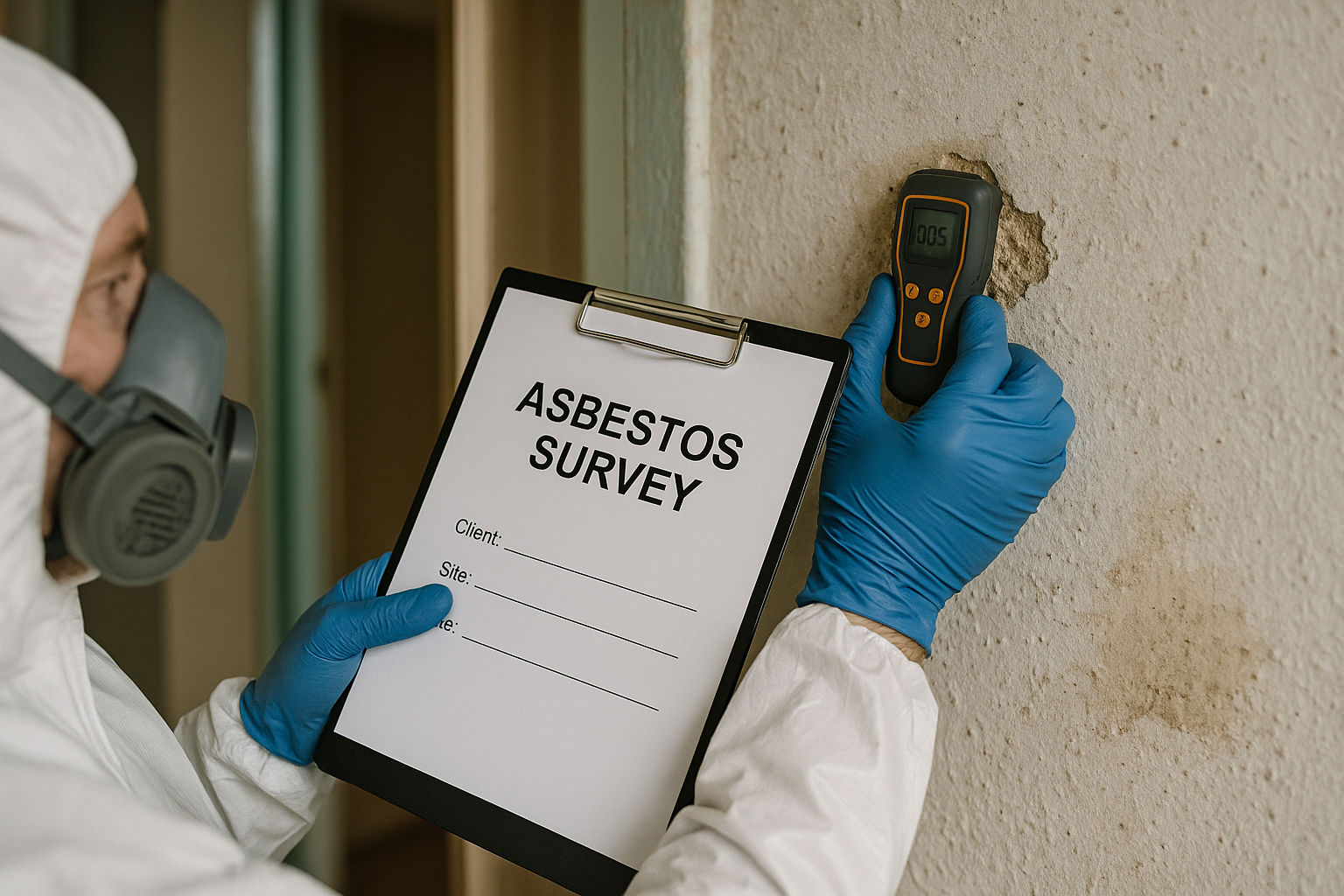
Asbestos awareness training
This is the entry-level training for people who may come across asbestos during their work but are not expected to disturb it intentionally. Typical attendees include electricians, plumbers, maintenance teams, decorators, data installers and general trades.
Awareness training usually covers:
- What asbestos is and why it is hazardous
- Common asbestos-containing materials in buildings
- Where asbestos is often found
- How to avoid accidental disturbance
- What to do if suspect materials are discovered
- Basic duties under the Control of Asbestos Regulations
This form of asbestos certification does not permit hands-on asbestos work. It is about recognition and avoidance, not sampling, removal, repair or remediation.
Training for non-licensed asbestos work
Some lower-risk asbestos tasks do not require an HSE licence, but they still require suitable task-specific training. The training should reflect the materials involved, the control measures, the equipment being used and the decontamination arrangements.
Examples can include certain limited tasks involving asbestos cement or other lower-risk materials where fibre release is expected to remain low if the work is properly planned and controlled. Even then, a risk assessment and safe system of work are still essential.
When checking asbestos certification for non-licensed work, look for evidence that the training is practical and role-specific. General awareness training alone is not enough.
Training for licensed asbestos work
Higher-risk asbestos work must only be carried out by a contractor holding the relevant HSE asbestos licence. This usually applies to more friable materials such as lagging, insulation and sprayed coatings.
Training at this level is more detailed and often includes:
- Use of specialist respiratory protective equipment and PPE
- Enclosure procedures
- Decontamination methods
- Waste handling requirements
- Emergency procedures
- Supervision and site documentation
If a contractor is proposing licensable work, do not rely on an operative’s training certificate alone. You also need to confirm that the contractor organisation itself holds the appropriate HSE licence.
Asbestos certification for surveyors and analysts
Surveying and analysis are often misunderstood because they sit apart from removal work. Surveyors are not licensed by the HSE in the same way as licensed removal contractors, but they still need to be competent, and the organisation should be able to demonstrate suitable quality arrangements.
HSG264 is the key guidance for asbestos surveying. It explains what a suitable survey should achieve, how it should be planned and what standards are expected in inspection, sampling and reporting.
Surveyor competence
A competent asbestos surveyor should understand asbestos-containing materials, building construction, inspection techniques, sampling methods, risk assessment and reporting requirements. Recognised qualifications such as BOHS P402 are commonly used as evidence of surveyor competence.
Clients should ask:
- Who will attend site?
- What qualifications do they hold?
- What experience do they have with similar properties?
- Does the organisation operate within an appropriate accredited framework?
Just as important, you need the right survey type. If your building is occupied and you need to manage asbestos during normal use, a management survey is usually the correct starting point.
If intrusive works are planned, you will usually need a refurbishment survey before the work begins. If the structure is due to be taken down, a demolition survey is the appropriate route.
Analyst and laboratory competence
Where bulk samples need identification or air monitoring is required, analyst competence matters just as much as surveyor competence. Analysts carrying out air testing and four-stage clearance work should hold suitable qualifications, commonly BOHS P403 and P404 or equivalent.
Organisations carrying out laboratory analysis or analytical services should work within a UKAS-accredited scope where applicable. Accreditation applies to the organisation and the specific activities covered, not simply to an individual member of staff.
If you need confirmation of a suspect material, professional asbestos testing is usually the safest route. Where a sample has already been collected appropriately, sample analysis can confirm whether asbestos is present.
Licensing, accreditation and certificates: the differences that matter
One of the biggest sources of confusion around asbestos certification is that several different terms are used as if they mean the same thing. They do not.
Training certificate
A training certificate shows that an individual has completed a course. It does not automatically prove ongoing competence, site experience or authority to carry out every type of asbestos work.
HSE licence
An HSE asbestos licence applies to certain higher-risk asbestos work. It is granted to the contractor organisation, not to a single operative. If the work is licensable, this is essential.
UKAS accreditation
UKAS accreditation applies to organisations that have been independently assessed as competent for specific activities within a defined scope. In asbestos services, this is commonly relevant to surveying, testing and analysis.
Clearance paperwork and certificates
After licensed removal, a formal clearance process may be required before the area can be handed back. Clients sometimes refer to this paperwork as asbestos certification, but it only relates to that stage of the project. It does not replace survey information, contractor checks or the need for proper records elsewhere in the job.
When reviewing documents, use this checklist:
- Check the name of the individual and the organisation
- Check exactly what the certificate, licence or accreditation covers
- Check whether it is current
- Check whether it matches the work being proposed
- Check whether supporting evidence is available, such as insurance, plans of work and previous reports
How to verify asbestos certification before appointing anyone
Procurement mistakes usually happen when programmes are tight. A contractor says they are qualified, sends over a certificate and work starts before anyone checks whether the paperwork is relevant.
A better approach is to verify asbestos certification in a structured way before instruction.
Questions to ask a surveyor, analyst or contractor
- What asbestos-related work are you competent to carry out?
- Is your training role-specific or awareness level only?
- Do you hold an HSE licence where the work requires one?
- Is your organisation UKAS accredited for this activity where applicable?
- Who will attend site, and what qualifications do they hold?
- Can you provide recent example reports or relevant documentation?
- How will sampling, access and reporting be managed?
- What assumptions or exclusions will apply?
Red flags to watch for
- Vague claims of being “fully certified” without any detail
- Out-of-date certificates
- Awareness training presented as proof of removal competence
- No clear distinction between surveying, testing and removal
- Reluctance to explain whether work is licensed or non-licensed
- Poorly written reports or missing scope information
- No evidence of quality systems or traceable documentation
If anything feels unclear, pause the instruction and ask more questions. A short delay at procurement stage is usually far cheaper than dealing with contamination, a failed refurbishment programme or emergency remediation after accidental disturbance.
Choosing the right asbestos service for your building
Many people searching for asbestos certification are really trying to work out what service they need next. The answer depends on what is happening in the building and how the area will be used.
When you need a survey
If the building is occupied and you need to manage asbestos during day-to-day use, a management survey is usually appropriate. This identifies asbestos-containing materials that could be disturbed during normal occupation or routine maintenance.
If refurbishment works are planned, a management survey is not enough. Refurbishment work is intrusive by nature, so the affected areas need a dedicated survey before any strip-out, drilling, cutting or opening-up begins.
Where demolition is planned, the survey needs to be fully intrusive in scope for the structure concerned. Starting demolition activity without the correct survey is one of the clearest ways to create avoidable asbestos risk.
When testing is enough
Sometimes the issue is a single suspect material rather than a whole building. A ceiling tile, textured coating, cement panel, floor tile adhesive or boxing panel may need confirmation before maintenance work can proceed.
In that situation, targeted testing may be the better option. If you need a specialist visit, you can also arrange further asbestos testing for suspect materials and areas.
For straightforward situations where sampling is suitable and managed correctly, an asbestos testing kit can be a practical first step. Some clients simply search for a testing kit when they need to check a material quickly before deciding whether a wider survey is necessary.
When removal may be required
If asbestos-containing materials are damaged, deteriorating, likely to be disturbed or incompatible with planned works, removal may be necessary. The level of control depends on the material, its condition and the type of work involved.
Do not assume all asbestos must be removed immediately. In many cases, asbestos can be managed safely in situ if it is in good condition, properly recorded and unlikely to be disturbed. The correct decision should follow a suitable survey, risk assessment and management review.
Practical advice for property managers and dutyholders
Good asbestos control is built on clear records and sensible procurement. If you are responsible for a property portfolio, your aim should be to make decisions quickly without cutting corners.
These actions help:
- Keep an asbestos register current and make sure relevant contractors can access it before work starts
- Check survey scope carefully so the inspection matches the planned activity
- Brief contractors properly on known asbestos locations and site restrictions
- Do not rely on old reports blindly if the building has changed or planned works are more intrusive than before
- Confirm who is taking samples and how results will be reported
- Store evidence centrally including reports, plans, certificates and communication records
It also helps to use local specialists who understand the building stock in your area. If you need support in the capital, an asbestos survey London service can help with offices, blocks, retail units and mixed-use properties. For projects in the North West, an asbestos survey Manchester service can support planned works, acquisitions and compliance reviews.
Common misunderstandings about asbestos certification
Several myths come up again and again when clients ask about asbestos certification. Clearing these up early makes procurement much easier.
“A certificate means they can do any asbestos work”
No. A certificate only means what it says it means. Awareness training, survey qualifications, analyst qualifications and licensed removal competence are all different things.
“If a material contains asbestos, it must always be removed”
No. Some asbestos-containing materials can remain in place if they are in good condition, properly assessed and unlikely to be disturbed. Removal is not the only control option.
“A management survey covers refurbishment works”
No. A management survey is not designed for intrusive refurbishment activity. If the planned works will disturb the fabric of the building, a more intrusive survey is usually required for the affected area.
“Testing one sample tells you everything about the building”
No. A sample result only confirms the material tested. It does not replace a properly scoped survey where wider inspection is needed.
“Clearance paperwork proves the whole site is asbestos-free”
No. Clearance documentation relates to specific removal works and the area covered by that process. It does not mean the entire building contains no asbestos.
What good asbestos documentation should look like
Whether you are reviewing survey reports, training records or analytical results, good documentation should be clear, specific and traceable. Vague wording creates risk because different parties can interpret it differently.
Useful asbestos records usually include:
- The property or area inspected
- The scope and purpose of the work
- Any limitations or exclusions
- Material assessments and sample references where relevant
- Plans, photographs or location details
- Recommendations that match the findings
- Names of the people and organisation involved
If the report is hard to follow, missing plans, unclear on scope or inconsistent in terminology, query it before relying on it. The quality of the paperwork often tells you a great deal about the quality of the service behind it.
Frequently Asked Questions
Is there a single UK asbestos certification that covers all asbestos work?
No. Asbestos certification is a general term people use for several different forms of evidence, including training certificates, surveyor qualifications, analyst qualifications, HSE licences and UKAS accreditation. You need to check which one is relevant to the work being proposed.
Can someone with asbestos awareness training take samples or remove asbestos?
No. Awareness training is designed to help people recognise asbestos risks and avoid disturbing materials. It does not qualify them to carry out removal work or other specialist asbestos activities.
How do I know if a surveyor or asbestos company is competent?
Ask what qualifications the individual holds, what experience they have with similar properties, and whether the organisation works within an appropriate accredited framework. Also check that the service being offered matches the job, whether that is surveying, testing, analysis or removal.
Do I need a survey or just testing?
If you only need to confirm whether a single suspect material contains asbestos, targeted testing may be enough. If you need to manage asbestos in an occupied building or plan intrusive works, you will usually need a properly scoped survey.
What should I do before appointing an asbestos contractor or surveyor?
Check the scope of their asbestos certification, confirm whether any HSE licence is required, review example reports, and make sure the service matches your building activity. Do not rely on broad claims of being certified without detailed evidence.
Need clear advice and the right paperwork for your property? Supernova Asbestos Surveys provides surveys, testing and asbestos support across the UK. Call 020 4586 0680 or visit asbestos-surveys.org.uk to book a survey or speak to our team.