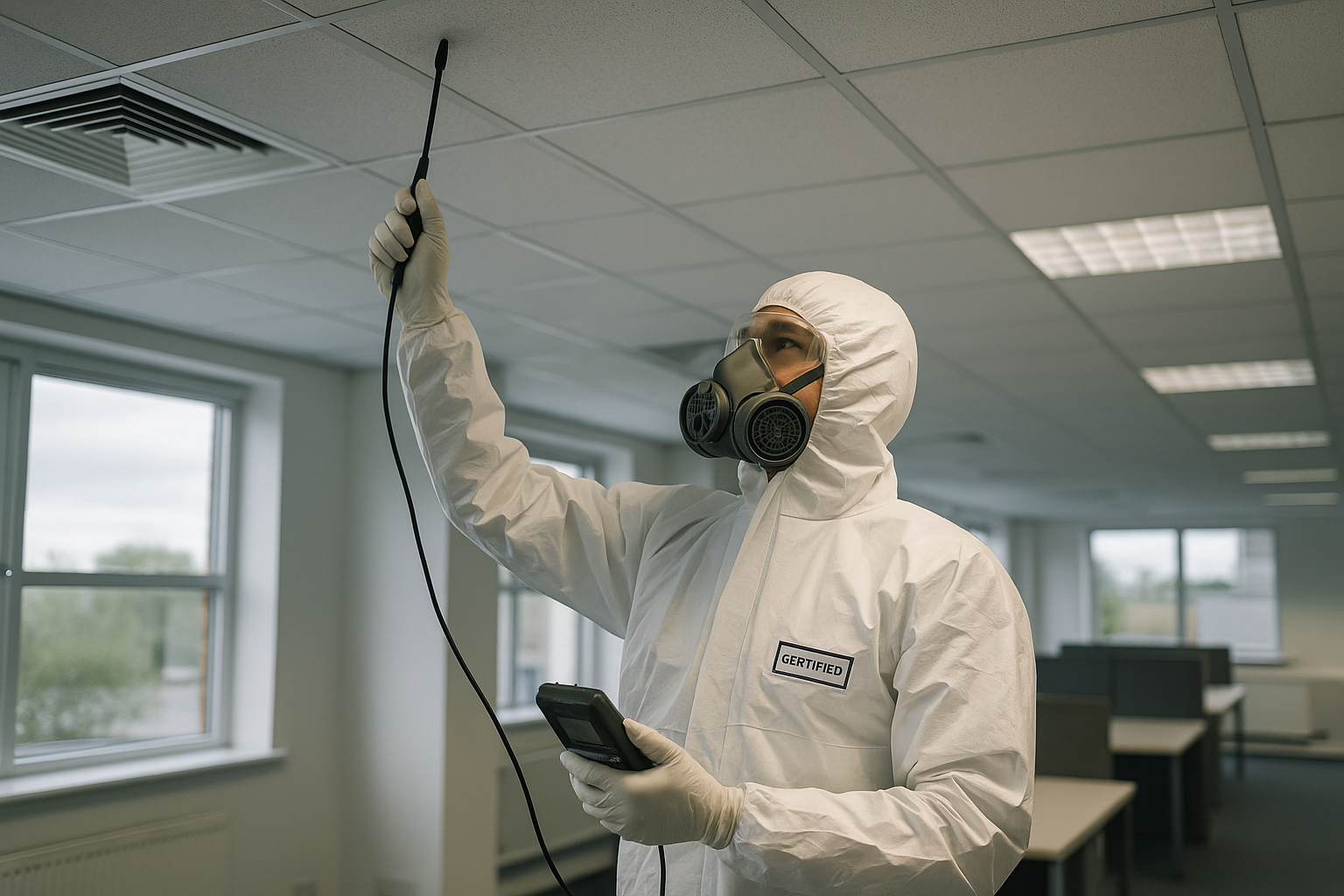
Ask for a type 2 asbestos survey today and you will often get a pause, even from experienced property professionals. The term still turns up in old reports, lease packs and contractor paperwork, but current HSE guidance no longer uses it. That matters because using outdated wording can lead to the wrong survey being booked, the wrong areas being inspected and the wrong information being handed to contractors.
For landlords, dutyholders, facilities teams and managing agents, the real issue is simple: what survey do you actually need to stay compliant and keep people safe? In most cases, when someone asks for a type 2 asbestos survey, they mean the survey now known as a management survey.
What is a type 2 asbestos survey?
A type 2 asbestos survey is an older term from a previous asbestos survey classification system. Under current HSE guidance and HSG264, the nearest equivalent is an asbestos management survey.
In practical terms, a type 2 asbestos survey is used to locate, as far as reasonably practicable, asbestos-containing materials that could be disturbed during normal occupation, routine maintenance or minor works. It is designed for buildings that remain in use, not for intrusive pre-construction work.
If the premises are occupied and you need an asbestos register, a management plan or reliable information for everyday maintenance, this is usually the right starting point. If walls, floors, ceilings or service voids are going to be opened up, it is not enough.
Why the term type 2 asbestos survey still causes confusion
Older asbestos language never fully disappeared from the property sector. A type 2 asbestos survey may still be requested in tender documents, archived reports, handover files and maintenance instructions because those labels were widely used for years.
The problem is that old terminology can blur the scope. Someone may ask for a type 2 asbestos survey when they actually need a pre-works intrusive inspection for refurbishment or demolition.
Old and current survey terms
- Type 2 asbestos survey broadly aligns with a management survey
- Old type 3 references broadly align with intrusive surveys before major works
- Current guidance separates intrusive surveys into a refurbishment survey and a demolition survey
If a contractor or client asks for a type 2 asbestos survey, ask one follow-up question straight away: is the building staying in normal use, or is work planned that will disturb the fabric? That answer usually tells you what is actually needed.
When a type 2 asbestos survey is the right choice
A type 2 asbestos survey is normally appropriate where a building is occupied and asbestos information is needed for ongoing management. It helps identify suspected asbestos-containing materials in accessible areas and assesses their condition so the risk can be managed properly.
This is commonly suitable for offices, schools, shops, communal areas, warehouses, industrial premises and other non-domestic properties that are in day-to-day use. It is also often used when a new dutyholder takes responsibility for a building and needs dependable asbestos information.
Typical situations where it applies
- You are responsible for a pre-2000 non-domestic property and have no reliable asbestos records
- You are taking over management of a site and need an asbestos register
- You need to support routine maintenance and minor installation work
- You are updating incomplete or unclear asbestos records
- You need to provide asbestos information to staff, tenants or contractors
If that sounds familiar, a type 2 asbestos survey is usually the practical option. It gives you usable information for managing risk without the disruption of a fully intrusive inspection.
When a type 2 asbestos survey is not enough
This is where many compliance problems begin. A type 2 asbestos survey is designed for normal occupation and routine use. It is not designed to find all hidden asbestos in areas that will only be exposed during major works.
If refurbishment, strip-out or demolition is planned, asbestos may be hidden behind walls, above ceilings, under floors, inside risers or within service voids. A management-style inspection may not access those areas because the survey scope is different.
Choose the survey based on the work planned
- Normal occupation and routine maintenance: type 2 asbestos survey or management survey
- Refurbishment or structural alteration: intrusive pre-works survey of the affected area
- Demolition: fully intrusive survey before demolition starts
- Known asbestos left in place: periodic review with a re-inspection survey
Never rely on a type 2 asbestos survey for refurbishment or demolition planning. If contractors are going to disturb the building fabric, the correct intrusive survey must be completed first.
Is a type 2 asbestos survey a legal requirement?
The phrase type 2 asbestos survey does not appear in the Control of Asbestos Regulations, but the underlying legal duties are very real. Dutyholders must identify whether asbestos is present, or liable to be present, assess the risk and manage that risk.
For many occupied non-domestic premises, a management-style survey is the most practical way to meet that duty where suitable information is not already available. HSG264 and wider HSE guidance explain how asbestos surveys should be planned, carried out and reported.
Who may hold the duty to manage?
- Commercial property owners
- Landlords
- Managing agents
- Employers
- Facilities managers
- Anyone with responsibility for maintenance or repair
If you control maintenance access or hold repair obligations under a lease or contract, you may have asbestos management duties. In practice, that means you need reliable survey information, an up-to-date record and a management plan that works on site.
What compliance usually involves
- Finding out whether asbestos is present or likely to be present
- Recording the location and condition of materials
- Assessing the risk of disturbance
- Preparing and implementing an asbestos management plan
- Providing information to anyone liable to disturb asbestos
- Reviewing known materials over time
If your building was constructed before 2000 and there is no dependable asbestos information, arranging the right survey is often the first practical step.
What happens during a type 2 asbestos survey?
A good type 2 asbestos survey should feel organised and proportionate. The aim is to inspect all reasonably accessible areas, identify suspect materials, take samples where needed and produce a report that can actually be used by the people managing the building.
Before the survey
The surveyor will usually ask for key property details so the scope can be set properly. Give as much information as possible at the start, especially if there are access issues or previous asbestos records.
- Property address and postcode
- Building type and approximate age
- Number of floors or overall size
- Whether the site is occupied
- Any access restrictions
- Previous asbestos reports or registers
- Planned maintenance or minor works
Arrange access early. Locked rooms, basements, risers, roof voids and plant areas often cause delays and can leave parts of the building uninspected.
During the survey
The surveyor carries out a systematic inspection of accessible areas. Suspect materials are assessed visually and, where appropriate, small samples are taken for laboratory confirmation.
Sampling is a normal part of a type 2 asbestos survey. Where there is a specific concern about one material or location, targeted asbestos testing may also be useful.
Samples are then sent for sample analysis through the appropriate laboratory process. In occupied premises, surveyors usually work carefully around staff, tenants and visitors, although short local restrictions may be needed while samples are taken.
After the survey
You should receive a report that clearly shows what was found, where it was found, the condition of the material and what action is recommended. If the report is vague or lacks location detail, it becomes much harder to manage asbestos properly afterwards.
A useful report will normally include:
- Material assessment information
- Locations of identified or presumed asbestos-containing materials
- Photographs
- Floor plans or marked-up layouts where appropriate
- Laboratory results for samples taken
- Recommendations for management, repair, encapsulation, re-inspection or removal
- Any limitations, exclusions or inaccessible areas
What areas are usually inspected in a type 2 asbestos survey?
A type 2 asbestos survey focuses on accessible parts of the building where asbestos-containing materials could be disturbed during normal occupation, maintenance or minor installation work. The exact scope depends on the premises, but certain materials appear regularly in older properties.
- Ceilings and ceiling tiles
- Textured coatings
- Vinyl floor tiles and bitumen adhesives
- Pipe insulation and pipe boxing
- Service risers and plant rooms
- Asbestos cement panels, soffits and roof products
- Insulating boards in cupboards, ducts and partitions
- Fire doors and older fire protection materials
- Electrical back boards and insulation products
- Panels behind heaters, sinks or service equipment
Not every area can always be inspected on the day. If access is not possible, the report should make that clear. Those areas may need to be presumed to contain asbestos until they can be checked properly.
How long is an asbestos report valid for?
This is one of the most common questions linked to a type 2 asbestos survey. There is no fixed expiry date that automatically makes an asbestos report valid forever or invalid after a set period.
An asbestos report remains useful only while it still reflects the actual condition and layout of the building. If the property has changed, materials have deteriorated, inaccessible areas have since been opened up or work has taken place, the report may no longer be reliable on its own.
What affects whether a report is still current?
- The age of the survey
- Whether the building has been altered since the survey
- Whether previously inaccessible areas can now be inspected
- The condition of known asbestos-containing materials
- How heavily the property is used
- Whether contractors need updated information before work
A report should be treated as a live management document, not a file that sits untouched on a shelf. If asbestos is being managed in place, the information needs regular review and the condition of known materials should be checked periodically.
That is why many dutyholders arrange a re-inspection survey to confirm whether recorded materials remain in the same condition and whether the management plan is still suitable.
How to use the results of a type 2 asbestos survey properly
The survey itself is only the starting point. The value of a type 2 asbestos survey comes from what happens next.
Once the report is issued, the findings should feed directly into your asbestos register and management plan. Contractors, maintenance teams and anyone else who could disturb asbestos need the relevant information before work starts.
Practical steps to take after the survey
- Create or update your asbestos register
- Review the condition and risk of each identified material
- Control access to higher-risk areas where appropriate
- Brief contractors before maintenance, repair or installation work
- Plan periodic re-inspections for materials left in place
- Arrange remedial action where damage or likely disturbance is identified
Not every asbestos-containing material needs to be removed. If it is in good condition and unlikely to be disturbed, management in place is often the correct and proportionate approach under HSE guidance.
Where materials are damaged, deteriorating or likely to be disturbed, action may include repair, sealing, encapsulation or asbestos removal. The right response depends on the material, its condition and how the area is used.
Common mistakes when booking a type 2 asbestos survey
Most problems around a type 2 asbestos survey are avoidable. They usually come down to poor scoping, missing access or assumptions about what an old report actually covers.
- Booking a type 2 asbestos survey when refurbishment work is planned
- Assuming an old report still reflects the current building
- Failing to provide access to plant rooms, risers or locked areas
- Not sharing previous reports, drawings or known asbestos records
- Letting contractors start work without seeing the relevant asbestos information
- Treating the survey report as the end of the process rather than the start of management
If you are unsure what survey to order, describe the planned works rather than relying on old survey labels. That usually avoids delays and makes sure the inspection scope matches the real risk.
Type 2 asbestos survey or testing only: which do you need?
Sometimes a full type 2 asbestos survey is the right choice. Sometimes you only need targeted testing of one suspect material. The difference comes down to the question you need answered.
If you need a building-wide picture for management purposes, a survey is usually required. If you only need to confirm whether one board, tile, coating or panel contains asbestos, targeted testing may be enough.
- Choose a survey when you need a broader understanding of asbestos risks across the premises
- Choose testing when you are checking a specific material or isolated concern
Where there is a single suspect item, targeted asbestos testing can be a practical option. For occupied commercial buildings with wider management duties, a survey is usually more useful.
What makes a good type 2 asbestos survey report?
A strong type 2 asbestos survey report should help you make decisions quickly. You should be able to see where materials are, what condition they are in, what the immediate risk is and what action is recommended.
Look for clear location descriptions, photographs, sample results, material assessments and obvious notes on limitations. If the report does not tell you what was inaccessible, you cannot judge whether further action is needed.
Signs the report is doing its job
- Locations are specific, not vague
- Photographs support the written findings
- Materials are clearly identified or presumed
- Recommendations are practical and proportionate
- Inaccessible areas and caveats are easy to spot
- The report can be turned into an asbestos register without guesswork
If your report leaves your maintenance team asking basic questions, it is not working hard enough for you.
Arranging a type 2 asbestos survey in London or nationwide
If you manage property in the capital, booking an asbestos survey London service with local knowledge can make access, scheduling and reporting much easier. The same principle applies across the UK: choose a surveyor who understands occupied buildings, contractor pressures and the need for clear reporting.
Before booking, have the property details ready, confirm whether the site is occupied and be clear about any planned works. If there is any chance the project goes beyond routine maintenance, say so at the start so the correct survey type can be recommended.
Frequently Asked Questions
Is a type 2 asbestos survey still an official term?
No. A type 2 asbestos survey is an older term that is still used informally, but current HSE guidance uses different survey classifications. In most cases, it now means a management survey for occupied premises.
Can I use a type 2 asbestos survey before refurbishment works?
Usually no. If refurbishment will disturb the building fabric, a management-style survey is not sufficient. You will normally need an intrusive refurbishment survey of the affected area before work starts.
Does a type 2 asbestos survey expire?
There is no fixed expiry date. The report remains useful only while it accurately reflects the building, the condition of materials and any access limitations. If the property changes or materials deteriorate, the information should be reviewed and updated.
What if the survey could not access some areas?
The report should clearly list inaccessible areas. Those locations may need to be presumed to contain asbestos until they can be inspected properly, especially if future works could disturb them.
Do all asbestos materials found in a type 2 asbestos survey need removing?
No. Many materials can be safely managed in place if they are in good condition and unlikely to be disturbed. Removal is usually considered where materials are damaged, deteriorating or likely to be affected by planned works.
If you need clear advice on whether a type 2 asbestos survey is the right option for your building, Supernova Asbestos Surveys can help. We carry out management, refurbishment, demolition, re-inspection and testing services nationwide. Call 020 4586 0680 or visit asbestos-surveys.org.uk to arrange the right survey for your property.