Get asbestos law wrong and the fallout is rarely minor. One missing survey, one outdated register, or one contractor drilling into the wrong board can trigger enforcement action, delays, expensive remedial work, and avoidable exposure risks.
For property managers, landlords, employers, and duty holders, asbestos law is not a side issue. It sits at the centre of safe building management, maintenance planning, refurbishment, demolition, and contractor control in older premises across the UK.
What asbestos law means in practice
When people talk about asbestos law, they are usually referring to the duties created by the Control of Asbestos Regulations, supported by wider health and safety law, HSE guidance, and surveying standards in HSG264.
The practical message is straightforward. If asbestos is present, or likely to be present, you are expected to identify the risk, assess it properly, and prevent anyone from being exposed to asbestos fibres.
That is why surveys, sampling, asbestos registers, management plans, contractor briefings, and regular reviews all matter. Asbestos law is not only about removal. In many buildings, it is equally about finding asbestos, recording it, monitoring it, and making sure it is not disturbed.
The HSE enforces these duties. Inspectors can ask to see records, review how asbestos is being managed, issue improvement notices, stop unsafe work, and prosecute where responsibilities have been ignored.
The main legal framework
For most duty holders and employers, the key parts of asbestos law include:
- Control of Asbestos Regulations for managing asbestos, controlling exposure, and setting duties around work involving asbestos
- Health and Safety at Work etc. Act for the wider duty to protect employees and others affected by work activities
- HSG264 for recognised asbestos survey types and expectations around competent surveying
- HSE guidance covering management, training, licensed work, and safe systems of work
- RIDDOR requirements where dangerous occurrences or reportable incidents arise
If you manage property, the takeaway is simple: asbestos law expects active control, not assumptions.
Which buildings are affected by asbestos law?
Asbestos law is especially relevant to buildings constructed or refurbished before asbestos use was fully banned in the UK. In practice, any older building should be treated as potentially containing asbestos unless there is reliable evidence showing otherwise.
The legal duty to manage asbestos applies to non-domestic premises. That covers far more buildings than many people first assume.
Premises commonly affected
- Offices and business parks
- Warehouses and factories
- Schools, colleges, and universities
- Hospitals, clinics, and care settings
- Retail units, restaurants, and hotels
- Churches, village halls, and public buildings
- Communal areas in blocks of flats, including corridors, stairwells, risers, basements, and plant rooms
Domestic homes are treated differently, but asbestos law can still affect residential properties when tradespeople are working there. If refurbishment, structural alteration, or demolition is planned, asbestos must still be considered before work starts.
If you are unsure whether your premises fall within the duty to manage, the safest approach is to assume they do until a competent surveyor confirms otherwise.
The duty to manage under asbestos law
The best-known part of asbestos law for property professionals is the duty to manage. This usually applies to owners, landlords, managing agents, employers, and anyone with responsibility for maintenance or repair under a lease, tenancy, or contract.
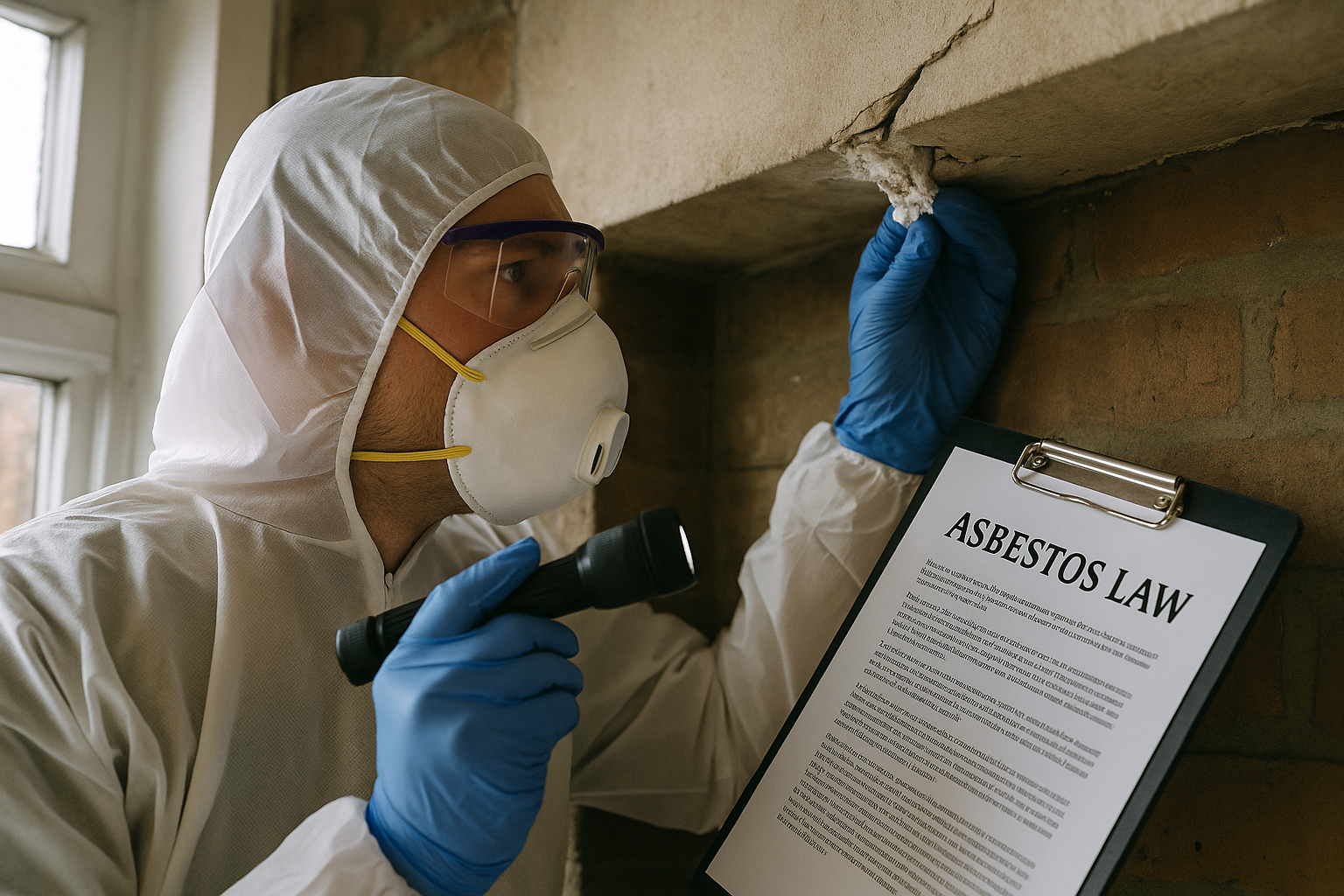
The law does not require every asbestos-containing material to be removed automatically. The legal requirement is to manage the risk so nobody is exposed.
What duty holders must do
- Find out whether asbestos is present or likely to be present
- Identify the location and condition of known or presumed asbestos-containing materials
- Assess the risk of those materials being disturbed
- Prepare a written asbestos management plan
- Keep an accurate and accessible asbestos register
- Share relevant information with contractors, staff, and maintenance teams
- Monitor materials and review arrangements regularly
This is where a proper management survey becomes essential. Without one, many duty holders are trying to manage asbestos with incomplete information.
A common mistake is assuming the legal duty ends once a survey report arrives. It does not. Asbestos law expects you to use that report, update records, brief anyone carrying out work, and arrange follow-up reviews when needed.
When surveys and testing are required under asbestos law
Asbestos law does not say that every material in every building must be tested immediately. What it does require is a suitable and sufficient approach to identifying and controlling risk.
In many real-world situations, that means surveys or sampling are effectively necessary if you want to stay compliant.
Before routine occupation and maintenance
If you manage an occupied non-domestic building, you will usually need an asbestos management survey to identify materials that could be disturbed during normal occupation, routine maintenance, or minor installation work.
This provides the baseline information for your asbestos register and management plan. Without it, it is very difficult to brief contractors properly or judge whether materials can remain safely in place.
Before refurbishment work
Planned refurbishment changes the legal picture. If works will disturb the fabric of the building, asbestos law requires a more intrusive survey of the affected area before work starts.
That is where a demolition survey or refurbishment and demolition survey becomes necessary. This type of survey is designed to locate asbestos hidden behind walls, above ceilings, beneath floors, within risers, or inside structural elements.
Do not rely on an old management survey for intrusive works. It is the wrong survey type for that level of disturbance.
Before demolition
If a building, or part of it, is due to be demolished, asbestos law expects asbestos-containing materials within the scope of work to be identified beforehand so they can be managed or removed safely before demolition proceeds.
Starting demolition without the correct survey is one of the clearest ways to breach your duties.
When a material needs confirmation
Sometimes the issue is not a full survey but a single suspect material. In those cases, targeted asbestos testing can confirm whether asbestos is present.
That might apply to a ceiling tile, insulation board, textured coating, floor tile, pipe insulation debris, or an old panel uncovered during maintenance. Sampling has to be done safely, and the result then needs to be considered in the wider context of building management.
A lab result is useful, but it does not replace the broader decisions asbestos law requires.
Survey types recognised by HSG264
HSG264 is the HSE guidance document that sets the benchmark for asbestos surveying. If you are appointing a surveyor, their work should align with this guidance.

Management survey
A management survey is the standard survey for occupied premises. Its purpose is to locate, as far as reasonably practicable, the presence and extent of asbestos-containing materials that could be damaged or disturbed during normal use, routine maintenance, or simple installation work.
It is usually non-intrusive or only lightly intrusive. The findings feed directly into your asbestos register and management plan.
Arrange this type of survey when:
- You are taking over responsibility for an older commercial building
- You do not have a current asbestos register
- Your existing records are incomplete or unreliable
- Contractors need asbestos information before maintenance work
Refurbishment and demolition survey
This survey is fully intrusive and is required before refurbishment or demolition in the relevant area. The aim is to locate all asbestos-containing materials, including those hidden within the building fabric.
Because it is intrusive, the area being surveyed normally needs to be vacant. This is not a paperwork exercise. It is a practical requirement for safe project planning.
Re-inspection survey
Asbestos law expects known or presumed asbestos-containing materials to be monitored over time. A re-inspection survey helps duty holders check whether previously identified materials remain in the same condition and whether the management plan still reflects the building as it stands now.
If materials have deteriorated, been damaged, or become easier to access, your risk assessment and control measures may need updating.
How asbestos law applies to testing, sampling, and DIY kits
Testing has a clear role within asbestos law, but it needs to be handled carefully. Sampling can release fibres if it is done badly, especially where materials are damaged or more friable.
For commercial premises, the safest option is usually to have suspect materials sampled by a competent professional as part of a wider inspection or survey. That gives you both the laboratory result and practical advice on what to do next.
For some lower-risk domestic situations, a homeowner may choose an asbestos testing kit to submit a sample for analysis. There is also a simple testing kit option for people who need an initial answer on a specific material.
Even then, a positive result should lead to professional advice rather than guesswork. Testing tells you whether asbestos is present. It does not, on its own, create a safe management plan.
Practical advice on sampling
- Do not cut, sand, drill, scrape, or break suspect materials unnecessarily
- Do not ask a general tradesperson to “just take a sample”
- Use a competent surveyor where the material is damaged, friable, or located in a workplace
- Treat positive results as part of a wider management issue, not an isolated fact
- Keep people away from the area if the material has already been disturbed
If you need direct laboratory confirmation as part of a wider property decision, specialist asbestos testing services can help you move from suspicion to a clear action plan.
Registers, risk assessments, and management plans
Asbestos law is not satisfied by identification alone. Once asbestos is known or presumed, the risk must be assessed and managed properly.
That means looking beyond a lab certificate. The type of material, its condition, surface treatment, accessibility, and likelihood of disturbance all affect the real risk in the building.
What your asbestos register should include
- The location of each known or presumed asbestos-containing material
- A description of the material
- Its condition at the time of inspection
- Material and priority risk assessments
- Recommended actions
- Dates of inspection and review
What your management plan should do
- Set out who is responsible for asbestos management
- Explain how asbestos information will be shared with contractors and staff
- Confirm how materials will be monitored
- State when repair, encapsulation, or removal is needed
- Provide a process for review after damage, changes, or planned works
Review should happen regularly and whenever circumstances change. If occupancy changes, maintenance activity increases, damage occurs, or works are planned, revisit the plan.
Asbestos law expects your records to reflect the building as it is now, not how it looked several years ago.
Training and communication duties under asbestos law
One of the most overlooked parts of asbestos law is communication. Even a good survey has little value if the people carrying out the work never see it.
Anyone likely to disturb asbestos during their work needs suitable information, instruction, and training. That includes in-house maintenance teams and many common trades working in older premises.
Workers who often need asbestos awareness
- Electricians
- Plumbers
- Joiners
- Decorators
- IT and cabling installers
- General maintenance staff
- Refurbishment contractors
- Demolition operatives
Before any work starts, contractors should know:
- Whether asbestos is present or presumed in the work area
- Where the relevant asbestos register or survey is held
- What restrictions or control measures apply
- Who to contact if suspect materials are found or damaged
If a contractor uncovers an unexpected board, insulation, or debris and there is any doubt, stop work immediately. Isolate the area, prevent further access, and get competent advice before work resumes.
Common mistakes that lead to breaches of asbestos law
Most asbestos law failures are not caused by obscure technical points. They usually come from everyday management gaps.
Frequent problems seen in practice
- Assuming a building is asbestos-free because no issues have arisen before
- Relying on an old survey that no longer reflects the premises
- Using a management survey for refurbishment or demolition work
- Failing to update the asbestos register after changes or damage
- Not sharing asbestos information with contractors before work starts
- Letting minor works proceed without checking the register
- Confusing a lab result with a full compliance strategy
- Ignoring communal areas in residential blocks
These mistakes are avoidable. A clear process, up-to-date records, and competent surveying go a long way.
Practical steps to stay compliant with asbestos law
If you are responsible for a building, focus on actions that reduce uncertainty and create a paper trail of sensible control.
- Check whether your premises are likely to contain asbestos. If the building is older and records are weak, assume asbestos may be present.
- Arrange the right survey. Occupied premises usually need a management survey. Planned intrusive works need the correct pre-work survey.
- Build or update your asbestos register. Make sure it is accessible, readable, and current.
- Create a workable management plan. Keep responsibilities clear and practical.
- Brief contractors before they start. Do not wait for them to ask.
- Schedule regular reviews. Re-inspect known materials and update records after changes.
- Stop work if suspect materials are uncovered. Get advice before anyone disturbs them further.
For organisations with multiple sites, standardise the process. Use the same reporting structure, review timetable, and contractor briefing method across the portfolio.
Asbestos law in real property scenarios
Office fit-out
A tenant wants to add new meeting rooms and cabling in an older office. A management survey may help day-to-day occupation, but intrusive fit-out works could disturb hidden materials. Asbestos law points you towards the correct pre-refurbishment survey for the affected area before work begins.
School maintenance
A school has known asbestos-containing materials in ceiling voids and service risers. The duty is not automatic removal. The duty is to keep records current, monitor condition, brief contractors, and ensure maintenance work does not disturb those materials.
Retail unit strip-out
A shop is being stripped back for a new tenant. If walls, ceilings, flooring, or service routes will be opened up, asbestos law requires the right intrusive survey first. Starting strip-out with only historic paperwork is asking for trouble.
Residential block communal areas
Landlords and managing agents often overlook plant rooms, stairwells, basements, and risers. Those areas can fall within the duty to manage. If caretakers, electricians, or fire alarm engineers work there, asbestos information needs to be available and current.
Choosing competent asbestos support
Not all asbestos issues need the same service. The right support depends on what you are trying to achieve.
- If you need baseline compliance for an occupied building, arrange the appropriate survey and management documents.
- If you are planning intrusive works, book the correct pre-refurbishment or pre-demolition survey.
- If you have one suspect material, targeted sampling may be enough as a first step.
- If you already have known asbestos, plan regular reviews and condition checks.
Location matters too. If you need local support in the capital, an asbestos survey London service can help with fast attendance and practical reporting. For the North West, an asbestos survey Manchester service may be the quickest route to compliant action.
Frequently Asked Questions
Is asbestos testing a legal requirement?
Not in every single case, but asbestos law requires a suitable and sufficient approach to identifying and managing risk. In practice, testing or surveying is often necessary where materials are suspected and decisions need to be made safely.
Does asbestos law require removal of all asbestos?
No. The law requires risk to be managed so people are not exposed. If asbestos-containing materials are in good condition, properly recorded, and unlikely to be disturbed, they can often remain in place under an effective management plan.
Who is responsible for asbestos law compliance in a building?
Usually the duty holder is the person or organisation responsible for maintenance or repair of non-domestic premises, or the relevant parts of them. That may be an owner, landlord, managing agent, employer, or another party with contractual responsibility.
What survey do I need before refurbishment?
If the work will disturb the building fabric, you need a refurbishment or demolition survey for the affected area. A standard management survey is not enough for intrusive works.
What should I do if a contractor finds suspect asbestos during work?
Stop work immediately, keep people out of the area, and seek competent advice. Do not allow further disturbance until the material has been assessed and the next steps are clear.
Need help with asbestos law compliance?
If you need clear, practical support with surveys, testing, re-inspections, or project planning, Supernova Asbestos Surveys can help. We work with landlords, managing agents, schools, offices, retailers, industrial sites, and multi-site property portfolios across the UK.
Call 020 4586 0680 or visit asbestos-surveys.org.uk to book a survey, discuss asbestos law obligations, or get advice on the right next step for your building.