One wrong drill hole can turn a tidy maintenance job into an asbestos incident. If you are staring at a garage roof, textured ceiling, floor tile or service duct panel and need a clear answer before work starts, an asbestos testing kit can be a practical first step. The key is using it in the right situation, understanding its limits, and knowing when you need professional help instead.
Asbestos cannot be confirmed by sight alone. Under the Control of Asbestos Regulations, backed by HSE guidance and the surveying standard HSG264, suspect materials must be assessed properly and sampled with care. For homeowners, landlords, facilities teams and property managers, that means choosing the safest route for the job in front of you rather than guessing.
What an asbestos testing kit is actually for
An asbestos testing kit is designed to help you collect a small bulk sample from a suspect material and send it to a laboratory for analysis. The result tells you whether asbestos is present in that specific sample.
That sounds simple, and in the right setting it is. But an asbestos testing kit is not a survey, not an asbestos register, and not a full risk assessment for an entire building.
Used properly, it removes guesswork from a single item or a small number of suspect materials. Used in the wrong setting, it can create unnecessary fibre release and false confidence.
What a kit can do
- Confirm whether a sampled material contains asbestos
- Help you decide whether minor work should pause or proceed
- Provide written laboratory evidence to share with contractors or managing agents
- Support a decision to escalate to wider inspection or removal
What a kit cannot do
- Find every asbestos-containing material in a property
- Assess the condition of all suspect items on site
- Create an asbestos management plan
- Meet duty-to-manage requirements for shared or commercial premises on its own
- Replace a refurbishment or demolition survey
If you need broader answers across a building, proper asbestos testing by a professional is usually the safer and more defensible route.
When an asbestos testing kit may be suitable
An asbestos testing kit can work well where the scope is limited and the material is accessible. The typical example is a domestic setting where you need to check one or two suspect items before minor work begins.
Suitable situations often include:
- A single suspect cement sheet in a garage or outbuilding
- One textured coating that may be disturbed during decoration
- A floor tile or board panel in a domestic room
- A stable material that is easy to reach without breaking it up excessively
- A user who can follow instructions exactly and stop if the material seems unsafe to sample
Even then, the job needs care. The aim is always to take the smallest representative sample possible, create as little dust as possible, and seal it immediately.
When an asbestos testing kit is not enough
This is where many people get caught out. A kit is useful for a narrow question, but it is not a shortcut around legal duties or safe planning.
Do not rely on an asbestos testing kit alone if:
- You are planning refurbishment or demolition
- The property is commercial or has shared common areas
- You need an asbestos register or management information
- The material is damaged, crumbly or friable
- You suspect pipe lagging, sprayed coatings, loose fill insulation or damaged insulation board
- The area is occupied and disturbance could affect others
- You are unsure whether the sample can be taken safely
For dutyholders and property managers, this matters. If you are responsible for a workplace, block, school, retail unit or mixed-use building, the question is rarely just “does this one bit contain asbestos?”. The real question is usually “what is present, what condition is it in, and how is it being managed?”. That calls for a professional survey.
If your project is in the capital or you need local support, arranging an asbestos survey London service is often the quickest way to get compliant answers before works start. The same applies regionally with an asbestos survey Manchester booking or an asbestos survey Birmingham appointment where wider inspection is needed.
Where asbestos is commonly found in UK properties
If a property was built or refurbished before the final ban, asbestos may still be present in ordinary-looking materials. That is why visual assumptions are risky.
Common locations include:
- Textured coatings on ceilings and walls
- Vinyl floor tiles and bitumen adhesive
- Garage and shed roof sheets
- Soffits, gutters and downpipes
- Ceiling tiles and partition boards
- Bath panels and service riser linings
- Fire-resistant boards around heaters, ducts and doors
- Pipe insulation, boiler insulation and old flue components
- External cement sheets and wall panels
The presence of asbestos does not automatically mean immediate danger. The bigger risk usually comes from disturbance.
Drilling, sanding, snapping, stripping, scraping or disposing of a suspect product without checking it first is where exposure problems begin. That is why an asbestos testing kit is often bought just before renovation, rewiring, bathroom replacement or garage work.
Can you identify asbestos by sight?
No. You cannot confirm asbestos by sight, texture, colour or age alone. Some asbestos-containing materials look harmless, while some non-asbestos materials look highly suspicious.
The only reliable way to confirm asbestos in a bulk material is laboratory analysis of a representative sample. That is the real value of an asbestos testing kit: it replaces guesswork with evidence.
Useful questions to ask before any work starts
- Was the material installed before the final ban?
- Is it a product type historically known to contain asbestos?
- Will planned works disturb it?
- Is it damaged, cracked, dusty or broken?
- Is it in a place where people may drill, cut or remove it?
If the answer is yes to any of these, stop the work and assess the next step properly. That may mean using an asbestos testing kit for a limited domestic check, or it may mean calling in a surveyor.
What to check before buying an asbestos testing kit
Online listings can make every kit look the same. They are not. The useful information sits in the detail: what is included, how the sample is handled, and what result you actually receive.
Before buying an asbestos testing kit, check:
- How many separate samples are included
- Whether laboratory analysis is included in the price
- Whether sample bags and submission paperwork are supplied
- Whether return packaging is included
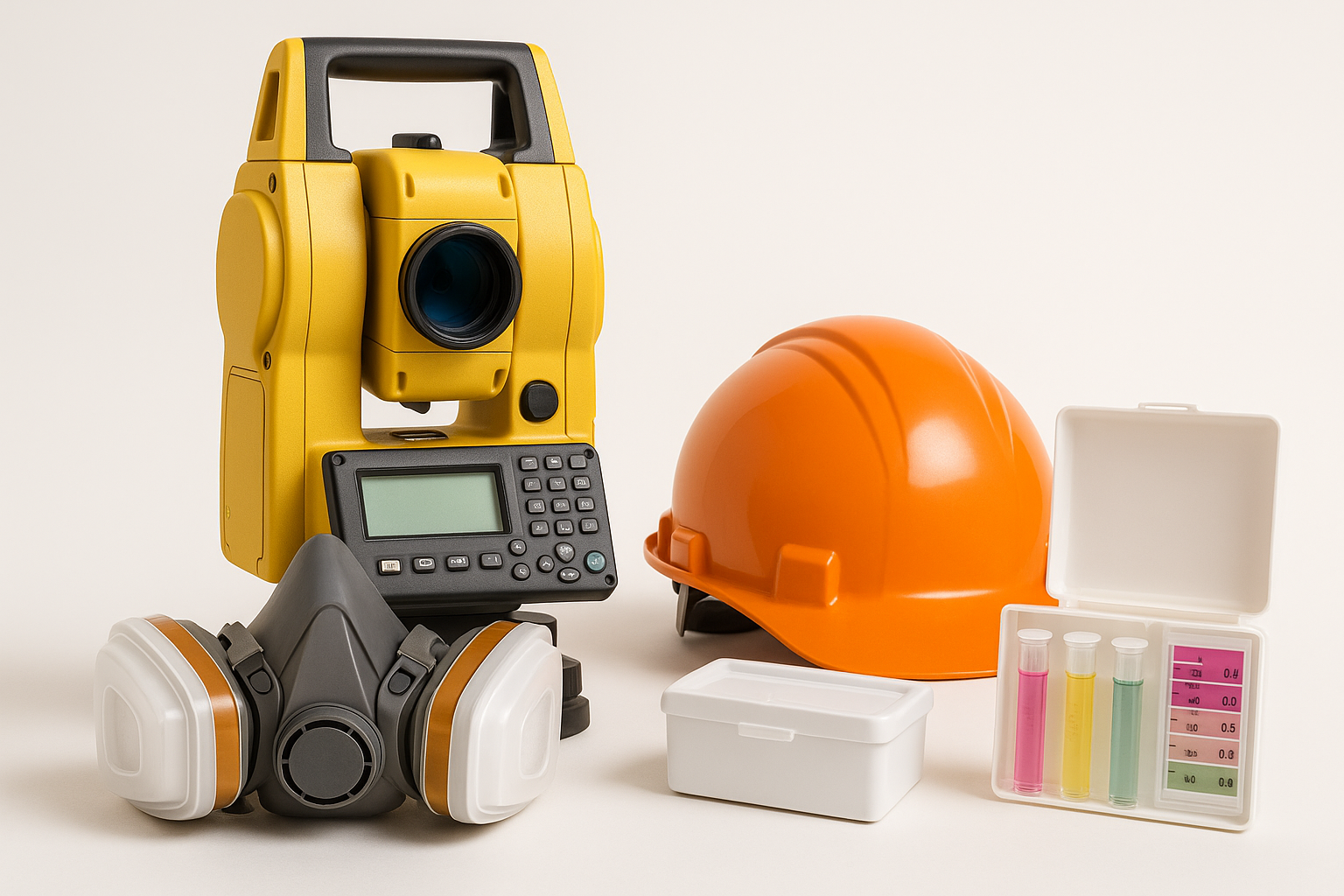
- Whether PPE and RPE are included
- What turnaround is expected once the laboratory receives the sample
- How the result is issued
If the listing is vague about safe handling, sample numbers or the lab process, treat that as a warning sign. A good kit should make the process clearer, not more confusing.
Features that genuinely matter
- Sample count: one, two, four or more separate materials
- Instructions: clear, step-by-step guidance
- Packaging: secure sample bags and simple paperwork
- PPE: whether gloves, coveralls and suitable respiratory protection are supplied
- Result format: written confirmation of whether asbestos is present
The best asbestos testing kit is not the one with the loudest marketing. It is the one that helps you avoid mistakes and get a usable result.
Features and benefits of an asbestos testing kit
People often compare kits on price alone, but the real value is in safety, clarity and decision-making. A cheaper option that leads to poor sampling practice or delayed results is rarely a saving.
Useful benefits include:
- Laboratory confirmation: evidence instead of guesswork
- Simple ordering: one package for collection materials and analysis
- Flexible sample numbers: suitable for one item or several
- Optional PPE and RPE: helpful for domestic users without suitable equipment
- Written results: easier to share with contractors, buyers or agents
- Faster decisions: helps you decide whether work can proceed, pause or escalate
For a homeowner, the benefit is often peace of mind before minor works. For a landlord or property manager, it is better evidence before instructing contractors or deciding whether wider investigation is needed.
If you already have a sample collected correctly and only need the laboratory stage, direct sample analysis may be the simpler option.
Popular essentials to have before taking a sample
Many people focus on the lab result and forget the practical side of collecting the sample safely. The essentials are not glamorous, but they make the process more controlled.
Before using an asbestos testing kit, make sure you have:
- The instructions read fully before you start
- Suitable disposable gloves
- Disposable coveralls if not supplied
- Appropriate respiratory protection where required
- Eye protection if there is a risk of debris
- A method for lightly dampening the area where appropriate
- Labels and a pen for sample identification
- Access to washing facilities afterwards
- A plan for keeping other people away from the area during sampling
The aim is to disturb as little material as possible, contain the sample immediately and leave the area in a safe condition. If you are improvising, you are already increasing risk.
Asbestos testing kit options: which type suits your job?
Not every buyer needs the same product. The right asbestos testing kit depends on how many materials you need to check, whether you already have suitable protective equipment, and whether the sampling task is genuinely low risk.
1. Sample analysis only
This suits people who already have suitable PPE and only need the collection materials and laboratory process.
Typical contents may include:
- Sample bag or bags
- Submission form
- Collection instructions
- Laboratory analysis for the chosen number of samples
This can be cost-effective where the sample is easy to reach and the person collecting it understands the precautions.
2. Kit with PPE and RPE included
For many domestic users, this is the more sensible option. It reduces the temptation to sample suspect material without the right basic protection.
A package of this kind may include:
- Disposable gloves
- Disposable coverall
- Eye protection
- Suitable respirator for low-level sampling tasks
- Sample bags and paperwork
3. Additional tests for multiple materials
This is one of the most useful formats for larger domestic projects and smaller property checks. Instead of sending one sample, you buy a package that covers several suspect materials.
Additional tests are useful when you have concerns about:
- A textured ceiling in one room
- Floor tiles in another area
- Cement sheets in the garage
- A board panel in a cupboard or service space
Buying a testing kit with extra sample capacity is often more efficient than ordering one test at a time.
4. PPE and RPE only
Some buyers only need protective equipment. This can help where sampling has already been arranged separately or extra protection is needed on site.
At a minimum, expect:
- Appropriate respirator
- Disposable gloves
- Disposable coverall
- Eye protection
5. Water absorption test
You may see a water absorption test offered alongside an asbestos testing kit. Treat this carefully. It can sometimes be used as an indicative check when assessing whether a product behaves like asbestos cement, but it is not a definitive identification method.
It cannot confirm or rule out asbestos fibres. If certainty matters, go straight to laboratory testing.
How many samples do you need?
This is one of the most common buying questions, and it catches people out. One sample covers one distinct material from one location. It does not cover an entire building.
As a simple rule, if the material type, appearance, age, finish or location changes, treat it as a separate sample unless a competent surveyor advises otherwise.
Practical examples
- One textured ceiling in one room: usually one sample
- Textured coatings in three rooms: often three samples, especially if applied at different times
- Garage roof and soffits: usually two samples
- Floor tiles and black adhesive beneath: often two samples
- Several identical cement sheets from the same structure: sometimes one representative sample if clearly the same product and age
If you are unsure, it is usually better to buy extra capacity than too little. Running out halfway through a project leads to delay and poor decisions.
How to use an asbestos testing kit more safely
DIY sampling should only be considered where the material is low risk to access and the task is limited. If the material is friable, badly damaged or in a difficult location, stop and bring in a professional.
Where a small domestic sample is appropriate, follow a controlled approach:
- Read the instructions fully before opening anything.
- Keep other people out of the area.
- Turn off fans or anything that may move dust around.
- Put on the supplied or suitable PPE and RPE.
- Lightly dampen the immediate sampling point where appropriate.
- Take the smallest representative piece needed.
- Place it straight into the sample bag and seal it.
- Wipe down or carefully clean the immediate area as instructed.
- Label the sample clearly.
- Wash thoroughly after finishing.
Do not drill deeply, break up large sections or keep taking extra pieces “just to be sure”. More disturbance means more risk, not a better result.
What happens after the result?
A laboratory result is only useful if you act on it properly. Once your asbestos testing kit result comes back, the next step depends on what was sampled and what work is planned.
If the result is negative
You have evidence that the tested sample did not contain asbestos. Keep the report with your property records and share it with contractors if the material will be disturbed.
Remember that the result only applies to the sampled material. It does not automatically clear other suspect items nearby.
If the result is positive
Do not disturb the material further. The next action depends on its type, condition and whether works are planned.
You may need to:
- Leave it in place and manage it if it is in good condition and unlikely to be disturbed
- Label or record it for future reference
- Arrange professional assessment before any works proceed
- Instruct licensed or non-licensed removal as appropriate to the material and task
For landlords and dutyholders, a positive result often means stepping up from isolated testing to broader management planning.
Common mistakes people make with an asbestos testing kit
Most problems come from using a kit in the wrong setting or rushing the process. A few avoidable mistakes appear again and again.
- Assuming one sample clears the whole property
- Sampling damaged insulation board or other higher-risk materials without professional help
- Taking too large a sample and creating unnecessary debris
- Failing to seal, label or document samples properly
- Ignoring the need for wider surveying before refurbishment
- Trusting visual judgement instead of laboratory evidence
- Buying a kit without checking whether analysis is included
If any part of the task feels uncertain, stop. Uncertainty is a good reason to bring in a surveyor rather than push ahead.
Asbestos testing kit or asbestos survey: which do you need?
This is the decision that matters most. A kit answers a narrow question about a specific material. A survey answers a wider question about asbestos risk in a property.
You may only need an asbestos testing kit if:
- You are checking one or two accessible suspect materials
- The setting is domestic
- The material is stable and low risk to sample
- You do not need wider management information
You are more likely to need a survey if:
- You are managing a commercial or shared building
- You need to comply with duty-to-manage requirements
- You are planning refurbishment or demolition
- You need an asbestos register or clear recommendations across the site
- There are multiple suspect materials in different locations
Where the issue is limited and suitable for a kit, you can order a testing kit directly. Where the risk picture is wider, book professional inspection instead of trying to piece it together sample by sample.
Frequently Asked Questions
Can I use an asbestos testing kit at home?
Yes, but only in limited situations where the suspect material is accessible, stable and low risk to sample. If the material is damaged, friable or part of a wider refurbishment project, professional help is the safer option.
Does an asbestos testing kit replace an asbestos survey?
No. An asbestos testing kit only confirms whether asbestos is present in the specific sample you send to the laboratory. It does not assess the whole property, create a register or meet wider survey requirements.
How accurate is an asbestos testing kit?
The accuracy depends on proper sampling and laboratory analysis. The laboratory can only analyse the material you submit, so the sample must be representative and collected correctly.
How many samples should I send?
Send one sample for each distinct material or location unless a competent surveyor advises otherwise. Different products, rooms, finishes or ages often need separate samples.
What should I do if the result is positive?
Stop work on that material and avoid disturbing it further. Depending on the material type, condition and planned works, you may need to manage it in place, arrange further assessment or instruct specialist removal.
Need expert help with asbestos testing?
If you are unsure whether an asbestos testing kit is enough, get advice before anyone starts drilling, cutting or stripping materials out. Supernova Asbestos Surveys provides professional asbestos testing, sampling and surveys across the UK for homeowners, landlords, facilities teams and property managers.
Call 020 4586 0680, visit asbestos testing online, or head to asbestos-surveys.org.uk to book the right service for your property.