One scrape into a textured ceiling can turn a routine decorating job into a health risk and a compliance problem. If you are planning to drill, sand, skim or remove a suspect coating, an artex asbestos testing kit can be the quickest way to find out whether asbestos is present before any work starts.
That matters because Artex and similar textured coatings were widely used across UK homes, flats, offices and public buildings. Some textured coatings contained chrysotile asbestos, and there is no reliable way to confirm that by sight alone. If the material is in good condition and left undisturbed, the immediate risk is often low. Once disturbed, fibres can be released.
For a homeowner checking one ceiling, a landlord assessing a single room, or a property manager needing a fast answer before minor works, a testing kit can be a practical first step. For larger projects, damaged materials or wider concerns across a building, professional asbestos testing is usually the safer and more reliable route.
Why an artex asbestos testing kit matters
Textured coatings often look harmless. They may have been painted over several times, sealed and left untouched for years, which leads many people to assume they can drill into them without any issue.
That is where problems begin. If asbestos is present, even minor disturbance can create dust. Fitting downlights, chasing cables, removing coving, repairing cracks, scraping loose sections or preparing a ceiling for plastering can all disturb the coating enough to release fibres.
Under the Control of Asbestos Regulations, duty holders in non-domestic premises must manage asbestos risks properly. HSE guidance is clear: if a material could contain asbestos and may be disturbed, it should be presumed to contain asbestos unless there is evidence to show otherwise. Laboratory analysis provides that evidence.
An artex asbestos testing kit helps answer one practical question before work starts: does this textured coating contain asbestos? Once you know, you can decide whether to leave it in place, encapsulate it, or arrange removal by the appropriate contractor.
What Artex is and why it may contain asbestos
Artex started as a brand name but became a catch-all term for decorative textured coatings used on ceilings and walls. Swirls, stipples, fans and other finishes were popular because they hid uneven surfaces and added texture without perfect plasterwork.
Some textured coatings contained asbestos as a reinforcing additive. The asbestos content in textured coating is often lower than in higher-risk asbestos-containing materials such as pipe insulation or sprayed coatings, but that does not make it safe to disturb without checking first.
You may find suspect textured coatings in:
- Houses and bungalows
- Flats and maisonettes
- Rental properties
- Schools and public buildings
- Shops and offices
- Extensions or refurbished rooms within older properties
The age of the building on its own is not enough to confirm anything. A newer-looking room in an older property may still have an older textured finish, and different rooms may have been decorated at different times. That is why an artex asbestos testing kit is useful when the history is unclear.
When a DIY artex asbestos testing kit is suitable
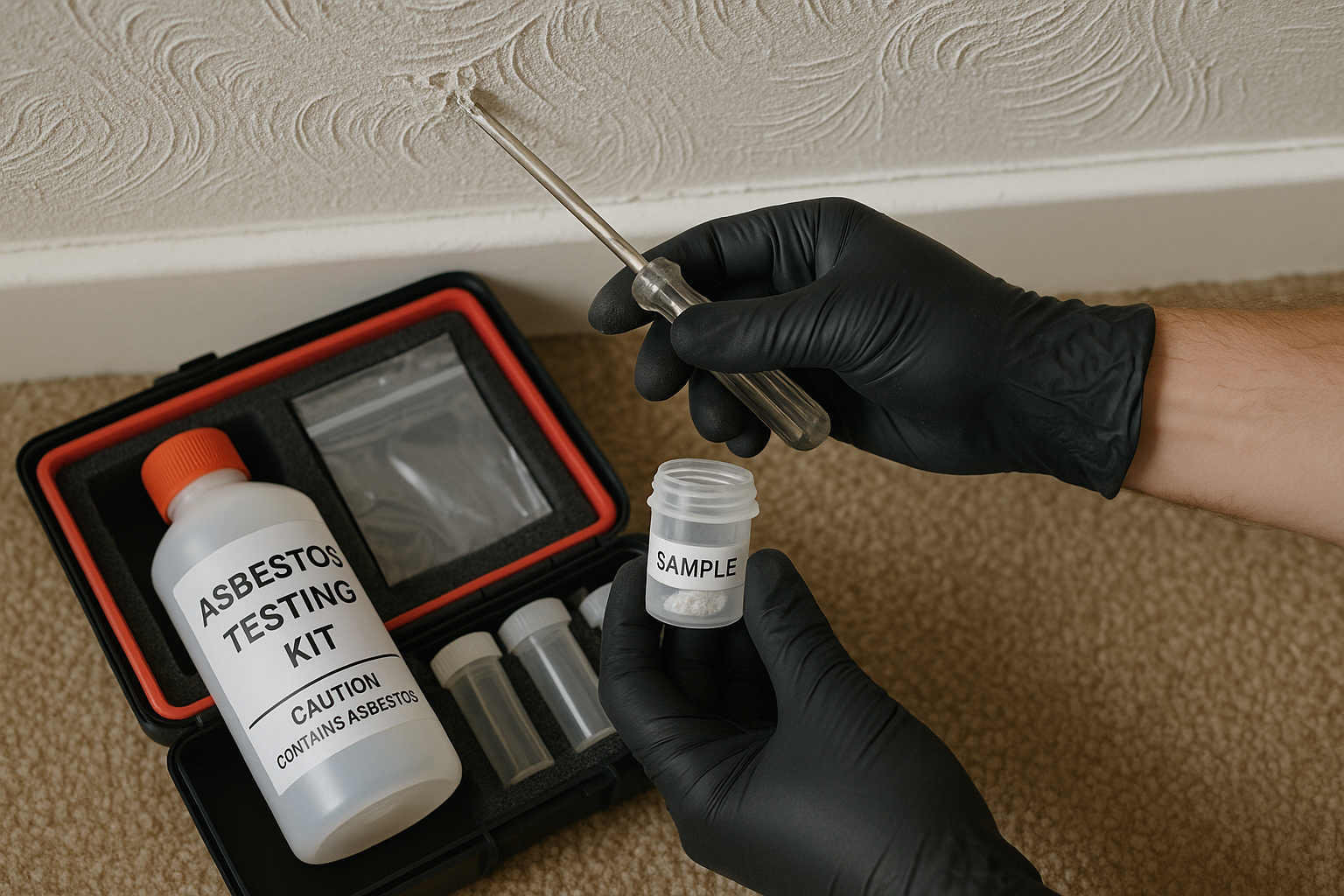
A DIY artex asbestos testing kit can work well when you need to test one or two accessible textured coatings and the sample can be taken with minimal disturbance. It is most suitable where the material is in reasonable condition and you only need a clear laboratory result before small planned works.
Typical situations include:
- Testing one ceiling before installing spotlights
- Checking a wall coating before re-skimming
- Sampling a small textured patch after a leak repair
- Confirming whether a suspect finish needs specialist removal
- Getting a result before asking contractors to quote
A DIY kit is usually not the right option if:
- The coating is badly damaged, flaking or delaminating
- The sample area is high or difficult to reach safely
- There are multiple suspect materials across the property
- The building is non-domestic and falls under duty-to-manage requirements
- Refurbishment or demolition work is planned on a wider scale
In those situations, professional sampling or a survey is more reliable. If you are dealing with a broader project, using a specialist asbestos testing service gives you a clearer record of what is present and where.
What to look for in an artex asbestos testing kit
Not all kits offer the same level of support. Some are simply a route to lab analysis, while others include instructions, packaging and protective equipment. The cheapest option is not always the safest or most practical.
When comparing any artex asbestos testing kit, check for:
- Laboratory analysis included in the price
- Clear instructions for taking a textured coating sample
- Return packaging or return postage
- Sample bags with proper labelling guidance
- Turnaround times explained clearly
- PPE and RPE included, or clearly stated as not included
If a listing promotes “no PPE” as if it were a benefit, be cautious. That usually means you will need to source suitable respiratory protection and disposable clothing yourself before sampling. Any saving can disappear quickly once those essentials are added.
Popular features people compare
People buying an artex asbestos testing kit usually compare the same practical details:
- Single-sample or two-sample kit
- Whether the lab fee is included
- Whether return postage is included
- Whether PPE and RPE are supplied
- Whether the kit is suitable for Artex ceilings and other common materials
- Whether results are standard, next day or 24-hour after lab receipt
That comparison matters because product titles can sound more complete than the contents really are. Always read beyond the headline.
What a good kit should include
A decent artex asbestos testing kit should make the process straightforward rather than leaving you to guess. In most cases, a good kit should include:
- Instructions for taking a small representative sample
- One or more sample bags
- Outer return packaging
- Labelling details so the sample location is recorded properly
- Laboratory analysis
- Clear turnaround information
Some kits also include a small tool for taking the sample. If they do not, use a suitable hand tool that allows a small piece to be removed cleanly. Avoid sanding, grinding or any method that creates unnecessary dust.
If you only need the laboratory stage and already know how to collect and package a sample safely, direct sample analysis may be more suitable than buying a full kit.
Common artex asbestos testing kit options
The market includes everything from basic sample packs to all-in-one kits with protective equipment. The right choice depends on how many materials you need to test and whether you already have suitable PPE and RPE.
Single-sample kits
A one-sample artex asbestos testing kit is often enough when you are checking one ceiling or one patch of textured coating before a small job. It is the simplest option if you only need a yes-or-no answer for a single location.
These kits are popular with homeowners because they are affordable and easy to use. They are less suitable if you have several rooms with suspect finishes, as one result should not be assumed to apply across the whole property.
Two-sample kits
A two-sample artex asbestos testing kit makes sense when you want to test two rooms, compare original and patched areas, or check both a ceiling and a wall coating. It often offers better value than buying two separate single-sample kits.
As always, check exactly what is included. Fast results are useful, but only if you understand whether the clock starts when you order, when the sample is posted, or when the lab receives it.
Sample-only options
Some products are really sample-only options rather than full kits. These can work well if you already have the right protective equipment and only need the analysis route.
For first-time users, though, a full asbestos testing kit is usually more practical because it reduces the chance of missing something important.
Multi-sample kits
Multi-sample kits are useful in older properties where there may be several suspect materials. You might need to check textured coating, floor tiles, soffits and boxing in during the same job.
Even then, be realistic. If the number of suspect materials keeps growing, a survey is usually more efficient and gives you a more defensible record.
All-in-one kits with PPE and RPE
One of the most useful formats is an all-in-one testing kit that includes personal protective equipment and respiratory protective equipment. If you do not already have the right gear, this is usually the safest route.
For taking a sample from suspect textured coating, suitable protection reduces the chance of inhaling dust and helps stop contamination being carried elsewhere in the property.
Advised PPE and RPE for sampling textured coatings
If you are using an artex asbestos testing kit, the advised equipment is straightforward:
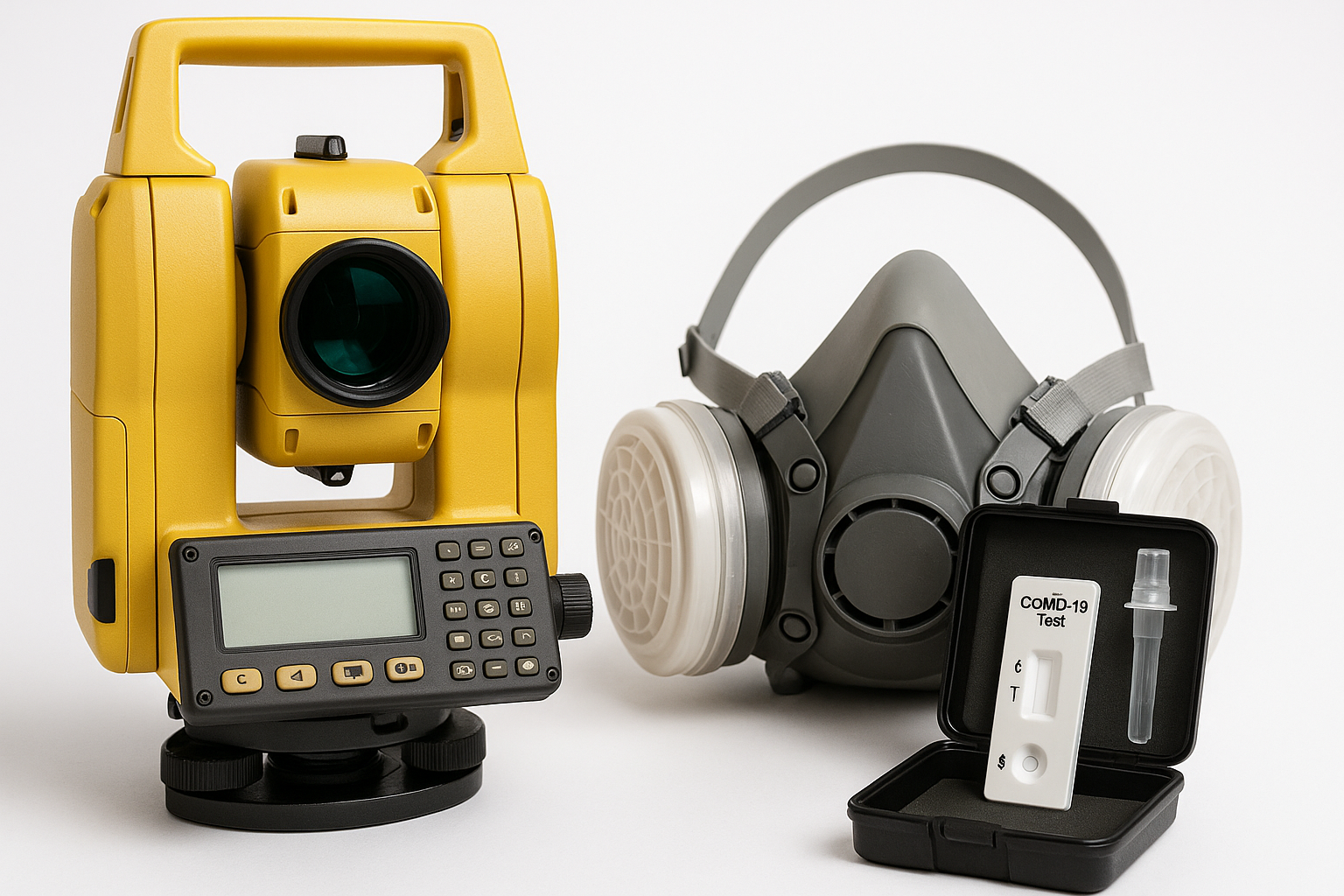
- FFP3 disposable respirator or equivalent suitable RPE
- Disposable coveralls
- Disposable gloves such as nitrile
- Wipes for cleaning tools and nearby surfaces
- Seal-able sample bags and outer packaging
A basic paper dust mask is not a substitute for suitable RPE. Old clothes and household gloves are not a proper substitute for disposable protective wear either.
If your chosen kit does not include PPE and RPE, source them before you start. Never begin sampling on the basis that you will just be careful.
How to take an Artex sample safely
The aim is to remove the smallest representative sample possible while creating as little disturbance as possible. If you are not confident, stop and book professional help instead.
Before you start
- Keep other people and pets out of the room
- Turn off fans or ventilation that may move dust around
- Lay polythene or disposable sheeting beneath the sample area
- Wear suitable PPE and RPE
- Have your sample bag open and ready before you disturb the coating
- Lightly mist the area if your instructions advise it, without soaking electrical fittings or creating run-off
Taking the sample
- Choose a discreet area where a small piece can be removed cleanly.
- Use a hand tool to take a small representative sample that includes the full depth of the textured coating where possible.
- Place the sample straight into the sample bag.
- Seal the bag immediately.
- Wipe the tool and surrounding area with damp wipes if appropriate.
- Seal used wipes and disposable items for careful disposal in line with local guidance.
Do not sand the surface. Do not drill it to create a sample. Do not scrape a large area when a very small piece is enough.
After sampling
- Label the sample clearly with the room and location
- Double-check the paperwork or online submission details
- Seal everything in the return packaging provided
- Wash thoroughly after removing PPE
- Keep the sampled area undisturbed until you receive the result
If the ceiling is damaged, the coating is loose, or the sample point is above a stairwell or awkward access area, do not force it. That is the point where a professional should take over.
What the lab result means
Once the laboratory has analysed the sample, you will usually receive a result confirming whether asbestos was detected and, if so, the asbestos type identified in the sample.
If the result is negative, that means the material tested did not contain asbestos. Keep the report with your property records so you can show contractors or future buyers what was tested and where.
If the result is positive, do not panic. A positive result does not automatically mean immediate removal is required. The next step depends on the condition of the material and what work is planned.
If asbestos is found
Your practical options are usually:
- Leave it in place if it is in good condition and will not be disturbed
- Encapsulate it if sealing is suitable and no intrusive work is planned
- Arrange controlled removal if refurbishment or damage means disturbance is unavoidable
Textured coatings are often removed under controlled non-licensed work methods, but that does not mean the job is suitable for casual DIY. The method, condition and scale all matter, and HSE guidance should be followed carefully.
When professional help is the better choice
An artex asbestos testing kit has its place, but there are plenty of situations where professional input is the better option from the start.
You should consider a surveyor or professional sampler if:
- You are responsible for a non-domestic building
- You need records that support duty-to-manage arrangements
- You are planning refurbishment or demolition work
- You suspect more than one asbestos-containing material
- The coating is damaged, friable or difficult to access
- You need multiple samples taken efficiently across a site
For wider property concerns, a survey carried out in line with HSG264 gives a clearer picture than isolated sample results. That is especially useful for landlords, managing agents and facilities teams who need location-specific records rather than a single yes-or-no answer.
DIY kit or survey: how to decide
If you are unsure whether to buy an artex asbestos testing kit or book a survey, use this simple rule.
A kit is usually enough when:
- You have one or two suspect textured coatings
- The material is in decent condition
- You only need to know whether a small area contains asbestos before minor work
A survey is usually better when:
- The property has multiple suspect materials
- You need a structured report with locations and recommendations
- Works are more extensive than a minor repair or small decorative job
- You are managing risk on behalf of tenants, staff or contractors
If you are based in the capital or managing regional portfolios, local support can speed things up. Supernova can help with an asbestos survey London, an asbestos survey Manchester, or an asbestos survey Birmingham depending on where the property is located.
Common mistakes to avoid when using an artex asbestos testing kit
Most problems with DIY sampling come from rushing. A few avoidable mistakes can create unnecessary exposure or make the sample less useful.
- Taking too large a sample instead of the smallest representative piece
- Using power tools or abrasive methods
- Skipping proper RPE
- Failing to label the sample location clearly
- Assuming one negative result covers every textured surface in the property
- Sampling damaged material that should have been handled professionally
- Starting refurbishment before the result comes back
If you avoid those mistakes, an artex asbestos testing kit can be a practical and efficient first step.
Practical advice for homeowners, landlords and property managers
For homeowners
If you are planning decorating work, test first and book trades after the result arrives. That avoids wasted visits and last-minute changes.
For landlords
Keep all reports and sample records together with your property documents. If a ceiling tests positive and remains in place, note its condition and make sure contractors are told before future works.
For property managers
Do not rely on verbal history or assumptions from previous occupiers. If multiple rooms or multiple materials are involved, move straight to professional sampling or a survey so you have a proper audit trail.
Choosing the right next step
An artex asbestos testing kit is useful when you need a quick, focused answer about a suspect textured coating. It is not a shortcut around sensible risk management, but it can help you make informed decisions before work starts.
If the coating is accessible, in fair condition and limited to one or two areas, a kit can be appropriate. If the material is damaged, the project is larger, or the property has wider asbestos concerns, professional support is the better choice.
Need help deciding whether to use a kit or book a survey? Supernova Asbestos Surveys carries out asbestos sampling and surveys across the UK. For expert advice, call 020 4586 0680, visit asbestos-surveys.org.uk, or order an asbestos testing kit if a DIY sample is the right fit for your situation.
Frequently Asked Questions
Can I tell if Artex contains asbestos just by looking at it?
No. Textured coatings that contain asbestos can look the same as those that do not. The only reliable way to confirm it is through laboratory testing of a representative sample.
Is an artex asbestos testing kit safe to use at home?
It can be, provided the material is in reasonable condition, the sample is easy to reach, and you follow the instructions carefully using suitable PPE and RPE. If the coating is damaged or the sampling point is awkward, professional sampling is safer.
What should I do if the result is positive?
Do not disturb the material further. If it is in good condition and no work is planned, it may be left in place and managed. If refurbishment is planned or the coating is damaged, seek professional advice on encapsulation or removal.
Does one test cover every textured ceiling in the property?
No. Different rooms may have been finished at different times, and one ceiling may not be representative of another. If you have several suspect areas, each distinct material or location may need its own sample.
When should I book a survey instead of using a kit?
Book a survey when there are multiple suspect materials, the property is non-domestic, refurbishment is planned, or you need a formal record of asbestos risks and locations in line with HSE guidance and HSG264.